
Orlando sits at the centre of the Florida peninsula, about 90 kilometres from the Atlantic coast and 100 kilometres from the Gulf of Mexico — an inland city of swamps, scrub, and subtropical heat that became one of the most-visited places on earth after Walt Disney World opened its gates in 1971. The city proper has a population of roughly 335,000, but the Greater Orlando metropolitan area — encompassing Orange, Osceola, Lake, and Seminole counties — is home to more than 2.7 million people. The tourism economy is vast and defining: the theme-park corridor along US-192 and US-27 employs hundreds of thousands and generates more than $75 billion annually, making Orlando the most-visited tourist destination in the United States by some measures. That same economy created a music infrastructure unlike anything else in America — a city where concert venues, performance training schools, and entertainment technology converge at a scale driven not by local population alone but by 75 million annual visitors.
A brief history
The land was Timucua and Seminole territory before American settlers began displacing indigenous communities through the 19th century. Orlando grew as a cattle and citrus centre after the Civil War, incorporated as a town in 1875, and built a regional economy on citrus farming and a rail connection that made it a modest distribution hub through the early 20th century. The post-WWII era brought aviation and defence industries (Martin Marietta's missile and aerospace operations in nearby Apopka and the broader Orange County area), rapid suburban growth, and the first stirrings of the tourism industry that would transform everything. Walt Disney's announcement in 1965 that he had secretly purchased 27,000 acres of Central Florida swampland — a site selected precisely for its flat, empty, inland character — changed the city's trajectory permanently. Walt Disney World Resort opened in October 1971 with the Magic Kingdom, and the region has not stopped growing since. EPCOT (1982), Disney-MGM Studios (1989, now Hollywood Studios), Disney's Animal Kingdom (1998), Universal Studios Florida (1990), Universal's Islands of Adventure (1999), SeaWorld Orlando (1973), Busch Gardens-era tourism, and the construction of the Orange County Convention Center — one of the largest in the United States — built a city whose entire economic identity is performance, entertainment, and hospitality.
Music identity
Orlando's most consequential chapter in pop-music history is the early 1990s incubation of the Backstreet Boys and 'N Sync — the two boy bands that defined the global pop market from 1996 to 2002 and whose cultural reach has never fully faded. Both groups were assembled in Orlando by the promoter and entrepreneur Lou Pearlman, who founded Trans Continental Records and Trans Continental Management in Orlando and had an instinct for the gap in the market left by New Kids on the Block's commercial decline. The Backstreet Boys — AJ McLean, Howie Dorough (both Orlando-raised), Nick Carter, Kevin Richardson, and Brian Littrell — formed in Orlando in 1993 and became one of the best-selling music acts in history, with estimated global record sales exceeding 100 million. 'N Sync — Justin Timberlake, JC Chasez, Chris Kirkpatrick, Joey Fatone, and Lance Bass — formed in Orlando in 1995, signed to BMG through Pearlman's management structure, and became the other dominant force of the same era: their album No Strings Attached sold 2.4 million copies in its first week in 2000, a record that stood for 15 years. Both bands were shaped by Orlando's entertainment and performance training infrastructure, by the city's performing-arts high school pipeline, and by the talent-hungry entertainment economy surrounding the theme parks.
Matchbox Twenty formed in Orlando in 1995, when lead singer Rob Thomas — who had grown up in the area and played the local circuit — assembled the band around Paul Doucette, Kyle Cook, Brian Yale, and Adam Gaynor. Their debut album Yourself or Someone Like You (1996) sold more than 12 million copies and produced hits including "3 AM," "Push," and "Real World"; it remains one of the best-selling debut albums of the post-grunge era. Thomas's Orlando roots and the band's rise through the local club circuit — the Central Florida scene of the mid-1990s, including The Milk Bar and various Thornton Park and downtown rooms — make them one of the city's most lasting rock exports.
In heavy music, Trivium — the Orlando metalcore and heavy-metal band formed in 1999 when guitarist Matt Heafy was only 12 years old — became one of the most internationally significant metal bands of the 2000s and 2010s. Albums including Ascendancy (2005), The Crusade (2006), Shogun (2008), and the string of releases through the 2010s built a career that has now spanned 25 years with consistent global touring, critical credibility in the metal press, and a fanbase that reaches well beyond the United States. Trivium came directly out of the Orlando suburban metal underground — the bedroom-recording, local-venue circuit of the late 1990s — and their longevity is a testament to both Heafy's compositional ambition and the city's quiet capacity to sustain heavy music at the grassroots level.
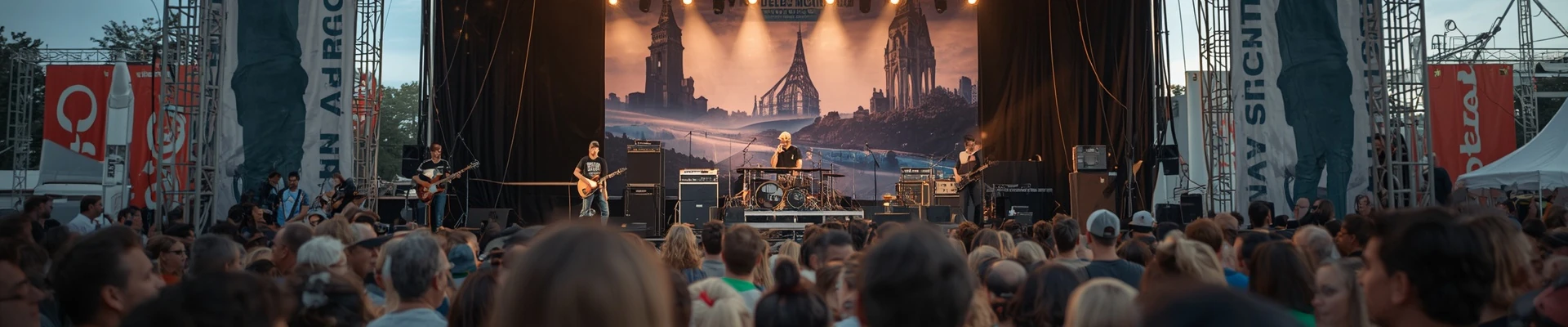
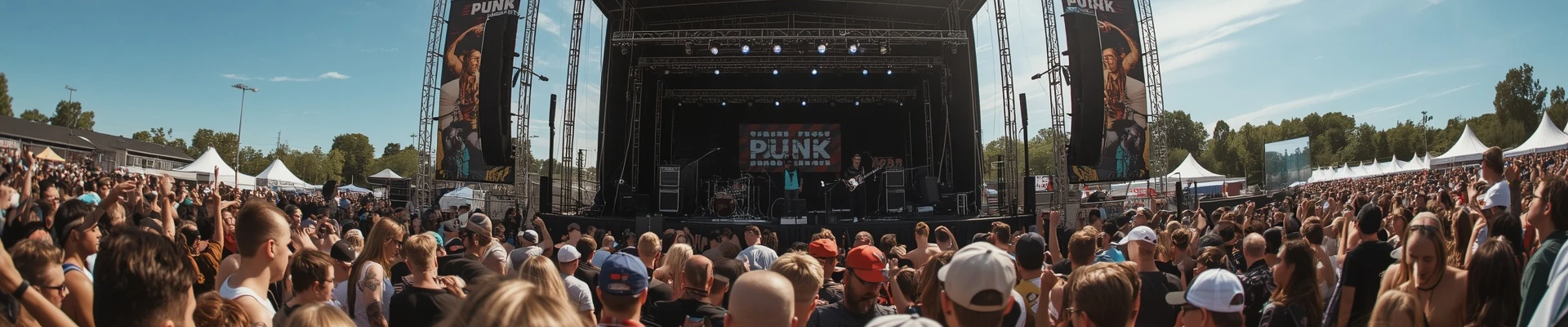
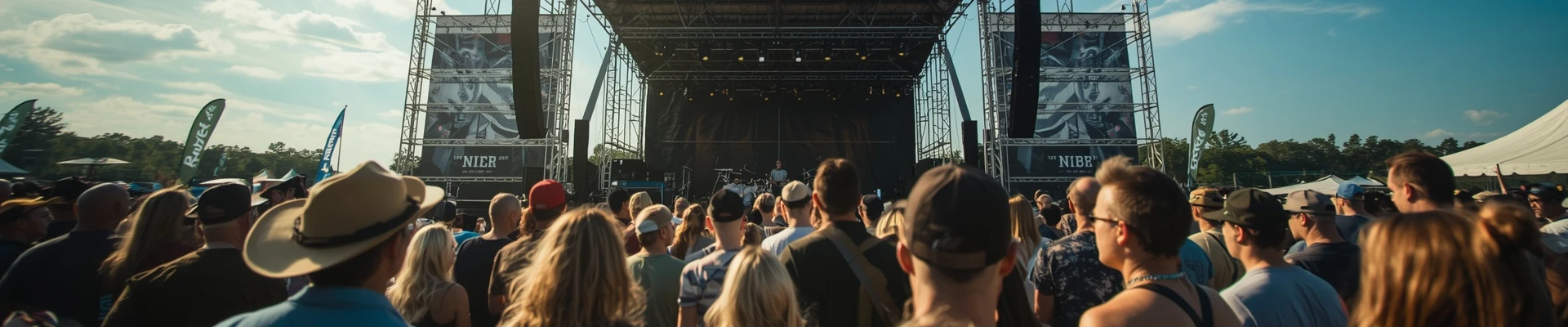
The electronic dance music economy in Orlando is enormous — fed by the tourism infrastructure, the convention-circuit club culture, and a young, transient, international visitor base that makes the city one of the most active EDM markets in the United States. EDC Orlando (Electric Daisy Carnival), Insomniac Events' annual festival at the Tinker Field / Camping World Stadium complex, is one of the largest music festivals in the Southeast, consistently drawing 60,000 to 80,000 attendees. The nightclub infrastructure along International Drive and in the downtown and Mills 50 district sustains continuous DJ and electronic performance. House of Blues Orlando at Disney Springs and the Hard Rock Live Orlando at Universal CityWalk both function as major mid-size performance venues within the entertainment districts, programming national and international acts with a scale that the city's residential population alone would not support.
The Latin music scene is one of Orlando's most organically grown musical communities. The greater Orlando area — particularly Kissimmee, Osceola County, and the OBT (Orange Blossom Trail) corridor — has one of the largest Puerto Rican communities outside the island itself, with an estimated 300,000 Puerto Rican-heritage residents in the metro area. This community sustains a continuous reggaeton, salsa, merengue, and Latin trap circuit, with clubs and venues along US-192 and in the East Colonial Drive corridor catering specifically to the Latin market. Latin Grammy-nominated artists regularly include Orlando-area performers, and the city's radio market includes several Spanish-language stations. The Mexican and Central American communities in Apopka, Buenaventura Lakes, and Pine Hills further sustain traditional folk and norteño circuits.
Full Sail University in Winter Park — a private university specialising in entertainment arts, film, music, and game design — has shaped Orlando's creative class for decades. Its audio engineering, music production, and entertainment business programmes have produced graduates who have gone on to work in recording studios, live sound, and the music industry at every level. The school's presence gives Orlando a steady pipeline of trained audio engineers and music-production professionals that other mid-size American cities lack.
Venues and neighbourhoods
Amway Center (the NBA arena home to the Orlando Magic, capacity approximately 20,000) is the city's largest indoor concert venue, hosting major touring acts across pop, hip-hop, country, and rock. Camping World Stadium (the outdoor stadium, capacity 65,000) has hosted major festivals and occasional one-off stadium shows. Dr. Phillips Center for the Performing Arts — opened in 2014 in the downtown arts district — provides the city's premier theatrical and orchestral space, with the 2,700-seat Walt Disney Theater and the 300-seat Alexis & Jim Pugh Theater; it programs Broadway touring productions, the Orlando Philharmonic Orchestra, jazz, and world music alongside theatre. Hard Rock Live Orlando at Universal CityWalk seats 3,000 and runs a near-nightly concert calendar. House of Blues Orlando at Disney Springs holds around 2,500 and similarly programs a continuous national touring schedule within the Disney ecosystem.
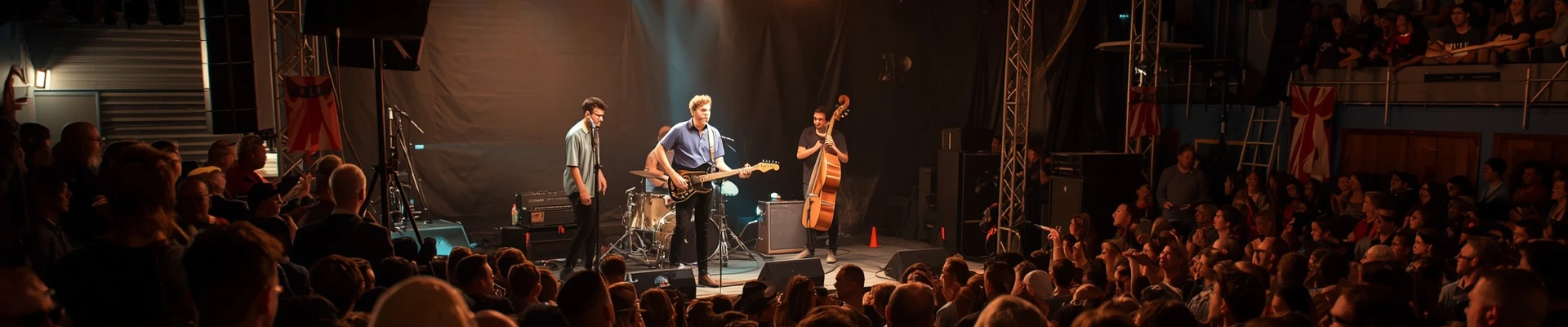
The mid-size and club tier runs through several distinct neighbourhoods. The Beacham (downtown, capacity 1,700), a restored 1921 theatre on Pine Street, has been a central mid-size rock and electronic venue for more than a decade. The Venue 578 (downtown) operates alongside it. The Social on Orange Avenue downtown has been the city's primary indie and alternative club since the late 1990s — a 300-capacity room that has hosted thousands of touring and local acts and helped build every generation of Orlando's underground music community. Will's Pub on Mills Avenue in the Mills 50 district is the other anchor of the DIY and independent scene: a beloved neighbourhood bar and venue that programs local bands, touring indie acts, and the Wills Pub Fest annual local-music event. The Falcon in College Park and Henao Contemporary Center in Mills 50 round out the arts-leaning venue circuit.
The Mills 50 neighbourhood — bounded roughly by Mills Avenue, Colonial Drive, 50th Street, and the railroad tracks — is Orlando's most active independent music and arts district: record stores including Park Ave CDs (originally in Winter Park), rehearsal spaces, and a concentration of small venues and bars that anchor the city's non-tourist music community. Ivanhoe Village along Orange Avenue north of downtown has a bar and live-music scene. Thornton Park east of Lake Eola is a historic residential neighbourhood with a cluster of restaurants and bars that host live music. Winter Park — the adjacent affluent suburb, home to Full Sail and Rollins College — sustains a high-end performance circuit through the Rollins Annie Russell Theatre and the college's arts programming.
Festivals and signature events
EDC Orlando is the city's largest annual music event — a two-day electric dance carnival at Camping World Stadium each November, with multiple stages running simultaneously across electronic genres from trance and techno to dubstep and house. The Central Florida Scottish Highland Games, the Okeechobee Music and Arts Festival (in nearby Okeechobee), the Immersion Music Festival, and WinterPark Autumn Art Festival all have music programming. SEA LIFE and SeaWorld Orlando run ongoing concert series. Disney Springs hosts regular live music. The Florida Film Festival at the Enzian Theater in Maitland programs music documentaries. Gay Days at Disney brings a massive music and nightlife circuit to the region in early June. The Orlando International Fringe Theatre Festival — one of the oldest and largest Fringe festivals in the United States — consistently includes musical theatre, cabaret, and musical comedy programming across its 100+ venues.
What ties it all together
Orlando's musical identity is shaped by the collision of two forces that exist nowhere else in quite the same combination: a world-class entertainment infrastructure built for 75 million annual visitors, and a scrappy, neighbourhood-level music community that has thrived in its shadow. The city where Lou Pearlman assembled the Backstreet Boys and 'N Sync in warehouses and rehearsal spaces became the same city where Trivium's teenage guitarists built one of metal's most durable careers out of the suburban underground, where Matchbox Twenty climbed from the local club circuit to 12 million album sales, and where Full Sail University trained the engineers who work in studios and venues across the industry. The Latin communities of Kissimmee and OBT have made Orlando one of the most active reggaeton and Latin trap markets outside New York and Miami. The EDM economy has made it one of the most active electronic-music markets in the American South. What ties it all together is Orlando's function as a city of arrivals — performers, engineers, entrepreneurs, tourists, and communities who come to build something inside the spectacle, and sometimes do.