
Palm Bay occupies the southern end of Brevard County on Florida's Atlantic coast, roughly 65 miles east of Orlando and 15 miles south of the county seat of Melbourne. With approximately 120,000 residents, Palm Bay ranks among the ten most populous cities in Florida — a figure that tends to surprise outsiders, because the city's footprint (over 100 square miles of municipal territory) is dominated by low-density residential development: single-family subdivisions, canal-threaded neighborhoods, and the quiet pine-scrub flatlands that typify the Space Coast interior. The Indian River Lagoon forms the city's eastern boundary, separating Palm Bay from Brevard's barrier islands; the Florida Turnpike and Interstate 95 provide north-south access. The community has grown dramatically since its incorporation in 1959, driven by the aerospace and defense employment centered on Kennedy Space Center (40 miles to the north), Cape Canaveral Space Force Station, and the constellation of engineering and manufacturing firms that have clustered around Brevard County's space industry.
A brief history
The land that is now Palm Bay was inhabited for millennia by the Ais people, who fished the Indian River Lagoon and its estuary networks. Spanish colonization disrupted these communities in the 16th and 17th centuries, and by the time American settlement accelerated in the 19th century, the area was largely uninhabited scrubland. Early settlers in the late 1800s farmed citrus and pineapple on the coastal flatlands, and the arrival of the Florida East Coast Railway in the 1890s opened the region to broader commercial activity. The community that would become Palm Bay began taking shape as a modest agricultural and fishing settlement. Formal incorporation came in 1959, timed to benefit from the extraordinary economic disruption of the Space Race — the establishment of NASA's Kennedy Space Center and the explosive growth of aerospace employment transformed Brevard County from a backwater into one of Florida's most economically dynamic regions within a decade.
The 1960s and 1970s saw Palm Bay's population begin expanding as workers drawn to the space industry sought affordable housing south of the more established Melbourne. The city's residential grid expanded rapidly through the 1980s and 1990s, absorbing wave after wave of migration from across the country. By 2000, Palm Bay had surpassed 80,000 residents; by 2020, it had crossed 110,000, making it Brevard County's largest municipality. The socioeconomic character of the city reflects this migration pattern: a working- and middle-class population with deep ties to military and aerospace employment, a significant retiree community drawn by Florida's climate and cost of living, and an increasingly diverse younger demographic including substantial Puerto Rican and Caribbean communities — a pattern shared broadly across Brevard County and the broader Orlando metro arc.
Music identity
Palm Bay's music scene is the product of its geography and demographics. The city sits inside the broader Space Coast music ecosystem — a network of independent venues, local promoters, and working bands that stretches from Titusville in the north through Cocoa and Rockledge to Melbourne and Palm Bay in the south. Within that ecosystem, Palm Bay has historically occupied the role of residential base rather than entertainment hub: it is the city where musicians live, rehearse, and raise families, while performing predominantly in neighboring Melbourne, where the venue concentration is higher.
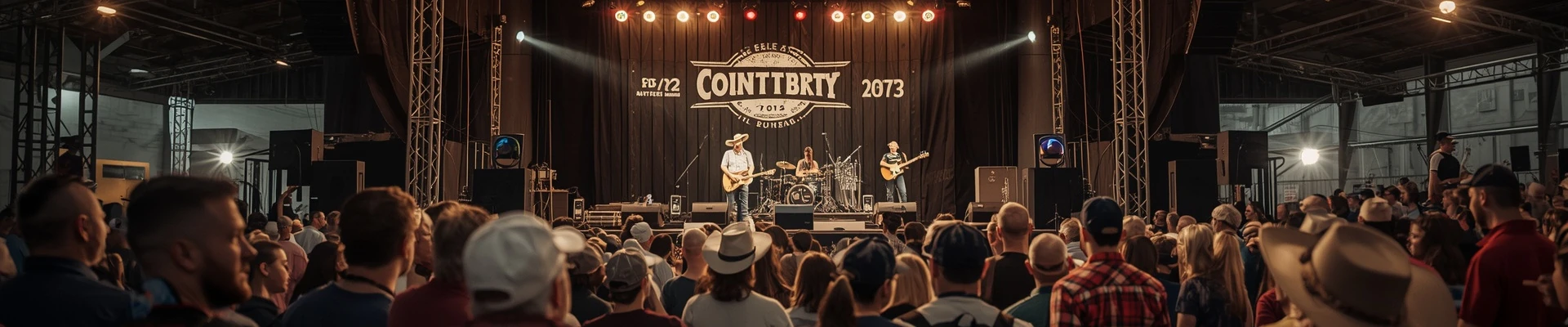
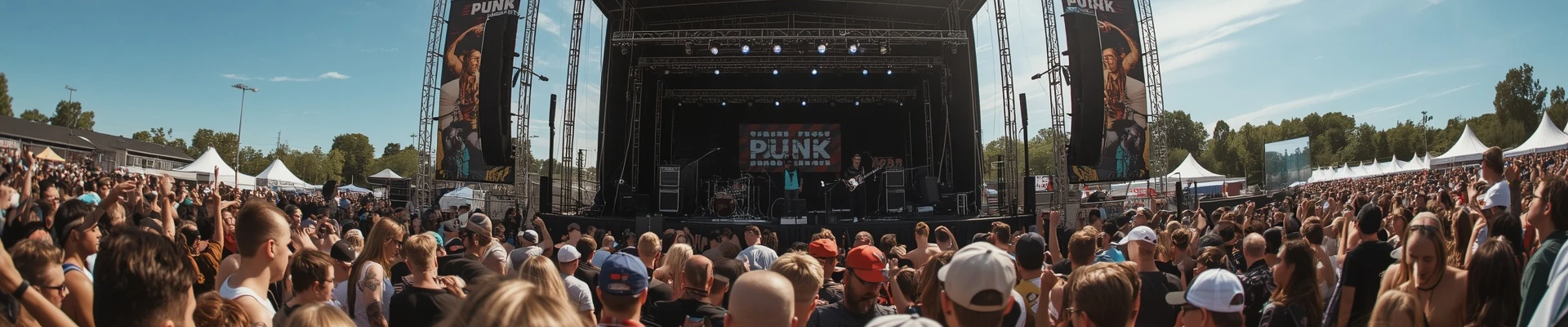
The city's local music scene leans heavily toward rock, punk, and country, reflecting both the working-class demographic of the Space Coast interior and the influence of Florida's deep-rooted country and Southern rock traditions. The Space Coast has always had a functional honky-tonk and country circuit, and Palm Bay participates in this through bars, roadhouses, and outdoor venues that program local and regional acts. Punk and hardcore have a persistent following, rooted in the broader Florida punk tradition that has given the state an outsized presence in American underground music since the 1980s; Brevard County produced a steady supply of bands who circulated through the Florida DIY circuit and occasionally broke through to national touring. Hip-hop has grown as a significant presence in the city's younger demographic, particularly among the substantial Puerto Rican community concentrated in Palm Bay's southwestern neighborhoods; local rap acts perform at bars, outdoor events, and community festivals.
The most important music institution in the immediate area is not in Palm Bay itself but in neighboring Melbourne: the Henegar Center for the Arts, a downtown theatre presenting regional performances; The Asylum (a mid-capacity rock and metal venue); and the string of bars along Melbourne's New Haven Avenue corridor that sustain regular live music bookings. Palm Bay musicians commute to these rooms to build their audiences. Within Palm Bay's own boundaries, the music infrastructure is largely bar-based — establishments like The Music Joint (a rehearsal and small-venue operation) and various sports bars and restaurants that program open mics and weekend cover bands represent the local tier. Parks and Recreation events and community festivals provide additional outdoor programming through the year.
The connection to the space industry creates a peculiar cultural texture. Palm Bay and its Brevard County neighbors have a higher-than-average concentration of engineers, technicians, and scientists — a demographic that tends to sustain niche musical tastes, from progressive rock and metal to jazz and classical, and to invest in home recording gear. The county's music community has a notable independent recording culture, with home studios and small commercial facilities scattered through the residential landscape. This DIY recording tradition has produced a stream of independent releases across genres.
Latin music — salsa, reggaeton, cumbia, and bachata — has a growing presence in Palm Bay, driven by the city's large Puerto Rican community. Latin nights at bars and clubs, community events organized by Puerto Rican cultural organizations, and the annual Brevard Puerto Rican Day celebration feature live music and DJ performance. The county's Caribbean diaspora communities have created a parallel Latin music circuit that intersects occasionally with the broader local music scene.
Venues and neighborhoods
Palm Bay's venue landscape is dispersed and bar-centric. Within the city limits, live music bars — sports bars, dive bars, and roadhouses scattered through the commercial corridors along Palm Bay Road, Malabar Road, and Babcock Street — provide the primary programming context. Community events use Turkey Creek Sanctuary (a nature preserve and park with outdoor event space) and the Palm Bay Community Center for larger gatherings. The Harris Corporation Amphitheatre in nearby Melbourne (now iHeartRadio) is the region's major outdoor concert venue, drawing national touring acts to a 7,000-capacity amphitheatre on the Brevard County fairgrounds. Space Coast Stadium, the former spring training facility of the Washington Nationals, has also hosted concert events.
The Bayfront Park area along the Indian River Lagoon provides a natural setting for outdoor music events. The Palm Bay Regional Park hosts community festivals with live music components. The strip of commercial development along US-1 between Palm Bay and Melbourne is where most of the county's working bar venues are concentrated, functioning as the primary live music corridor for the southern Brevard market.
Festivals and signature events
Palm Bay's annual events calendar includes several occasions that center live music. The Palm Bay Art and Jazz Fest (held in Bicentennial Park) features local and regional jazz, blues, and R&B acts alongside visual arts programming. Brevard Puerto Rican Day celebrates the county's Caribbean community with live salsa, reggaeton, and Latin pop. The Turkey Creek Jazz and Blues Festival (in the park along the eponymous creek) programs outdoor acoustic and amplified sets in a natural setting. The Space Coast Music Festival has historically organized performances drawing on the county's rock and pop community. Various Fourth of July and community celebration events use live music as a centerpiece. The Melbourne Art Festival (in neighboring Melbourne) draws regional musicians and serves as a cultural anchor for the south Brevard music community.
What ties it all together
Palm Bay is not a music city in the way that a college town or urban center is — it has no legendary venue, no defining genre, no artist who put it on the map the way a single band or record can define a scene. What it has is the unspectacular infrastructure of a working music community: rehearsal spaces in garages and commercial units, bars that take a chance on local acts, parks where neighbors bring their instruments for festivals, and a population large enough to sustain multiple overlapping scenes simultaneously. The Puerto Rican community makes it Latin; the blue-collar Space Coast identity makes it rock and country; the engineering culture makes it technically literate and home-studio-equipped. The city feeds musicians into the larger Space Coast circuit, and the larger Space Coast circuit feeds them into the broader Florida and national touring world. It is, in the end, the kind of city that music needs as much as the famous ones — a place where music gets made, practiced, and loved in the ordinary way, away from the spotlights.