
Pembroke Pines is Broward County's most populous city and one of the largest municipalities in Florida by population, with roughly 167,000 residents spread across 108 square kilometres of flat, sun-baked South Florida terrain. The city sits at the geographic midpoint of Broward County, flanked by Miramar to the south, Cooper City and Davie to the north and west, and the Florida Everglades to the west — a literal edge where suburban sprawl meets one of the most ecologically significant wetlands in North America. The Atlantic Ocean is roughly 20 kilometres to the east. The terrain is uniformly flat — the entire city sits at roughly three metres above sea level — part of the ancient limestone shelf that underlies South Florida, drained and developed from the mid-20th century onward. Interstate 75 and Pines Boulevard (State Road 820) are the city's defining arteries; the latter runs the full east–west length of the city and gives it much of its internal logic.
Pembroke Pines is not a historic city in the Florida sense — its population was negligible until the 1960s, when the construction of the Florida Turnpike Extension and the drainage of surrounding wetlands opened the area to residential development. What followed was one of the most dramatic suburban growth stories in American history: from a small agricultural community of a few thousand in the early 1960s to a city of more than 100,000 by 1990, and to its current position as Broward County's population leader. The growth came in waves — first from white-collar Northern transplants (the "snowbird" economy), then from Cuban exiles and their families establishing a second cultural hub south of Hialeah and Miami, then from Colombian, Venezuelan, and broader Latin American immigration during the 1990s and 2000s, and concurrently from Haitian and Caribbean communities displaced from Little Haiti in Miami by rising rents and from the 2010 earthquake diaspora. The result is one of the most genuinely diverse cities in the United States — a place where Spanish, Haitian Creole, Portuguese, and English all function as working community languages, and where the music playing from car stereos, restaurants, and community centers is a rotating international festival.
A brief history
The land now occupied by Pembroke Pines was part of the broader territory of the Tequesta and later the Seminole peoples, who retreated into the Everglades following the Seminole Wars of the 19th century. The area was drained and opened for agriculture in the early 20th century through the Everglades drainage project — a massive engineering effort that converted millions of acres of wetland to farmland and residential land at significant ecological cost. The city was incorporated in 1960, taking its name from Pembroke Road, the main east–west artery that cut through the area. For its first decade, Pembroke Pines was a quiet semi-rural community of a few thousand.
The real transformation began in the 1970s and accelerated through the 1980s: master-planned subdivisions — Silver Lakes, Chapel Trail, Grand Palms, Walnut Creek — were carved from the flatlands and marketed to middle-class families priced out of Miami and Fort Lauderdale proper. Broward County's school system had a strong reputation, and families moved for the schools, the larger lots, the lower crime, and the sense of starting fresh in a planned environment. By the time the city crossed 100,000 residents in the early 1990s, it had become the fastest-growing city in Florida.
The demographic shift that most profoundly shaped Pembroke Pines culturally was the mass arrival of Cuban, Colombian, and Venezuelan families — professionals, business owners, and their children — who chose Broward County over Miami-Dade for its perceived neutrality (less intensely Cuban-identified than Hialeah or Coral Gables) while maintaining close community ties southward. This Latin American middle class brought restaurants, music, cultural associations, radio stations, and community events that made large swaths of the city into a bilingual cultural zone. The Haitian community — centered around the Pembroke Road corridor and spread through the city's eastern sections — added a distinct Caribbean layer, with kompa music, Haitian Creole radio, and community institutions that gave Pembroke Pines one of the largest Haitian populations outside of Miami proper.
Music identity
Pembroke Pines does not have a signature sound in the way that New Orleans has brass band jazz or Detroit has techno — it is a suburban city, and its music scene is deliberately plural, rooted in the cultural identities of its immigrant communities rather than in a locally-generated genre. But plurality is itself a kind of identity, and what Pembroke Pines offers is a sustained, community-maintained multilingual music culture that runs deeper than its suburban geography might suggest.
Latin music in its many forms is the dominant strand. The Cuban community — transplanted in large part from Hialeah and from the original Mariel Boatlift and Balsero generations — brought salsa, son, bolero, timba, and Cuban jazz into the community fabric. Restaurants along Pines Boulevard and in the Flamingo Road corridor program live music that draws directly from this tradition. The Colombian community — one of the largest Colombian-American populations in the United States is concentrated in South Florida, with Pembroke Pines a major node — introduced cumbia, vallenato, champeta, and the Latin pop and reggaeton aesthetic that Colombian producers and artists have led globally since the early 2000s. Shakira, though born in Barranquilla, is the planetary symbol of this Colombian–Miami–global axis; the broader Colombian music industry has deep roots in South Florida, with Pembroke Pines and nearby Weston (heavily Colombian) as residential bases for industry professionals, producers, and artists.
The Venezuelan community — which grew dramatically after 2013 as political and economic conditions in Venezuela deteriorated — brought with it the llanero tradition, joropo, and a wave of young Venezuelan musicians who settled in Broward County and established themselves in the South Florida Latin music ecosystem. Several Venezuelan-American producers and artists who work in Miami-area studios have Pembroke Pines addresses; the city's Venezuelan cultural associations program music events that bring performers directly from Venezuela's diaspora circuit.
Haitian kompa and Caribbean music constitute the city's other major sonic axis. Kompa — the Haitian ballroom dance music developed in the 1950s by Nemours Jean-Baptiste and associated with bands like Tabou Combo, T-Vice, and Carimi — is the defining social music of the Haitian community and plays at every Haitian birthday party, wedding, and community event in Pembroke Pines. The city's Haitian nightclubs and event halls program live kompa bands from the Haitian diaspora circuit that connects Miami, New York, Montreal, and Boston. The Haitian-American community has also produced artists who work in Afrobeats fusion, Caribbean pop, and hip-hop — genres that reflect the second and third generation's bicultural identities.
Miami Bass and hip-hop have a presence rooted in the city's African American community, which occupies the eastern sections of Pembroke Pines and connects culturally to neighboring Lauderhill, Lauderdale Lakes, and North Lauderdale. Miami Bass — the Roland TR-808-driven booty music tradition pioneered by 2 Live Crew, DJ Magic Mike, and Freestyle artists in the 1980s and early 1990s — is the regional DNA, and its influence runs through the local hip-hop, trap, and club music that younger producers and DJs from Pembroke Pines make. The proximity of Miami (30–40 minutes south) means serious hip-hop artists from Pembroke Pines are oriented toward Miami's industry rather than building infrastructure locally.
Venues and neighborhoods
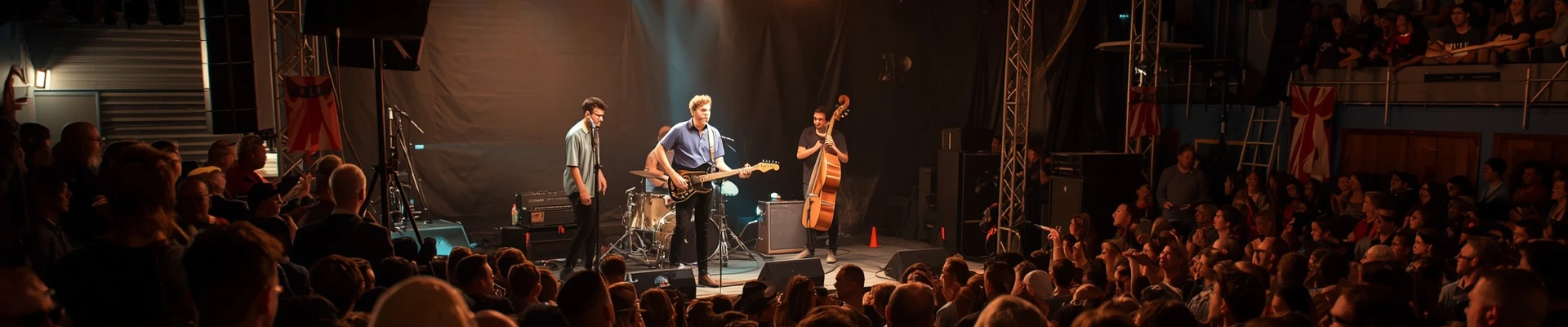
Pembroke Pines' live music infrastructure is primarily built around community events, cultural associations, and a cluster of mid-size nightclubs and event halls rather than traditional music venues. The Charles F. Dodge City Center — the city's primary performing arts facility — programs community concerts, theatrical productions, and cultural events including Latin music performances and Haitian cultural celebrations. The Miramar Regional Park Amphitheatre (just south of the city line in neighboring Miramar) draws on the Pembroke Pines audience base for outdoor concerts, primarily Latin pop, reggaeton, and Caribbean artists.
The Pines Boulevard corridor is home to Latin restaurants and event spaces that program live music regularly — Colombian, Venezuelan, Cuban, and pan-Latin acts cycle through; La Palapa, El Rancho Grande, and similar venues are community institutions. The Flamingo Road corridor has a cluster of Haitian-owned restaurants and clubs where kompa and Caribbean pop programming is consistent. The University Drive and Taft Street intersection anchors the city's more youth-oriented nightlife, with clubs programming reggaeton, Afrobeats, and hip-hop.
Neighborhoods define the cultural geography. Silver Lakes — the large master-planned community in the western sections — is primarily middle-class Latin American; community associations here program cultural events with live music. Chapel Trail similarly draws a pan-Latin demographic. The eastern sections along Pembroke Road and Johnson Street have the densest Haitian and Caribbean presence. Walnut Creek and the areas around Century Village (a massive senior living community) have a distinct older demographic — the snowbird generation — that sustains its own music programming of a more mainstream American popular variety.
Festivals and signature events
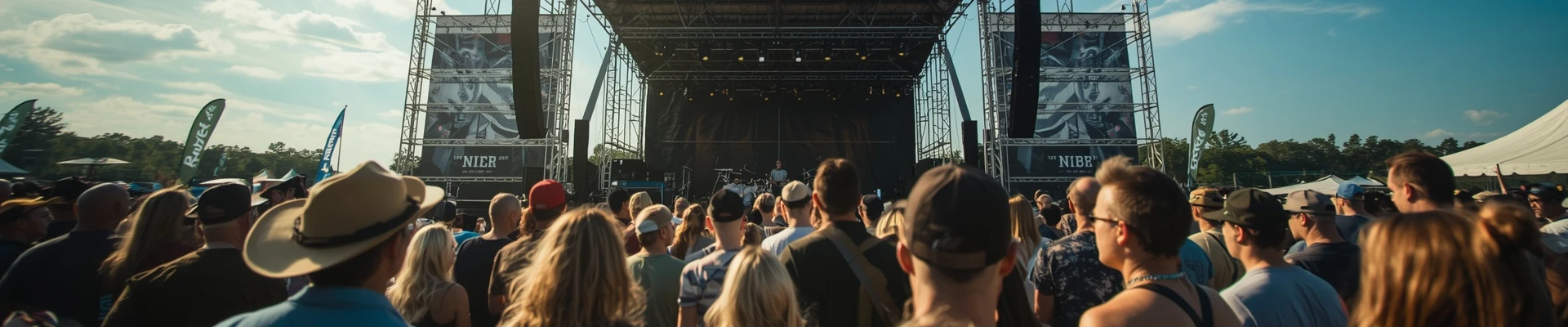
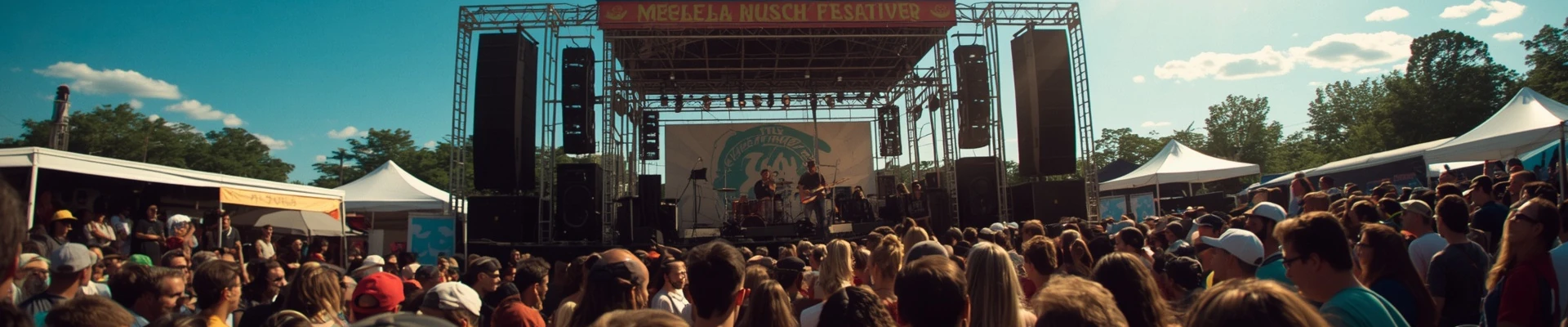
Pembroke Pines' festival calendar is community-driven and culturally plural. The City of Pembroke Pines Concert Series programs free outdoor concerts at community parks, drawing tens of thousands of residents over its summer and fall dates, with Latin, Caribbean, and popular American music consistently represented. The Haitian Heritage Month celebrations (May) bring kompa bands, Haitian folkloric dance performances, and cultural programming that reflect the city's large Haitian community. Colombian Independence Day (July 20) events organized through the Colombian consulate and cultural associations program vallenato, cumbia, and Latin pop acts. The Cuban community's Bay of Pigs anniversary (April) is observed with cultural events including traditional Cuban music performance. Caribbean Heritage Month (June) brings Caribbean music performance — reggae, soca, dancehall, kompa — to city parks and cultural centers.
The annual Broward County Fair (held in nearby Davie, accessible to Pembroke Pines residents) programs live music across country, Latin, and popular genres. Sunfest in West Palm Beach and the Ultra Music Festival in Miami draw Pembroke Pines residents to the broader South Florida festival circuit, which is one of the most active in the country.
What ties it all together
What Pembroke Pines offers is a model of how immigrant communities sustain rich music cultures outside of traditional urban centers. The city has no music district, no legendary studio complex, no industry row — but it has living rooms where Venezuelan musicians play joropo for their parents, Haitian community centers where three generations gather for kompa nights, Colombian quinceañera halls where vallenato bands fly in from Medellín, and South Florida sun blasting from car stereos loaded with reggaeton, Miami Bass, and Afrobeats. The music of Pembroke Pines is the music of a diaspora city — plural, mobile, rooted in memory and in the particular joy of maintaining a cultural identity in a new place. In a South Florida landscape dominated by Miami's gravitational pull, Pembroke Pines is the city where that diaspora energy is lived day to day, in the largest and most diverse suburb in Broward County.