


Pompano Beach sits on the Atlantic coast of southeastern Florida, in Broward County, roughly 8 kilometres north of Fort Lauderdale and 24 kilometres south of Boca Raton. With around 108,000 residents, it is the second-largest city in Broward County and part of the sprawling Miami metropolitan area — one of the five largest metropolitan areas in the United States, with more than 6.2 million people. The city occupies about 56 square kilometres of barrier island, Intracoastal Waterway, and mainland terrain, sitting just 2 metres above sea level. The Atlantic Ocean forms its eastern edge; the Intracoastal Waterway divides the beach strip from the mainland; and the broader Everglades wetland system is a short drive west. Pompano Beach is widely known as one of the best sport fishing and scuba diving destinations on the US East Coast — the Pompano fish is named for the area — and a network of artificial reefs (including the sinking of decommissioned ships off the coast) has made it a magnet for divers from across the Western Hemisphere.
Economically, Pompano Beach is part of the South Florida services, tourism, and logistics corridor. The Hillsboro Inlet separates Pompano Beach from Lighthouse Point to the north; the Pompano Beach Airpark (a general aviation facility) sits inland; and the city is woven into the continuous urban fabric of the Fort Lauderdale–Boca Raton axis. Broward County's logistics hub and the nearby Port Everglades generate freight and warehousing employment. Tourism, healthcare, and retail fill out the economic base. The city's demographic profile is strikingly diverse: Pompano Beach is roughly 40% Hispanic, 27% Black, and 27% white, with the Haitian-American community constituting the largest and most culturally influential immigrant group — one of the largest concentrations of Haitians and Haitian-Americans in the entire United States.
A brief history
The name Pompano Beach derives from the pompano fish — a prized flat, silver-sided species that runs through these coastal waters — and the area attracted commercial and sport fishermen from the post-Civil War era onward. The Florida East Coast Railway arrived in the 1890s, enabling agricultural and tourist development. The city incorporated in 1908 and grew steadily through the Florida land boom of the 1920s and the post-World War II Sun Belt migration. Through the 1950s and 1960s, Pompano Beach developed as a mid-range Atlantic resort town, building hotels, the Pompano Beach Club, and the waterfront infrastructure that still defines its eastern edge. The Hillsboro Lighthouse (1907), one of the most powerful lighthouses in the Western Hemisphere, remains an iconic landmark. A major demographic shift began in the 1970s and accelerated through the 1980s and 1990s as Haitian immigrants — fleeing the Duvalier dictatorship, political violence, and economic hardship — settled in large numbers in Pompano Beach and the surrounding Broward County area. By the 2000s, Pompano Beach had become one of the most important Haitian diaspora communities in North America, with Creole language, Haitian culture, and Haitian entrepreneurship woven into the city's everyday life. A parallel wave of Colombian, Puerto Rican, Mexican, and Central American immigration reshaped the city's Hispanic demographics. The city has invested in its downtown through the CRA (Community Redevelopment Agency) Pompano Beach district, rebuilding commercial corridors and the Pompano Beach Amphitheater as a public entertainment centrepiece.
Music identity
Pompano Beach's most internationally consequential musical contribution is its role as a Haitian kompa (also spelled kompas or compas) stronghold. Kompa — the Haitian dance music genre built on electric guitar, synth bass, horn sections, and a distinctive shuffle rhythm — is the dominant popular music of Haiti and its diaspora worldwide, and Pompano Beach's Haitian-American community is one of the largest and most culturally productive Haitian populations outside of Haiti itself. South Florida, centred on Little Haiti in Miami but with Pompano Beach and Fort Lauderdale equally important, is the undisputed capital of Haitian-American music in the United States. Wyclef Jean (a Haitian-American born in Croix-des-Bouquets, raised in New Jersey) and the Fugees emerged from the broader Haitian diaspora and became globally famous in the mid-1990s; while Wyclef's base was New Jersey, his South Florida Haitian community connections run deep. Sweet Micky (Michel Martelly, the Haitian musician who became Haiti's president) built much of his performing career through South Florida Haitian diaspora concerts and clubs. Pompano Beach-area Haitian clubs and promoters have for decades booked the major Haitian kompa bands — Bossa Combo, Tabou Combo, Djakout Mizik, Nu Look, Harmonik, and T-Vice among them — for large-scale community concerts that draw thousands of Haitian-Americans from across South Florida.
Alongside kompa, the city's reggae and dancehall scene is substantial, fed by a sizable Jamaican-American and Caribbean-American community in Broward County. Reggae nights are a staple at Pompano Beach-area clubs and the broader Fort Lauderdale scene; South Florida is one of the strongest reggae markets in the continental United States, with regular touring from Jamaican and Caribbean artists. The city's Latin music ecosystem reflects its Colombian, Puerto Rican, Mexican, and pan-Latin demographics — cumbia, vallenato, reggaeton, bachata, salsa, and merengue all have active scenes through clubs and cultural events. The Colombian-American community in Broward County is among the largest in the United States and sustains a particularly robust vallenato and cumbia circuit.
Pompano Beach is also embedded in the broader South Florida hip-hop and R&B ecosystem. Broward County contributed significantly to the Miami bass tradition — the bouncing, 808-heavy sound that ran through the 1980s and 1990s and influenced everything from Southern rap to modern trap — and Pompano Beach-area artists have been part of that lineage. Rick Ross (William Leonard Roberts II) was born in Clarksdale, Mississippi but raised in Carol City (now Miami Gardens), making him a Miami rapper; however, his influence and the broader Miami-Broward hip-hop community are deeply intertwined with Pompano Beach. Lil Wayne has deep South Florida ties from his Young Money era. Local hip-hop, trap, and R&B acts circulate through the Fort Lauderdale–Pompano Beach club circuit continuously.
The beach music and entertainment dimension of Pompano Beach is anchored by its Pompano Beach Amphitheater — the city's primary outdoor concert venue, programming reggae, Latin, R&B, pop, and touring artists through its concert series. The beachfront runs bars, clubs, and restaurants with live music year-round, building a casual but active entertainment economy driven largely by tourism and the snowbird winter season (the large influx of northern US and Canadian retirees from roughly November through April).
Venues and neighborhoods
The Pompano Beach Amphitheater (also known as the Pompano Beach Cultural Arts Center Amphitheater) is the city's flagship public performance space, an outdoor venue programming the Jazz on the Oceanside free concert series, the Pompano Beach Seafood Festival entertainment stage, and touring acts across reggae, Latin, R&B, and pop. The Hillsboro Club, the Lighthouse Point Yacht Club, and the Pompano Beach Club host private and semi-private events. The Pompano Beach Airpark area anchors some industrial-area warehouse event spaces. Bars and clubs along Atlantic Boulevard (A1A) form the primary beachfront entertainment strip — a mix of casual beach bars, tiki-style venues, and clubs running live music and DJ nights.
Collier City — the historically Black and Haitian-American neighborhood in northwest Pompano Beach — is the cultural heart of the city's Haitian community, with Haitian restaurants, churches, businesses, and the informal social infrastructure that sustains kompa music, Haitian gospel, and Caribbean cultural life. The Pompano Beach Downtown corridor along US-1 / Dixie Highway and Atlantic Boulevard is the commercial and entertainment centre — undergoing redevelopment through the CRA. McNab Park and Crystal Lake neighborhoods anchor suburban residential areas to the west. The beachfront strip along A1A runs from the Hillsboro Inlet south to the city's border with Lauderdale-by-the-Sea.
Festivals and signature events
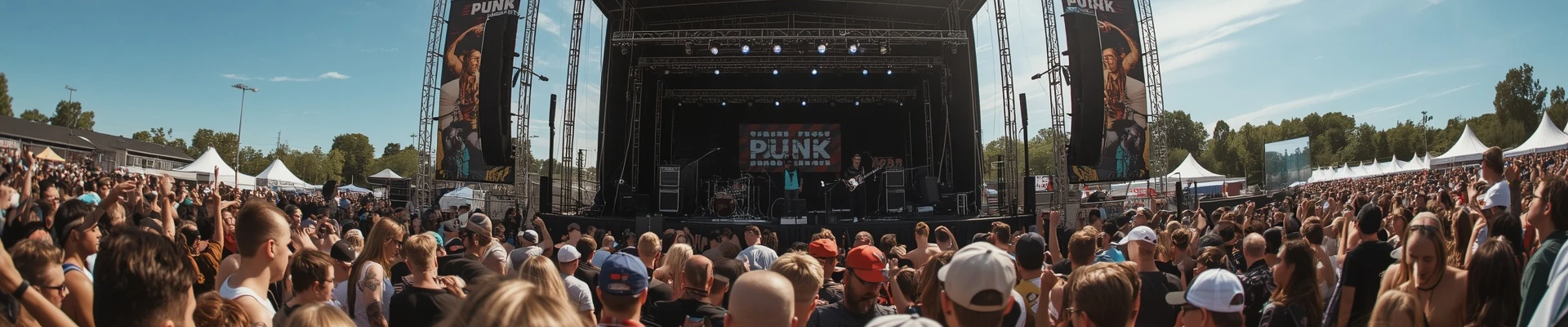
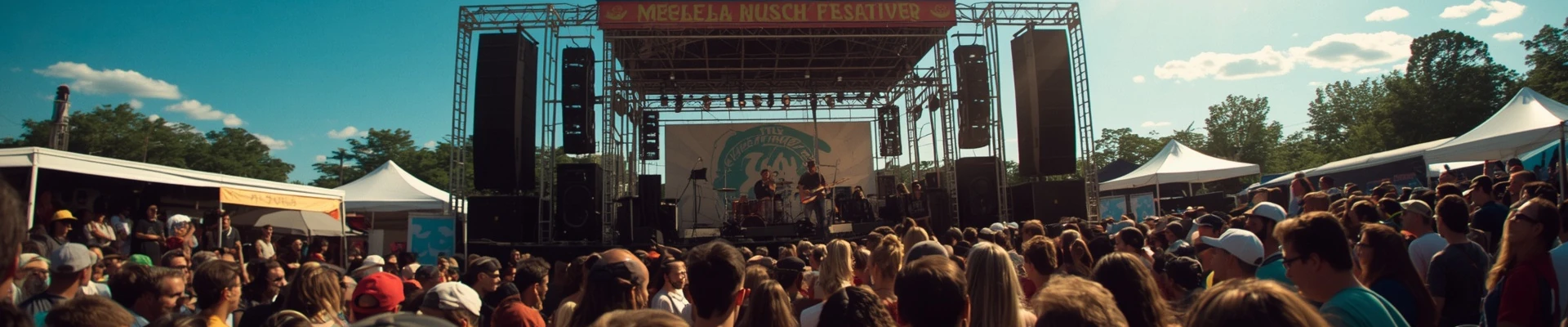
The Pompano Beach Seafood Festival is the city's signature annual event — a three-day waterfront festival held each spring at the Pompano Beach Fishing Village that draws 100,000+ visitors with seafood vendors, craft beer, arts, and live music across reggae, blues, R&B, and tropical genres. It is one of the most-attended outdoor festivals in Broward County. The Jazz on the Oceanside free concert series at the Amphitheater runs through the warmer months. Caribbean cultural festivals — Haitian Heritage Month celebrations in May, Haitian Flag Day events (May 18), Jamaican Independence Day events, and pan-Caribbean block parties — are fixtures of the Collier City and broader Pompano Beach community calendar. The ArtCity Pompano arts and culture initiative programs visual arts and community events downtown. The Pompano Beach Holiday Boat Parade on the Intracoastal Waterway is a local institution. Reggae on the Sand events at the beach, Latin Heritage Month programming, and Black History Month celebrations at the Community Services complex round out the civic calendar.
The broader South Florida festival landscape — SunFest in West Palm Beach, Reggae Rise Up Florida in St. Petersburg, Ultra Music Festival in Miami, III Points in Miami, Calle Ocho Festival in Miami's Little Havana — provides major festival infrastructure that Pompano Beach residents access easily within a short drive.
What ties it all together
Pompano Beach is a South Florida coastal city where the Haitian diaspora, Caribbean immigration, and Sun Belt tourism economics converge to create a distinctive and underappreciated music culture. The city does not produce global pop stars at the rate of Miami or Atlanta, but its Haitian-American kompa scene is a world unto itself — drawing tens of thousands of concert-goers to South Florida Haitian music events, sustaining clubs and promoters who book Haiti's biggest touring acts, and maintaining a living connection to one of the Caribbean's most distinctive popular music traditions. The reggae, dancehall, cumbia, vallenato, reggaeton, and hip-hop scenes that coexist alongside kompa reflect a city where Caribbean and Latin immigrants have rebuilt their musical worlds in the Florida sun. The Pompano Beach Seafood Festival is the city's great public gathering — a moment when the fishing heritage, the beachfront geography, and the community's plural cultures all share the same stage. The Amphitheater programs the broader South Florida entertainment economy. And the snowbird economy and year-round tourism keep the live music circuit financially viable. Pompano Beach is a city that sounds, above all, like the Haitian-American Atlantic — a place where kompa rhythms echo through Collier City churches and clubs, where the ocean breeze carries reggae from the beachfront bars, and where a community built from immigration has made something distinctive, resilient, and genuinely its own.