
St. Petersburg sits at the tip of the Pinellas Peninsula, cradled between Tampa Bay to the east and the Gulf of Mexico to the west, soaking up more annual sunshine than almost any other American city. With a population pushing 260,000 and a metro area of more than three million, it is no longer Tampa's quieter neighbor — it is a destination in its own right, anchored by the Salvador Dalí Museum, a mural-saturated arts corridor in the EDGE District, and a live-music ecosystem that punches well above its weight class. The city's geography — connected to Tampa by the Howard Frankland and Gandy bridges, and to Sarasota by the soaring Sunshine Skyway — gives it cultural reach across the entire Tampa Bay region while maintaining its own distinct identity.
A City Defined by the Water and the Sun
The Pinellas Peninsula's isolation shaped St. Petersburg's character as much as any historical event. Before the bridges, the city was reachable primarily by ferry and rail, which gave it an insular, self-sufficient creative community. The waterfront — Vinoy Park, North Shore Beach, Demens Landing — has long been a gathering place, and today outdoor concerts at Vinoy Park draw tens of thousands to the palm-lined bayshore. The Mediterranean Revival architecture of the 1920s boom era still anchors downtown, lending the city a visual grandeur that its smaller population doesn't quite suggest. Neighborhoods like Old Northeast, Kenwood, and Historic Roser Park carry that architectural legacy while housing the studios, rehearsal spaces, and small venues that sustain the local creative economy.
The Manhattan Casino and the Roots of Black Music in St. Pete
No honest account of St. Petersburg's music history begins anywhere other than the Manhattan Casino at 642 22nd Avenue South. During the era of segregation, the Manhattan Casino was the beating heart of Black cultural life in Pinellas County. From the 1930s through the 1960s it hosted Ray Charles, James Brown, Count Basie, B.B. King, Cab Calloway, and virtually every major African American performer of the era who toured the South. The venue sat in the Midtown neighborhood — historically the center of St. Petersburg's Black community — and its ballroom floor held generations of dancers, musicians, and listeners who built the city's soul, R&B, and jazz foundations.
The Coliseum Ballroom on 4th Avenue North played a parallel role for the city's white audiences during the same decades, hosting big-band orchestras in the 1930s and 1940s as the swing era swept through Florida. Together, these two venues established a live-music tradition in St. Pete that has never entirely gone away, even as the formats and audiences evolved dramatically over the following decades.
Jannus Live: The Outdoor Room Where History Is Made
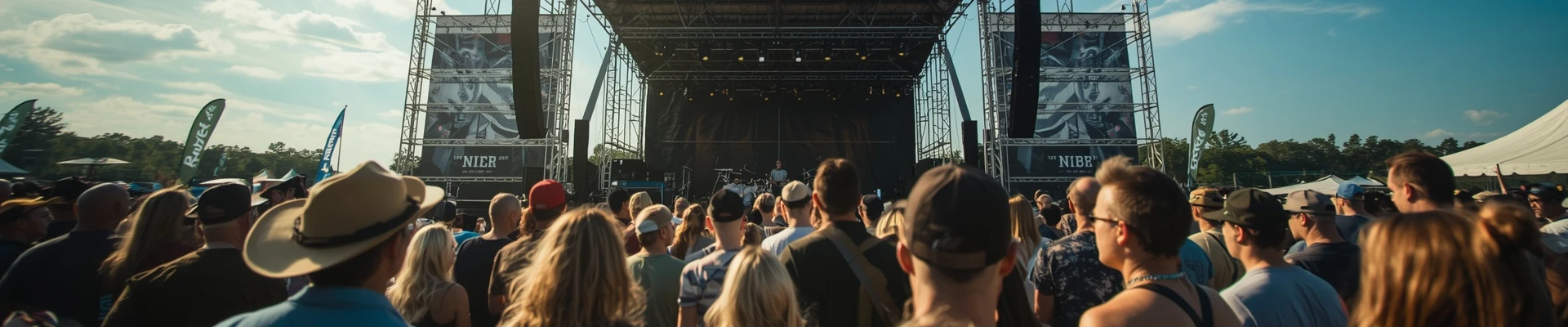
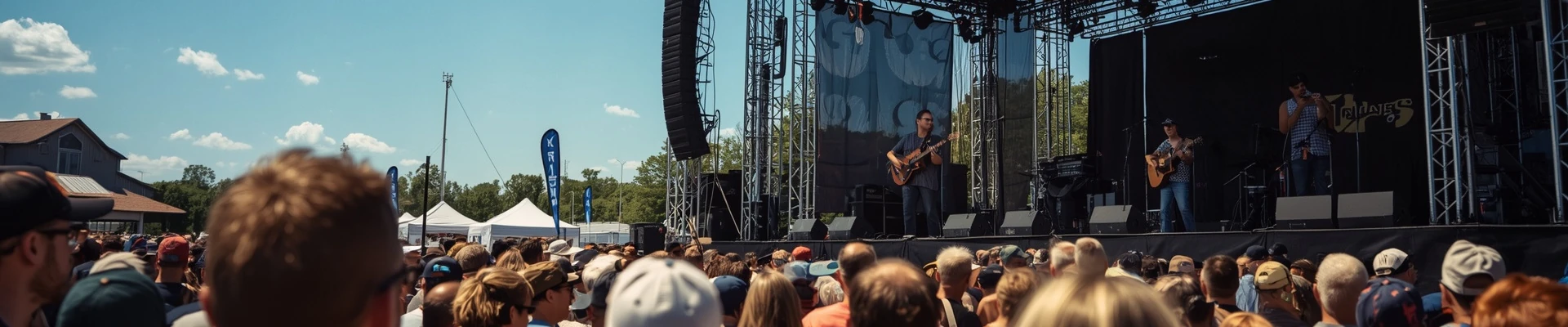
The most consequential venue in St. Petersburg's contemporary music story is Jannus Live, an open-air courtyard in the heart of downtown capable of holding around 2,000 people under the open Florida sky. The venue is the spiritual successor to the original Jannus Landing, which hosted shows for decades before the current iteration took shape. What makes Jannus remarkable is the intimacy — you are close to the stage whether you are in the front row or near the back bar — combined with a booking history that reads like a decade-by-decade survey of important alternative and indie rock. The Clash played the old Jannus in 1982. Foo Fighters, Arcade Fire, The National, Vampire Weekend, LCD Soundsystem, and hundreds of other essential acts have played the current venue in the decades since. On the right summer night, when the breeze off the bay cuts the Florida heat and a band the crowd has been waiting months to see walks onstage, there is no better room in the Southeast.
The State Theatre and the Club Ecosystem
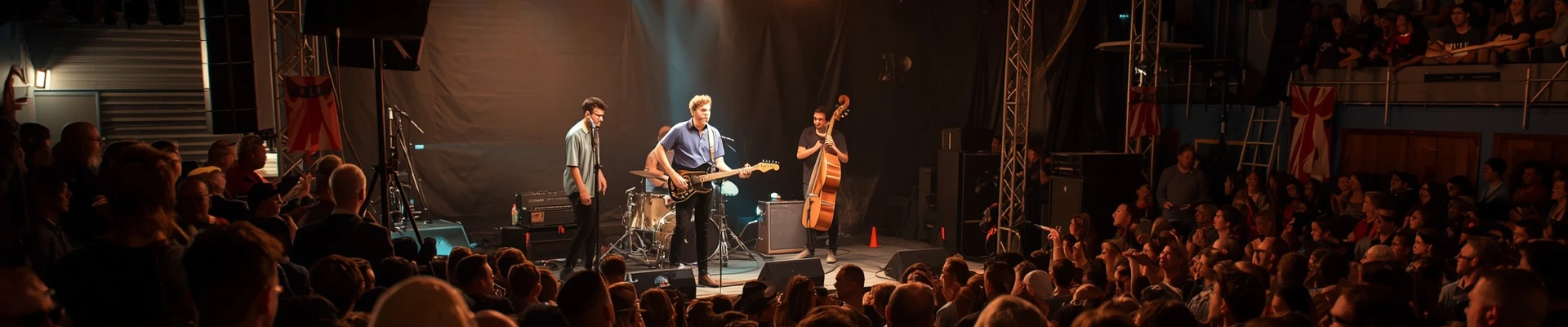
The State Theatre on Central Avenue, a 1,200-capacity converted theater, has been the city's primary mid-size indoor venue since the 1980s. It was central to the Tampa Bay punk and alternative scenes of the 1990s, hosting local and national acts as the post-grunge wave worked its way through Florida. Today it books across genres — metal, electronic, hip-hop, indie — and remains the anchor of Central Avenue's nightlife corridor.
Downtown's EDGE District along Central Avenue between roughly 9th and 16th streets functions as the city's primary live-music bar strip, with venues like The Bends and The Floridian keeping smaller independent music alive on a given Tuesday night. The Palladium Theater on 5th Avenue North operates more in the jazz, classical, and world-music space — an elegant 1920s hall that hosts the St. Petersburg Jazz Festival programming and various chamber and folk performances. The Mahaffey Theater at the Duke Energy Center for the Arts handles the city's large-scale touring productions, seating more than 2,000 in a waterfront performing arts complex.
Craft-brewery culture and live music have become inseparable in St. Pete. Green Bench Brewing on Central Avenue and Cage Brewing in the EDGE District both maintain regular live-music programming, reflecting a national trend that has found particularly fertile ground in a city whose warm climate keeps outdoor stages running year-round.
Pouya, the Underground, and St. Pete Hip-Hop
The most internationally significant artist to emerge from St. Petersburg in recent years is rapper Pouya (Nicolás Reyes), born in the city and raised in the Tampa Bay area. Pouya occupies a specific and genuinely influential corner of underground hip-hop — a zone where fat Memphis-influenced 808 bass, slurred cadences drawn from cloud rap, and a confrontational punk attitude all collide. His collaboration with producer Fat Nick and his alignment with the Buffet Boys collective helped define a strain of SoundCloud-era rap that spread well beyond Florida. Albums like Underground Underdog (2016) and Five Five (2018) established him as a cult figure with real streaming numbers. Pouya's St. Pete roots are not incidental — the humid, late-night, strip-mall-and-beach-town atmosphere of the Tampa Bay suburbs runs through his music like a low-frequency hum.
St. Pete's hip-hop scene extends beyond Pouya into a broader ecosystem of producers, battle rappers, and independent artists clustered around the Midtown neighborhood and the broader South St. Pete corridor. The city's African American musical heritage — that Manhattan Casino lineage — feeds into the present through gospel, R&B, and new-generation hip-hop artists who absorb the history even when they don't explicitly reference it.
Jazz, Blues, and the Latimore Legacy
Benny Latimore — known professionally simply as Latimore — made St. Petersburg his base for much of his career. The Miami-born soul and blues singer, best known for the 1973 hit "Let Me Go to Work on You" and the slow-burning Southern soul standard "Stormy Monday," was a fixture of the city's African American music scene through the 1970s and beyond. His connection to St. Pete is a reminder that the city's place in the broader soul and R&B geography of the Southeast is older and more significant than its current indie-rock reputation might suggest.
Jazz continues to find space in St. Pete through the St. Petersburg Jazz Festival, held annually at venues including the Palladium, and through club nights at various downtown bars. The city's proximity to Tampa, where a more robust jazz infrastructure exists at venues like The Straz Center, gives Bay Area jazz musicians a bi-city circuit to work.
The Tampa Death Metal Adjacency
Thirty minutes across the bay, Tampa's Morrisound Recording studio produced foundational death metal records for Death, Obituary, Morbid Angel, Deicide, and Sepultura through the 1990s. While these bands were Tampa-based rather than St. Pete-based, the Bay Area functions as a single musician-labor market, and St. Pete contributed players, fans, and small-venue infrastructure to the death metal ecosystem. The local metal scene — operating through clubs like Crowbar in Tampa and smaller all-ages spaces across Pinellas County — draws freely on both sides of the bay.
Festivals and the Calendar
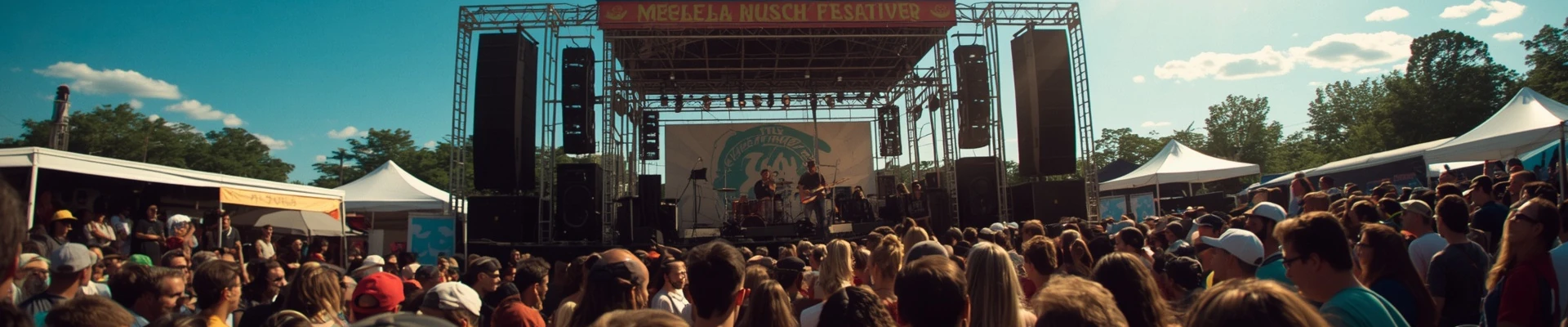
Localtopia, held annually in January at Vinoy Park, is the city's most distinctive festival concept: a celebration of local-only businesses, artists, and musicians, explicitly barring national chains or out-of-town acts. It is an unusual and principled commitment to hyperlocalism that has built real community loyalty. The St. Pete Beach Music Festival, various Vinoy Park concert series throughout the year, and the SHINE Mural Festival in October — which draws world-class street artists to the EDGE District walls and pairs murals with live music programming — all contribute to a calendar that keeps the city in motion almost every weekend.
Neighborhoods and the Creative Infrastructure
Kenwood, declared a historic neighborhood district in the 1990s, has become the city's unofficial creative residential district — bungalows housing painters, musicians, and small creative businesses. The Grand Central District between 22nd and 31st streets on Central Avenue carries the city's independent retail and café culture, with live-music venues tucked between vintage shops and coffee houses. Gulfport, technically a separate municipality at the southern tip of the peninsula, functions culturally as an extension of St. Pete's arts community and hosts its own small music scene built around the Gulfport Casino Ballroom and Tuesday Night Market.
What Ties It Together
What unifies St. Petersburg's music identity across eight decades is the city's talent for intimacy — for creating spaces where the distance between artist and audience collapses. The Manhattan Casino gave segregation-era audiences a room where the greatest performers of the age were truly present. Jannus Live gives contemporary audiences an open-air courtyard where the stars are visible above the stage. The indie bars of the EDGE District give local bands rooms where nobody is far from the sound. Pouya built a recording career from a bedroom-studio-and-SoundCloud aesthetic that is, at its core, the same intimacy operating in a digital register. The sunshine and the water give the city a particular mood — something between ease and urgency, between vacation and real life — that runs through its music from the big-band ballrooms to the underground rap channels. St. Petersburg is, above all, a city that knows how to be present with music.