
Tampa is the third-largest city in Florida and the cultural and economic anchor of the Tampa Bay region, with roughly 414,000 residents inside the city limits and more than 3.3 million across the surrounding metropolitan area — making it the second-largest metro in Florida and one of the fastest-growing in the United States. Sitting at sea level on the north shore of Hillsborough Bay, a sub-bay of Tampa Bay, on Florida's Gulf Coast roughly 320 km northwest of Miami and 130 km southwest of Orlando, Tampa is shaped by water — the bay, the Hillsborough River that runs through downtown, and the Gulf of Mexico just beyond. Together with St. Petersburg across the bay and Clearwater to the west, Tampa anchors a metropolitan area defined by beaches, port commerce, retirees, and a remarkable Latin Caribbean cultural inheritance. The city is home to MacDill Air Force Base (headquarters of U.S. Central Command and U.S. Special Operations Command), the Port of Tampa Bay (the largest port in Florida by tonnage), the University of South Florida, Busch Gardens, and the Tampa Bay Buccaneers, Lightning, and Rays. Tampa's musical identity is shaped by three deep traditions: the Afro-Cuban and Latin music that has run through Ybor City since the 1880s, the explosive 1980s emergence of Tampa as the world capital of death metal, and a steady Southern rock, blues, hip-hop, and country undercurrent that ties Tampa to the broader Gulf Coast sound.
A brief history
The Tampa Bay shoreline was inhabited by the Tocobaga and Calusa peoples for thousands of years before Spanish contact in the early 16th century — Pánfilo de Narváez landed near Tampa Bay in 1528 and Hernando de Soto in 1539. The Spanish established no permanent settlement, and the area remained largely unsettled by Europeans until the U.S. Army built Fort Brooke at the mouth of the Hillsborough River in 1824. The town that grew up around the fort was incorporated as Tampa in 1855. The city remained a remote frontier outpost until two transformative arrivals in the 1880s: Henry B. Plant's South Florida Railroad reached Tampa in 1884, and Vicente Martinez-Ybor, a Spanish-Cuban cigar manufacturer fleeing labor strife in Key West, founded the cigar town of Ybor City northeast of downtown in 1885. Tens of thousands of Cuban, Spanish, Italian, and Afro-Cuban workers poured into Ybor City to roll cigars, and within a generation Tampa was the "Cigar Capital of the World," producing more than 500 million cigars a year. Ybor City became one of the most culturally distinctive immigrant enclaves in the American South — a place where Spanish was the dominant language, where mutual aid societies (Centro Español, Centro Asturiano, Círculo Cubano, L'Unione Italiana) anchored social life, and where Afro-Cuban music traditions took root on American soil. José Martí visited repeatedly to raise funds for Cuban independence. The Spanish-American War of 1898 staged out of Tampa, with Theodore Roosevelt's Rough Riders camping at the Tampa Bay Hotel. The cigar industry declined through the Depression and the post-WWII era, but the city's Latin character endured. Postwar Tampa grew explosively through suburbanization, MacDill Air Force Base, the Port of Tampa, the tourism boom, and — through the 1980s and into the present — a steady migration of retirees, Northeasterners, and Latin American immigrants that has reshaped the metropolitan area into one of the most diverse in the South.
Music identity
Tampa's oldest musical tradition is the Afro-Cuban and Latin music of Ybor City. From the 1880s through the 1950s, Ybor City was one of the most important nodes of Cuban music in the United States outside of Havana and New York. The mutual aid societies hosted live music constantly — danzón, son, bolero, rumba, guaracha, and eventually mambo, cha-cha-chá, and salsa — and Ybor City's clubs and dance halls were a key stop on the touring circuit for Cuban and Puerto Rican artists. Afro-Cuban drumming and the broader rumba tradition put down roots in Ybor that have survived to the present. The L'Unione Italiana social club hosted Italian opera and Sicilian folk music. Centro Asturiano hosted Spanish zarzuela and flamenco. After the 1959 Cuban Revolution a fresh wave of Cuban immigrants arrived, refreshing the Latin music tradition. Through the late 20th century, salsa, merengue, and eventually bachata and reggaeton kept Tampa connected to the Caribbean — and the recent influx of Puerto Rican residents (Tampa is now one of the largest Puerto Rican communities in the U.S. mainland, behind only New York and Orlando) has further deepened the Latin music infrastructure. A steady community of Latin bands across West Tampa, East Tampa, and the Brandon and Riverview suburbs sustains the tradition, and the Cuban Club in Ybor City continues to host Latin concerts and dance nights in its magnificent 1917 ballroom.
Tampa's most internationally consequential musical contribution, however, is death metal. In the late 1980s and early 1990s, Tampa became the unrivaled world capital of the genre — a status the city retains to a remarkable degree more than thirty years later. The story begins with Morrisound Recording, a Temple Terrace studio founded by Tom Morris and Jim Morris in 1981, and especially with producer Scott Burns, who became the defining producer of the genre. Through Morrisound, Burns produced foundational albums for Death (Chuck Schuldiner's Florida-based band, the genre's namesake and pioneer), Obituary (the Brandon-based brothers John and Donald Tardy), Deicide (the Tampa band led by Glen Benton), Cannibal Corpse (who relocated to Tampa from Buffalo in 1994 to be near Morrisound), Atheist, Six Feet Under, Malevolent Creation, Massacre, Brutality, Monstrosity, and dozens of other bands that collectively created the genre as the world knows it. Roadrunner Records's death metal roster ran through Morrisound. Earache Records's American output ran through Morrisound. The "Tampa sound" — guttural vocals, blast beats, downtuned guitars, complex song structures — became the global template. Death's Scream Bloody Gore (1987), Leprosy (1988), and Human (1991), Obituary's Slowly We Rot (1989) and Cause of Death (1990), Deicide's self-titled debut (1990), Cannibal Corpse's Tomb of the Mutilated (1992) and The Bleeding (1994), and Atheist's Piece of Time (1989) and Unquestionable Presence (1991) are foundational documents of metal history. The legacy continues — Cannibal Corpse remains one of the most commercially successful death metal bands in the world, Obituary continues to tour and record, and a current generation of Tampa-area bands sustains the scene through clubs like The Brass Mug.
Tampa's other rock contributions include Iron Butterfly's Tampa connections, Tom Petty (raised in Gainesville but a frequent Tampa performer who treated the Tampa Bay area as his second home), Molly Hatchet (the Jacksonville Southern rock band with deep Tampa Bay following), and a steady local rock scene through the 1970s and 1980s. The Bay Area indie and punk scene — Less Than Jake (Gainesville but Tampa Bay regulars), Hot Water Music (Gainesville), Against Me! (Gainesville, Laura Jane Grace's Tampa Bay residency), and a deep network of Tampa Bay DIY rock bands — runs through the Crowbar, The Orpheum, and the broader Ybor City circuit. St. Petersburg across the bay hosts a complementary indie scene anchored by Jannus Live, the Floridian Social Club, and the State Theatre. Hip-hop in Tampa runs through Tom G, Plies (raised in Fort Myers but a Tampa Bay regional star), Rick Ross's Tampa connections, and a current generation of trap and Florida rap artists out of the city's east-side and west-side scenes. R&B and gospel run through the historic Black churches of East Tampa and the Sulphur Springs neighborhood. The Florida Orchestra (based in Tampa Bay, performing in both Tampa and St. Petersburg) anchors the classical scene, and Opera Tampa at the Straz Center anchors opera.
Venues and neighborhoods
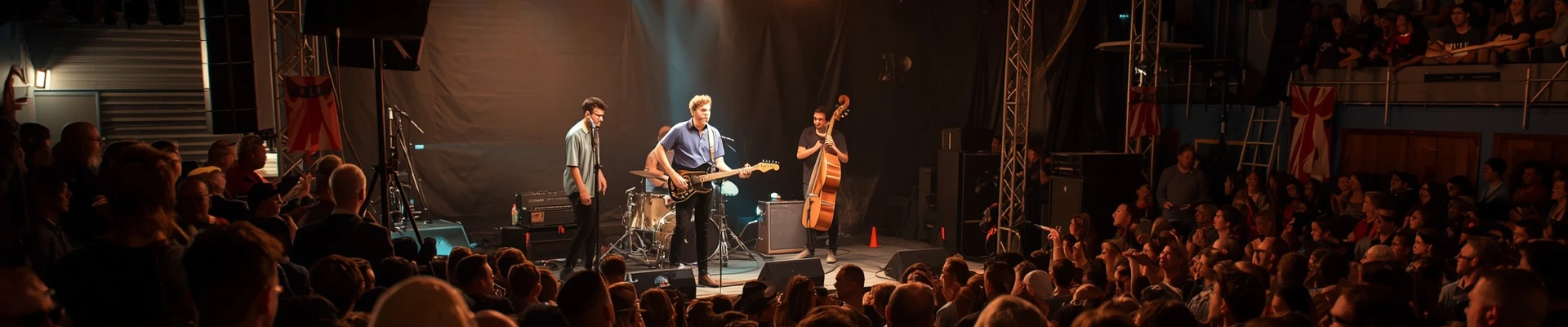
Tampa's venue ecosystem is anchored at the top by Amalie Arena (home of the Lightning, the city's largest indoor concerts), Raymond James Stadium (home of the Buccaneers, stadium concerts), MIDFLORIDA Credit Union Amphitheatre (the 20,000-capacity outdoor amphitheater at the Florida State Fairgrounds), the Yuengling Center at USF, the Tampa Theatre (the magnificent 1926 atmospheric movie palace in downtown, one of the most beautiful concert venues in the South), the Straz Center for the Performing Arts (the multi-hall arts complex on the Hillsborough River, home of Opera Tampa and the Florida Orchestra's Tampa performances), and the Mahaffey Theater across the bay in St. Petersburg. The midsize tier includes Jannus Live (the legendary outdoor courtyard venue in downtown St. Petersburg, one of the most beloved mid-sized venues in Florida), the State Theatre in St. Petersburg, the Floridian Social Club, the Cuban Club (the magnificent 1917 social hall in Ybor City, host to concerts of every kind), and the Ritz Ybor. Beneath them is a deep club layer concentrated along 7th Avenue (La Séptima) in Ybor City — The Orpheum, Crowbar, The Bricks, The Castle (the legendary goth and industrial club), and a network of bars and venues that has anchored Tampa nightlife for more than a century. The Brass Mug in North Tampa is the metal scene's home base. Skipper's Smokehouse in northeast Tampa is the long-running blues, reggae, and roots venue. Ella's Americana Folk Art Café in Seminole Heights and the New World Brewery circuit anchor smaller stages. Morrisound Recording in Temple Terrace remains active as one of the most historically significant studios in metal.
Different neighborhoods carry different musical identities. Ybor City is the historic Latin and nightlife district and the modern center of the rock, metal, and goth scenes. Seminole Heights anchors the modern indie, craft cocktail, and folk circuits. Downtown Tampa anchors the arts, theatre, and high-end venue circuits through the Straz Center and the Tampa Theatre. South Tampa anchors the country and bar-band scenes. West Tampa retains historic Cuban and Spanish character and anchors much of the Latin music scene. East Tampa and Sulphur Springs anchor the Black church gospel and R&B traditions. Brandon, Riverview, and the southeast suburbs anchor the death metal and modern rock scenes through Morrisound and the broader metal community. Across the bay, St. Petersburg's Edge District, Grand Central, and downtown anchor a complementary indie, jazz, and arts scene.
Festivals and signature events
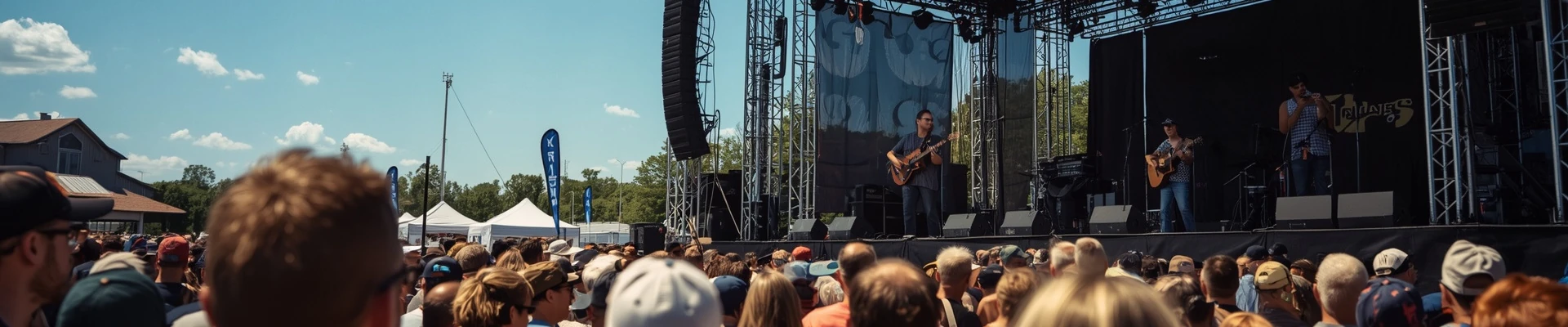
The festival calendar reflects the city's range. Gasparilla Pirate Festival in late January — the enormous pirate-themed parade and party that takes over downtown and Bayshore Boulevard, with associated music programming — is the city's signature event and one of the largest parades in the United States. Gasparilla Music Festival in late February at Curtis Hixon Waterfront Park draws indie rock, hip-hop, and Americana acts. Sunset Music Festival at Raymond James Stadium each Memorial Day weekend is the city's flagship electronic dance music festival. Tampa Bay Margarita Festival and Tampa Bay Beer Week feature substantial music programming. Guavaween (the Ybor City Halloween street party) is one of the largest Halloween events in Florida. Florida State Fair at the state fairgrounds includes a major country and rock concert series. Tampa Bay Black Heritage Festival runs through January and February. Hispanic Heritage Month events across Ybor and West Tampa and the Pan-American Festival anchor the Latin music calendar. Big Guava Music Festival (when active) drew major rock acts to MIDFLORIDA Amphitheatre. Across the bay, Tampa Bay Blues Festival in St. Petersburg each April, Localtopia, SHINE Mural Festival's music programming, and St. Petersburg Pride (one of the largest Pride events in the South) round out the regional calendar.
What ties it all together is Tampa's distinctive position as a Gulf Coast Latin city that became, against every expectation, the world capital of death metal. This is the city where Cuban cigar rollers built Ybor City and brought danzón and rumba ashore, where the Cuban Club still hosts concerts in its 1917 ballroom, where Morrisound Recording and Scott Burns produced the foundational albums of an entire global genre, where Death, Obituary, Deicide, and Cannibal Corpse remade extreme music, where the Tampa Theatre's atmospheric stars still light up its 1926 ceiling, where Gasparilla pirates take over Bayshore Boulevard every January, and where the bay, the heat, the cigars, and the brutal precision of the Tampa metal sound continue to define one of the strangest and richest musical cities in the American South.