
Boise is the capital and largest city of Idaho, home to roughly 236,000 residents inside city limits and more than 800,000 across the broader Treasure Valley metropolitan area — one of the fastest-growing regions in the United States through the 2010s and 2020s. Set at 2,730 feet above sea level at the foot of the Boise Front — the southernmost reach of the Rocky Mountains — the city sits where the high desert of the Snake River Plain gives way to timbered foothills, a geography that inspired both the city's name (French les bois — the trees) and its enduring identity as an outdoor-oriented, rugged-but-cultivated community. The Boise River runs through the city's core, flanked by a 25-mile greenbelt that is among the most-used urban trail systems in the Mountain West. Major employers include Micron Technology, Hewlett-Packard (whose campus was foundational to Boise's emergence as a technology hub), Simplot, PetIQ, Clearwater Paper, St. Luke's Health System, and St. Alphonsus Regional Medical Center, giving the city an economic base that straddles agriculture, food processing, healthcare, and technology. Boise State University — home of the famous blue turf — enrolls roughly 25,000 students and anchors an academic and creative culture in the city's near-downtown University District.
A brief history
The Boise Valley was home to the Northern Paiute and Shoshone-Bannock peoples for centuries before European-American arrival. The fur trade brought trappers through the Snake River corridor in the 1810s, and the Oregon Trail crossed the Boise River at what is now downtown Boise beginning in the early 1840s, making the site a critical supply and rest point for emigrants heading west. Fort Boise was established in 1863 by the U.S. Army to protect miners and settlers during the Idaho gold rush, and Boise was declared the capital of the Idaho Territory that same year. The city grew steadily through the late 19th century on timber, ranching, and mining supply; the arrival of the Oregon Short Line Railroad in 1887 accelerated commercial development. By the early 20th century Boise had established itself as a regional trade and government center, with a downtown of stone and brick commercial buildings reflecting the confidence of a territorial-turned-state capital. The second half of the 20th century brought dramatic growth, particularly after Hewlett-Packard opened its Boise campus in 1973, seeding a technology economy that attracted additional employers and a professional class of transplants that gradually reshaped the city's demographics and cultural sensibility.
Music identity
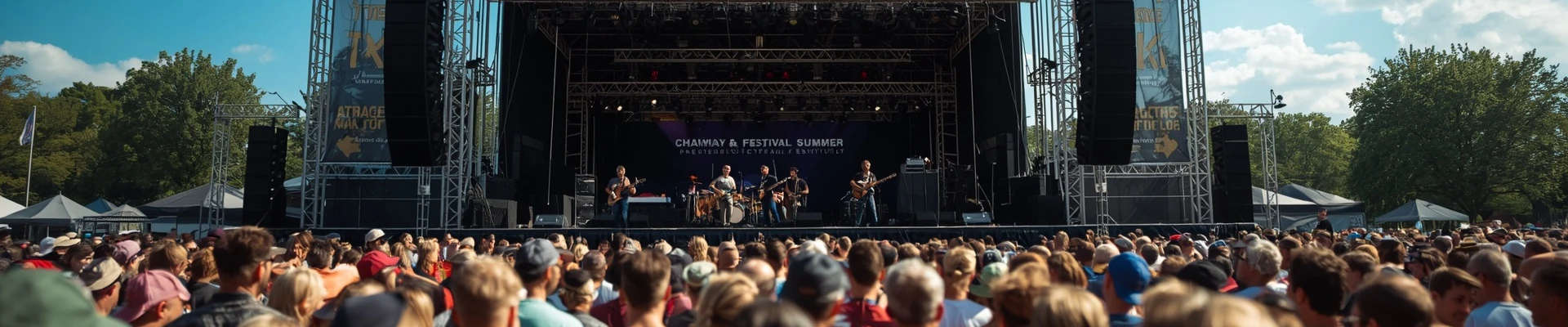
Boise's musical profile is dominated by Treefort Music Fest — the annual multi-venue, multi-day independent music festival that since its founding in 2012 has become one of the most distinctive and beloved indie-rock events in the American West. Founded by Lori Shandro and Eric Gilbert, Treefort operates across 30+ venues throughout Downtown Boise for five days each March, bringing 450+ bands — a mix of regional and national touring acts with a deliberate emphasis on discovery — to a city with the physical scale and genuine music-fan enthusiasm to host it with remarkable effectiveness. Treefort has become the organizing event of Boise's music year, the gravitational center around which the rest of the local scene orbits, and one of the primary reasons the city has a national reputation far above what its population would ordinarily generate. The festival's associated events — Hackfort (technology and creative fields), Filmfort, Alefort, and Kidfort — have made it a genuine multi-arts festival with Boise's specific outdoor, tech-adjacent culture embedded in its DNA.
The city's deepest musical heritage is in hardcore punk and metal. Boise produced one of the American hardcore scene's most important regional bands in Built to Spill — but the specific contribution most consequential to underground rock was Doug Martsch, who formed Built to Spill in Boise in 1992, took the project to Up Records (Seattle) and ultimately to Warner Bros., and produced a sequence of records — There's Nothing Wrong with Love (1994), Perfect from Now On (1997), Keep It Like a Secret (1999) — that are canonical texts of American indie rock. Martsch has remained rooted in Boise his entire career, and Built to Spill's continued presence in the city (they have recorded at Treefort Records and performed at Treefort regularly) gives the local scene a direct connection to the founding generation of Pacific Northwest indie rock. The band's specific approach — expansive, guitar-heavy, structurally ambitious songs that balanced noise-rock dynamics against melodic accessibility — deeply shaped the indie music coming out of Boise in the years that followed.
Caustic Resin — the drone-rock project of Brett Netson, who also played in Built to Spill — represents the harder, more abrasive edge of Boise's '90s underground and has maintained a cult following for three decades. The Dirty Little Secrets and a dense network of punk and hardcore bands through the late '80s and '90s built the underground infrastructure — the DIY venues, the zine culture, the house-show network — that eventually nurtured Treefort. Hinder, the post-grunge rock band who scored multiple platinum albums and radio hits in the mid-2000s, were from Boise and represent the city's capacity to produce commercially successful rock without the coastal-city infrastructure usually required.
In contemporary Boise, the most consequential scenes are indie rock, folk/Americana, metal, and a growing electronic music community. Boise Hum and related local publications have documented the emergence of a genuinely prolific recording community. The Shins (though rooted in Albuquerque and Seattle) recorded portions of their work with Boise-connected producers. The Treefort ecosystem has generated record labels, booking collectives, and recording studios operating in and around the city. Treefort Records operates as a label and community platform anchored to the festival. Outlaw Field at the Idaho Botanical Garden serves as Boise's premier outdoor summer concert venue, programming nationally touring acts in a setting of unusual natural beauty against the Boise Front foothills.
Venues and neighborhoods
The Knitting Factory Boise is the city's central mid-size rock club — a 1,500-capacity venue in Downtown Boise that programs touring and local acts across rock, hip-hop, country, and electronic music and serves as the practical anchor of the live-music week. Treefort Music Fest distributes across 30+ Downtown venues each March — Neurolux (a legendary dive bar and Boise institution since 1989), The Olympic, Pengilly's Saloon, Shrine Social Club, Reef, The Wildwood, Capitol City Public Market Stage, and dozens more fill out the festival map. The Egyptian Theatre — a 1927 movie palace now used as a performing arts venue — programs touring acts and local events in a Downtown landmark. Knitting Factory Concert House and Stueckle Sky Center at BSU serve larger-format events.
Downtown Boise — particularly the corridor anchored by Main Street, Eighth Street, and the Hyde Park neighborhood to the north — hosts the majority of live-music venues and music-adjacent businesses (record stores, rehearsal spaces, promoters). BoDo (the Boise Downtown shopping and entertainment district) has a cluster of bars with live music. The North End — a residential neighborhood of early-20th-century bungalows north of Downtown — is home to many of the city's working musicians and sustains a strong folk and acoustic coffee-house circuit. Eastside Boise has a growing arts and music scene tied to the city's younger demographic influx. Garden City — an independent municipality sandwiched inside Boise's urban core — has emerged as a significant arts and music district, with Boise Contemporary Theater, galleries, and studios concentrated along Chinden Boulevard and the river corridor.
The city's Basque community — one of the largest Basque populations outside the Basque Country in the world, centered on Basque Block on Grove Street — sustains a living tradition of Basque folk music, dance, and cultural performance. The Jaialdi International Basque Festival, held every five years in Boise, is one of the largest Basque cultural events anywhere in the world and draws performers from the Basque Country, South America, and Basque communities across the American West.
Festivals and signature events
Treefort Music Fest (March, five days, 30+ venues, 450+ bands) is by far the city's most consequential music event and one of the defining indie-rock festivals in the western United States. Outlaw Field Summer Concert Series at the Idaho Botanical Garden programs outdoor national touring acts from May through September against the backdrop of the Boise Front foothills. Alive After Five — a weekly outdoor concert series in Alive After Five Plaza from May through September — programs local and regional acts in a free format that has run since the 1980s and functions as a genuinely beloved community event. Hyde Park Street Fair incorporates live music from local acts across the North End neighborhood each summer. Boise Music Festival (held at Taco Bell Arena at BSU, or sometimes Optimist Youth Sports & Recreation Complex) programs local pop and rock acts in a family-oriented format. The Jaialdi Festival (every five years) brings Basque music and dance to a multi-day event at Expo Idaho. Spirit of Boise Balloon Classic programs live music at Ann Morrison Park during its late-August run. Taco Bell Arena (12,000 capacity) at BSU serves as the city's largest indoor concert venue for major national touring acts.
What ties it all together is the particular cultural confidence that Boise has developed — a city that knows it isn't Portland or Seattle and doesn't particularly want to be, that has built its music scene around genuine enthusiasm and a DIY ethos rather than industry infrastructure. Built to Spill gave the city a direct line to the canon of American indie rock; Treefort gave it an annual moment of national visibility that consistently surprises people who haven't been. The Basque Block keeps a folk-music tradition alive in the middle of the high desert. The outdoor venues — Outlaw Field against the Boise Front, Morrison Center on the Boise River, Alive After Five in the summer-lit downtown — give the music a physical setting that enhances the experience in ways purely indoor scenes can't replicate. Boise is a city that punches well above its population in music, driven not by industry machinery but by the specific devotion of its residents to the idea that a fast-growing high-desert capital can sustain a serious, original, and independent music culture.