
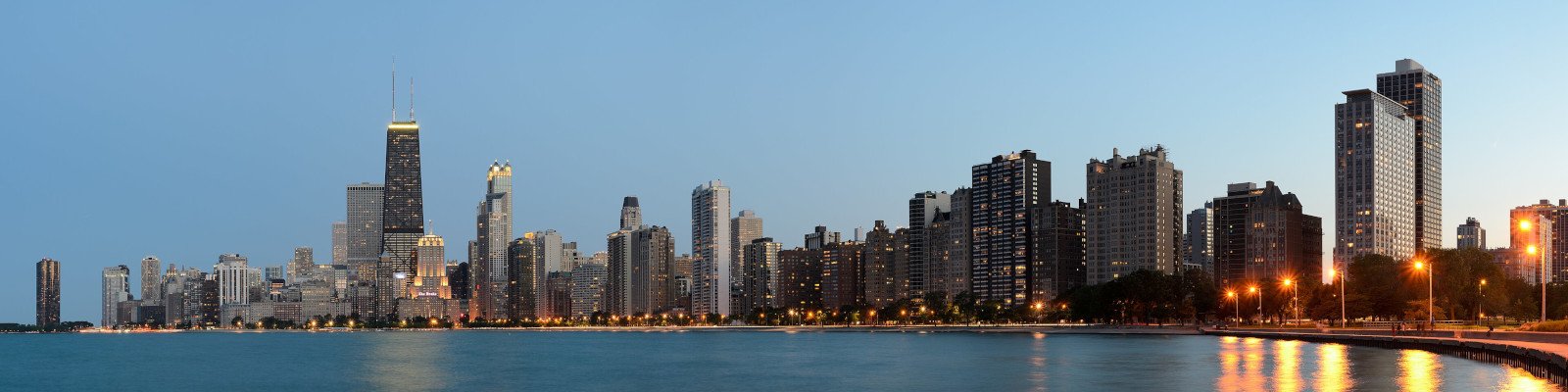
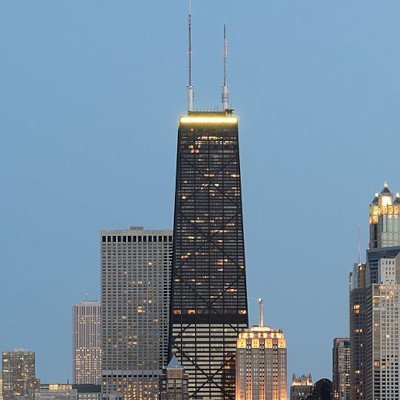
Chicago is the third-largest city in the United States and the largest in the Midwest, with roughly 2.7 million residents inside the city limits and nearly 9.5 million across the surrounding metropolitan area. Stretched along the southwestern shore of Lake Michigan and divided by the Chicago River into its North, South, and West Sides, it is a city of distinct neighborhoods — Bronzeville, Pilsen, Hyde Park, Humboldt Park, Wicker Park, Logan Square, Englewood, Bridgeport, Uptown, Albany Park, and dozens more — each with its own musical history. Chicago's role in American music is hard to overstate: nearly every genre rooted in Black migration from the South was either invented in the city or fundamentally remade there.
A brief history
The land at the mouth of the Chicago River was a Potawatomi, Miami, and Illinois Confederation crossroads for centuries before French traders established a small post in the 18th century. The U.S. Army built Fort Dearborn at the river mouth in 1803, and the town of Chicago was incorporated in 1833. The opening of the Illinois and Michigan Canal in 1848 and the arrival of the railroads turned the city into the continental hub of grain, lumber, livestock, and manufacturing within a generation. The Great Chicago Fire of 1871 destroyed most of the city center; rebuilding accelerated the rise of the steel-frame skyscraper and the city's industrial economy. Through the late 19th and early 20th centuries, Chicago became a magnet for European immigrants — Irish, German, Polish, Italian, Eastern European Jewish, Lithuanian, Czech — and, beginning around World War I, for Black Americans moving north from the Mississippi Delta and the Deep South in the Great Migration. That migration is the single most important fact in Chicago's musical history. Hundreds of thousands of Black Southerners brought blues, gospel, jazz, and country traditions north, plugged them into electrification and urban infrastructure, and remade them.
Music identity
In the 1920s, the South Side was one of the great centers of American jazz. Louis Armstrong moved up from New Orleans in 1922 to join King Oliver's Creole Jazz Band; Jelly Roll Morton, Earl Hines, Lil Hardin, Bix Beiderbecke, and Benny Goodman built the Chicago jazz idiom in clubs along State Street and the "Stroll" between 26th and 39th. The same neighborhoods produced one of the country's most important gospel traditions — Thomas A. Dorsey, often called the father of Black gospel music, founded the National Convention of Gospel Choirs and Choruses here, and Mahalia Jackson built her career out of South Side churches.
After World War II, Chicago became the world capital of electric blues. Muddy Waters, Howlin' Wolf, Willie Dixon, Little Walter, Buddy Guy, Otis Rush, Magic Sam, Junior Wells, Hound Dog Taylor, and Koko Taylor recorded for Chess Records at 2120 South Michigan Avenue and played clubs along Maxwell Street, 43rd Street, and the West Side. The Chess catalogue — which also included Chuck Berry and Bo Diddley — directly seeded British rock through the Rolling Stones, Led Zeppelin, and the Yardbirds, and laid much of the harmonic, rhythmic, and lyrical foundation of rock and roll. Chicago soul in the 1960s — Curtis Mayfield and the Impressions, Jerry Butler, Major Lance, the Chi-Lites, the Dells, the Staple Singers — added a sweeter, gospel-rooted counterpoint to Detroit's Motown sound.
In the early 1980s, Black gay DJs and producers at clubs like the Warehouse (where Frankie Knuckles played) and the Music Box (Ron Hardy) extended disco into something new. House music was born in Chicago, and within a decade had become a dominant global club idiom. Frankie Knuckles, Larry Heard ("Mr. Fingers"), Marshall Jefferson, Jesse Saunders, Steve "Silk" Hurley, Lil Louis, DJ Pierre, Ron Trent, Cajmere/Green Velvet, Derrick Carter, Mark Farina, and the Trax, DJ International, and Cajual catalogues built and exported the sound. The same scene later produced footwork and juke — DJ Rashad, DJ Spinn, RP Boo, Traxman — a hyperkinetic offshoot of ghetto house that turned into one of the most influential underground dance genres of the 21st century.
Chicago is also a major hip-hop city. Common, Twista, Crucial Conflict, and Lupe Fiasco shaped the 1990s and 2000s; Kanye West, raised on the South Side, became one of the defining producers and artists of the 21st century, redrawing the boundaries of hip-hop, pop, and gospel. Chief Keef's emergence from Englewood in the early 2010s helped birth the drill genre, which spread to London, Brooklyn, and beyond. Chance the Rapper, Saba, Noname, Mick Jenkins, Vic Mensa, Smino's Chicago ties, Joey Purp, and the broader Save Money and SaveMoney/Pivot circles built a parallel, often more spiritual and jazz-inflected hip-hop tradition. Indie rock has its own deep Chicago lineage — Wilco, Tortoise, the Sea and Cake, Liz Phair, Smashing Pumpkins, Veruca Salt, Naked Raygun, Big Black, Shellac, Touch and Go and Drag City and Thrill Jockey records — much of it centered on neighborhoods like Wicker Park, Logan Square, and the Pilsen warehouses. Punk, post-rock, avant-garde jazz through the AACM (Association for the Advancement of Creative Musicians, founded 1965), Mexican regional music in Pilsen and Little Village, Polish and Eastern European scenes on the Northwest Side, and Caribbean music in Rogers Park all run alongside.
Venues and neighborhoods
Chicago's venue ecosystem is as deep as any in North America. At the top sit the United Center, Soldier Field, Wrigley Field, the Allstate Arena, the Auditorium Theatre, Symphony Center (home of the Chicago Symphony Orchestra), the Lyric Opera House, and the Chicago Theatre. The midsize tier includes the Aragon Ballroom, the Riviera, House of Blues, the Vic, Park West, Concord Music Hall, Salt Shed, Radius, and the Byline Bank Aragon. Beneath them is one of the great American club layers — the Empty Bottle, Lincoln Hall, Schubas Tavern, Sleeping Village, Subterranean, Beat Kitchen, Hideout, Thalia Hall, Reggies, Cobra Lounge, Bottom Lounge, Sleeping Village, Martyrs', the Promontory in Hyde Park, and a long list of bars and basements. Blues and jazz are sustained by Buddy Guy's Legends, Kingston Mines, B.L.U.E.S. on Halsted, Rosa's Lounge, the Green Mill (the Al Capone–era jazz club still operating in Uptown), Constellation, the Jazz Showcase, and Andy's. House and dance music live at Smartbar (housed inside the Metro), Spybar, Primary, and a deep warehouse and after-hours circuit on the West and South Sides.
Different neighborhoods carry different musical identities. Bronzeville and the South Side remain central to Black American music — blues, gospel, jazz, soul, hip-hop, and house. Pilsen and Little Village are heart of Mexican and Mexican-American music in the Midwest. Wicker Park, Logan Square, and Humboldt Park anchor indie rock, punk, and DIY. Uptown retains its jazz history through the Green Mill and the Aragon. Hyde Park carries a strong soul and hip-hop tradition through the University of Chicago's neighborhoods and venues like the Promontory. Rogers Park, Albany Park, and West Ridge are dense with Caribbean, South Asian, and African scenes.
Festivals and signature events
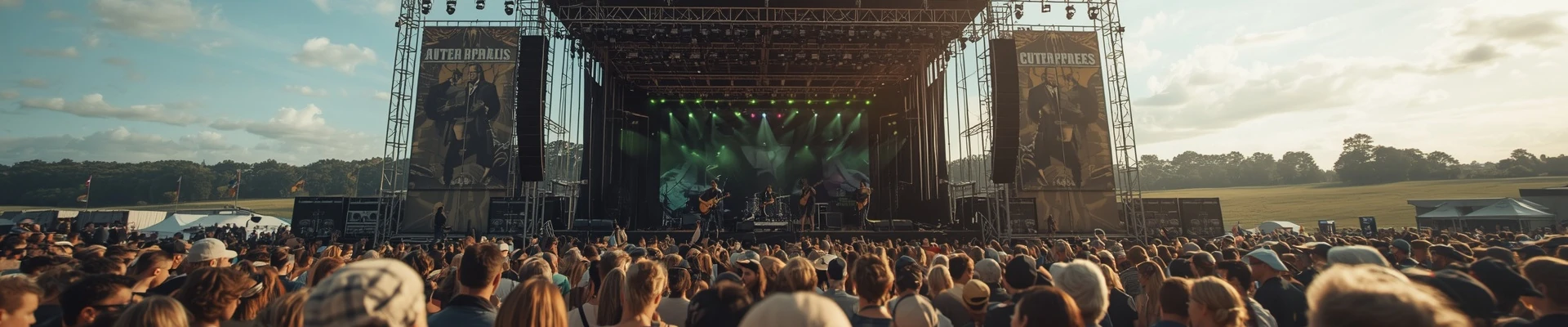
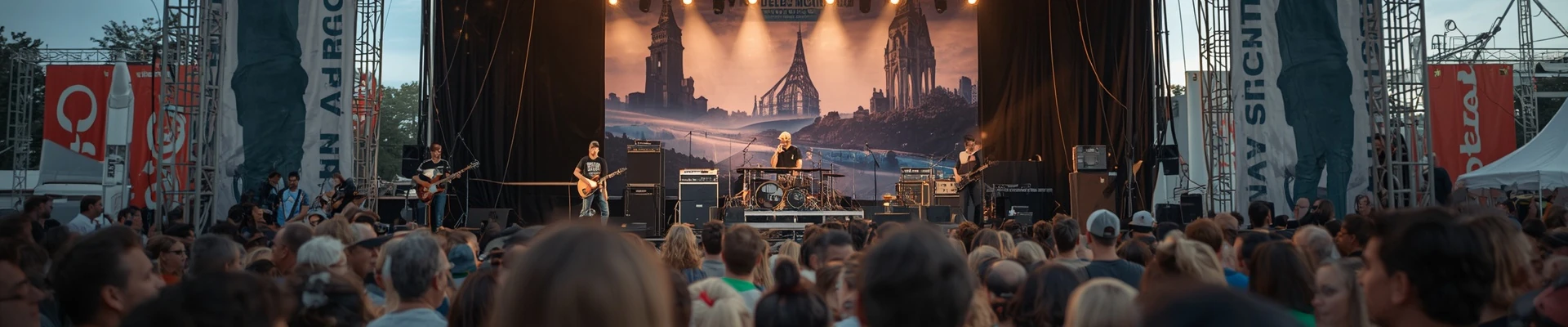
The festival calendar is enormous. Lollapalooza in Grant Park has been the city's mass-market music event since its move to Chicago in 2005, drawing hundreds of thousands across four days. Pitchfork Music Festival in Union Park, Riot Fest in Douglass Park, Ruido Fest for Latin alternative, Sueños for Latin urban, and Heatwave for electronic music keep the festival circuit running through the summer. The Chicago Blues Festival, Chicago Jazz Festival, Chicago Gospel Music Festival, Chicago World Music Festival, and Chicago House Music Festival at Millennium Park are free, city-run events that anchor the calendar in genres the city helped invent. The Taste of Chicago, Bud Billiken Parade and Picnic (the largest African-American parade in the United States), Puerto Rican People's Parade and Fiestas Puertorriqueñas in Humboldt Park, the Mexican Independence Day Parade through Pilsen and Little Village, Bronzeville Summer Nights, and SummerDance in Grant Park add free and community programming. Out of Space at FitzGerald's in Berwyn, North Coast Music Festival, ARC Music Festival dedicated to house, and a year-round circuit of warehouse parties keep the dance scene full.
What ties it all together is the city's combination of industrial scale, neighborhood density, and Black migratory history. Chicago is the place where Mississippi Delta blues was plugged into an amplifier, where disco was rebuilt from the ground up into house, and where gospel, soul, jazz, hip-hop, and footwork were each given a recognizably Chicago accent. It is one of the most consequential music cities in the world.