
Elgin is a city of roughly 112,000 people situated on the Fox River in Kane County, about 35 miles northwest of downtown Chicago. It is the county seat of Kane County in name and geography, though administrative functions are shared with neighboring Geneva. Elgin occupies a narrow river valley flanked by the glacially carved bluffs and prairie flatlands that define this stretch of northeastern Illinois, and the Fox River — which flows south through the city before joining the Illinois River system — has shaped Elgin's character since its founding: as a mill site, as a recreational corridor, and today as the axis of an ambitious downtown waterfront revival. The city's metropolitan context places it firmly in the outer Chicago suburbs, connected to the city by the Union Pacific Northwest Metra line, but Elgin has always maintained a civic identity distinct from the suburban towns that surround it — larger, older, more economically complex, and far more culturally diverse than its neighbors.
A Brief History
Elgin was founded in 1835 by James T. Gifford, who named it after the town of Elgin in Scotland. Settlement accelerated when the Fox River provided reliable waterpower for mills, and by the mid-19th century Elgin had established itself as a prosperous agricultural hub serving the dairy farms of Kane County. The Elgin condensed milk industry — centered on the Gail Borden condensed milk plant — gave the city regional economic stature before the arrival of the enterprise that would define it for a century: the Elgin National Watch Company, founded in 1864.
The watch company transformed Elgin. At its peak, the factory employed thousands of workers, produced millions of precision timepieces annually, and made Elgin's name synonymous with American watchmaking. Workers came from across Europe — Swedish, Norwegian, German, and English immigrants settled in neighborhoods shaped by the company's paternalistic community planning, and the Elgin Observatory atop a factory hill served as the official time-keeping station for the American railroad system, broadcasting the correct time by telegraph across the continent. The company's closure in 1968 left an enormous industrial void that took decades to address; the former factory complex was demolished, and Elgin spent the final decades of the 20th century navigating deindustrialization, population flux, and the demographic transformation that would redefine its character.
That transformation arrived through immigration. Beginning in the 1970s and accelerating through the 1980s and 1990s, Mexican and Central American families moved into Elgin in large numbers, drawn by manufacturing and service-sector employment. By the 2000s, Elgin had become one of the most heavily Latino cities in Illinois — today roughly 45 percent of the population identifies as Hispanic or Latino, and Spanish is the dominant language in large swaths of the city's west and south sides. That demographic shift has not been without tension, but it has profoundly reshaped Elgin's culture, commerce, and music.
Music Identity
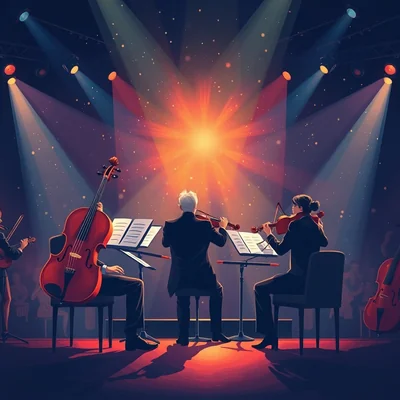
Elgin's deepest and most sustained musical institution is the Elgin Symphony Orchestra, founded in 1950. The ESO is one of the oldest suburban orchestras in the Chicago metropolitan area and one of the most active in the state, performing a full classical season at the Hemmens Cultural Center — the city-owned 1,200-seat performing arts facility on the Fox River — alongside educational programming and community concerts. The orchestra's longevity and ambition have established Elgin as a legitimate orchestral city rather than merely a stop on a touring circuit, and its programming has historically mixed standard repertoire with American composers and occasional crossover events that reflect the city's demographics.
Elgin's most internationally consequential figure in popular music is Pat Metheny, who — though born in Lee's Summit, Missouri — spent formative years in the Chicago area and built a career that touches the jazz world Elgin feeds into through its proximity to the metropolitan scene. More directly, the Fox Valley area produced Liz Phair, the defining indie rock singer-songwriter of the early 1990s, who grew up in Winnetka but whose experience of the broader Chicago suburban corridor — the prep school culture, the class anxiety, the escape routes toward Chicago's underground — maps directly onto the Fox Valley experience. Her 1993 debut Exile in Guyville on Matador Records remains one of the most influential albums in American independent rock, its suburban unease and raw guitar aesthetic speaking to a regional experience that includes Elgin at its margins.
The city's Latino music scene is the most vital and self-sustaining strand of Elgin's contemporary musical life. A city nearly half Hispanic does not simply absorb outside culture — it generates its own, and Elgin's Spanish-speaking community has produced a rich parallel world of norteño, banda, cumbia, salsa, and regional Mexican music that circulates largely outside the mainstream venue calendar. Local bands performing corridos, cumbia sonidera, and conjunto material work a circuit of quinceañera receptions, backyard parties, church festivals, and dedicated Latino clubs that constitute a shadow economy of live music. The Fox Valley area hosts several Mexican nightclubs and Latin dance venues that book touring acts from Mexico and local regional bands — this is where Elgin's musical pulse is most visceral, most constant, and least documented by English-language media.
Hip-hop has developed a presence in Elgin's African-American and Latino youth communities through the 2000s and into the streaming era, with local producers and MCs building followings on SoundCloud and YouTube before the shift to major platforms. The city lacks the infrastructure — established studios, well-capitalized labels, dedicated hip-hop venues — to anchor a nationally recognized scene, but it feeds the broader Chicago suburban hip-hop corridor that includes Joliet, Aurora, and Waukegan.
Rock and punk have moved through Elgin since the 1980s via the suburban bar circuit and the pipeline into Chicago's club scene. The proximity to Chicago's north and northwest suburbs meant that Elgin's aspiring rock musicians frequently commuted to the city to play the Empty Bottle, Metro, and Double Door rather than building a dedicated local circuit. Several Elgin-area musicians have appeared in Chicago indie and alternative bands without the city itself being named as the scene's origin point. The Elgin Area Arts Alliance has worked to develop dedicated support structures for local musicians across genres.
Gospel and Christian music run deep in Elgin's African-American church community, centered on the established Black churches on the city's east and south sides. Choir traditions, revival events, and occasional crossover artists have kept a gospel circuit active alongside the secular venue world.
Venues and Neighborhoods
The cornerstone of Elgin's formal performing arts infrastructure is the Hemmens Cultural Center — named after former mayor Raymond Hemmens — on the Fox River waterfront in the heart of downtown. The 1,200-seat theater serves as the home of the Elgin Symphony Orchestra, a venue for Broadway touring productions, and a rental hall for community events. Its riverfront setting and the adjacent Festival Park outdoor stage have made the downtown corridor the focal point of Elgin's cultural identity.
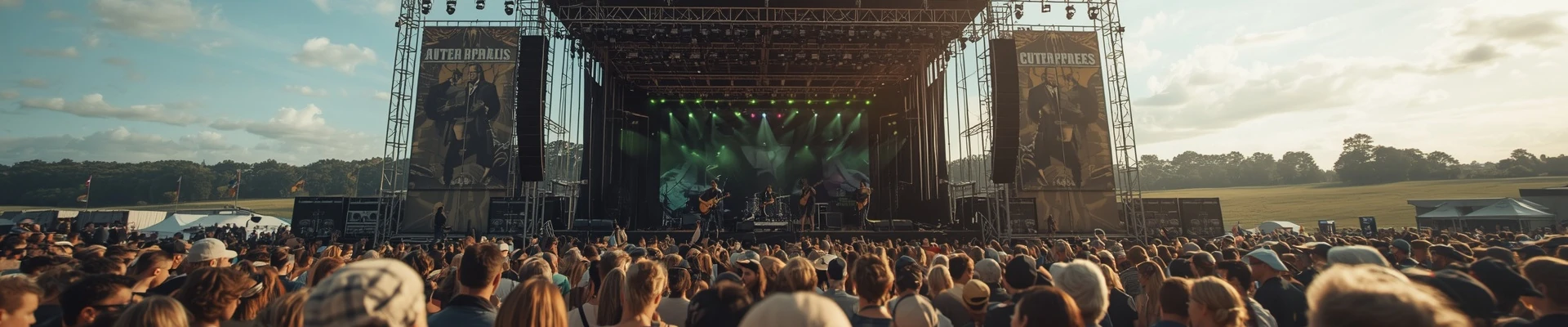
Festival Park — a grassy riverfront amphitheater space adjacent to the Hemmens — serves as the primary outdoor concert venue in the warmer months, hosting the Elgin Fringe Festival, summer concert series events, and community gatherings. The combination of indoor hall and outdoor park gives downtown Elgin a coherent arts district feel that distinguishes it from most suburban cities of comparable size.
For club-level and bar music, downtown Elgin along Chicago Street and the blocks radiating from the riverfront has seen a slow but genuine revival since the 2000s, with restaurants, craft breweries, and event spaces moving into renovated historic storefronts. The Jailhouse, The Overtime, and similar establishments have hosted local bands and themed music nights in a district that was largely derelict a generation ago. The Grand Victoria Casino on the Fox River — a riverboat casino — has a performance space that books regional and national touring acts, and it represents one of the larger entertainment employers in the city.
For Latin music, the venues are concentrated on McLean Boulevard and the southwest side corridors that anchor Elgin's Mexican-American community. These include dedicated banda and cumbia clubs, taquería-adjacent cantinas that book live music on weekends, and event halls that rent for large private celebrations — the collective infrastructure of a parallel music economy that generates more live performance hours per week than the entire mainstream venue circuit.
The Elgin Public Library and the Centre of Elgin have added music programming to their community calendars as arts engagement has broadened, and the Elgin Community College music department provides local musicians with educational infrastructure and occasional performance venues.
Festivals and Events
The Elgin Fringe Festival is the city's most distinctive annual cultural event — modeled on the Edinburgh Fringe tradition, it has grown since its founding into a multi-day celebration of experimental theatre, performance art, music, and unconventional creative work that draws participants from across the Chicago metropolitan area and beyond. Music is embedded throughout the festival's programming, with outdoor stages, venue-hopping performers, and a general atmosphere of creative risk-taking that sets it apart from the commercial fair circuit.
Elgin Razzmatazz — a long-running summer outdoor concert series at Festival Park — has brought free and low-cost music to the downtown riverfront across genres including jazz, blues, rock, and Latin. The series has been a reliable community anchor in the warmer months, providing a stage for local and regional acts and drawing thousands of residents into the downtown corridor.
The Fiesta en el Barrio and various Cinco de Mayo and 16 de Septiembre celebrations organize significant community music programming around Mexican national holidays, with stages for local Latin bands and occasional touring regional acts. These events reflect the genuine weight of the Latino community in Elgin's cultural life and operate largely independently of the city's official events calendar.
The Elgin Christmas Parade and the Festival of the Talking Street street festival in the historic downtown district incorporate music into their programming, maintaining a civic event calendar that keeps local performers in rotation through the seasonal calendar.
What Ties It All Together
Elgin's musical character is the product of a city that has reinvented itself more than once — from dairy and mills to precision watchmaking to manufacturing to a genuinely multicultural community that no longer resembles the European immigrant city that built its historic downtown. The Elgin Symphony Orchestra anchors one pole: the aspirational, civic-minded orchestral culture that the city's Scandinavian and German founders would have recognized. The norteño bands playing in the clubs on McLean Boulevard anchor the other: a living tradition imported from Mexico and adapted to life in northern Illinois, vital and self-sustaining and largely invisible to the outside world. Between them, the Elgin Fringe Festival's experimental ambitions, the Festival Park's summer populism, and the commuter pipeline into Chicago's club scene define the range of musical possibilities in a city that has never been content to be merely a suburb. Elgin carries its watch-city heritage carefully — the precision, the patience, the sense that the right time will come — and its music reflects a community still in the process of deciding what it is.