
Naperville sits 48 kilometres southwest of Chicago's Loop on the West Branch of the DuPage River, a small prairie stream that has been shaped into the city's most beloved public space — the Naperville Riverwalk, a 6.5-kilometre brick-paved corridor of footbridges, covered pavilions, and public art that anchors the walkable downtown and serves as the city's outdoor concert venue from spring through autumn. It is the seat of DuPage County on its eastern edge and, at roughly 147,000 residents, the second-largest city in Illinois after Chicago itself. Naperville's growth arc — from farming village to railroad town to research-corridor suburb — was among the most dramatic in Midwest municipal history: in 1970 the population was just 23,000; by 2000 it had crossed 128,000, driven by the technology and pharmaceutical campuses that colonised the I-88 corridor west of Chicago. Argonne National Laboratory, Fermilab (in neighbouring Batavia), Nalco, Nicor Gas, and the regional headquarters of BP America gave the city an employment base rooted in science and corporate services — a profile that shaped the audience for its music scene as much as any geographical accident.
A brief history
Naperville was founded in 1831 by Captain Joseph Naper, one of the first permanent American settlers in the region, who arrived from Ohio with a party of thirty-two and established a mill on the DuPage River. The settlement was incorporated as a village in 1857, and the arrival of the Chicago, Burlington and Quincy Railroad in 1864 cemented its role as a market town for the agricultural communities of northeastern Illinois. North Central College — founded as Plainfield College in 1861, relocated to Naperville in 1870 — gave the town an educational anchor that persisted through every subsequent phase of development. The college remains embedded in the downtown grid and its performance facilities contribute meaningfully to the city's cultural calendar. The mid-20th century brought Kroehler Furniture (at its peak one of the largest furniture manufacturers in the United States, with a massive plant employing thousands of Naperville residents) and the slow transformation from small city to research suburb as the Illinois Technology and Research Corridor took shape along the East-West Tollway. The old Kroehler complex was eventually converted into mixed-use space; the shift from manufacturing to knowledge work mirrored national patterns but happened with unusual speed here.
The 1990s and 2000s brought the Money magazine rankings — Naperville appeared repeatedly on lists of the best places to live in America — and a wave of national attention that occasionally obscured the city's more complex economic geography. DuPage County includes both the wealth concentrated in Naperville's newer western subdivisions and older, more working-class pockets. The school district's consistently high test scores attracted families from across the Chicago metropolitan area. What this meant for music was a city with a relatively affluent, educated population that supported a robust civic arts infrastructure, a busy downtown bar and live-music circuit, and a regional audience for touring acts.
Music identity
Naperville's most internationally consequential connection to rock history is indirect but real. Billy Corgan grew up not in Naperville proper but in nearby Elk Grove Village and Glendale Heights — both in the northwest-suburban Chicago constellation — and the Smashing Pumpkins formed in Chicago proper in 1988. But the band rehearsed in the western suburbs, played early shows in the DuPage County bar circuit, and drew directly from the teenage experience of growing up in this particular slice of Midwest prosperity-adjacent alienation. The themes of Siamese Dream (1993) and Mellon Collie and the Infinite Sadness (1995) — suburban ennui, middle-class anxiety, the weird loneliness of shopping malls and subdivisions — were not specifically about Naperville but spoke fluently to the experience of growing up in its orbit. Naperville teenagers were among the Pumpkins' earliest suburban Chicago audience, and the cultural fingerprint of the western suburbs runs through that band's entire aesthetic.
More directly rooted in Naperville is the midwest emo tradition. The city contributed to the broader suburban Chicago emo and post-hardcore ecosystem in the 1990s and early 2000s, with bands rehearsing in garages off Route 59 and Aurora Avenue, playing Franks in Lisle (a legendary regional DIY venue), and recording at studios throughout the DuPage-Cook border corridor. Blessthefall — the metalcore band from Phoenix — had members who passed through the western Chicago suburb circuit. More locally, Naperville's contribution was to the quieter, more melodic end of the spectrum: bands influenced by American Football, Cap'n Jazz, and The Promise Ring, playing to twenty people at house shows in the subdivisions south of Ogden Avenue.
The city's acoustic and roots tradition is perhaps its most visible music export. The House of Music (in its various iterations) and the Riverwalk concert series created a reliable circuit for Chicago-area singer-songwriters, folk acts, and Americana artists who found Naperville's downtown audiences receptive and the venues professionally run. The Wentz Concert Hall at North Central College provides a genuine concert-hall setting (approximately 750 seats with variable acoustics) that books touring chamber ensembles, jazz orchestras, and world music acts that would otherwise bypass a city of this size. Pfeiffer Hall at the same institution is used for recitals and smaller presentations.
Venues and neighbourhoods
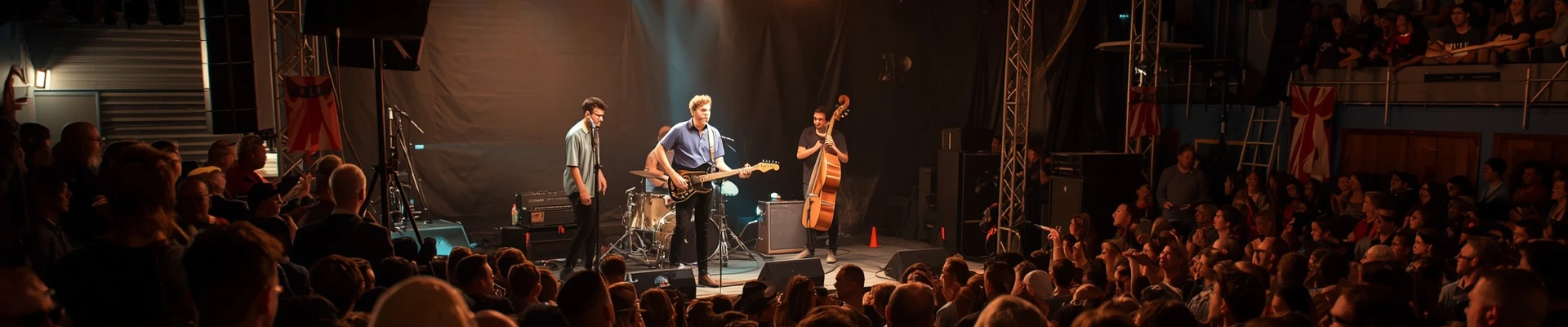
The downtown Naperville music corridor centres on Washington Street and Chicago Avenue, where a cluster of bars and restaurants maintains live music throughout the week. Frankie's Blue Room — a Chicago-blues-themed club on Jefferson Avenue — is the flagship independent venue, booking national touring blues, jazz, soul, and R&B acts in a dedicated room of around 200 capacity. Quigley's Irish Pub and The Lantern hold regular acoustic and folk sessions. Ballydoyle Irish Pub runs an open-mic-to-ticketed-show model that funnels local talent into weekend headline slots.
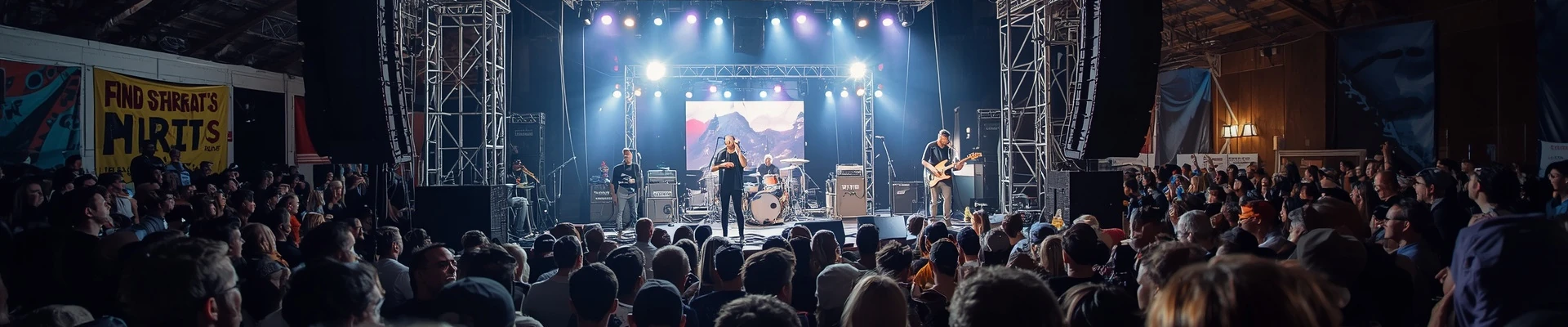
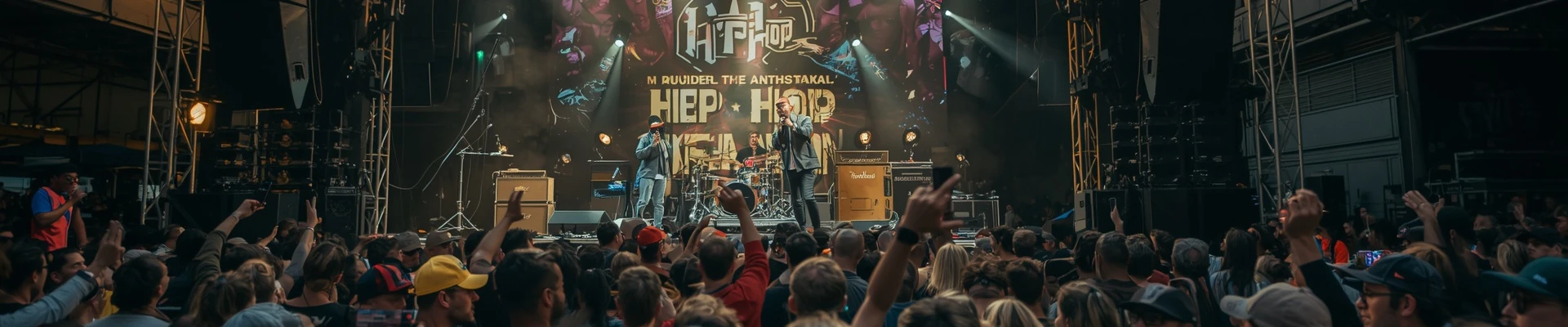
The Riverwalk itself functions as an outdoor amphitheatre in warm months, with the Millennium Carillon — a 72-bell carillon tower at Moser Tower, one of the largest in the world — providing the acoustic centrepiece of the park. The carillon is not a music venue in any conventional sense but it does host public recitals and contributes to the city's distinctive sonic character. The Riverwalk Amphitheatre hosts the Ribfest entertainment stages and the summer concert series, with audiences of several thousand for popular regional and national acts.
The Meiley-Swallow Hall at North Central College offers another 300-seat performing-arts space, and the college's music department runs an active schedule of student ensembles, faculty recitals, and visiting-artist programs that adds institutional density to the scene. The school's jazz program, in particular, feeds musicians into the broader Chicago metropolitan jazz ecosystem.
Downtown Naperville — roughly the blocks between Jefferson Avenue, Washington Street, Van Buren Avenue, and the river — is the social and musical centre. The 5th Avenue Station development (a former downtown commercial block converted to mixed-use retail and dining) and Naper Settlement (an outdoor living-history museum on the north edge of downtown) frame the neighbourhood's geography without displacing the music economy.
Festivals and signature events
Ribfest is the signature outdoor event — held annually over Fourth of July weekend at Knoch Park on the east side of downtown, it combines a nationally touring live-music lineup (typically three-four stages across five days, with headliners drawn from mainstream rock, country, and adult contemporary) with a barbecue competition that draws teams from across the Midwest. Attendance regularly exceeds 100,000 across the run and the music booking is genuinely ambitious by suburban-city standards. Past headliners have included Train, Foreigner, Sheryl Crow, Kenny Rogers, Counting Crows, and Cheap Trick (who, as a Rockford-based Illinois band, carry particular resonance in this part of the state).
Last Fling — held over Labour Day weekend in the same downtown area — is a second major outdoor festival with its own music stage, carnival rides, and food vendors, typically booking regional acts and slightly younger touring names than Ribfest. The Naperville Woman's Club Arts Festival (held at Naper Settlement) includes outdoor performances alongside visual art, and the North Central College Spring Concert is a long-standing community event that draws families and alumni.
The Fine Art Festival in late May features outdoor acoustic and jazz performance on the Riverwalk, and the Christkindlmarket Naperville (the Midwest's third-largest German Christmas market) includes outdoor brass and choral performance through December. The Riverwalk Run and related community events layer additional outdoor concert moments throughout the summer calendar.
Demographics and immigrant music communities
Naperville's demographics shifted significantly in the 1990s and 2000s as the technology and research corridor attracted a large South Asian professional community. The Indian-American population — substantial in both Naperville proper and the adjacent communities of Lisle, Bolingbrook, and Aurora — supports a parallel cultural circuit that is largely invisible in the downtown bar economy but genuinely active: Bollywood dance academies, bharatanatyam studios, carnatic music ensembles, and the annual programming of the India Cultural Center and Temple of Greater Chicago (a short drive south in Lemont) contribute to a rich subcultural music life. Several tabla and sitar instruction studios operate in Naperville, and the South Asian community organizes its own concert events — typically at Drury Lane Theatre in nearby Oakbrook Terrace or at school auditoriums within the district — that bring established performers from India for community audiences.
The Chinese-American and Korean-American communities, also substantial, support similar parallel circuits: Korean churches with large choirs, Chinese community arts organizations programming traditional and contemporary performance, and a dense network of music instruction studios that feed the high-achieving local school music programs — Naperville's Naperville Central High School and Naperville North High School consistently rank among the top school band and orchestra programs in Illinois, with students going on to conservatories and professional careers at a rate that reflects the community's investment in music education.
What ties it all together
Naperville's musical character is defined by the tension between its civic prosperity and the creative restlessness that prosperity generates in the young people who grow up within it. The Riverwalk festival circuit and the Ribfest main stages represent the city's polished, civic face — professionally run, community-supported, demographically broad. Underneath that, the downtown bar circuit sustains working musicians from Chicago and the suburbs playing to appreciative, relatively well-resourced audiences. In garages and church fellowship halls, the subcultural scenes — South Asian classical, Korean church music, midwest-emo survivors — operate on their own rhythms. And over all of it hangs the gravitational pull of Chicago, 48 kilometres east, which is close enough to shape the scene without absorbing it. Naperville has always been part of the Chicago music world without being in Chicago, and that ambiguity — prosperous enough to sustain its own institutions, proximate enough to access the larger city's infrastructure — is the defining condition of its creative life.