
Peoria, Illinois
Peoria sits on the wide western bend of the Illinois River, roughly equidistant between Chicago and St. Louis, occupying bluffs that rise sharply from the floodplain bottomlands. It is the largest city in downstate Illinois, a distinction freighted with both pride and irony in a state whose political and cultural gravity bends perpetually toward Chicago. With a population hovering around 115,000 in the city proper and roughly 400,000 across the metropolitan area, Peoria is a city that once set the commercial tempo for middle America and has spent the last half-century finding its footing after deindustrialisation rearranged the map.
The name itself entered American idiom through a long-running showbiz heuristic: "Will it play in Peoria?" — shorthand for whether a product, joke, or political message would land with ordinary middle-class American consumers. The phrase dates to nineteenth-century vaudeville touring circuits, when Peoria was the standard proving ground for acts working the Midwest. That reputation for representing archetypal American taste has followed the city ever since, sometimes as a compliment and sometimes as a slight.
Geography and Economy
The Illinois River cuts through a series of glacially carved bluffs before broadening into Peoria Lake, a natural widening that gave the city its early commercial advantage. The water-level terrain divides into distinct zones: the riverfront and old warehouse district at the base, blufftop neighborhoods — including the elegant Victorian residential corridors of Moss-Bradley — and the flat agricultural plateau beyond the escarpment's edge. The river provided the power and the transport corridor that made Peoria the distilling capital of the United States in the late nineteenth century. At its peak, Peoria produced more whiskey than anywhere else on the continent — a heritage that shaped local culture, tax revenue, and working-class civic identity in ways that persisted long after Prohibition and consolidation shuttered most of the distilleries.
Heavy manufacturing anchored the twentieth century. Caterpillar Inc., the construction and mining equipment giant, is headquartered here and remains by far the largest private employer, with its global corporate campus visible against the skyline. The UAW's presence in Caterpillar plants shaped Peoria's labour politics and its union hall culture — halls that served as social anchors for working-class music scenes long before the concept of a "venue" entered the lexicon. The city also hosted Illinois Central railroad maintenance facilities and a robust secondary manufacturing sector that shrank dramatically through the 1980s and 1990s.
Music Identity
Peoria's music history is grounded in the blues, carried up the Illinois River corridor from the Mississippi Delta through the Great Migration, and layered over by a jazz scene that flourished in the postwar decades when the city's entertainment district was thriving. The tradition has produced nationally significant figures whose Peoria origins are often underacknowledged outside Illinois.
Richard Pryor was born and raised in Peoria — and while his genius was comedic rather than musical, his command of rhythm, timing, and narrative shaped a generation of Black American performers who cut across music and comedy simultaneously. The Washington Square and Carver Community Cultural Center neighborhoods where Pryor grew up sustained a parallel music world of clubs, churches, and after-hours rooms that fed the local blues ecosystem.
The guitarist and vocalist Buddy Guy spent formative time in the broader Illinois River corridor before his career crystallised in Chicago, and the cultural geography connecting Peoria to Chicago's South Side blues scene is a real arterial link — musicians moving back and forth along the Illinois River route, playing wherever crowds gathered. Muddy Waters passed through on early tours, and Peoria's Black-owned clubs of the 1940s and 1950s provided reliable stops on what was informally the Midwest leg of the Chitlin' Circuit.
Jazz flourished during the postwar era. The Madison Theatre — opened in 1921 on SW Adams — hosted touring acts including Count Basie, Ella Fitzgerald, and Duke Ellington as part of the Orpheum circuit. Local big bands developed throughout the 1940s, and the union hall affiliated with the American Federation of Musicians maintained separate Black and white locals until desegregation, a bifurcation that paradoxically concentrated talent in the Black local and produced some of the city's most sophisticated jazz orchestras.
Contemporary Peoria carries that heritage forward through a smaller but committed independent music community. The local punk and hardcore scene developed through the 1990s and 2000s around Donnelley's Pub and later The Eastside Centre, producing bands that circulated through the regional DIY circuit connecting Springfield, Champaign, Bloomington, and Rockford. The alternative country and Americana current runs strong here — a logical convergence of the city's agricultural context, blues memory, and Irish- and German-descended working-class white community whose cultural touchstones overlap heavily with country's emotional vocabulary.
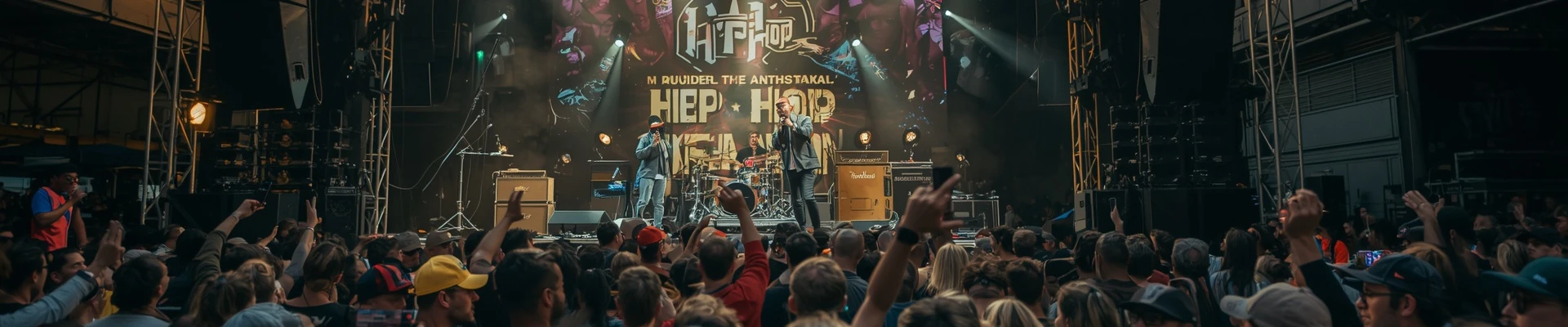
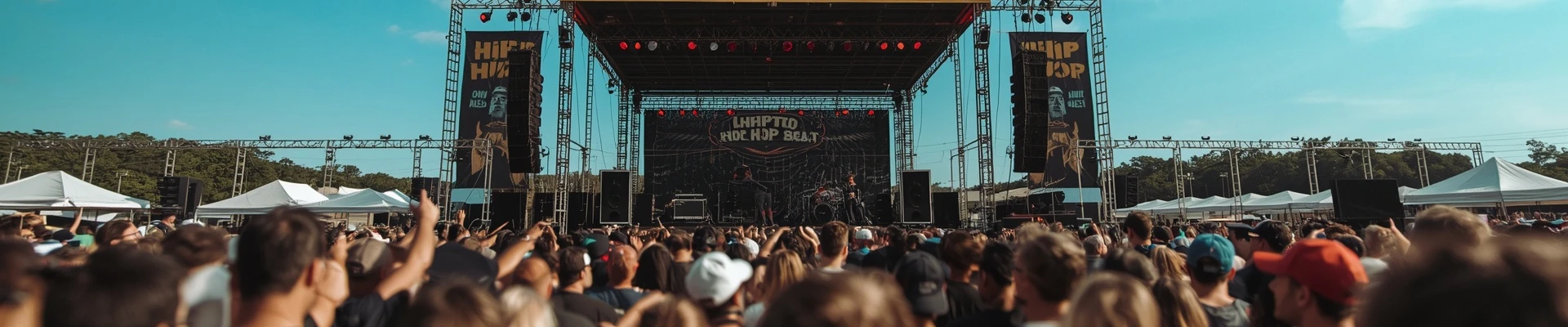
The hip-hop scene that emerged in the 1990s drew on the city's Black neighbourhoods on the North Side and produced local artists who charted within Illinois without crossing to national prominence, a pattern common to mid-size Midwest cities where the Chicago market is close enough to absorb regional talent before it can build an independent identity.
Venues and Neighbourhoods
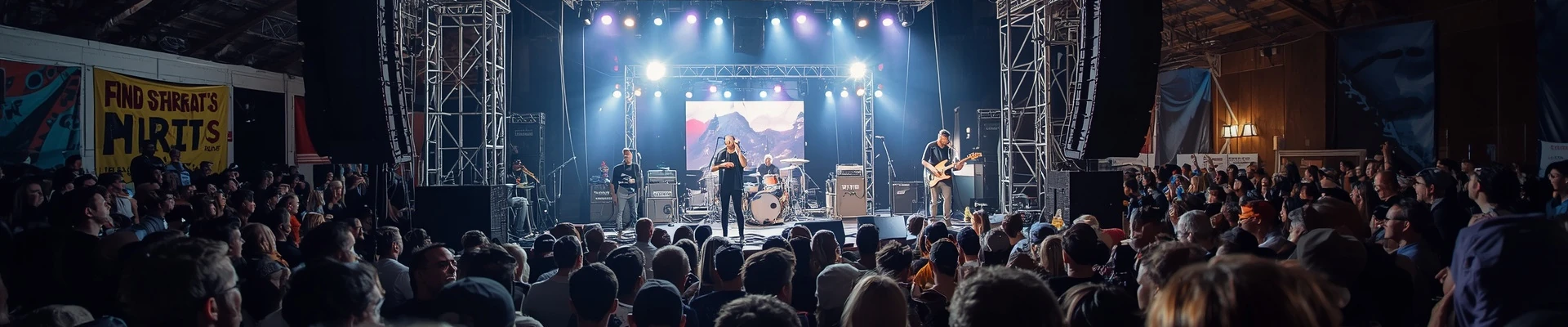
The Civic Center — branded as the Peoria Civic Center and anchored by its arena component — is the city's largest performance space, seating roughly 10,000 and drawing national touring acts across country, rock, and hip-hop. Arena tours that skip Chicago occasionally route through Peoria as the downstate anchor.
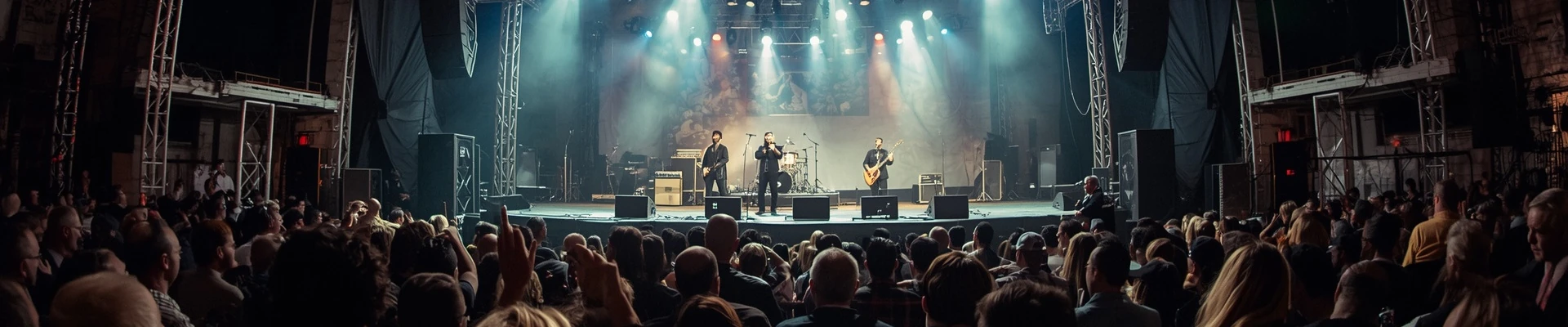
The Madison Theatre on SW Adams is the historic crown jewel, a restored 1,800-seat venue that has served as Peoria's mid-size concert anchor since its renovation. Its programming covers classical, comedy, Broadway touring productions, and concert events — a multipurpose venue in the tradition of the grand Midwestern movie palaces that anchored city centres in the early twentieth century.
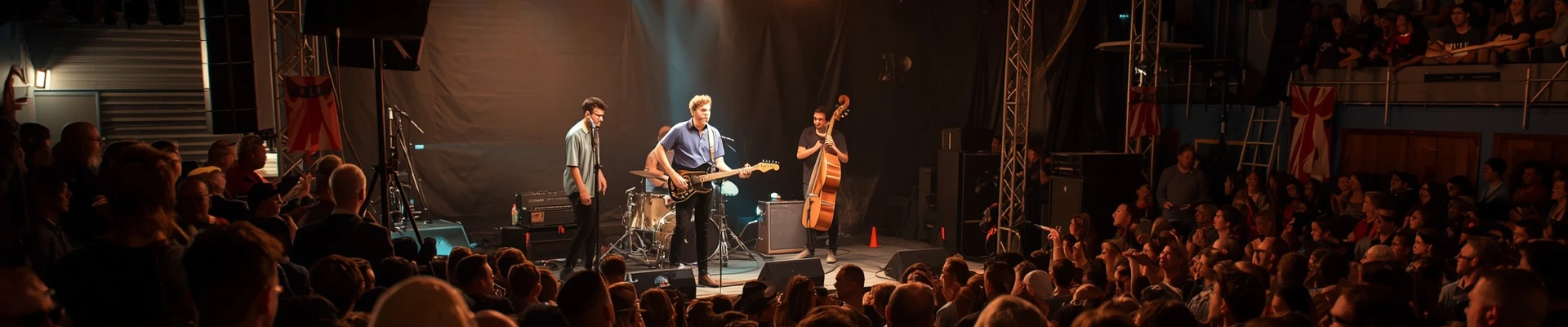
The Venue (formerly operating under various names in the downtown entertainment corridor) has functioned as the primary general admission rock and alt-country room. The strip along SW Adams Street in the Entertainment District anchors Peoria's bar and live music concentration, with several smaller rooms operating with weekend live programming — Kelleher's Irish Pub, One World (which hosted folk and acoustic sets), and rotating independent venues that open and close on the rhythms of the restaurant economy.
The Riverfront area has been the site of sustained redevelopment since the 1990s, with festivals gravitating toward the waterfront esplanade and the RiverPlex recreation complex. The North Side — historically the heart of Peoria's Black community — sustained its own club corridor through the postwar decades, with the Carver Community Cultural Center serving as an anchor institution.
Festivals and Events
Heart of Illinois Fair — a traditional county fair held at the Expo Gardens — draws country touring acts for its grandstand stage series, typically booking mid-tier artists on the summer amphitheatre circuit. It is the city's largest annual event by attendance.
The Riverfront Festivals series covers multiple summer weekends, including Rib Friendly Festival, Steamboat Classic (a road race with concurrent festival programming), and Blues at the Bridge, which specifically showcases local and regional blues talent against the riverfront backdrop. The blues festival is the closest Peoria comes to a signature music event tied explicitly to its cultural inheritance.
Peorian Art and Music Walk has operated as a periodic downtown arts circuit, combining gallery openings with live music in storefronts and public spaces throughout the SW Adams corridor.
Demographics and Community Music Scenes
Peoria's population is approximately 40% African American — a significant proportion for a city of its size in the Midwest interior — and that community sustains the city's deepest musical roots: gospel choirs in the North Side Baptist and AME churches, blues and R&B in surviving club rooms, and hip-hop throughout the North End neighbourhoods. The Friendship House and community centres through the North Side have historically provided youth programming that feeds into music education.
The Latino community, concentrated largely on the South Side, brings its own musical culture — norteño, cumbia, and banda that circulate through South Adams Street social clubs and quinceañera venues. The Peoria Park District has occasionally programmed Latin-facing events in the Riverfront series.
The German and Irish-descended working-class community that built much of the city's Catholic parish system sustains a strong presence in the country, bluegrass, and traditional folk corners — local Irish sessions run monthly at several pubs, and the acoustic Americana scene draws participants from this demographic base alongside younger musicians who came of age in the indie era.
What Ties It All Together
Peoria is a city where the question "will it play here?" was never really about the city being generic — it was about the city being real. The music that endures here is music that connects to work, loss, neighbourhood, and the specific gravitational pull of the Illinois River. Blues walked up the river corridor, jazz filled the postwar ballrooms, country walked in from the surrounding agricultural counties, and hip-hop mapped the North Side's particular geography of aspiration and constraint. None of these scenes defined Peoria the way Detroit techno defined Detroit or Nashville's music row defined Nashville, but all of them are genuinely rooted here, grown from the soil of a working-class river city that learned long ago not to depend on trends set elsewhere to know its own sound.