
Rockford is the second-largest city in Illinois, seat of Winnebago County, and home to roughly 148,000 people within the city limits — a population that swells to over 350,000 across the broader Rockford metropolitan area. The city sits on the Rock River, about 90 miles northwest of Chicago and 75 miles east of the Mississippi, at a latitude that delivers genuine Midwestern winters and a landscape of river bluffs, prairie flats, and scattered hardwood forests that earned the city one of its oldest nicknames: "The Forest City." Economically, Rockford built itself on manufacturing — machine tools, industrial fasteners, aerospace components, and furniture — and the city's post-industrial story shares the contours familiar across the Rust Belt: plant closures, population decline from a peak of 150,000 in the 1970s, and a long, uneven recovery built on healthcare, education, and a reviving creative economy. What sets Rockford apart in the cultural ledger is a music heritage disproportionate to its size, centered on one of the biggest arena rock bands the United States has ever produced.
A Brief History
The land along the Rock River was home to the Ho-Chunk (Winnebago) people for centuries before American settlers arrived in the 1830s. Germanicus Kent and Thatcher Blake crossed the river in 1834 and established the settlement that became Rockford — named, by some accounts, for the rock-bedded ford in the river that made crossing practical. The town grew quickly as a waypoint on routes leading west, and the arrival of the Galena and Chicago Union Railroad in 1852 anchored it as an industrial center. Through the late 19th century, Rockford attracted waves of immigration: Swedish, Italian, Greek, and later Eastern European communities put down roots, and the city became, by the early 20th century, home to one of the densest concentrations of Swedish-Americans in the United States. The Erlander Home (now a museum) and a network of Lutheran churches survive as markers of that heritage. By World War II, Rockford's factories were producing everything from machine tools to aerospace equipment, and the city's nickname shifted to "Screw Capital of the World" — a reference to its dominant fastener industry, not a slight. Post-war prosperity peaked around 1970; the subsequent decades of deindustrialization hit the city hard, cutting deeply into employment and tax revenue, and Rockford spent years near the top of national lists for unemployment and poverty. That adversity did not silence the city's creative life. If anything, the affordable rents, empty industrial spaces, and a strong sense of place fostered exactly the conditions in which bands get serious.
Music Identity
Rockford's single most consequential contribution to the history of popular music is Cheap Trick. The band was formed in Rockford in 1973 out of the ashes of several local groups, anchored by guitarist and primary songwriter Rick Nielsen (born in Rockford), drummer Bun E. Carlos (born in Rockford), bassist Tom Petersson (born in Rockford), and lead vocalist Robin Zander (from nearby Loves Park). Nielsen's family had been in Rockford for decades — his father ran a music store in the city — and the band's DNA was always local: they rehearsed in Rockford, played their early gigs in Rockford bars and club circuits, and were signed out of the Midwest before breaking nationally in 1977 with their self-titled debut on Epic Records. The 1979 live album At Budokan became one of the best-selling live records in rock history, and songs like "I Want You to Want Me," "Dream Police," and "The Flame" embedded Cheap Trick permanently in the American rock canon. The band was inducted into the Rock and Roll Hall of Fame in 2016 — and they have never really left Rockford, returning repeatedly for local concerts and civic events, maintaining a connection to the city that is genuinely reciprocal. The city has honored Nielsen with a statue downtown, and Cheap Trick remains the defining proof that a mid-sized Midwestern industrial city can produce globally consequential rock and roll.
Beyond Cheap Trick, Rockford has contributed steadily to the broader rock and metal ecosystem. The city's bar and club scene in the 1970s and 1980s produced a tight circuit of working bands that fed the arenas and theaters. REO Speedwagon — more closely associated with nearby Champaign-Urbana where the band formed at the University of Illinois — nevertheless played Rockford frequently and drew from the same regional rock pipeline. The Illinois Quad Cities corridor and the broader northern Illinois scene treated Rockford as a peer stop on the touring circuit, meaning bands that came through Chicago often came through Rockford too, giving local musicians regular exposure to touring professionals.
The city's heavy metal and hard rock tradition runs deep. Bands like Broken Hope — the death metal outfit that gained national underground attention in the early 1990s — emerged from the Rockford area, as did a number of thrash and metal acts that circulated through Chicago's tape-trading and club networks. The industrial-meets-metal aesthetic that defined parts of the Chicago scene had a Rockford chapter, sustained by musicians who grew up in genuinely working-class circumstances and channeled that experience into aggressive music.
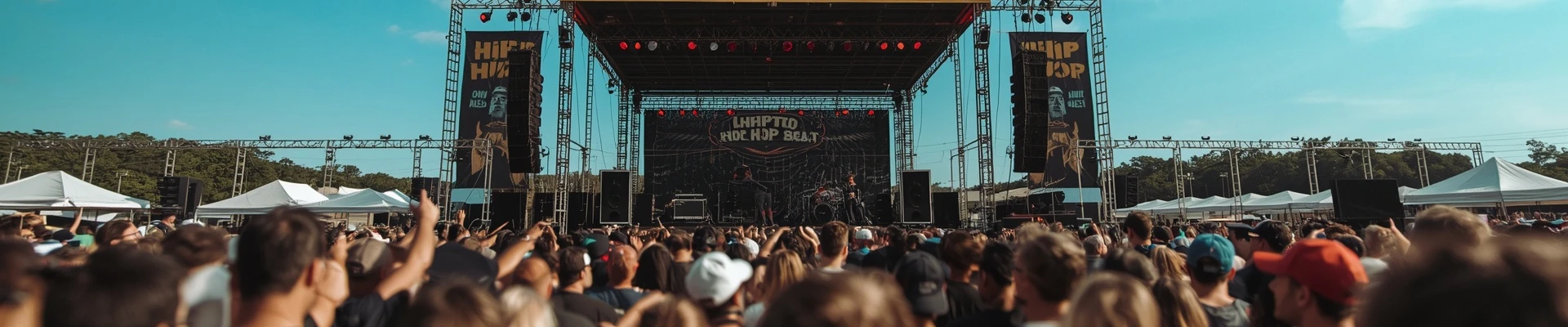
Hip-hop took root in Rockford through the 1990s, developing a regional scene that moved between house parties, community centers, and later dedicated venues. The city's African-American and Latino communities — particularly concentrated on the west side — generated producers, MCs, and crews whose output circulated in regional markets without achieving the national profile of the rock scene. Artists like Kid Abstract and a network of underground producers built a local mixtape and streaming presence through the 2000s and 2010s. The Rockford Hip Hop Festival became an annual gathering point, bringing regional acts to downtown stages and connecting local talent with broader audiences.
Country and Americana have always moved quietly through Rockford's sonic landscape, reflecting the agricultural communities surrounding the city and the working-class tastes of much of its population. The Winnebago County Fair provides one of the region's oldest outdoor music stages, and the fairground tradition of booking touring country acts — national names alongside regional openers — has fed a steady appetite for roots music.
The city's Swedish immigrant heritage left a quieter but real mark on musical culture: choral traditions, brass band culture, and a hymnal sensibility that filtered into the Lutheran churches and community festivals that defined Rockford's social calendar for decades. The Swedish American Museum preserves artifacts of that heritage, and the Midsommar Festival still celebrates it annually.
Venues and Neighborhoods
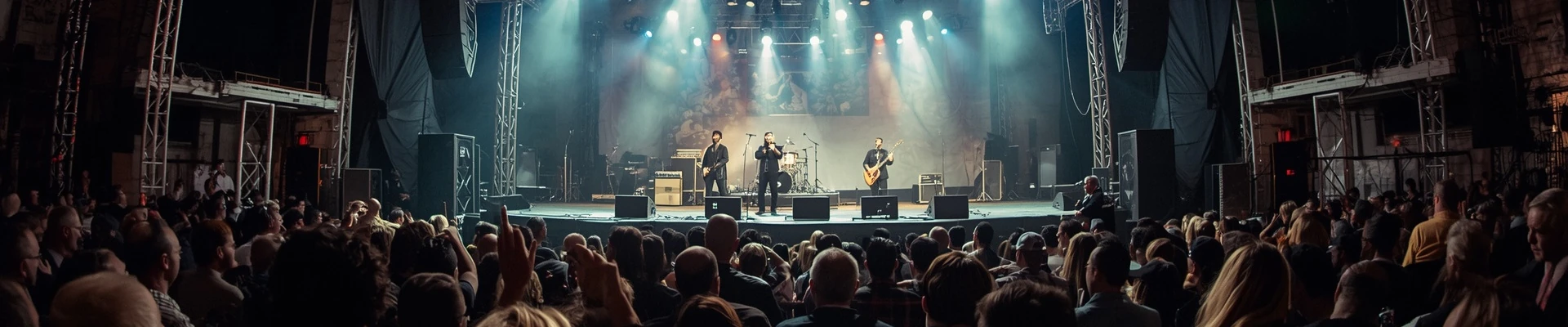
The flagship venue for major touring acts is Heartland Pro Credit Union Arena (formerly BMO Harris Bank Center, before that the MetroCentre), a 6,000-plus-capacity arena in the heart of downtown that has hosted Cheap Trick reunion shows, major rock and pop touring productions, and the Rockford IceHogs (AHL hockey). For theatrically staged performances, the Coronado Performing Arts Center — a lavishly restored 1927 Spanish baroque movie palace with 2,400 seats — anchors the city's relationship with Broadway tours, orchestral performances, and high-production-value concerts. The Rockford Symphony Orchestra performs at the Coronado regularly, and the room's acoustics and ornate interior make it one of the most beautiful mid-size theaters in the upper Midwest.
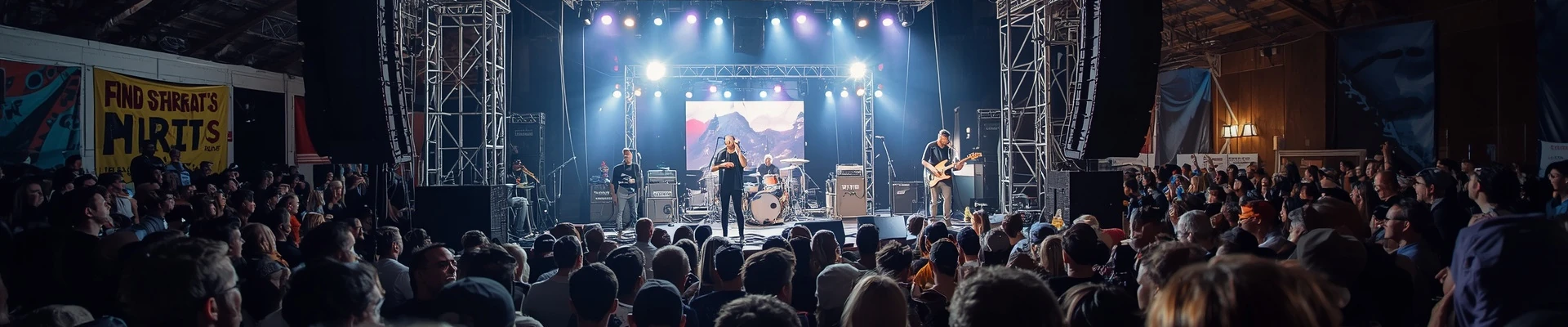
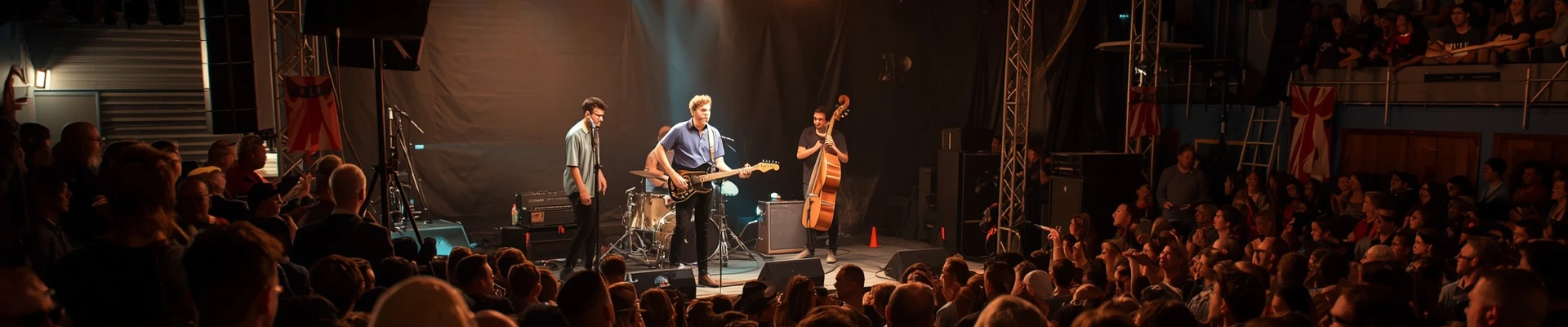
For club-level and general-admission rock, the downtown bar and venue strip along East State Street and the corridors around the Rockford City Market host a rotating lineup of local and regional acts. The Grape, The Barrel, and smaller rooms have functioned as incubators for the local scene at various points. Prairie Street Brewhouse, housed in a converted 19th-century warehouse along the riverbank, blends craft brewing with a concert space that books regional touring acts and local bands in a setting that captures the best of Rockford's repurposed-industrial aesthetic.
The Midtown Arts District — centered on Auburn Street and the corridors between the river and the West Side — has been the focus of arts-district development investment since the 2010s, providing studio space, gallery nights, and informal performance venues that host singer-songwriters, jazz nights, and experimental music alongside visual arts programming. Nicholas Conservatory & Gardens, on the east bank of the Rock River, occasionally hosts outdoor performance events in its grounds.
Neighborhoods worth knowing for music history: the South Main Street corridor was historically the city's African-American commercial district and music scene hub. The West Side has been home to Rockford's Latino population — primarily of Mexican origin, a community that grew rapidly through the 1970s and 1980s — which sustains a parallel cultural world of quinceañera bands, norteño and banda music, and community events that rarely appear on the mainstream venue calendar but represent a significant share of the city's live music activity.
Festivals and Events
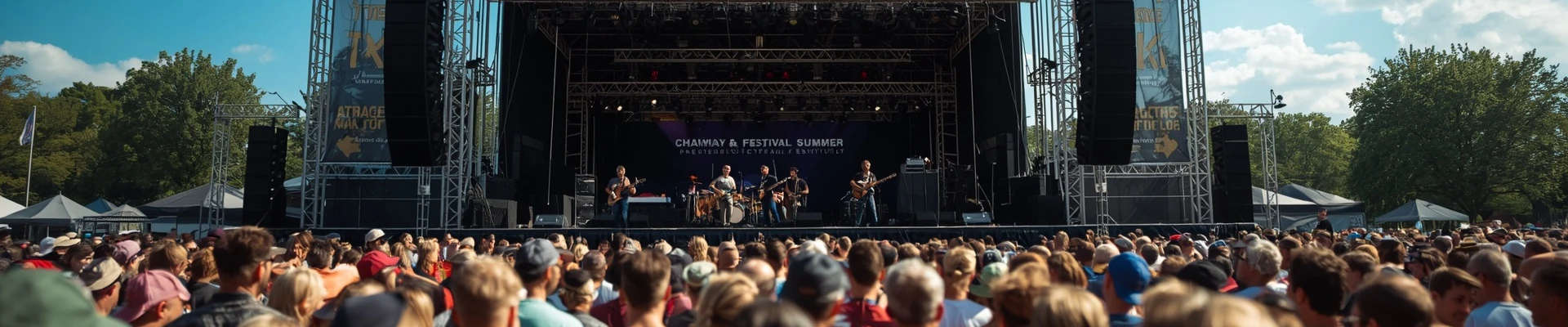
On the Waterfront — a multi-day rock festival that ran from the late 1980s through the 2000s along the Rock River — was Rockford's signature summer music event, drawing national touring acts alongside regional performers and reliably selling out the riverfront grounds. The festival wound down in the 2010s after a period of ownership and organizational changes, leaving a gap in the city's summer calendar that subsequent events have only partially filled.
The Rockford City Market (summer Saturdays in the downtown parking district) incorporates live music into its weekly farmer's market programming, providing a steady low-key stage for local bands across genres. Stroll on State, the annual holiday street festival on State Street, has become one of the most-attended events on the city calendar, with live music woven through its programming.
Midtown Rocks and various neighborhood association events have emerged as grassroots alternatives to large commercial productions, organizing block parties and street festivals that prioritize local artists. The Winnebago County Fair at the fairgrounds south of the city continues its tradition of booking country and rock touring acts for the summer fair circuit.
The Rockford Hip Hop Festival — operating intermittently but with strong community support — provides a dedicated platform for the city's hip-hop community and connects Rockford acts with regional peers from Chicago, Milwaukee, and the Quad Cities.
What Ties It All Together
Rockford's musical character is built on the particular tension of a city that has always lived in Chicago's shadow without being absorbed by it. Close enough to the metro to draw touring acts and share in the regional economy, far enough away that it developed its own working-class rock identity — one that values craftsmanship, volume, and durability over trend-chasing. Cheap Trick embodies that identity perfectly: four decades of relentless touring, a catalog that holds up across every era of radio, and an allegiance to the city of their formation that has never wavered. The arena at the center of downtown, the baroque theatre on the hill, the riverside warehouse venue, the neighborhood bars on East State Street — these are the infrastructure of a music community that knows what it's made of. Rockford does not need to be Chicago. It is its own thing, and it has the Rock and Roll Hall of Fame plaque to prove it.