
Evansville is the third-largest city in Indiana and the seat of Vanderburgh County, with roughly 119,000 residents in the city and more than 315,000 across the greater Evansville metropolitan area. The city sits at the far southwestern corner of Indiana on a broad horseshoe bend of the Ohio River, roughly 175 miles southwest of Indianapolis, 160 miles east of St. Louis, and just a few miles north of the Kentucky border. To the west, the Wabash River marks the Illinois state line, making Evansville the commercial and cultural capital of a genuinely three-state zone — the Tri-State region of southwestern Indiana, southeastern Illinois, and northwestern Kentucky. The economy has been shaped by manufacturing, healthcare, and higher education: Toyota operates a major Indiana plant in nearby Princeton, and Berry Global, Old National Bank, Shoe Carnival, and Accuride are all headquartered in the city. University of Southern Indiana (USI) and University of Evansville both anchor major academic and cultural institutions in the metro, while Ivy Tech Community College and Evansville Day School round out the education sector.
A brief history
The site of present-day Evansville was long inhabited by the Shawnee, Piankashaw, and other Indigenous peoples before American settlement arrived in the early 19th century. The town was platted in 1819 and named after General Robert Morgan Evans, a veteran of the War of 1812. Its location on the Ohio River quickly made it a critical inland shipping point: flatboats and steamboats loaded with coal, grain, and timber moved through Evansville's wharves throughout the antebellum period, and the city grew rapidly. By the Civil War era, Evansville was a Union-aligned border city in a contested region — the proximity of Kentucky and its complex loyalties meant Evansville served as a supply depot and point of passage for troops moving along the river.
The late 19th and early 20th centuries brought waves of German, Irish, and later Eastern European immigration, creating neighborhoods defined by ethnic parishes, labor organizations, and community halls. The Stringtown neighborhood on the east side and the West Side of the city became dense working-class enclaves. Manufacturing surged during both World Wars — Evansville produced P-47 Thunderbolt fighter aircraft at the Republic Aviation plant during World War II, and the wartime industrial mobilization drew workers from across the region, including a significant influx of African American families from Kentucky and Mississippi who settled in neighborhoods around North Main Street and Baptistown. The postwar decades saw suburban expansion and the gradual closure of the river-dependent industries, but Evansville retained its identity as a Midwestern manufacturing and service center rather than pivoting to tech or finance.
Music identity
Evansville occupies a genuine crossroads in American popular music — not a scene-defining city like Nashville or Detroit, but a river-town incubator whose honky-tonks, roadhouses, and VFW halls have generated a steady current of rock, blues, country, and gospel talent across multiple generations.
The city's blues and R&B tradition traces back to the African American neighborhoods along North Main Street and the clubs that lined that corridor through the 1940s, 1950s, and 1960s. Roadhouses on the Indiana-Kentucky border drew traveling acts from the Deep South on their way up the river to Chicago, and local players absorbed idioms from both the Delta and the urban North. That river-town blues sensibility — grittier than Nashville, rawer than Cincinnati — is the city's deepest musical inheritance.
In rock and roll, Evansville punched well above its weight during the classic rock era. Jo Ann Kelly, the British blues singer often compared to Janis Joplin, actually acknowledged Evansville-area influences during her career though her roots were English; more directly, the city's bar circuit in the 1970s and 1980s produced hard-driving rock bands that toured the Midwest arena circuit regularly. Hayseed Dixie — the pioneering bluegrass-metal cover act whose bluegrass renditions of AC/DC songs became an international cult phenomenon — emerged from the Evansville-area Appalachian musical culture that stretches across the Kentucky-Indiana border. Frontman John Wheeler grew up in this region; the band's conceit of treating heavy metal as a lost bluegrass tradition was drawn directly from the rural musical knowledge of the Tri-State hills and hollers.
The country and Americana scene in Evansville reflects the city's position as a genuine border zone between the urban Midwest and the rural Upper South. Honky-tonk, traditional country, and outlaw-leaning Americana have always found audiences here, and the bar circuit that runs from downtown Evansville through the West Side and into the surrounding rural counties has sustained working country musicians for generations. Radio stations like WIKY and WGBF shaped regional listening tastes through the 20th century, the latter having been among the first Indiana stations to break rock and roll records in the late 1950s.
The city's indie and alternative scene has been modest but persistent since the 1990s. The University of Southern Indiana and University of Evansville together provide a steady enrollment of young musicians, and a network of smaller venues and all-ages spaces has supported original-music acts. Local acts like Valley of the Sun (stoner-rock) built Evansville followings before wider national touring careers.
Venues and neighborhoods
Downtown Evansville is the anchor of the city's entertainment corridor. The Victory Theatre, a 1921 Italian Renaissance Revival venue restored in the 1980s, seats roughly 1,900 and has hosted everyone from touring orchestras to rock and comedy acts. Adjacent to it, the Old National Events Plaza — a convention-center complex with the John Dunn Hospitality Center and connected arena spaces — handles mid-to-large touring shows. The Aiken Theatre, part of the Events Plaza complex, seats around 1,500 and serves as a presenting house for touring Broadway, comedians, and concert acts.
For live original music, Lamasco Bar on Washington Avenue has been a cornerstone of the downtown bar scene — a neighborhood tavern that books local and regional bands with minimal pretension. The Turoni's restaurant group's Newburgh location also anchors a broader dining-and-live-music corridor. The Tin Pan Alley area near Haynie's Corner Arts District — the city's designated arts neighborhood anchored by Haynie's Corner at the intersection of Haynie and Pennsylvania Streets — hosts galleries, studios, and occasional music events. The Mesker Music Theatre, an open-air amphitheater in Mesker Park, hosts summer outdoor concerts and has a long history as the city's primary outdoor venue.
For larger arena shows, Ford Center — opened in 2011, seating approximately 11,000 — replaced the old Roberts Stadium as the city's premier concert and sports venue. The arena has hosted major touring acts from Taylor Swift to Metallica to wrestling and family entertainment. Its construction marked a significant downtown investment and reinvigorated the core entertainment district.
The West Side of Evansville — roughly the area west of Garvin Park extending to the city limits — is working-class, heavily German-American in ancestry, and fiercely local in identity. The West Side's bar culture has always been distinct from downtown: neighborhood taverns, VFW halls, and supper clubs rather than dedicated music venues, but a deep substrate of live music has run through them for generations. The East Side around Burkhardt Road and Green River Road is more suburban but hosts a robust strip of bars, restaurants, and entertainment venues that book cover bands and regional acts heavily.
Festivals and signature events
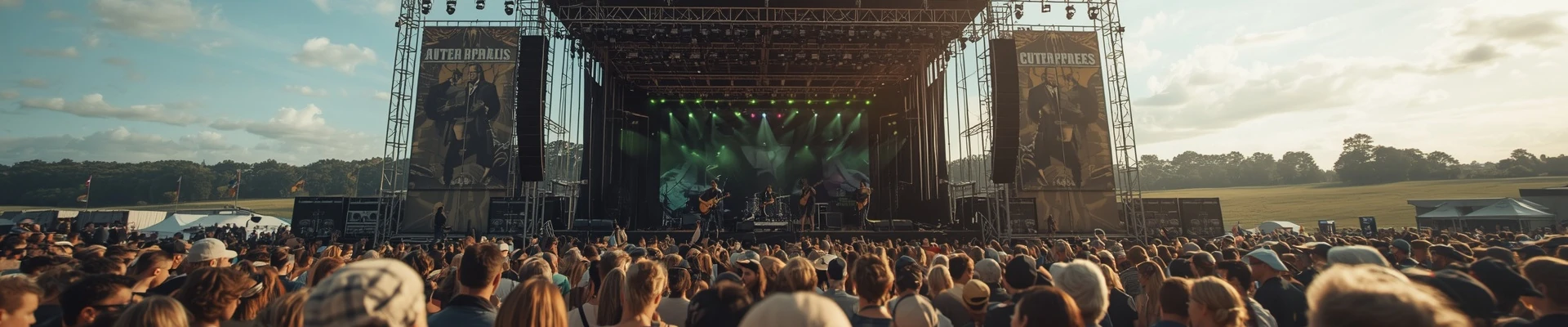
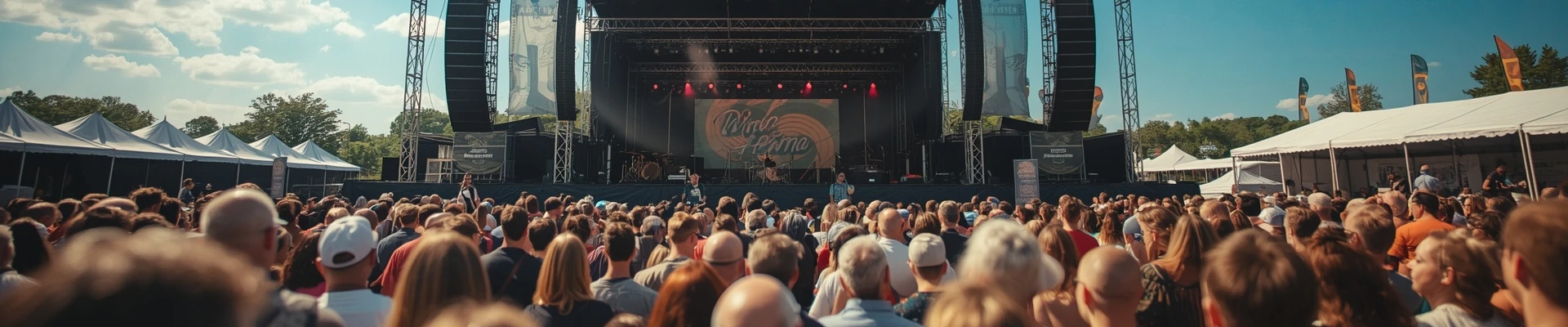
Evansville's Riverfest — held annually along the Ohio River waterfront at Dress Plaza — is the city's largest outdoor music event, drawing tens of thousands over a multi-day run with regional and national headliners across rock, country, and R&B stages. The event is tied to the Thunder on the Ohio powerboat racing festival, giving it a particular Midwestern outdoor-event energy that blends motorsport and live music.
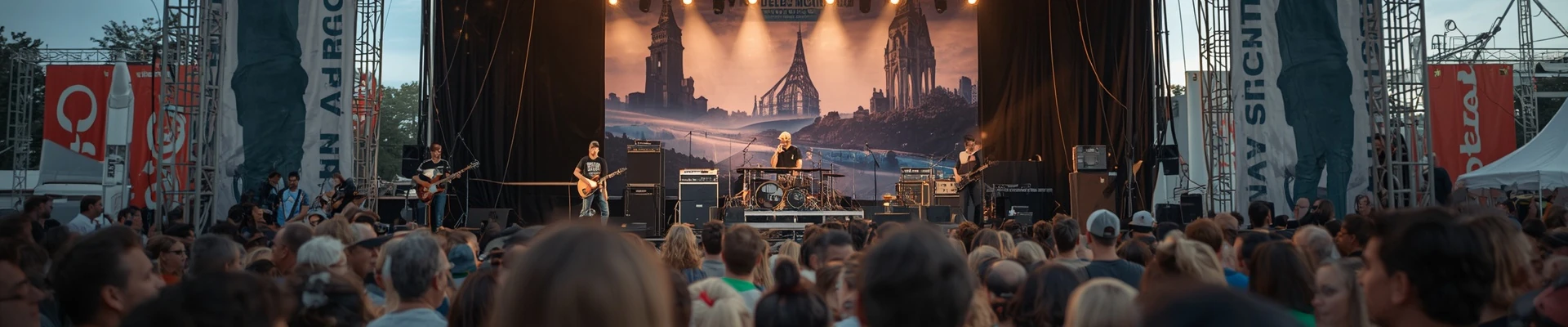
Moogfest is not held in Evansville, but the city has its own cluster of summer outdoor events: Party in the Park (a weekly Thursday summer concert series in Garvin Park) brings free live music across genres to west-side residents and has been a fixture of the summer calendar for decades. The Evansville Museum of Arts, History and Science and the Reitz Home Museum also host periodic cultural programming with musical components.
Shrinersfest — formerly known as Freedom Festival — is the region's largest Fourth of July celebration, attracting visitors from Indiana, Illinois, and Kentucky with multiple stages, carnival attractions, and fireworks over the Ohio River. Major touring country and rock acts have headlined the festival's music stages in various incarnations over the years.
What ties it all together
Evansville's musical identity is the sound of a river crossing — a city where the Midwest's pragmatic work ethic meets the Upper South's emotional directness, where bar-band toughness and Appalachian string-music tradition coexist a hundred miles from Chicago's noise. It has never been a scene city in the music-industry sense; no major label has a satellite office here, no genre was born on its streets. What Evansville has instead is a deep, unbroken tradition of live performance for real audiences — the honky-tonk that books three nights a week every week, the outdoor stage at the riverfront where 20,000 people show up because it's summer and the river is right there. The Ford Center draws the arena tours; the Lamasco Bar keeps the original-music scene honest; and somewhere on the West Side on a Friday night, a cover band is absolutely destroying "Don't Stop Believin'" for a room full of people who mean every word of it. That is Evansville — not a music capital, but a music city, which is a different and arguably more important thing.