

South Bend sits in the far north of Indiana, roughly 150 kilometres east of Chicago and 25 kilometres south of the Michigan state line. The city straddles the St. Joseph River — a broad, curving waterway that powered the mills and factories that once made this one of the most productive industrial cities in the American Midwest — and anchors a metropolitan area of just under 330,000 people that also includes Mishawaka, Elkhart, and a cluster of smaller St. Joseph County communities. South Bend is best known internationally for two things that define its identity in almost equal measure: the University of Notre Dame and the collapsed empire of the Studebaker Corporation. One continues to shape the city's cultural, demographic, and musical life with enormous force; the other left behind an architectural and spiritual void that South Bend spent decades trying to fill, and that the city's arts and music scenes have in some ways made their own.
A brief history
The site at the south bend of the St. Joseph River was a Potawatomi gathering place and trading crossroads for centuries before French missionaries and fur traders established contact in the 17th and 18th centuries. A permanent American settlement followed American acquisition of the territory — the Pierre Navarre trading post and the early presence of the Holy Cross Congregation (who founded the University of Notre Dame on the plain north of town in 1842) helped fix South Bend's identity from the outset as a place at the intersection of commerce, faith, and education.
The city grew rapidly through the mid and late 19th century on the strength of industry. Studebaker — founded as a blacksmith and wagon-making operation by the Studebaker brothers in 1852 — became one of the largest vehicle manufacturers in the world, transitioning from horse-drawn wagons to automobiles in the early 20th century. At its peak, Studebaker employed tens of thousands of South Bend workers and made the city one of the most prosperous in Indiana. The Singer Sewing Machine company also established a major manufacturing presence. South Bend was, by the early 20th century, an industrial city on the rise.
Studebaker's collapse — announced abruptly in December 1963, throwing 7,000 workers out of work overnight — was the shock from which South Bend spent the following half-century recovering. The closure set off a long population decline (the city peaked near 130,000 residents in the 1960s and had fallen below 100,000 by the 2010s), accelerated deindustrialisation, and left the Studebaker Complex — a sprawling campus of early 20th-century brick factory buildings in the west end of downtown — standing vacant for decades. That complex has become one of the most architecturally rich adaptive reuse projects in the Midwest: the Studebaker National Museum occupies one building, while others house apartments, offices, and the Innovation Park small-business incubator.
Notre Dame's continuous growth insulated the north end of the broader area from much of the deindustrial pain. The university's global reputation for football, its Catholic institutional presence, and its steady stream of students, faculty, and visitors created a two-speed local economy. Mayor Pete Buttigieg's tenure (2012–2020) brought renewed national attention and ambitious redevelopment plans — the Smart Streets downtown redesign converted one-way arterials to two-way streets and reclaimed lanes for pedestrians and cyclists, reshaping the East Bank entertainment district alongside the river.
Music identity
South Bend's most internationally consequential musical connection is indirect but real: Notre Dame's Fighting Irish mythology — the marching band, the fight song "Notre Dame Victory March" (written by the Shea brothers in 1908 and one of the most recognisable college fight songs in American culture), the Notre Dame Concert Band, and the broader culture of choral and orchestral music that the university's music programmes sustain — has given South Bend a rich classical and band tradition that runs beneath everything else. The Notre Dame Glee Club is one of the oldest collegiate singing organisations in the country. The university's DeBartolo Performing Arts Center (opened 2004) brings major touring classical, jazz, and world music acts to campus.
South Bend's popular music identity is harder to pin down than its industrial twin Flint or its Midwestern neighbour Kalamazoo, but it is real. The city produced Michael Jackson — or more precisely, the Jackson family's story begins in Gary, Indiana, roughly 100 kilometres to the west, but the northwest Indiana axis that runs from Gary through South Bend is one of the most important corridors in 20th-century American Black music. South Bend's own Black musical tradition runs deep: the city's African American community — concentrated historically in the Near Northwest and Near West sides — sustained a jazz, R&B, and gospel circuit through the mid-20th century that connected to the broader Midwestern Black music network.
Joshua Bell — the internationally acclaimed classical violinist — was born in Bloomington, Indiana, and studied at Indiana University, but South Bend's broader relationship with classical talent runs through Notre Dame and the Indiana music education tradition. More distinctly South Bend are artists like Joshua Davis (a South Bend singer-songwriter who was a finalist on The Voice Season 8 in 2015, bringing the city a moment of national mainstream visibility), and the indie rock and alternative scene that emerged from the city's club circuit in the 1990s and 2000s.
The city's Latino community — heavily Mexican and Mexican-American, concentrated in the Near South Side and the southwest quadrant — sustains a thriving norteño, banda, mariachi, and contemporary Latin pop scene through quinceañera halls, restaurants, and a cluster of clubs along Western Avenue and Mishawaka Avenue. The local radio station WHMB and Spanish-language media reinforce this circuit. South Bend's Latino population has grown steadily — now approaching 15% of the city — and their musical presence is increasingly visible at Potawatomi Park summer concerts and Fiesta South Bend celebrations.
The city's hip-hop scene developed through the 2000s and 2010s, with local producers and MCs working out of home studios and releasing music through SoundCloud and Bandcamp. South Bend has not produced a nationally-known hip-hop artist of the first rank, but the scene is persistent — grounded in the Near Northwest Side African American community and increasingly multiracial as the city's demographics have shifted.
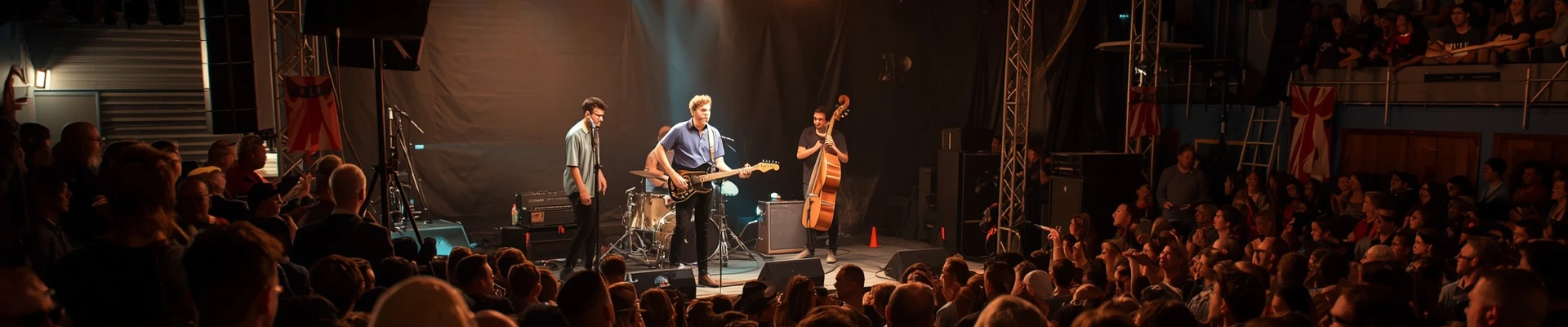
South Bend's indie rock and DIY scene clustered around a handful of bars and small venues through the 2000s and 2010s. The closure of Heartland and other venues hit hard, but the scene rebuilt around new anchors. The Fernway neighbourhood on the east side and the downtown East Bank have both hosted DIY programming, house shows, and small club nights.
Venues and neighborhoods
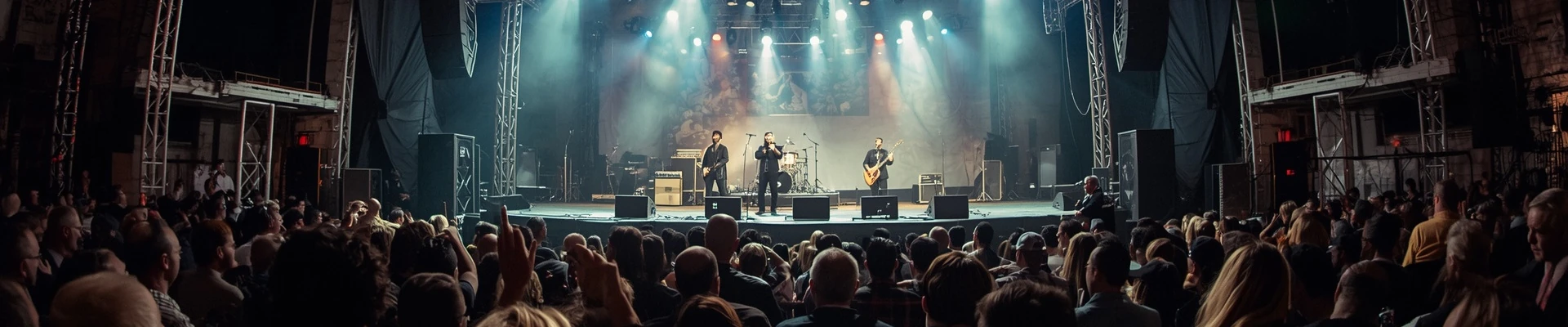
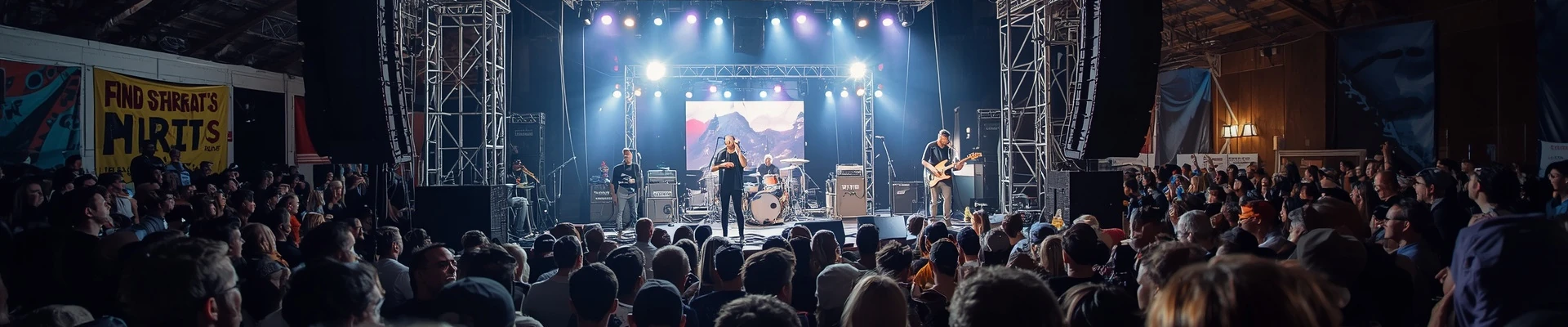
The flagship performing arts venue is the Morris Performing Arts Center — a restored 1922 theatre on Michigan Street in downtown South Bend, now a 2,600-seat proscenium house that books touring Broadway shows, national comedy acts, and major musical performers. The Palais Royale Ballroom in South Bend (a 1920s dance hall) has a historical footprint in regional memory, though the active mid-size venue landscape is now anchored by Four Winds Field (the minor league baseball stadium that doubles as an outdoor concert venue for summer shows) and the Legends at Notre Dame (a university-operated entertainment complex on campus with regular musical programming).
The club tier runs through downtown South Bend and the East Bank district along the river. Crobar and Club Fever served the hip-hop and dance music communities for years. Fiddler's Hearth on North Main Street — an Irish pub and folk venue — is one of the most beloved small venues in the city, programming traditional Irish sessions, folk acts, and local singer-songwriters in an intimate room with a loyal following.
The University of Notre Dame campus is its own venue ecosystem: Purcell Pavilion (the 9,149-capacity basketball arena, which hosts major touring acts), DeBartolo Performing Arts Center (a 1,000-seat hall for classical, jazz, and world music), and the Notre Dame Stadium concert configuration (used occasionally for the largest possible shows).
The Near South Side and Western Avenue corridor anchor the Latin music venue circuit. East Bank Village developments have added outdoor festival space along the St. Joseph River. South Bend Cubs games at Four Winds Field include frequent summer concert programming on the plaza.
Festivals and signature events
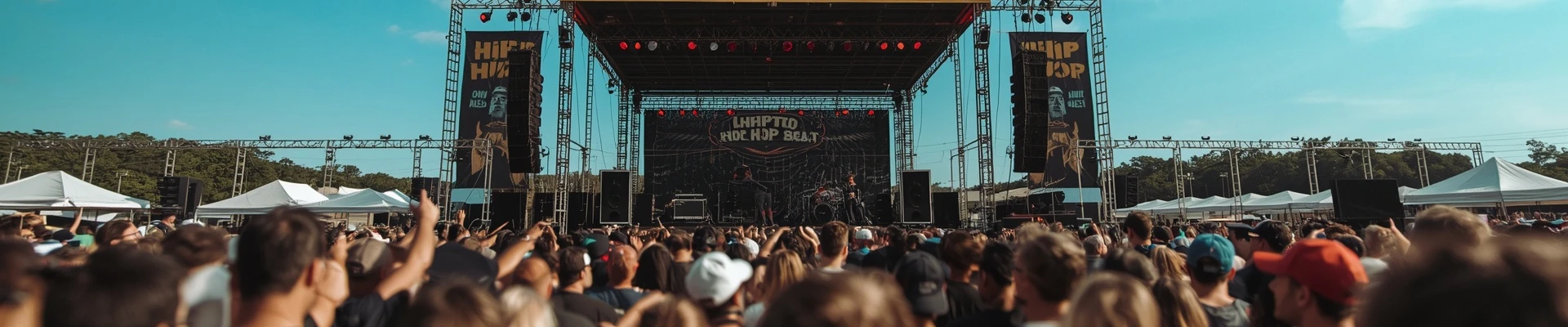
The Sunburst Music Festival — held in the summer at Howard Park and along the East Bank — is the city's signature outdoor music event, drawing regional and national acts across pop, rock, country, and R&B in a family-friendly park setting. The festival went through scheduling changes and relaunches through the 2010s but remains the primary warm-weather music anchor.
Fiddler's Hearth runs an Irish Traditional Music Festival in the spring that draws traditional Irish musicians from across the Midwest and occasionally from Ireland itself. Fiesta South Bend (late summer, Howard Park) programs mariachi, norteño, cumbia, and Latin pop acts for a community celebration that has grown into one of the largest Latino cultural events in Indiana. The Firefly Festival has programmed eclectic folk and roots music at Potato Creek State Park on the county's southern edge.
Notre Dame's Collegiate Jazz Festival — the longest-running collegiate jazz competition in the country, held annually since 1959 — brings university jazz ensembles from across the country to campus each spring and has hosted legendary judges including Duke Ellington and Dizzy Gillespie in its history.
What ties it all together
South Bend is a city defined by the tension between its aspirational past and its resilient present. The Studebaker ghost — the empty factory floors, the workers displaced overnight — sits beside Notre Dame's gleaming golden dome and the new-urbanism polish of the East Bank development. That tension has made South Bend's music scene more honest than many: the Irish sessions at Fiddler's Hearth, the quinceañera bands on Western Avenue, the DIY indie shows in warehouse spaces, and the collegiate jazz tradition on Notre Dame's campus all coexist without pretending to be a unified "sound." What they share is the particular Midwestern directness of a city that knows its own scale — not Chicago, not Indianapolis, but not nothing either — and has learned to find its music in the spaces that remain.