

Davenport is the largest city in Iowa by population and the cultural anchor of the Quad Cities — the bi-state metropolitan area that straddles the Mississippi River and includes Rock Island and Moline in Illinois on the east bank, and Davenport and Bettendorf in Iowa on the west. With roughly 102,000 residents in the city limits and a metro population of approximately 490,000, the Quad Cities form one of the most distinctive riverine urban clusters in the American Midwest. Davenport sits at a natural ford in the Mississippi — the only place where the river runs due east-west for an extended stretch — and that geographic orientation, so unusual for the Mississippi, has shaped the city's character as a place where Illinois and Iowa co-exist in practical daily life more than perhaps anywhere else in the country.
The city is home to Augustana College (a liberal arts institution with about 2,500 students), St. Ambrose University, and Palmer College of Chiropractic (historically significant as the institution where chiropractic medicine was invented in 1895). Davenport's economy has roots in manufacturing — John Deere operates a major plant in the metro area, Arconic (formerly Alcoa) maintains aluminum rolling mills, and the city has historically been a center of farm equipment and heavy industry — but has diversified into healthcare, logistics, and financial services as the manufacturing base has contracted.
A brief history
The Sauk and Meskwaki peoples called this stretch of the Mississippi home for generations. The Black Hawk War of 1832 — in which the United States military forced Sauk leader Black Hawk and his band back across the Mississippi after they had returned to their homeland in Illinois — directly preceded the founding of Davenport in 1836. Antoine LeClaire, a Potawatomi-French interpreter who had served as a negotiator, was granted land at the ford as part of the treaty settlement and co-founded the city, naming it after Colonel George Davenport, a fur trader and army officer. The city grew rapidly as a commercial hub. The Rock Island Railroad crossed the Mississippi at Davenport in 1856 on the first railroad bridge to span the river — a bridge that Abraham Lincoln successfully defended in a landmark legal case after a steamboat struck it, a case that helped launch Lincoln's national profile.
By the late 19th century Davenport was a prosperous river city — breweries, packing houses, manufacturing, and the grain trade sustained a cosmopolitan culture. German immigrants formed the largest ethnic community, giving the city a distinctly Germanic character in its beer gardens, music societies, and civic institutions. A substantial African American community grew through the Great Migration era, settling particularly in the neighborhoods along the river and west of downtown. The city's population peaked in the mid-20th century and has remained relatively stable since, with the broader Quad Cities region absorbing growth across the river in Illinois.
Music identity
Davenport's most internationally significant musical contribution is absolute and singular: it is the hometown of Bix Beiderbecke (1903–1931), the cornetist and pianist who stands as one of the most celebrated improvisers of the early jazz era. Beiderbecke was born on Davenport's west side, grew up hearing ragtime and riverboat music on the Mississippi, and taught himself cornet by ear — playing the recordings of the Original Dixieland Jass Band and the piano rolls that came into his home. He left Davenport for Chicago and New York in the early 1920s and became a central figure in the white Chicago jazz and New York dance-band scenes, eventually joining Paul Whiteman's Orchestra — the most commercially successful dance band in America at the time — where his solos attracted comparison to Louis Armstrong. He died at 28 of alcohol-related illness, and his recordings — particularly "Singin' the Blues" (with Frankie Trumbauer), "In a Mist" (his solo piano composition), and the Bix Beiderbecke and His Gang recordings — remain canonical documents of 1920s jazz.
The Bix Beiderbecke Memorial Jazz Festival, held annually in late July in Davenport's Schwiebert Riverfront Park, is one of the oldest and most respected traditional jazz festivals in the United States. Founded in 1972 by a group of local jazz enthusiasts, it has grown into a four-day event drawing traditional jazz and Dixieland bands, Beiderbecke scholars, and thousands of listeners from across the country and internationally. The festival is free on its outdoor riverfront stage, with a paid ballroom component that draws the most serious jazz devotees. Davenport's Beiderbecke connection is not merely sentimental — the festival has sustained a genuine local appreciation for pre-bebop jazz and hot music that makes Davenport unusual among Midwestern cities of its size.
Beyond Beiderbecke, Davenport and the broader Quad Cities have produced a range of artists across genres. Moline, Illinois (directly across the river) has more claim to some of the regional heritage, but the Quad Cities as a unit have generated Jim Post (the folk and comedy songwriter), a continuous line of blues and roots-rock acts drawing on the river-town tradition, and a homegrown punk and indie scene that has cycled through the city's clubs for decades. George Harrison's brother Peter Harrison lived in the Quad Cities for many years, and the region has periodic connections to the broader rock world through that unusual thread.
The Quad Cities' hip-hop scene has grown substantially since the 1990s. Da Grassroots and a network of local MCs, producers, and labels have built a recognizable regional sound. The Latin music scene — sustained by a significant and growing Mexican-American community concentrated particularly in the southwest neighborhoods of Davenport — encompasses norteño, banda, corridos tumbados, and cumbia through a network of clubs and dance halls along Division Street and Locust Street.
The city's blues heritage runs through the Mississippi riverfront tradition — Davenport sits squarely in the upper Mississippi blues corridor that connects St. Louis to Dubuque and Minneapolis. Friday Night Live concerts in the summer months and the Blues Blastoff circuit at local clubs keep the tradition active. Rock and metal scenes run through the Redstone Room and a club circuit that has sustained local bands for decades.
Venues and neighborhoods
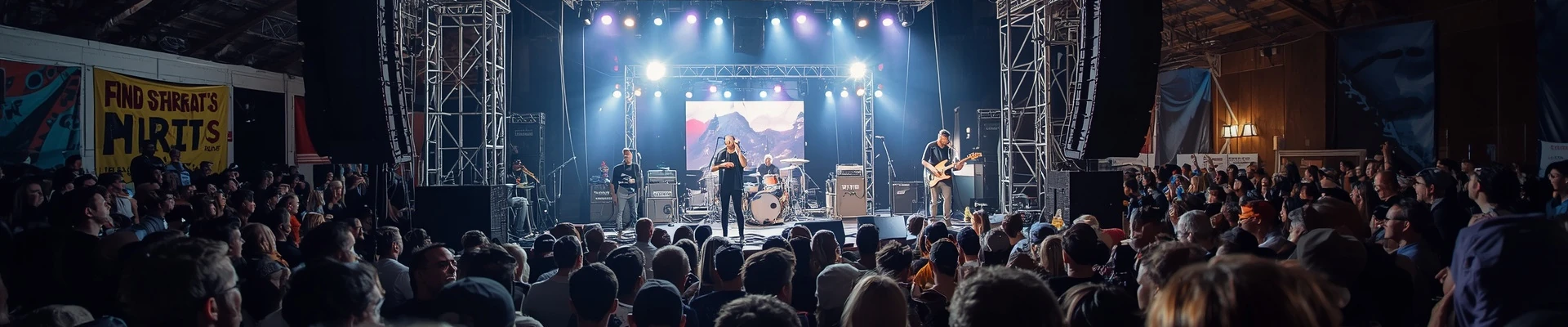
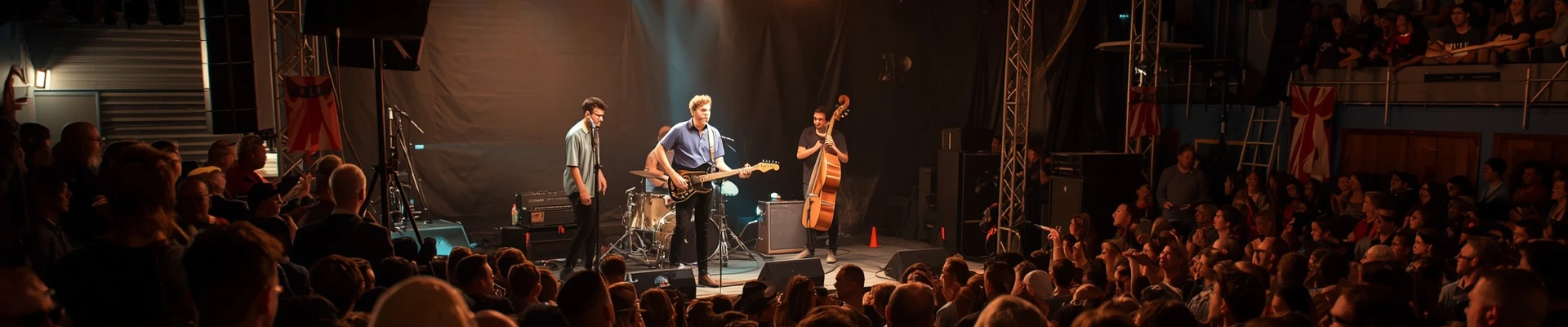
The Redstone Room — operated by River Music Experience in a beautifully renovated historic building on West 2nd Street in downtown Davenport — is the city's most important music venue. It programs blues, jazz, indie rock, Americana, and roots music across the full spectrum of Quad Cities talent and national touring acts. The River Music Experience as an organization extends beyond the venue into music education, instrument lending, and community programming that makes it one of the most mission-driven music nonprofits in the Midwest.
Schwiebert Riverfront Park and the adjacent LeClaire Park (named for the city's co-founder) anchor the outdoor festival circuit along the Mississippi. Vibrant Music Hall in nearby Moline provides a larger-capacity room for regional and national touring acts. The Adler Theatre — Davenport's historic 1930s movie palace, now a performing arts center — programs symphonic, touring Broadway, and major performing arts events. Augustana College and St. Ambrose University both operate music programs with campus venues that contribute to the city's classical and jazz calendar.
The Downtown core along West 2nd Street, Brady Street, and East 3rd Street anchors the bar and club circuit. The District (centered on East 3rd Street) concentrates a mix of bars with live music. The East Village neighborhood has seen revitalization driven partly by arts and music programming. The Division Street corridor in southwest Davenport anchors the Latin music and nightlife circuit.
Across the river, Rock Island and Moline contribute additional venue infrastructure to the broader Quad Cities music scene — Ribco in Rock Island is a long-running blues and rock club, and The Rust Belt in Rock Island is a mid-capacity rock venue. The QC Quad Cities Bike Fest and Quad Cities Waterfront Convention Center events add seasonal programming to the calendar.
Festivals and signature events
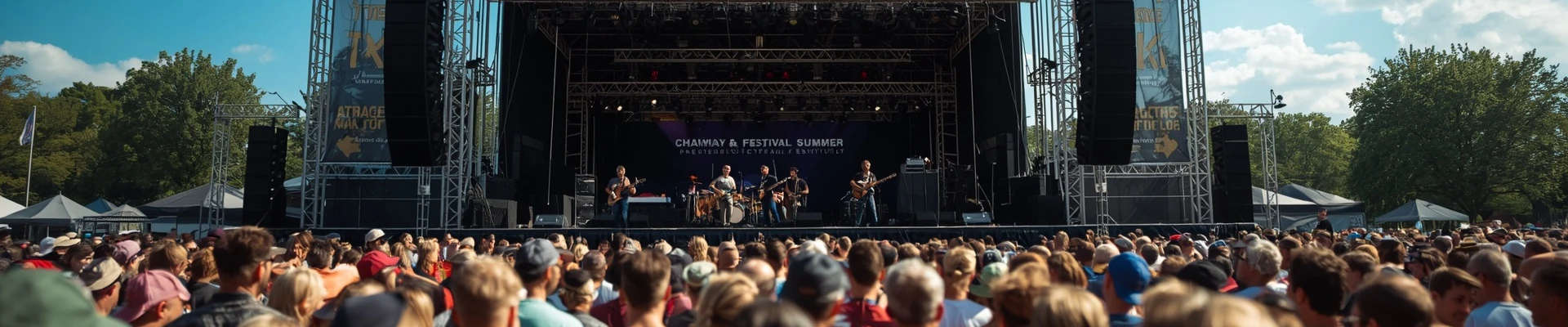
The Bix Beiderbecke Memorial Jazz Festival (late July, Schwiebert Riverfront Park and LeClaire Park) is Davenport's signature event and one of the defining traditional jazz festivals in America. Free outdoor stages run afternoon and evening sets across four days; the paid Saturday Night Ballroom event is the festival's centerpiece.
The Alternating Currents festival — a multi-day indie music and arts festival programming independent music across multiple downtown Davenport and Rock Island venues — has grown into one of the most ambitious small-city music festivals in the upper Midwest, with an emphasis on discovery-level and regional touring acts.
Ribfest (LeClaire Park, Memorial Day weekend) combines blues and roots music with competitive barbecue and draws tens of thousands of visitors to the riverfront. Davenport's 4th Fest is a major riverfront Fourth of July celebration with live music. Blues Blastoff programs blues acts through the winter months. Friday Night Live (downtown Davenport, summer months) is a free weekly outdoor concert series. Rock Island Brewing Company hosts regular live music and seasonal events that connect the Illinois and Iowa sides of the Quad Cities scene.
The Quad City Arts organization and the Figge Art Museum (Davenport's major fine arts institution, designed by David Chipperfield) program performing arts and music-adjacent events that contribute to the city's cultural calendar year-round.
What ties it all together
Davenport's musical identity is inseparable from the Mississippi River — and from the fact that a young man named Bix Beiderbecke grew up hearing that river's music in the early 20th century and took it to Chicago and New York where it helped shape the sound of early jazz. The Bix Beiderbecke Memorial Jazz Festival is not nostalgia for nostalgia's sake — it is a living institution that has kept traditional jazz genuine and accessible on the banks of the river where Beiderbecke learned to play. Beneath that heritage runs a club circuit built on blues, roots rock, indie, hip-hop, and Latin music sustained by the Quad Cities' working-class, multiethnic, river-town character. The River Music Experience and the Redstone Room are the organizational and physical heart of that ongoing scene — a serious, community-oriented music infrastructure in a city too often overlooked by national music media. Davenport is a river city, a jazz city, and a city where the work of keeping music alive has been done steadily and without fanfare for generations.