
Lexington-Fayette is the formal name of the consolidated urban-county government created in 1974 when the city of Lexington and Fayette County merged into a single jurisdiction — one of the earliest and most studied city-county consolidations in American history. With roughly 314,000 residents inside the consolidated boundary and a metro population approaching 530,000, Lexington-Fayette anchors central Kentucky's economy on twin pillars of thoroughbred horse farming and higher education. The city occupies the heart of the Inner Bluegrass, a limestone-rich plateau of rolling grassland where the geology itself — porous bedrock, calcium-rich pasture grass, and mineral-dense water — produces the muscular bone structure prized in racehorses. The white four-board fences and emerald paddocks that ring the city's perimeter have made Lexington-Fayette's outskirts among the most photographed agricultural landscapes in North America.
The University of Kentucky, with more than 30,000 students, is the dominant institutional presence, shaping nightlife, DIY music culture, and demographic diversity. Elevation sits at 301 metres above sea level. The city is approximately 130 km east of Louisville, 385 km north of Nashville, and about 130 km from the Appalachian foothills that have produced a disproportionate share of defining American country and folk music. That proximity — sitting at the hinge between the urban Bluegrass plateau and the mountains — gives Lexington-Fayette its particular musical character: a meeting point between the polished Nashville country apparatus and the raw Appalachian and old-time traditions of the eastern Kentucky hollers.
History
The land was Cherokee, Shawnee, and Wyandot hunting ground before Virginian surveyors pushed through the Cumberland Gap in the 1770s. Lexington was platted in 1781 and chartered as a city in 1832, named for the opening battle of the Revolutionary War. In the early 19th century it earned the title "the Athens of the West" — the most culturally sophisticated city west of the Appalachian Mountains, home to Transylvania University (founded 1780, the oldest university west of the Alleghenies), a vibrant publishing industry, and an economy built on hemp, tobacco, and horse trading. The Civil War bisected the city's loyalties; Kentucky was a border state, and Lexington's Confederate sympathies sat uneasily alongside Union administration. Reconstruction reshaped a city that had depended heavily on enslaved labor for its agricultural wealth.
The late 19th and early 20th centuries industrialized horse racing, tobacco processing, and distilling at scale. The University of Kentucky's growth through the mid-20th century shifted the economic center toward education, healthcare, and services. The 1974 merger creating Lexington-Fayette Urban County Government — a consolidation model that cities like Indianapolis (UniGov, 1970) and Jacksonville (1968) had recently pioneered — unified city and county services, stabilized the tax base, and established the governance structure that still operates today. Rupp Arena, built in 1976 and named for legendary UK basketball coach Adolph Rupp, gave the young consolidated government one of the most consequential indoor arenas in the American South almost immediately.
Music identity — Bluegrass at its source
Lexington-Fayette's music identity is inseparable from the state name attached to the instrument. Bluegrass music — the string-band style crystallized by Bill Monroe in the 1940s — was born in the cultural orbit of the Kentucky Bluegrass region, and the city has served for decades as the urban hub where the mountain string-band tradition meets the university-town folk revival and the Nashville country industry. Old-time fiddle tunes, mountain banjo playing, and Sacred Harp singing all have deep Lexington-area roots, and the city hosts one of the more active traditional music session scenes in the upper South.
The most consequential link between the city's geography and American music is Eastern Kentucky's Appalachian corridor — the mountains two hours southeast have produced a remarkable concentration of defining country and folk artists. Tyler Childers, from Lawrence County, built a substantial Lexington fanbase through early shows at Cosmic Charlie's and Manchester Music Hall before his album Purgatory (2017, produced by Sturgill Simpson) brought national attention. Childers has repeatedly cited Lexington crowds as central to his early career development, and his breakthrough coincided with a broader resurgence of Appalachian-inflected country that Lexington's music community championed early. Sturgill Simpson himself — from Jackson County in eastern Kentucky — drew Lexington as a key stop in his rise from outlaw-country underground to mainstream crossover.
The city's own production history runs through the University of Kentucky School of Music, which has trained classical, jazz, and contemporary performers for eight decades. Wax Fang, the art-rock duo whose 2013 single "The Astronaut" received unexpected national exposure through South Park, emerged from Lexington's indie circuit. The punk and hardcore scene orbiting UK in the 1990s and 2000s sustained a cluster of bands that influenced the regional underground. Cage the Elephant, though from Bowling Green, built part of their early fanbase through Lexington shows before their 2008 Atlantic debut made them one of the most commercially successful Kentucky rock exports of their generation. My Morning Jacket — based primarily in Louisville but deeply connected to the Kentucky alt-country scene — maintained a strong Lexington following throughout their rise.
The country and singer-songwriter community has always been strong. Billy Ray Cyrus, from Flatwoods in eastern Kentucky, spent time in Lexington in his early career years before breaking nationally with "Achy Breaky Heart" in 1992. The city's proximity to Nashville — a four-hour drive — means that touring country acts from mid-tier to arena level play Lexington regularly, and the club-to-Nashville pipeline runs through songwriter nights and open-mic circuits. Ricky Skaggs and Dwight Yoakam — both Kentucky-born standard bearers of traditional country and Appalachian music — made Lexington a consistent touring stop across their careers.
Gospel music has deep roots in Lexington's Black church tradition. The Consolidated Baptist Church, First Baptist Church Lexington, and the network of historically Black congregations on Georgetown Street and the Northside have produced gospel choirs, soloists, and musicians who move through the broader music scene. Hip-hop scenes have developed in Northside neighborhoods alongside R&B and trap production communities connected to the region's growing studio infrastructure.
Venues and neighborhoods
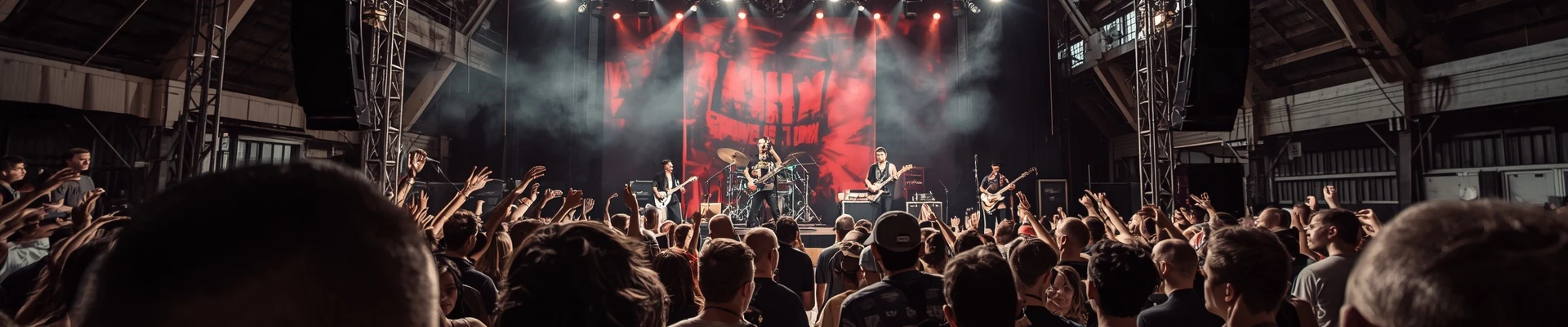
Lexington-Fayette's venue infrastructure punches significantly above its population. At the top sits Rupp Arena — the 23,000-capacity downtown arena that is one of the largest in the American South — which hosts arena-level country acts, rock tours, and hip-hop spectacles. The 2023 renovation and expansion of the downtown convention district reinforced Rupp's position as the region's primary arena well into the future, with the adjacent Central Bank Center supplementing capacity for multi-stage events and conventions.
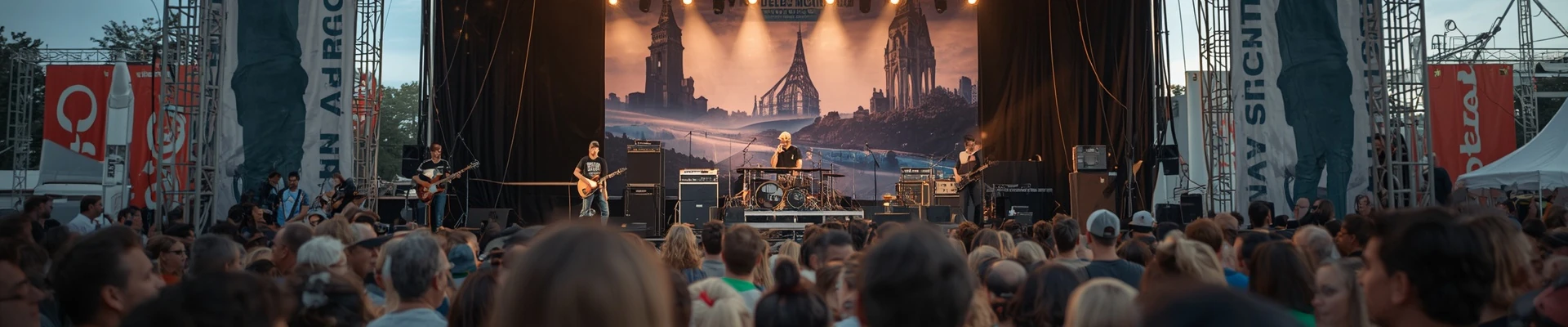
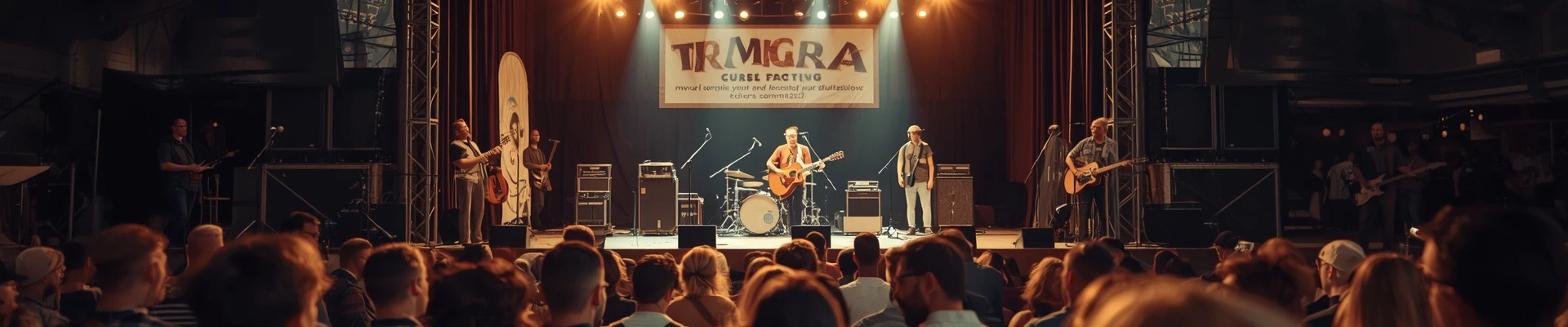
The mid-size tier is anchored by Manchester Music Hall (1,600-capacity, the city's leading club for national touring indie, country, and rock acts, housed in a converted 1912 tobacco warehouse in the Manchester Street corridor of the Distillery District), The Burl (600-capacity, a cedar-clad room that has become Lexington's premier venue for Americana, folk, and indie singer-songwriter acts since opening in 2015, with an outdoor deck that gives it a distinctive intimacy for the genre), and Cosmic Charlie's (400-capacity, the long-running psychedelic and jam-band club that has launched dozens of Lexington careers and remains the city's most personality-rich small room).
Pazzo's on Broadway has hosted jazz and blues bookings for years. Al's Bar on Limestone Street anchors the University of Kentucky undergraduate circuit as the classic dive-bar institution. Two Keys Tavern and Buster's Billiards round out the small-room tier. The Kentucky Theatre — the 600-capacity 1922 atmospheric movie palace on Main Street — occasionally programs live music alongside its arthouse cinema mission. Singletary Center for the Arts on the UK campus (1,550-seat hall) programs classical, jazz, folk, and world music through the academic year.
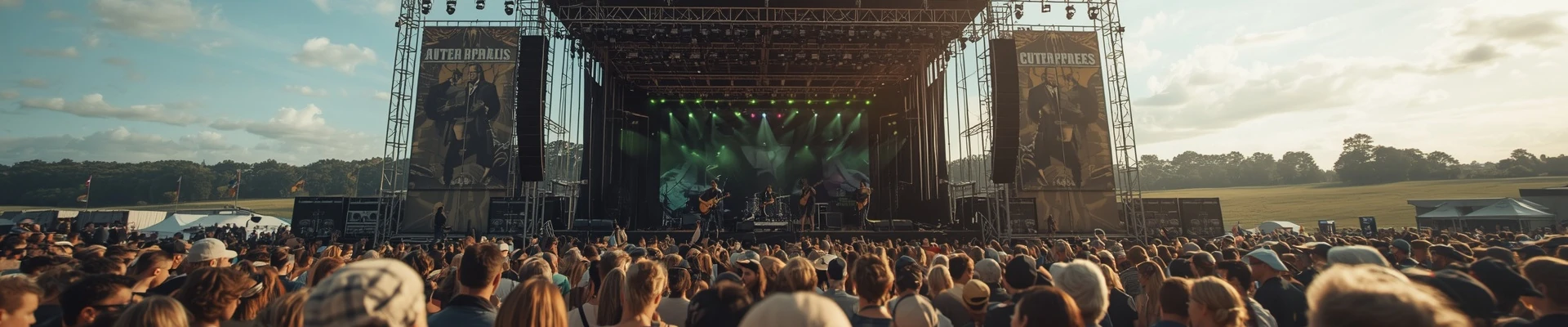
Keeneland Race Course, the 1936 thoroughbred track north of the city, programs major outdoor concerts during its spring and fall meets — Kacey Musgraves, Eric Church, and Zac Brown Band have all played the course — and hosts the annual Railbird Music Festival. The Kentucky Horse Park, a 1,200-acre equestrian complex and events center north of the city, hosts the Festival of the Bluegrass and serves as a secondary outdoor concert venue.
Neighborhoods carry distinct musical identities. Downtown Lexington — particularly the Main Street and Short Street corridors — concentrates the bar and live-music strip. The Distillery District on Manchester Street has emerged as the most dynamic arts and nightlife hub since the 2010s. Northside neighborhoods (around Georgetown Street) have historically been the heart of Lexington's African-American community and its R&B, gospel, and hip-hop culture. The University of Kentucky campus and surrounding Limestone Street corridor sustains the undergraduate indie and alternative scene. Chevy Chase anchors a quieter bohemian arts presence.
Festivals and signature events
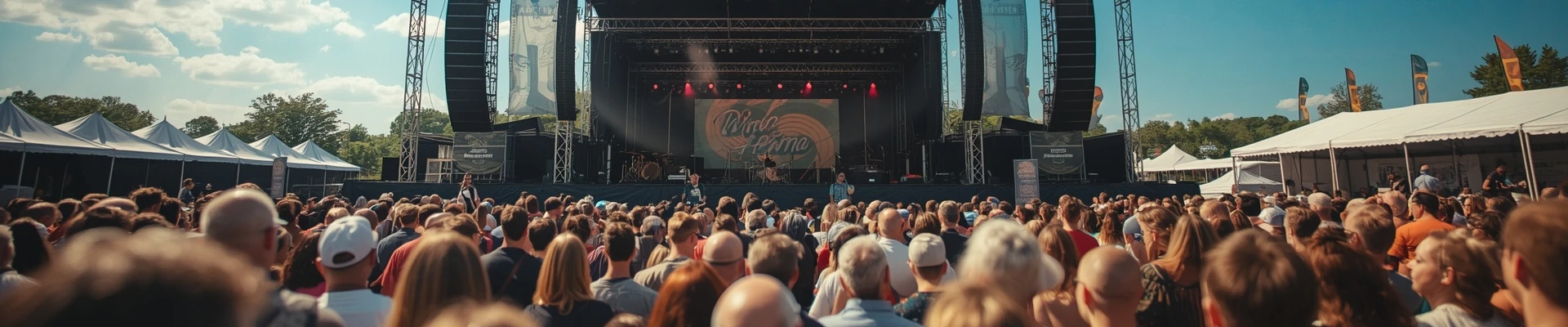
Railbird Music Festival is Lexington-Fayette's most prominent national-profile music event. Launched at Keeneland Race Course in 2019 (paused for the pandemic, revived in 2021), it programs two stages of nationally touring acts across a mid-size festival footprint, with recent headliners including Chris Stapleton, Hozier, Tyler Childers, Nathaniel Rateliff & the Night Sweats, and Leon Bridges. The Keeneland setting — against the backdrop of thoroughbred barns, limestone grandstands, and white rail fences — gives Railbird a distinctive visual identity that separates it from the field-in-a-parking-lot aesthetic of most American festivals.
The Festival of the Bluegrass at the Kentucky Horse Park is a long-running traditional and contemporary bluegrass gathering that programs acts across the instrumental and vocal spectrum. LexJazz programming fills the mid-calendar. The UK Roots and Branches Folk Series at Singletary Center programs internationally touring folk and Americana acts through the academic year. Woodland Art Fair programs live music alongside visual arts in the summer. The Lexington Philharmonic's outdoor summer concerts in Jacobson Park draw large community crowds.
What ties it all together
Lexington-Fayette is the meeting point of several distinct Kentucky musical traditions. The consolidated government name carries the administrative identity of a city that sits at the boundary between the polished Nashville country machine and the raw Appalachian and old-time traditions of the eastern mountains; between the university-town indie circuit and the tobacco-warehouse-turned-concert-hall industrial heritage of the Distillery District; between the old-money elegance of Keeneland and the DIY urgency of Cosmic Charlie's. Rupp Arena gives it arena-level infrastructure that cities twice its size often lack. Manchester Music Hall and The Burl give it a credible mid-size circuit. Railbird gives it a nationally recognized festival anchor at one of the most picturesque venues in American thoroughbred racing.
Most importantly, its proximity to the most music-rich corner of Appalachia — a two-hour drive from Lawrence County, Floyd County, and the mountain communities that produced Tyler Childers, Loretta Lynn, Crystal Gayle, and the Judds — gives Lexington-Fayette a gravitational pull on the most consequential country and folk voices working in American music today. Lexington-Fayette is not a music capital in the way Nashville or Austin are, but it is something more interesting: a sophisticated, limestone-and-bluegrass city that knows it sits at the doorstep of one of the most musically fertile regions in America, and that takes that proximity seriously.