
Louisville is the largest city in Kentucky and the 27th-largest in the United States, with roughly 624,000 residents inside the consolidated city–county limits and more than 1.4 million across the surrounding metropolitan area, which spans the Ohio River north into southern Indiana. Sitting at the Falls of the Ohio — the only natural barrier to navigation along the entire Ohio River — and ringed by the rolling bluegrass farmland that stretches east toward Lexington and the Knobs region to the south, it is the largest city in Kentucky and one of the most culturally distinctive cities in the Upper South. Louisville is the home of the Kentucky Derby (the longest continuously held annual sporting event in the United States, run since 1875 at Churchill Downs), the Louisville Slugger baseball bat, and the global headquarters of the bourbon distilling industry — and its musical identity reflects that mix: a deep bluegrass and Appalachian roots tradition tied to the Kentucky countryside, a serious indie rock and post-rock lineage that produced one of the most acclaimed American underground scenes of the 1990s, an outsized Black church-music tradition rooted in the city's historic Black neighborhoods, and a fast-growing modern hip-hop and R&B ecosystem.
A brief history
The land at the Falls of the Ohio was Shawnee, Cherokee, and Lenape territory before George Rogers Clark established a small American settlement on Corn Island in 1778. The town was named for King Louis XVI of France in recognition of French support during the American Revolution. Through the 19th century Louisville grew rapidly as the largest river port between Pittsburgh and New Orleans, the gateway between the Northern industrial economy and the Southern agricultural economy. The city remained a major shipping and manufacturing hub through the 20th century, anchored by General Electric's Appliance Park, the Ford Louisville Assembly Plant, Brown-Forman (Jack Daniel's parent company), and a deep bourbon distilling industry. The 1937 Great Ohio River Flood devastated the city; the postwar suburbanization, the 2003 city-county merger that created Louisville Metro Government, and the 2020 protests over the police killing of Breonna Taylor have all shaped recent civic memory. Successive waves of migration — Black Southerners during and after the Great Migration, Italian and Eastern European Catholic families through the 20th century, very large Vietnamese and Cuban populations through the late 20th century, and growing Mexican, Honduran, Nepali, Somali, and Congolese communities since the 1990s — have built a city that is roughly 23% Black and increasingly diverse.
Music identity
Louisville's most internationally acclaimed musical chapter is the rise of one of the most influential American underground rock scenes of the late 1980s and 1990s. Slint, formed in Louisville in 1986 by Brian McMahan, David Pajo, Britt Walford, and Ethan Buckler, released Spiderland (1991) — an album that, although commercially obscure on release, has become widely regarded as one of the most influential indie rock albums ever made and is often cited as the foundational document of post-rock. Slint's members went on to form Tortoise (Pajo, briefly), Papa M (Pajo's solo project), The For Carnation (McMahan), and a network of bands that helped define the broader post-rock and math-rock movements of the 1990s and 2000s. Squirrel Bait, the earlier Louisville hardcore band that produced Slint's members along with David Grubbs (later of Bastro and Gastr del Sol), built one of the most acclaimed late-1980s hardcore catalogs. Rodan, June of '44, Crain, Bastro, The Shipping News, and a deep network of Louisville post-hardcore and post-rock bands — most associated with the Louisville scene that developed around the Rocket House and a network of basement venues in the late 1980s and early 1990s — have made Louisville one of the most consequential small-city American underground rock scenes ever.
The 1990s and 2000s extended the lineage through bands like My Morning Jacket, formed in Louisville in 1998 by Jim James, Tom Blankenship, Patrick Hallahan, and Carl Broemel. It Still Moves (2003) and Z (2005) made them one of the most acclaimed American indie rock bands of the era, and their continued home base in Louisville — Jim James still records and performs out of the city — has anchored the modern Louisville scene. VHS or Beta, Wax Fang, The Ass Ponys's tour stops, Cabin (Pajo's later project), Cake Like's Louisville ties, and a deep current generation continue the indie tradition. Will Oldham (Bonnie "Prince" Billy), the singer-songwriter and former Palace Music leader, has been Louisville-based for decades and built one of the most acclaimed American underground folk catalogues. Catherine Irwin of Freakwater anchors the alt-country tradition. Houndmouth, The Watson Twins, Cage the Elephant's tour stops (the band is from Bowling Green, Kentucky), Twin Limb, White Reaper, and a thriving local indie scene around clubs like Headliners Music Hall and Zanzabar continue the lineage.
Louisville's bluegrass tradition runs through the broader Kentucky bluegrass economy. Bill Monroe, the Father of Bluegrass, was born in Rosine, Kentucky (90 minutes southwest of Louisville) and built much of his early career through Louisville-area performances. The Stanley Brothers, The Osborne Brothers, J.D. Crowe (Lexington-based but a constant Louisville presence), Ricky Skaggs (raised in eastern Kentucky and a constant Louisville presence), and Sam Bush all worked the Louisville bluegrass circuit. The International Bluegrass Music Association held its annual convention in Louisville from 1985 to 2004 (it has since moved to Owensboro and then Raleigh and back), and the Bluegrass Music Hall of Fame is in Owensboro, two hours west. Old-time and mountain music continue through Louisville-area folk venues and the Kentucky School of Bluegrass and Traditional Music in nearby Hyden.
Louisville's Black music lineage runs continuously through the city's historic West End and Smoketown neighborhoods. Lionel Hampton, born in Louisville in 1908 and raised in Chicago, went on to become one of the most influential jazz vibraphonists in history. Jonah Jones, the trumpeter, was born in Louisville. Helen Humes, the Count Basie Orchestra vocalist, was born and raised in Louisville. Sweet Evening Breeze, the legendary Louisville Black drag performer of the early 20th century, anchored a deep queer Black entertainment tradition. Wynonie Harris, while raised in Omaha, recorded extensively in Louisville. Shirley Mae's Cafe (a Louisville institution) and a long lineage of Black-owned music venues anchored the West End scene through the 20th century. The Black gospel tradition continues through churches across the West End, anchored by venues like St. Stephen Baptist Church and a deep choral tradition. The University of Louisville's Jamey Aebersold Jazz Studies program is one of the most respected in the country.
The 21st century has remade the city again. Bryson Tiller (Bryson Djuan Tiller), born and raised in Louisville, broke independently with "Don't" (2015) on SoundCloud and built one of the most commercially successful R&B catalogues of the late 2010s through T R A P S O U L (2015). His ongoing public ties to Louisville — including the PJ's Coffee concert and his continued home base in the city — have reshaped the modern Louisville musical identity. Jack Harlow (Jackman Thomas Harlow), born and raised in Louisville and a graduate of Atherton High School, broke nationally with "WHATS POPPIN" (2020) and "Industry Baby" (2021, with Lil Nas X) and has become one of the most commercially successful young rappers of the 2020s; his deep public ties to Louisville — including his Private Garden label, his Kentucky Derby appearances, and his continued home base in the city — have made him one of Louisville's most beloved cultural figures. Static Major (Stephen Garrett), the Louisville-raised R&B singer and producer, co-wrote and sang on Aaliyah's "Try Again" before his death in 2008. 2 Live Stews's Louisville ties, Nappy Roots's Louisville orbit, EST Gee (the Louisville rapper signed to Yo Gotti's CMG), Jack Harlow's Private Garden roster, and a current generation of trap and indie hip-hop artists fill the city's clubs.
Venues and neighborhoods
Louisville's venue ecosystem is well-developed. At the top sit the KFC Yum! Center (home of Louisville Cardinals basketball and the city's largest indoor concerts), Lynn Family Stadium, the Iroquois Amphitheater (a 2,300-seat outdoor amphitheater), the Kentucky Center for the Performing Arts (housing Whitney Hall, home of the Louisville Orchestra; Bomhard Theater; and MeX Theater), the Louisville Palace (the legendary 1928 movie palace), Louder Than Life Festival's grounds, and Bourbon & Beyond Festival's programming. The midsize tier includes Headliners Music Hall (the long-running indie rock venue, in operation since 1976 and anchoring the local rock scene), Mercury Ballroom, the Old Forester's Paristown Hall, the Brown Theatre, and Forecastle's legacy programming. Beneath them is a deep club layer — Headliners, Zanzabar in Germantown, Highlands Tap Room, Kaiju, The Cure Lounge, The Pour Haus, Magnolia Bar, Café Lou Lou, The Whirling Tiger, and a network of bars and DIY rooms across the Highlands, Germantown, NuLu, and Butchertown. Stevie Ray's Blues Bar anchors the city's blues circuit. The University of Louisville's Bird Recital Hall and Comstock Hall host classical and jazz programming.
Different neighborhoods carry different musical identities. The Highlands along Bardstown Road anchors the indie rock, alt-country, and DIY scenes. Germantown has emerged in recent years as a small-venue indie corridor. NuLu (East Market) anchors a higher-end bar and venue circuit. Butchertown supports a complementary indie and roots scene. Old Louisville anchors the city's classical and historic music traditions. The West End retains the historic Black music identity. Smoketown anchors the historic Black music corridor. Crescent Hill and St. Matthews support smaller bar and venue circuits. South Louisville anchors the bluegrass and country traditions.
Festivals and signature events
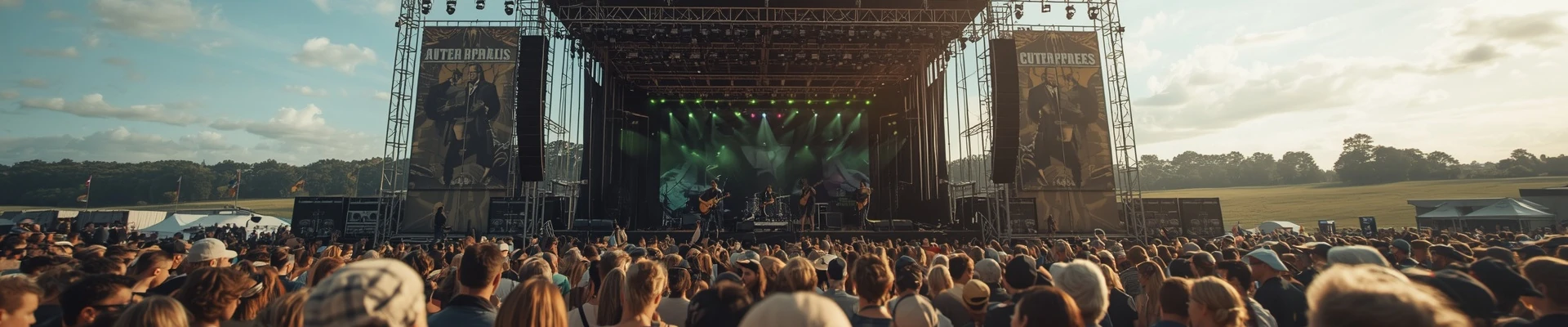
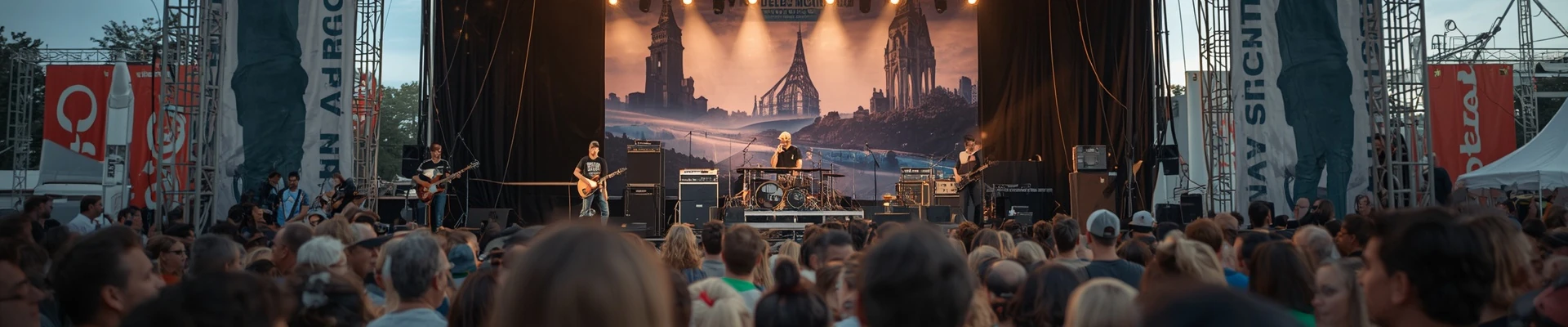
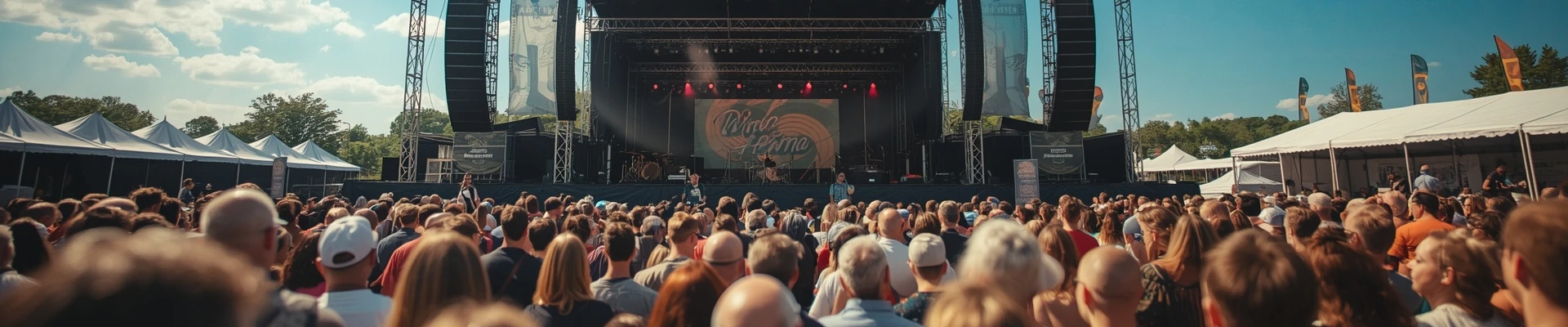
The festival calendar reflects the city's range. Louder Than Life Festival at Highland Festival Grounds at the Kentucky Exposition Center each September is one of the largest hard-rock and metal festivals in the United States, drawing major touring acts. Bourbon & Beyond Festival, also at Highland Festival Grounds, programs major rock, country, and Americana acts alongside bourbon programming. Forecastle Festival at Waterfront Park (founded in 2002 and on hiatus since 2022) was the city's flagship modern indie festival. Hometown Rising (country music) and Goettafest add to the festival circuit. Kentucky Derby Festival in late April and early May programs hundreds of events across the city, including Thunder Over Louisville (one of the largest fireworks shows in North America with a major music programming track), Pegasus Parade, and the Great Steamboat Race. Kentucky State Fair in late August programs major country, rock, and pop acts at Freedom Hall. WorldFest at the Belvedere, Cherokee Triangle Art Fair, NuLu Fest, Louisville Pride, Festival Latino, Vietnamese Tết Festival, St. James Court Art Show's music programming, Gallopalooza, and the Louisville Orchestra's Pops programming round out the calendar. Bardstown's Stephen Foster Music Festival draws on the Louisville audience.
What ties it all together is the city's combination of Upper South geography, river-port industrial heritage, deep bluegrass and Black church traditions, and a uniquely scrappy underground rock and indie scene. Louisville is the city where Slint built post-rock with Spiderland, where My Morning Jacket built modern Southern indie rock, where Will Oldham built American underground folk under the Bonnie "Prince" Billy name, where Bryson Tiller invented modern alt-R&B with T R A P S O U L, where Jack Harlow became one of the most commercially successful rappers of the 2020s, where Bill Monroe and the broader Kentucky bluegrass tradition runs through the city's clubs and festivals, and where Headliners Music Hall has been anchoring the local scene since 1976.