
Geography and framing
New Orleans sits in a shallow bowl on a great curve of the lower Mississippi River, roughly 100 miles upstream from where the river finally empties into the Gulf of Mexico. The river bends so dramatically through town that the city was nicknamed the Crescent City long before anyone thought to count its musicians. Surrounded by Lake Pontchartrain to the north, brackish marshland to the east, and the bayous and swamps of the Mississippi River Delta on every other side, New Orleans is a city built below sea level and held in place by levees, pumps, and stubbornness. The municipal population — roughly 363,000 — is small for a city this culturally enormous; the metro area sits closer to 1.27 million, but the urban core is denser, weirder, and more concentrated than any other U.S. city of comparable size.
The economy runs on the Port of South Louisiana (one of the largest tonnage ports in the Western Hemisphere), oil and gas services anchored across the river in the petrochemical corridor, healthcare (LCMC, Ochsner), Tulane and Loyola universities, and — most visibly — tourism. Roughly 19 million visitors a year come for Mardi Gras, Jazz Fest, the food, the architecture, and the music that pours out of every other doorway in the French Quarter, Frenchmen Street, and Tremé.
History
Founded in 1718 by the French as La Nouvelle-Orléans, ceded to Spain in 1763, returned to France, and sold to the United States in 1803 as part of the Louisiana Purchase, the city's cultural DNA was set by three colonial regimes overlaid on enslaved African, free Creole of color, Indigenous Houma and Choctaw, and later Sicilian, Irish, German, Vietnamese, and Honduran communities. The result was — and is — a city that is functionally Caribbean rather than Southern, Catholic rather than Protestant, French and Spanish in its courtyards and ironwork, African in its rhythm, and entirely its own thing.
Congo Square, in what is now Louis Armstrong Park in Tremé, is the foundational site. Under French and Spanish colonial law, enslaved Africans were permitted to gather on Sundays — a small mercy that did not exist elsewhere in the antebellum South — and they used those gatherings to keep alive Bambara, Kongo, Yoruba, and Fon drumming, dancing, and call-and-response singing. Those rhythms never died. They went underground after Reconstruction, surfaced in the brass bands of the late 19th century, and erupted out of the Storyville red-light district at the turn of the 20th century as something the world would eventually learn to call jazz.
The 20th century brought hurricanes (Betsy in 1965, Katrina in 2005), white flight, the bulldozing of the North Claiborne oak corridor for the I-10 expressway through Tremé, and a long demographic decline from a 1960 peak of 627,000. Hurricane Katrina in August 2005 displaced most of the city; tens of thousands of musicians and culture-bearers were scattered across the country. The recovery has been incomplete and uneven, but the music came back faster than almost anything else.
Music identity
There is no honest way to write a short paragraph about New Orleans music. The city is a tree with too many branches.
Jazz was born here. Buddy Bolden, the cornetist whose Storyville bands at the turn of the 20th century are generally credited as the first jazz performances, never recorded a note before mental illness silenced him in 1907. Jelly Roll Morton, a Creole pianist from the Faubourg Marigny, claimed to have invented jazz in 1902 — an exaggeration but not a lie. King Oliver moved his Creole Jazz Band to Chicago in 1918 and sent for a young second-line cornetist named Louis Armstrong, whose Hot Five and Hot Seven recordings in the late 1920s are the foundational documents of the music. Sidney Bechet, Kid Ory, Bunk Johnson, George Lewis, and the Original Dixieland Jass Band all came out of the same handful of square miles.
Rhythm and blues is the second great New Orleans contribution. Cosimo Matassa's J&M Recording Studio at the corner of Rampart and Dumaine, opened in 1945, recorded Fats Domino's "The Fat Man" (1949) — frequently cited as the first rock and roll record — along with Little Richard's "Tutti Frutti," Lloyd Price's "Lawdy Miss Clawdy," and the early hits of Smiley Lewis, Shirley & Lee, and Professor Longhair. The session pianist on most of those records was Allen Toussaint, who would go on to write and produce hits for Lee Dorsey, Aaron Neville, Irma Thomas, Dr. John, The Meters, and LaBelle, and whose Sea-Saint Studios in Gentilly was the New Orleans equivalent of Stax or Muscle Shoals. Dave Bartholomew, Domino's bandleader and co-writer, was the architect of the New Orleans R&B sound — that loping, second-line shuffle with a tresillo bassline underneath.
Funk is the third. The Meters — Art Neville, George Porter Jr., Leo Nocentelli, Joseph "Zigaboo" Modeliste — invented a syncopated, deeply pocketed funk in the late 1960s that has been sampled more than almost any other catalog in hip-hop history. The Neville Brothers, Dr. John's gris-gris records, and the Wild Tchoupitoulas album (1976) are extensions of the same lineage.
Bounce is the fourth — and the most recent. A regional hip-hop subgenre built on the "Triggerman" beat (sampled from the Showboys' 1986 single "Drag Rap"), bounce emerged from the city's housing projects in the early 1990s. DJ Jubilee, Magnolia Shorty, Partners-N-Crime, and Big Freedia (the genre's most internationally visible ambassador) defined it. Cash Money Records, founded by Bryan "Birdman" Williams and Ronald "Slim" Williams in 1991, took the bounce sensibility national through Juvenile, B.G., Turk, Lil Wayne, and the Hot Boys — and Lil Wayne, born and raised in Hollygrove, became one of the most influential rappers of the 21st century. No Limit Records, Master P's rival empire, ran in parallel through the late 1990s.
The brass band tradition never stopped. The Dirty Dozen Brass Band modernized the form in the late 1970s; the Rebirth Brass Band (founded 1983) carried it into the 21st century with a hip-hop and funk-inflected attack; the Hot 8 Brass Band, Soul Rebels, Stooges Brass Band, and TBC Brass Band keep the second-line parades — the Sunday social aid and pleasure club processions that wind through Central City, Tremé, and the Sixth Ward — fully alive. The Mardi Gras Indian tribes (Wild Magnolias, Wild Tchoupitoulas, Golden Eagles, Creole Wild West) are a parallel African-Indigenous tradition with their own chants, their own elaborately beaded and feathered suits, and their own Carnival calendar.
Venues and neighborhoods
Frenchmen Street in the Faubourg Marigny is the working musician's strip — The Spotted Cat, d.b.a., The Maison, Snug Harbor (the city's flagship modern jazz room), Blue Nile, and Three Muses all within a three-block walk. Bourbon Street in the French Quarter is for tourists, but Preservation Hall on St. Peter Street is the real thing — a tiny, bench-lined room where traditional jazz has been played nightly since 1961.
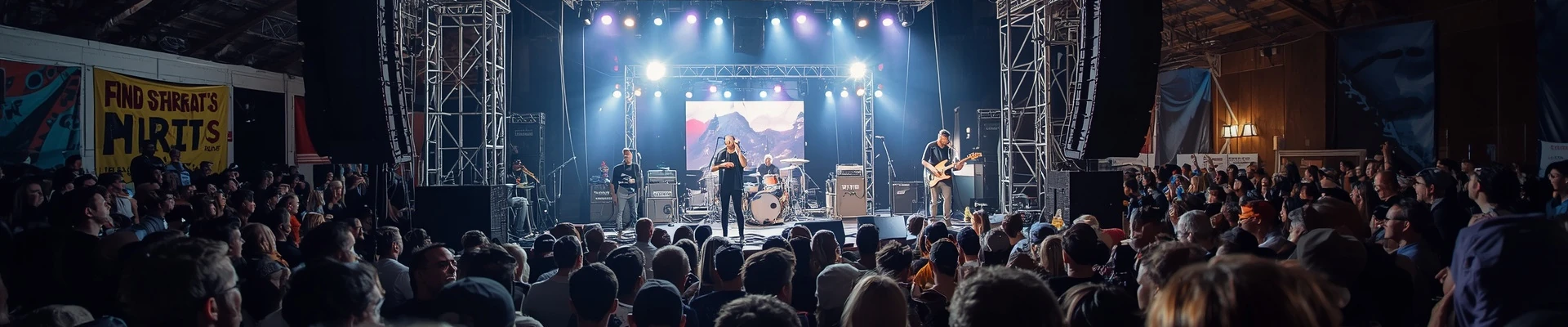
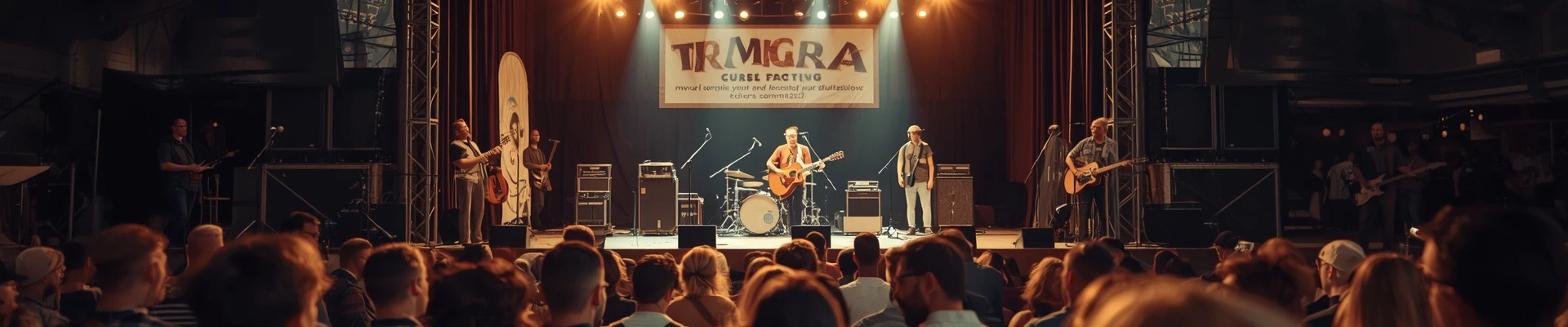
Tipitina's at Napoleon and Tchoupitoulas, opened in 1977 and named for a Professor Longhair song, is the city's iconic mid-size club; it was rescued from financial collapse in 2018 when the Galactic guys (the band) bought it. The Maple Leaf Bar uptown hosts the legendary Tuesday-night Rebirth Brass Band residency. One Eyed Jacks (Decatur Street, French Quarter) is the indie-rock and burlesque room. The Howlin' Wolf in the Warehouse District handles bigger touring acts; Joy Theater and Civic Theatre on Canal handle theater-scale shows. Smoothie King Center is the arena. Saenger Theatre on Canal is the historic vaudeville-era room.
The House of Blues in the French Quarter, the Carver Theater in Tremé, the Music Box Village in Bywater (a literally architectural instrument installation), and the open-air Lafayette Square Wednesday-night concert series fill out the calendar.
Festivals and signature events
Mardi Gras is not a music festival per se, but the entire city becomes one for the two weeks leading up to Fat Tuesday — krewes, parades, marching bands, Indian gangs, Skull and Bone gangs, and Baby Dolls all in motion. The New Orleans Jazz & Heritage Festival at the Fair Grounds Race Course, held over two long weekends in late April and early May, is the city's biggest single music event and one of the most musically deep festivals in the world — local artists hold the centerpiece even when Stevie Wonder and the Stones are on the headliner stage. French Quarter Festival in April is the biggest free festival in the South, focused entirely on Louisiana music. Voodoo Music + Arts Experience in City Park on Halloween weekend covers rock, hip-hop, and electronic. Essence Festival over the Fourth of July weekend is the largest African-American cultural event in the country. Satchmo SummerFest (August), Treme Creole Gumbo Festival (November), Buku Music + Art Project (March, electronic-leaning), and a year-round calendar of second-line parades organized by the social aid and pleasure clubs round it out.
What ties it all together
New Orleans is the only American city where the music is older than the country, where a brass band can still draw a crowd on a Tuesday night in a residential neighborhood, where jazz, R&B, funk, brass band, bounce, and Mardi Gras Indian chant are not separate genres so much as different angles on the same long, deep, syncopated conversation that has been going on in Congo Square since 1730. The defining signature is the second line — the rolling parade of brass, dancers, parasols, and handkerchiefs that follows a brass band through the streets — and the underlying pulse of the clave and the tresillo, the African-rooted rhythm that makes everything from Fats Domino's piano triplets to Lil Wayne's drum patterns sound, unmistakably, like nowhere else.