

Where the Red River Bends
Shreveport sits in the northwestern corner of Louisiana on the western bank of the Red River, roughly equidistant from Dallas, Little Rock, and New Orleans — each about four hours away. The metropolitan area, which straddles the Texas–Louisiana state line and folds in neighboring Bossier City, holds around 440,000 people, making it Louisiana's second-largest metro after Greater New Orleans. The broader economy runs on healthcare, gaming (the riverboat and land-based casinos lining the Red River corridor), natural gas, and a film-production sector that earned the city the nickname "Hollywood South" before that label migrated to New Orleans. But Shreveport's most durable identity is musical: the city produced or launched more nationally consequential artists in the mid-twentieth century than its size alone would predict, and its current scene still carries that outsized ambition.
Leadbelly and the Deep Blues Foundation
The oldest chapter in Shreveport's music story begins in Caddo Parish, where Huddie "Leadbelly" Ledbetter was raised at the turn of the twentieth century. Leadbelly did not live a settled Shreveport life — he was peripatetic, violent, twice imprisoned, twice pardoned — but his formation in the Red River cotton economy gave his twelve-string guitar style and his enormous song catalogue a specific regional gravity. "Goodnight, Irene", "Midnight Special", and "Bring Me Li'l Water, Silvy" all carry traces of the Louisiana–East Texas borderlands where he grew up. When folklorists John and Alan Lomax recorded him at Angola State Prison in 1933, they were documenting music that had already absorbed decades of Shreveport-area work songs, Caddo-country church singing, and Texas barrelhouse piano. That foundational current — blues at the intersection of Louisiana swamp and Texas plains — runs beneath everything Shreveport has produced since.
The Louisiana Hayride: The Cradle of the Stars
No institution defined Shreveport's place in American music history more than the Louisiana Hayride, the live country radio program broadcast from the Municipal Auditorium starting in 1948. Produced by KWKH 1130 AM and eventually syndicated across much of the South and Midwest, the Hayride occupied a specific and strategic niche: it was more willing than the Grand Ole Opry to book unproven or unconventional acts, which meant that artists who hadn't yet broken through — or who had been turned down elsewhere — could debut on a major regional stage.
The roster reads like a condensed history of postwar country and early rock and roll. Hank Williams joined in 1948 when he was still struggling and his marriage was fraying; Shreveport audiences responded to his raw honky-tonk immediacy before Nashville had fully processed what to do with him. Elvis Presley first performed on the Hayride stage in October 1954, just months after recording "That's All Right" for Sun Records, and he returned regularly through 1955, earning the crowd response that convinced Colonel Tom Parker to take over his management. Johnny Cash played the Hayride, as did Kitty Wells, Jim Reeves, Slim Whitman, Webb Pierce, and David Houston. The auditorium on Texas Street became the venue where country and early rockabilly merged in real time before live audiences.
The Municipal Auditorium still stands — a 1929 Art Deco landmark — and still hosts concerts. The room where Elvis and Hank Williams stood has been preserved, and its National Register listing reflects a genuine understanding that the building is a primary site of American music history, not a simulacrum.
R&B, Soul, and the Strand Era
While the Hayride anchored the white country circuit, Shreveport's Black music community built its own parallel infrastructure along Texas Street and in the neighborhoods north and south of the downtown corridor. Local R&B labels pressed regional sides in the 1950s and early 1960s, and the Strand Theatre and various club rooms hosted touring packages from the Chitlin' Circuit — B.B. King, Bobby "Blue" Bland, Little Richard — who recognized that northwest Louisiana audiences were as serious as any in the region.
Smiley Lewis, born in DeQuincy and associated with New Orleans, spent formative years performing in and around Shreveport before his recording career took hold. The circuit between Shreveport, Baton Rouge, and New Orleans was tight enough that stylistic ideas moved freely; the funky, horn-driven R&B that characterizes much of Louisiana's postwar sound was as much a product of cross-city travel as of any single recording room.
Guitar Town: James Burton and the Shreveport Guitar Lineage
Shreveport produced one of the most influential guitarists in rock and roll history: James Burton, born in nearby Dubberly and raised in Shreveport, who developed his distinctive chicken-pickin' style as a teenager playing local clubs and sessions in the mid-1950s. Burton's recording debut — the riff on Ricky Nelson's "Susie Q" in 1957 — announced a sound that would define West Coast rockabilly; his subsequent decades as Elvis Presley's lead guitarist from 1969 onward cemented his reputation as one of the most recorded session players in history. The James Burton Foundation has operated in Shreveport for years, presenting guitar festivals and music education programs that carry his name forward.
The local guitar tradition Burton helped establish feeds into Shreveport's ongoing tendency to produce technically exceptional players who spread outward rather than staying home — a pattern common to mid-size cities with strong musical foundations but limited local industry infrastructure.
Contemporary Hip-Hop and Rap
Since the late 1990s, Shreveport has contributed meaningfully to Southern hip-hop. The city is best known nationally as the birthplace of Boosie Badazz (Torrence Hatch), whose raw, confessional street narratives earned him a devoted regional following and national recognition well before mainstream crossover. Boosie's music — recorded for Trill Entertainment and later through independent channels — documented Shreveport's north-side neighborhoods with a specificity that functions partly as sociology, and his releases through the 2000s and 2010s charted consistently on Billboard despite minimal mainstream radio play in the early years.
The label Trill Entertainment, based in Baton Rouge but deeply connected to the Shreveport–Baton Rouge corridor, provided distribution and industry infrastructure for a wave of Louisiana rappers whose aesthetic — slow, heavy 808s, blunt lyricism, regional slang — became influential on subsequent generations of Southern rap. C-Loc, Lil Phat, and other Shreveport-affiliated artists contributed to this network.
More recently, the local scene has diversified, with producers and artists working across trap, melodic rap, and experimental R&B. The Cross Lake area and surrounding Shreveport neighborhoods have produced independent acts releasing through SoundCloud and streaming platforms who haven't yet broken nationally but sustain an active local ecosystem.
Venues and the Live Music Landscape
The Municipal Auditorium (capacity around 3,800) remains the flagship historic venue and anchors the performing arts district. For mid-size touring shows, Shreveport Municipal Memorial Auditorium competes with the Saenger Theatre — a renovated 1925 movie palace on Texas Street that hosts Broadway touring productions and concerts in the 2,500-seat range.
The Horseshoe Casino and adjacent properties along the Red River waterfront have integrated live entertainment into their operations, bringing in national country and R&B acts. The Shreveport Convention Center expands the city's capacity for large-format shows and festival-scale events.
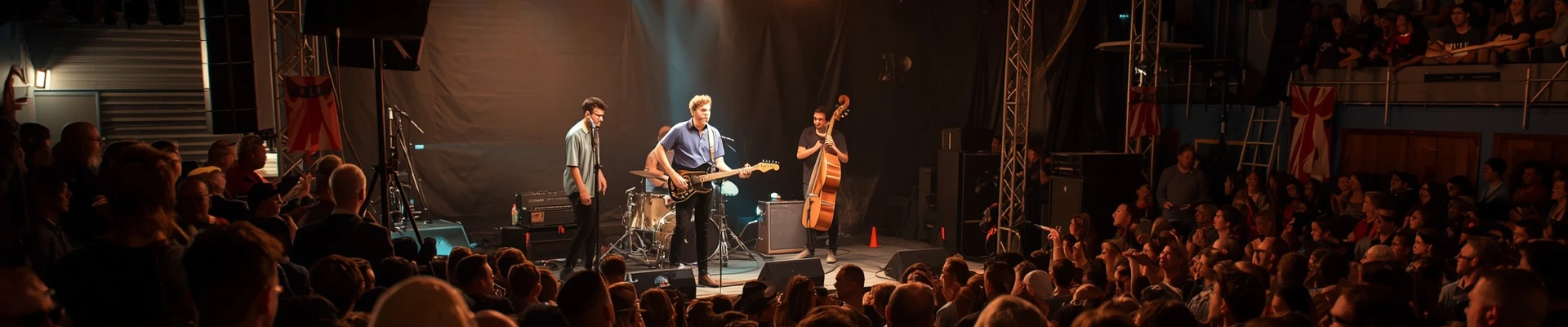
For local and independent music, Artspace Shreveport has hosted concerts and experimental performances in its repurposed industrial space. Bar and club rooms on Texas Street and in the Fairfield Avenue corridor (Shreveport's arts district) sustain regular local gigs, with venues cycling and rebranding as the scene evolves. The Strand Theatre on Texas Street remains a reference point for mid-size performances.
Festivals and Annual Events
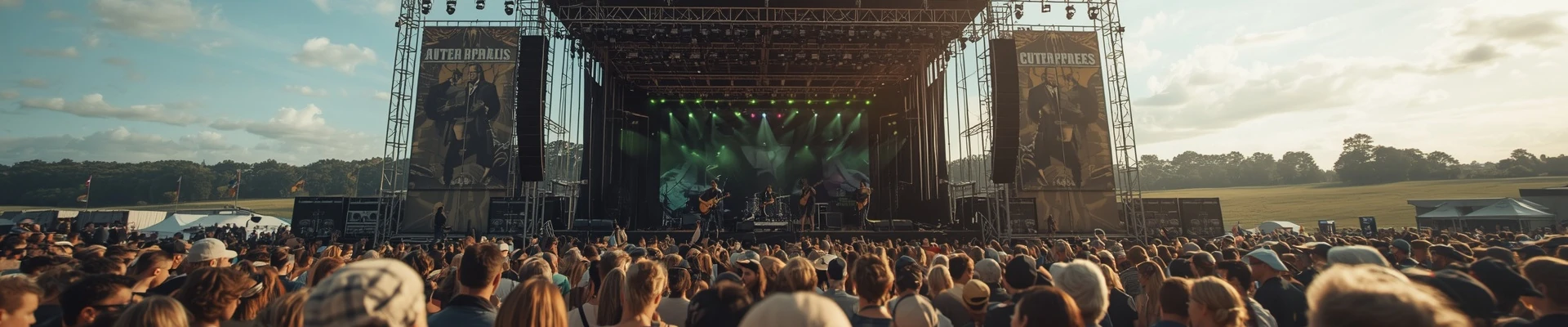
The Red River Revel Arts Festival — held annually in early October along the Red River waterfront — has operated since 1976 and includes live music across multiple stages alongside visual arts, craft, and food. It functions as the city's premier outdoor cultural event.
Mudbug Madness, the Cajun food and music festival held on Memorial Day weekend, draws regional crowds and presents zydeco, Cajun, and Louisiana roots music in a setting that foregrounds the state's food culture as much as its music.
The Louisiana Film Prize, the film competition that has made Shreveport a genuine location for independent filmmakers, has generated ancillary music events and soundtrack-focused programming as the film community has grown.
Christmas in Roseland and the broader Shreveport-Bossier holiday event calendar include musical programming that keeps touring regional acts cycling through in the shoulder season.
Neighborhoods and Musical Geography
Downtown Shreveport — specifically the blocks around Texas Street between the Red River and the I-20 corridor — is the historic music district. The Municipal Auditorium, the Saenger, and the Strand all cluster here. The city's entertainment corridor runs north–south along the riverfront and east–west along Texas Street.
Bossier City, directly across the Red River, operates its own entertainment infrastructure — the Margaritaville Resort Casino hosts national acts, and the Brookshire Grocery Arena (capacity ~14,000) is the primary large-format indoor venue for the metro area, used for arena-size concerts, hockey (the Mudbugs), and rodeo.
The Fairfield Historic District and the South Highlands neighborhood anchor the city's arts community; galleries, studios, and the Shreveport Regional Arts Council operate here, creating an arts infrastructure that supports musicians as much as visual artists.
What Ties It Together
Shreveport's defining musical signature is the tension between its two great inheritances: the country-and-rockabilly energy that the Louisiana Hayride concentrated and broadcast outward, and the blues-and-R&B roots that Leadbelly embodied and that the city's Black musical community sustained through the soul era and into hip-hop. These aren't separate traditions so much as parallel streams fed by the same Red River geography — the same borderlands crossroads between Deep South and Texas, the same mix of rural poverty, evangelical fervor, and Saturday-night release that produced American roots music more broadly. James Burton's chicken-pickin' and Boosie Badazz's street narratives are both, in different ways, products of the same place. That place — flat, hot, sitting where Louisiana meets Texas — keeps producing music that travels far beyond its own population, which is about as concise a definition of a historically fertile music city as one can find.