
Cambridge, Massachusetts sits across the Charles River from Boston, occupying just 18.4 square kilometres on the north bank. With roughly 110,000 residents — and a daytime population swollen by the combined student bodies of Harvard University (founded 1636, the oldest university in the United States) and the Massachusetts Institute of Technology — Cambridge is one of the most intensely educated and creatively active small cities in the world. The city divides naturally into distinct neighborhoods: Harvard Square, the traditional intellectual and bohemian hub; Central Square, the live-music capital of the city; Inman Square, a quieter residential node with a beloved cluster of restaurants and small bars; Kendall Square, the biotech and tech innovation district anchored by MIT; and Porter Square, the northernmost residential heart. Cambridge is globally famous as a centre of science, technology, and academia — but its less-heralded musical legacy is one of the most consequential in American popular music. From the folk revival of the 1950s and 1960s to the indie-rock ferment of the 1980s and 1990s, Cambridge has repeatedly punched far above its weight as a crucible for American music.
A Brief History
The land Cambridge occupies was home to the Massachusett people before English Puritans established Newtowne in 1630 across the river from Boston. The settlement was renamed Cambridge in 1638 — honouring Cambridge, England — the same year Harvard College was founded. Through the colonial and revolutionary periods, Cambridge was a centre of resistance: George Washington took command of the Continental Army at Cambridge Common in 1775. The 19th century brought industrialisation along the Charles River and waves of Irish, Italian, and Portuguese immigrants who shaped the city's working-class character. The early 20th century brought further immigration and the expansion of Harvard and MIT into the dominant institutions that define the city today. The post–World War II decades brought the urban renewal disruptions of the 1950s and 1960s — including the demolition of the West End — but also the counterculture ferment at Harvard Square that would give rise to the American folk revival. Cambridge's current population is heavily international, graduate-student-heavy, and marked by communities including a substantial Haitian-American population (one of the largest per capita in Massachusetts), growing East African communities, and longstanding Portuguese and Brazilian communities.
Music Identity
Cambridge's most internationally consequential musical contribution is the American folk revival. The city's role centred on a single room: Club 47, founded in 1958 at 47 Mount Auburn Street in Harvard Square, renamed Club Passim in 1969 and relocated to its current home on Palmer Street. This small basement club — it holds fewer than 110 people — became the single most important venue in the folk revival of the 1950s and 1960s. Joan Baez performed her first professional shows here in 1958, before her appearance at the Newport Folk Festival launched her to national fame. Tom Rush developed his introspective finger-picking style on the Club 47 stage through the early 1960s; his championing of then-unknown songwriters like Joni Mitchell, James Taylor, and Jackson Browne brought those artists to wider attention before they had record deals. Eric Von Schmidt, Geoff Muldaur, and the Kweskin Jug Band developed the Cambridge jug-band and blues-revival sound that influenced the broader national folk movement. Bob Dylan played the room during his early New York period, absorbing the Cambridge scene. Tracy Chapman — who graduated from Tufts University just north of Cambridge and busked in Harvard Square during the mid-1980s — launched her career from this exact milieu, winning a Grammy for Best New Artist in 1989 on the strength of "Fast Car."
The folk legacy never died in Cambridge; it simply ran in parallel with subsequent waves. The punk and new wave moment of the late 1970s found Cambridge hosting clubs that fed the Boston scene — the Rat in Kenmore Square (technically Boston, but a Cambridge-band destination), the Paradise Rock Club (likewise just across the city line), and Central Square's emerging club circuit. The Cars — the new-wave rock band that achieved massive commercial success between 1978 and 1987 — formed from musicians active in the Cambridge-Boston scene; Ric Ocasek and Benjamin Orr built the group out of that milieu. Aerosmith formed in Boston in 1970 with deep Cambridge-area connections.
The most significant moment in Cambridge's indie-rock history came in 1986, when the Pixies formed at the University of Massachusetts Amherst — but crucially coalesced as a band in the Cambridge-Boston scene, recruiting drummer David Lovering through a Boston Phoenix classified ad and building their early following at Bunratty's and other Central Square venues before signing to the Boston-based 4AD-distributed Throwing Music label. The Pixies' jagged dynamics, Black Francis's screaming melodicism, and Kim Deal's bass-and-harmony counterpoint created the blueprint for 1990s alternative rock — Kurt Cobain cited "Smells Like Teen Spirit" as a deliberate Pixies imitation. Morphine — the Cambridge trio built around Mark Sandman's two-string slide bass, Dana Colley's baritone saxophone, and various drummers — developed their signature low-rock sound through the Cambridge scene from 1989 onward, releasing six albums of hypnotic, noir-inflected rock before Sandman's death onstage in 1999. The Lemonheads — frontman Evan Dando's revolving alt-rock project — were a Cambridge fixture through the late 1980s and early 1990s, recording their breakthrough album It's a Shame About Ray (1992) while Cambridge-based.
Cambridge's jazz scene runs through the Charles River from Boston's deep tradition. Ryles Jazz Club in Inman Square operated as one of New England's premier jazz venues from 1977 until its 2019 closure. The Harvard Jazz Bands programme has trained generations of jazz musicians. The New England Conservatory (technically Boston, a few kilometres away) feeds jazz, classical, and contemporary music talent into the Cambridge scene. The Berklee College of Music (Boston) draws international students who populate the Cambridge music ecosystem.
The city's hip-hop scene runs through Central Square and the public housing projects of the North Cambridge and Area IV neighbourhoods. Erica B. and a network of independent producers and MCs built a Cambridge-flavoured hip-hop circuit through the 1990s and 2000s. The city's extraordinary student population — international, tech-oriented, globally connected — has sustained a continuous electronic music scene through campus events and the Central Square club circuit. Kendall Square's startup culture has produced companies in the music-tech space, including early music-streaming and licensing firms.
The classical tradition runs through Harvard's Sanders Theatre — a 1,000-seat Victorian gem used for chamber music, faculty recitals, and the Boston Philharmonic's chamber series — and the Longy School of Music of Bard College in Harvard Square, one of the oldest conservatories in New England.
Venues and Neighborhoods
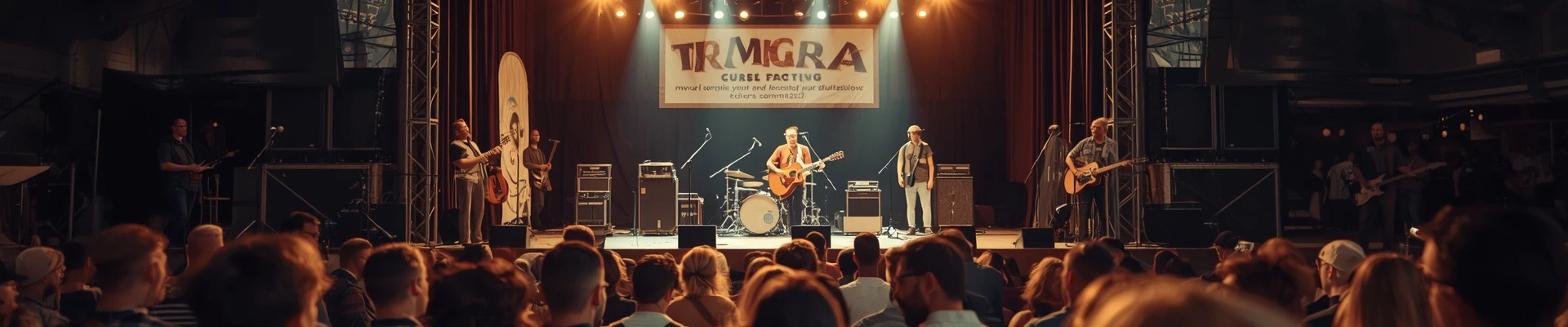
Club Passim (Palmer Street, Harvard Square) is the anchor of the Cambridge venue ecosystem — a National Historic Landmark of American folk music, still programming six nights a week with an emphasis on singer-songwriters, Americana, and world music. It is the city's most historically significant venue and one of the most important folk music rooms in the United States. The Sinclair (Church Street, Harvard Square) is a 500-capacity mid-size club that has become the primary indie-rock and touring-band venue since its 2012 opening — a properly designed club with excellent sound, balcony seating, and a kitchen. The Middle East (480 Massachusetts Avenue, Central Square) is a three-room complex — the Downstairs (575 capacity), the Upstairs (196 capacity), and the Corner (no-frills restaurant/bar stage) — that has been the heart of the Central Square rock, indie, and touring scene since 1987. TT the Bear's Place (Central Square, closed 2015) was for three decades the other essential Central Square club, the room where countless Cambridge-Boston bands built their following. Its closure marked the end of an era.
Central Square anchors the live-music district. The blocks around Massachusetts Avenue and Prospect Street — the old Central Square strip — hold the Middle East, Zuzu (the Middle East's cocktail-bar offshoot with an intimate stage), Cantab Lounge (the no-frills country and bluegrass dive), and a cluster of bars with sporadic live bookings. Harvard Square holds Club Passim, the Sinclair, Lizard Lounge (the downstairs jazz and singer-songwriter room under the Cambridge Common restaurant), and assorted open-mic venues. Inman Square held Ryles Jazz Club until its closure; the neighborhood retains a bar-with-music character at the Druid and other spots. Kendall Square has minimal live-music infrastructure — it's biotech and startup territory by day, quieter by night.
Sanders Theatre (Harvard Yard) programs classical chamber concerts, folk, and world music in a spectacular Victorian hall. Agassiz Theatre (Radcliffe Yard) programs student and experimental performance. The American Repertory Theater's rehearsal and performance spaces at Loeb Drama Center (Harvard Square) have housed musical theatre productions including several that transferred to Broadway.
Festivals and Signature Events
The Cambridge Jazz Festival at Magazine Beach Park is the flagship outdoor summer festival — a free multi-stage event that draws artists from the full jazz spectrum alongside funk, soul, and world music. The Cambridge Arts River Festival celebrates the city's artistic community with outdoor stages, visual art installations, and world music alongside Charles River. Folk Americana Roots Hall of Fame (recently established in Cambridge) programmes concerts and inductions. Harvard Square May Fair has occasional musical programming. The Cambridge Carnival International — an annual Caribbean festival celebrating the city's significant West Indian, Haitian, and Jamaican communities — programs soca, reggae, calypso, and dancehall. Oktoberfest Harvard Square is more street fair than music festival but includes live music stages.
The Harvard and MIT calendars programme an extraordinary volume of concerts across the academic year: the Harvard Concert Commission books major touring acts at Sanders Theatre, the MIT Concert Series programs Kresge Auditorium (a 1,230-seat mid-century modern concert hall designed by Eero Saarinen), and college radio station WHRB (Harvard Radio Broadcasting, 95.3 FM) and MIT's WMBR (88.1 FM) have long programme traditions including WHRB's legendary 24-hour "orgies" devoted to a single composer or genre.
What Ties It All Together
Cambridge's defining musical character is the intersection of intellectual seriousness and bohemian restlessness — a city where a Harvard Square coffee shop could host a future Grammy winner (Tracy Chapman busking), where a basement club (Club Passim) could shape the entire direction of American folk music, and where the indie-rock ferment of Central Square could incubate a band (the Pixies) whose influence would reshape mainstream rock globally. The city's extraordinary density of universities — and the creative churn they generate — means that Cambridge perpetually renews itself musically, drawing students and artists from around the world who pass through the scene, leaving fingerprints, and moving on. What remains is a small city with an outsized musical conscience: one that values the handmade song over the stadium spectacle, the intimate club over the arena, the long career over the overnight sensation.