



Lowell is a city of roughly 110,700 people in Middlesex County, Massachusetts, situated at the confluence of the Merrimack and Concord Rivers, approximately 45 kilometres northwest of Boston. Once the foremost planned industrial city in the United States, Lowell was the birthplace of the American textile industry in the 1820s and remained among the most productive mill cities in the world through the 19th century. The collapse of the textile economy in the 20th century left a city of brick mill buildings, immigrant communities, and empty factory floors — until a generation of artists, civic leaders, and new immigrants transformed Lowell into one of New England's most culturally dynamic mid-size cities. Today Lowell is home to a remarkable mix of Cambodian-Americans (one of the largest Cambodian communities in the United States), Puerto Rican and Dominican populations, Brazilian, Vietnamese, and Laotian communities — and a music scene shaped as much by traditional Southeast Asian forms, Latin rhythms, and hip-hop as by its New England rock heritage.
A brief history
The land along the Merrimack was long inhabited by the Pennacook Confederation before European settlement. The town of Lowell was formally incorporated in 1826 as a planned industrial city, built around a network of canals — 10 kilometres of hand-dug waterways — designed to harness the power of the Merrimack River falls and drive the massive textile mills that Boston capitalists financed. At its peak, Lowell's mills produced a significant portion of all cloth manufactured in the United States. The city's early labour force were the Lowell Mill Girls — young women from New England farms who lived in company boarding houses — and they formed one of the first organized labour movements in American history. By the mid-19th century, immigration from Ireland (fleeing the Great Famine), French Canada, Greece, Poland, Portugal, and Lithuania had transformed Lowell into one of the most ethnically diverse cities in Massachusetts.
The textile industry began migrating south in the early 20th century — cheaper labour, lower costs — and by the 1920s and 1930s Lowell was in economic freefall. The city that had housed 100,000 residents at its industrial peak began to depopulate and decay. The 1970s brought a dual transformation: the Lowell National Historical Park (established 1978) — the first urban national historical park in the United States — anchored economic revival around heritage tourism and mill rehabilitation, while a wave of Southeast Asian refugees following the Vietnam War and the Khmer Rouge genocide resettled in the city, drawn by affordable housing, existing community networks, and social services. The Cambodian community in particular took root deeply: Lowell now has one of the largest Cambodian-American populations in the United States, estimated between 25,000 and 30,000 people.
The city's other great cultural export is Jack Kerouac, born in Lowell in 1922, who grew up in the city's French-Canadian working-class community and whose novels — particularly On the Road — drew explicitly on the Lowell streets, churches, and social life of his childhood. Lowell has memorialized Kerouac with a downtown commemorative park and celebrates his legacy as the city's most famous son.
Music identity
Lowell's music scene is small in national terms but extraordinarily layered for a city its size — a direct consequence of its immigrant demographics and arts-revitalization history.
The Cambodian-American community has sustained a rich traditional and popular music culture in Lowell since the 1980s. Khmer traditional music — classical pin peat ensembles, mohori court music, and folk forms like romvong — is performed at the Cambodian Buddhist temples across the city and at community festivals. More broadly, Cambodian pop music (the electric guitar–driven genre that flourished in Phnom Penh's 1960s golden age before the Khmer Rouge destroyed it) has been championed in Lowell through community events, the Angkor Dance Troupe (a nonprofit Cambodian performing-arts company founded in Lowell in 1986), and a younger generation of Cambodian-American musicians who blend heritage forms with hip-hop, R&B, and electronic music. Artists like praCh Ly — the Cambodian-American rapper born in Phnom Penh, raised in the Lowell area, who became one of the first artists to use hip-hop to document the Khmer Rouge genocide in records like Dalama: The Lost Chapter (2000) — represent the creative meeting of traditional Cambodian memory and American street music that is uniquely Lowell's contribution to US music history.
The Latin music scene is anchored by the city's substantial Puerto Rican and Dominican communities, concentrated along Gorham Street and the Acre neighborhood. Salsa, merengue, bachata, and reggaeton clubs and DJs operate through the city's bar and nightlife circuit. The Brazilian community sustains samba, forró, and contemporary Brazilian pop at community events. Vietnamese and Laotian communities maintain karaoke traditions and pop scenes at community cultural events.
In rock and alternative music, Lowell contributed meaningfully to the New England rock ecosystem of the 1980s and 1990s. The city's most internationally significant rock-era export is The Lemonheads — though the band was formed in Boston, frontman Evan Dando is from Wellesley and the band's early years were rooted in the broader Massachusetts scene, recording for Taang! Records — a Boston punk label that documented the regional hardcore and alternative scene throughout the 1980s. Lowell itself fed the broader Boston rock ecosystem: dozens of bands from the Lowell area played the Boston circuit at venues like The Rat (Rathskeller), The Channel, and T.T. the Bear's Place. The city's own venue scene through the 1980s and 1990s included clubs on Merrimack Street and Middle Street that hosted punk, hardcore, new wave, and metal shows.
The hip-hop and R&B scene has grown substantially since the 1990s, driven by the city's young Black, Latino, and Southeast Asian populations. Local MCs and producers circulate through the Greater Boston circuit. The Lowell SummerMusic festival has programmed hip-hop, R&B, and Latin acts alongside rock and folk through its summer outdoor series.
Folk and acoustic traditions run through the city's Irish-American and French-Canadian communities — the Acre Irish community (the Acre neighbourhood, Lowell's historic Irish immigrant quarter) has sustained pub music and traditional Irish session culture, and French-Canadian fiddle traditions echo through the Canuck community that produced Kerouac's world.
The UMass Lowell campus (part of the University of Massachusetts system, with roughly 18,000 students) provides a steady stream of young musicians, DIY shows, and an institutional infrastructure for music education through the College of Fine Arts, Humanities and Social Sciences.
Venues and neighborhoods
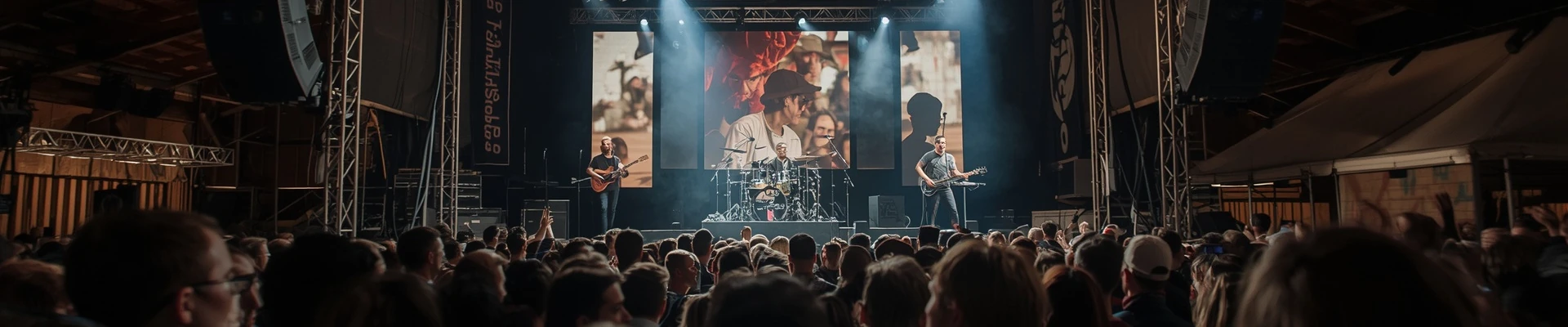
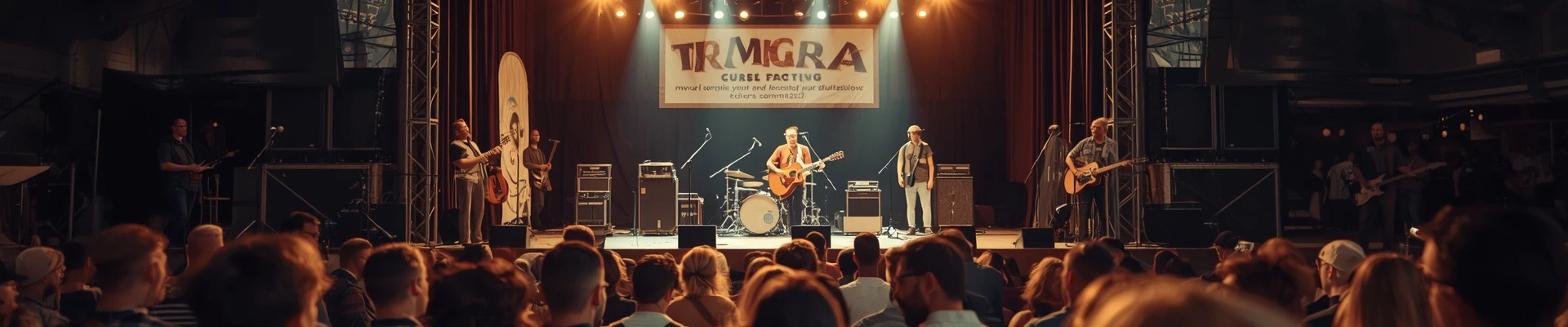
Lowell's venue landscape is small but genuine. The anchor of the concert calendar is the Lowell Memorial Auditorium — a 2,800-seat venue in downtown Lowell, housed in a 1912 Beaux-Arts building on East Merrimack Street, which hosts touring theatre productions, orchestral performances, and mid-size rock and pop touring acts. The Tsongas Center at UMass Lowell (the 6,500-capacity arena on the university campus) is the city's largest performance venue, primarily an ice hockey and basketball arena but a regular touring concert stop for mid-size national acts.
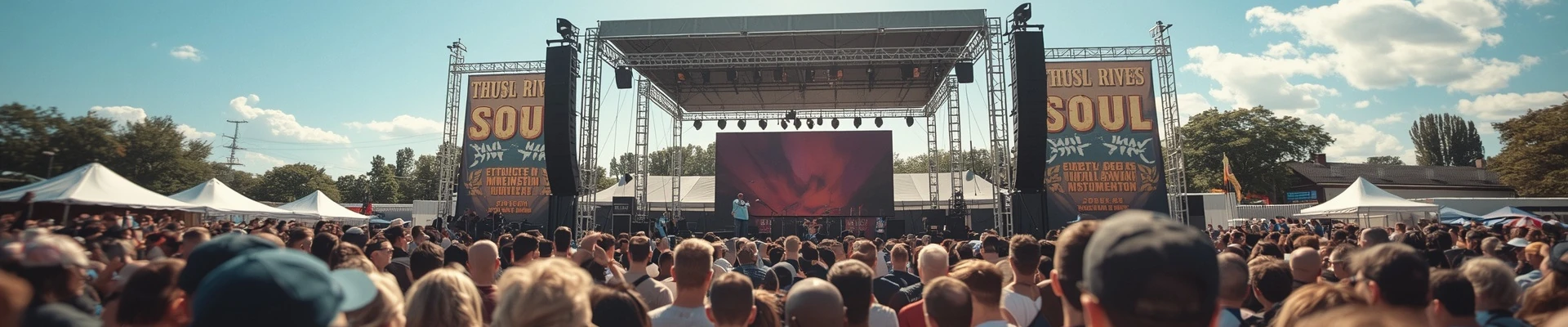
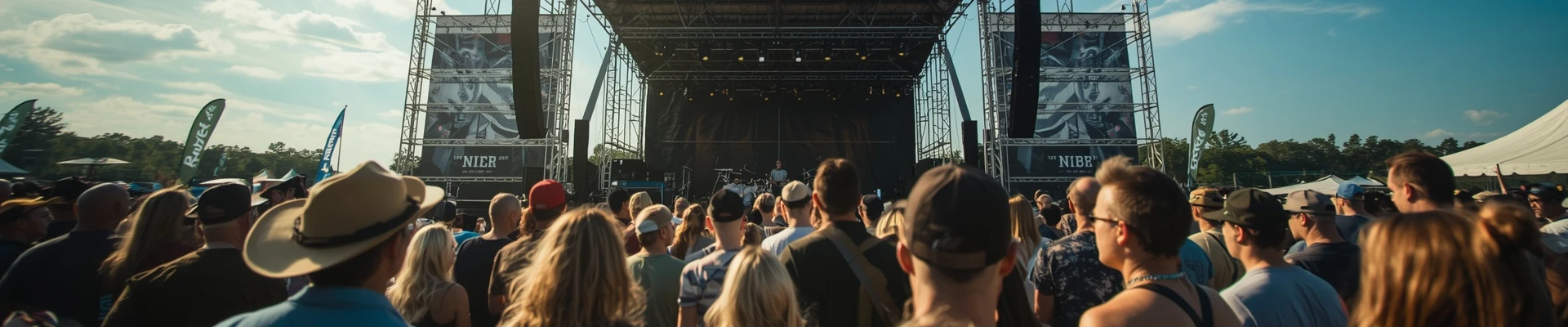
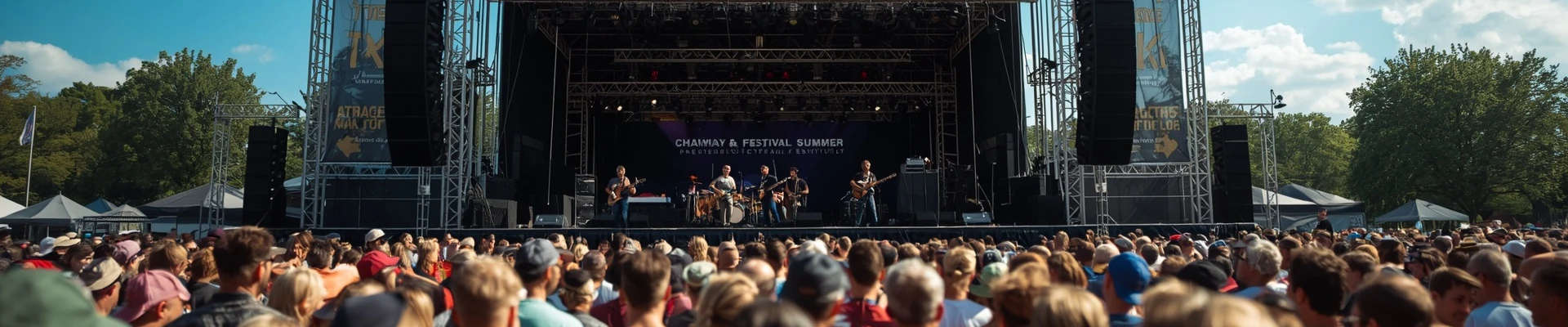
The Merrimack Repertory Theatre is the city's anchor professional theatre company, housed in a converted mill building on East Merrimack Street, programming dramatic productions and occasional performance events. The Lowell Folk Festival — the largest free folk festival in the United States — takes over the entire downtown core across multiple outdoor stages each July, with performers spread from Boarding House Park to Lucy Larcom Park to the Middlesex Canal amphitheatre; it is Lowell's single biggest music event of the year.
In the club and bar tier, the Worthen House Cafe (the oldest continuously operating bar in Massachusetts, established 1834) on Worthen Street has hosted live music; The Owl Diner area and the Acre neighborhood bars support the Irish and acoustic circuit. The Southeast Asian nightclub scene runs through venues along Chelmsford Street and Gorham Street. Boarding House Park serves as an outdoor amphitheatre for free summer concerts, and the Western Canal area's mill-building developments house event spaces used for arts programming.
Lowell's neighborhoods map onto distinct cultural identities. The Acre (historically Irish, now Latino and Southeast Asian) anchors the city's most ethnically mixed residential scene. Centralville and Pawtucketville — the working-class residential neighborhoods north of the Merrimack — have deep French-Canadian and later Southeast Asian roots. The Highlands anchors middle-class residential Lowell. Downtown Lowell — with the national historical park, canal system, and mill-building conversions — is the cultural and entertainment hub.
Festivals and signature events
The Lowell Folk Festival (late July) is the city's flagship event — a three-day, 12-stage free festival that draws over 100,000 visitors to downtown Lowell for a program spanning blues, gospel, Celtic, Cajun, Appalachian, and world folk traditions. It is a National Heritage Area event, funded through the Lowell National Historical Park and the National Council for the Traditional Arts, and it represents one of the most serious and well-curated folk festivals in North America.
Southeast Asian Water Festival (the Cambodian New Year celebration, held in spring) brings traditional Cambodian music, dance, dragon boat racing, and food to the Merrimack River waterfront — one of the largest Cambodian cultural celebrations in the United States. Lowell SummerMusic programs a full summer outdoor concert series at Boarding House Park with roots, rock, Latin, and world music. The Kerouac Festival (October, around his birthday) brings Beat Generation literary events, poetry readings, and cultural programming to downtown Lowell. The Merrimack Valley Philharmonic Orchestra performs a full classical season at the Lowell Memorial Auditorium. UMass Lowell stages student and faculty concert events through its campus arts calendar.
What ties it all together
What defines Lowell musically is the tension — and creative synthesis — between its industrial past and its immigrant present. The red-brick mill buildings that once deafened workers with mechanical looms now house art galleries, music rehearsal spaces, and studio apartments. The canal system that powered the Industrial Revolution now mirrors the sky at night while Cambodian pop music drifts from the Acre neighborhood. A city that produced Jack Kerouac's restless, jazz-inflected prose — the American rhythmic improvisation that Beat literature was built on — now sustains one of the most culturally diverse music scenes in New England, where Khmer pin peat, Dominican bachata, Lowell SummerMusic outdoor rock, and Irish session music exist within blocks of each other. Lowell is a small city with an outsized cultural inheritance, still finding its sound.