
Springfield, Massachusetts
Springfield sits at the bend of the Connecticut River in Hampden County, the urban anchor of Western New England roughly ninety miles from both Boston and New York City. With a population near 155,000 it is the fourth-largest city in Massachusetts — a hardscrabble post-industrial capital whose identity has been shaped by waves of Puerto Rican, Dominican, and West Indian migration, a robust labor history, and a music community that has always looked outward while remaining stubbornly local.
The city's economy was built on precision manufacturing — Springfield Armory produced the nation's military rifles for two centuries, and the legacy of that industrial precision runs through everything from the city's architecture to its work ethic. When the factories hollowed out in the second half of the twentieth century, Springfield absorbed that decline alongside every other Rust Belt community, but the contraction also freed up warehouse space, old theaters, and vacant storefronts that musicians, promoters, and community organizers moved into.
Music Identity
Springfield's most internationally recognized cultural export is not a band but a game: basketball, invented here by James Naismith in 1891 at the YMCA Training School. The Naismith Memorial Basketball Hall of Fame on West Columbus Avenue draws visitors to the city, and the sporting identity has long cross-pollinated with hip-hop culture — sneaker culture, ball culture, and rap arrived in Springfield early and stayed.
On the hip-hop front, Springfield's most significant contribution to national discourse has been through its Puerto Rican community's embrace of the genre. The city's North End and South End neighborhoods incubated a regional scene that fed acts into the Boston and New York circuits during the 1990s and 2000s. Skyzoo, though Brooklyn-based, frequently cited the Springfield-to-New-York corridor as foundational to his early touring. Local collective Mic Bles and producer Ill Conscious built a following out of the Pioneer Valley underground that stretched across New England.
Springfield is also the unofficial western capital of the Pioneer Valley music corridor — a stretch of the Connecticut River Valley that runs through Northampton, Amherst, and Holyoke, and whose college-town ecosystem (UMass Amherst, Smith, Mount Holyoke, Amherst, Hampshire) feeds Springfield venues with bands and audiences. That geography means Springfield clubs have seen early sets by artists who later broke nationally, from alternative rock acts to indie folk.
The city's jazz legacy is quieter but genuine. During the mid-twentieth century, Springfield's downtown hotel circuit and supper clubs hosted national touring jazz acts, and the city produced several session musicians who ended up in New York and Boston recording dates. The CityStage theater at Symphony Hall has hosted jazz programming continuously for decades.
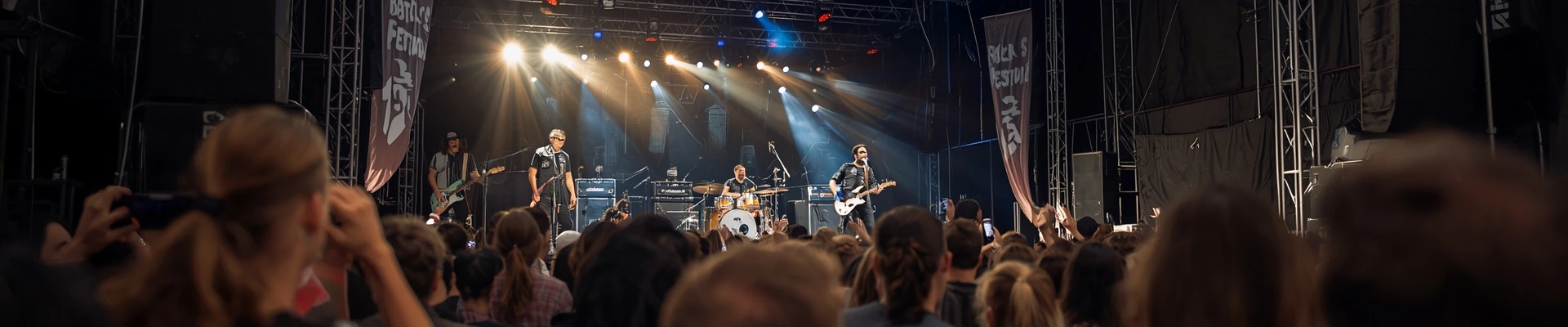
In metal and punk, Springfield punches above its weight. The Western Massachusetts scene — anchored partly in Springfield and partly in Northampton — produced bands like Shadows Fall, who emerged in the late 1990s to become one of the defining acts of the New Wave of American Heavy Metal, and Unearth, who formed in the Boston suburbs but toured the Springfield circuit extensively. All That Remains, formed in Springfield in 1998, became one of the most commercially successful metalcore acts of the 2000s, releasing albums on Razor & Tie and Eleven Seven Music and charting on the Billboard 200. Their aggressive melodic sound — technically demanding guitar work over breakdowns — became a template that dozens of East Coast metal acts replicated.
Killswitch Engage, though formed in Westfield (a small city fifteen miles west of Springfield), is closely associated with the Springfield-area scene and shares a circuit of venues and production networks with bands rooted in the city proper. That cluster of Western Massachusetts metalcore acts — All That Remains, Killswitch Engage, Shadows Fall, Unearth — is one of the most significant regional contributions to heavy music in American history, earning the area the informal designation "the birthplace of New Wave of American Heavy Metal."
Venues and Neighborhoods
The city's primary concert facility is MassMutual Center (formerly known as the MassLife Center and, before that, the Civic Center), a mid-size arena on Main Street with a capacity around 8,000 that hosts national touring acts and minor-league hockey. For decades it has been the destination for acts that are too large for theater venues but not quite arena-scale in the Boston market.
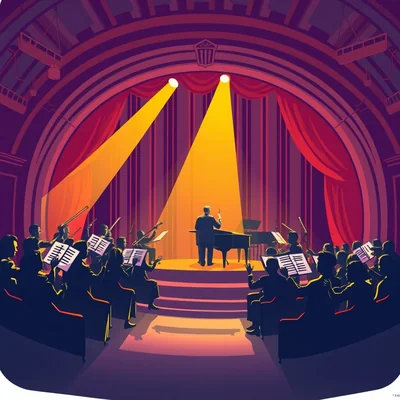
Symphony Hall on Court Street is Springfield's historic performance venue — a 1913 Italian Renaissance structure that seats just over 2,600 and houses the Springfield Symphony Orchestra. Its two stages, Clyde Auditorium and CityStage, serve classical, jazz, world music, and spoken-word programming. The building is a legitimate architectural landmark and its acoustics for orchestral and chamber performances are considered among the best in New England outside of Boston.
The Camelot and the predecessor venues that have occupied various corners of the downtown and the North End have served as the primary club-level rooms for rock, metal, and hip-hop since the 1990s. The downtown club landscape has shifted as the city has gone through various cycles of development and vacancy, but Theodore's Blues, Booze & BBQ on Worthington Street has maintained a consistent anchor as a blues and roots music destination.
The North End — Springfield's majority Puerto Rican neighborhood — has its own set of social clubs, salones, and smaller venues that host salsa, merengue, reggaeton, and Latin trap nights independent of the mainstream promoter circuit. This parallel ecosystem rarely intersects with the downtown scene except at major festivals.
Festivals and Events
Springfield Jerk Fest on State Street brings Caribbean food and music together in the North End each summer, with sound system culture and live performance rooted in the Jamaican and Caribbean diaspora communities. It is one of the largest Caribbean cultural events in Western New England.
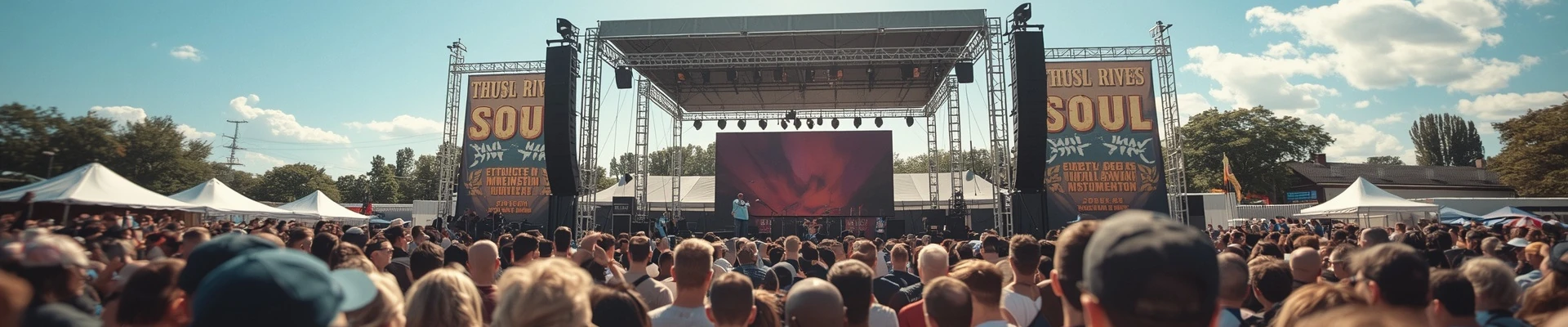
Hoop City Jazz Festival — held in and around the Basketball Hall of Fame grounds — has brought national jazz and soul acts to the Connecticut River waterfront, combining the city's two most recognizable cultural assets.
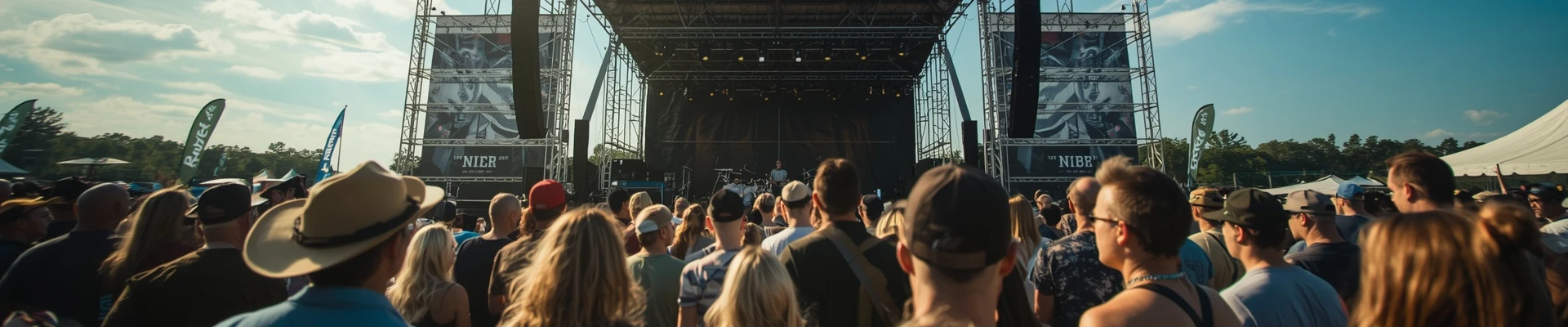
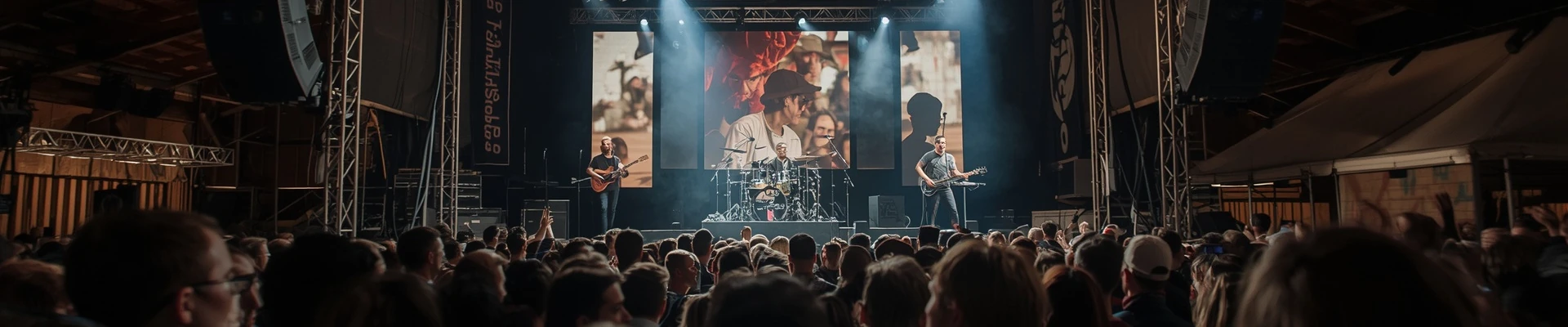
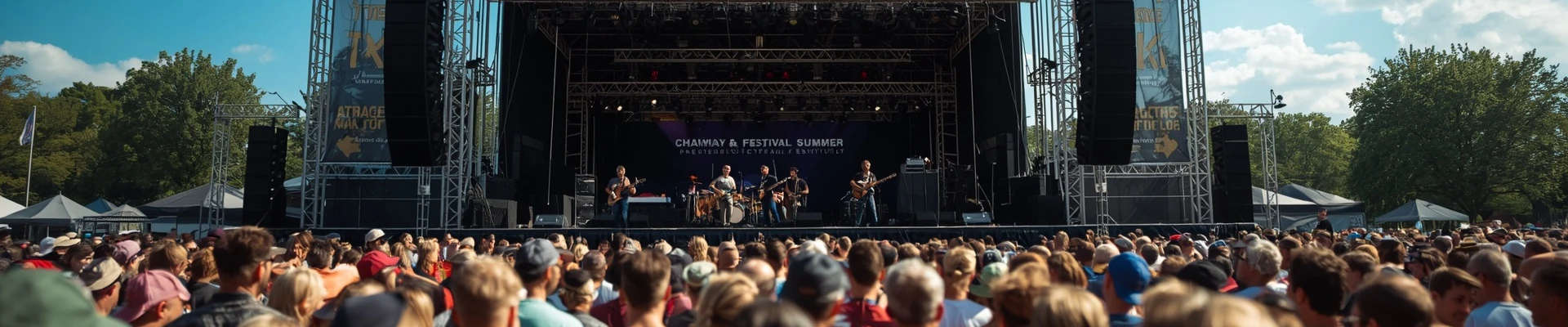
The X-Fest and various predecessor outdoor rock festivals organized by Springfield's radio stations (historically WHMP and WRNX in the Pioneer Valley orbit) have brought large outdoor audiences to sites around Hampden County, typically headlined by national alternative and rock acts with local support slots.
Puerto Rican Parade and Festival on Main Street is one of the largest in New England, drawing tens of thousands and featuring live salsa and tropical music alongside the procession.
Demographics and Community Music
Springfield's population is majority-minority — approximately 45 percent Puerto Rican, with significant Dominican, Black, and West African communities. This demography shapes everything about the music landscape: the radio dial in Springfield is divided between reggaeton-heavy Latin urban stations, gospel programming targeted at the Black church community, and the alternative/rock outlets anchored in the college corridor to the north.
The Puerto Rican community has sustained a continuous live music tradition since the 1960s, when the first large wave of migration from the island reached Western Massachusetts. Bomba and plena rhythms appear alongside contemporary urban Latin sounds at community events, and several Puerto Rican musicians who grew up in Springfield have gone on to record in New York and San Juan.
The Black church corridor — particularly along State Street and in the Liberty Heights neighborhood — has produced gospel choirs and gospel soloists of regional note, feeding into the broader New England gospel circuit.
What Ties It All Together
Springfield's musical identity is a study in productive tension. The college corridor to the north provides audience, infrastructure, and experimental tolerance; the city's own industrial-working-class core provides hunger, toughness, and a preference for music that does not equivocate. That combination — intellectual proximity plus blue-collar grit — is precisely what produced the metalcore explosion of the late 1990s and early 2000s. All That Remains did not sound like a band from Cambridge or Northampton; they sounded like a band from a city that had been written off and had nothing to lose. That sound — technically sophisticated, emotionally raw, structurally aggressive — is the most honest expression of what Springfield has always been: underestimated, outworked, and occasionally extraordinary.