
Worcester is the second-largest city in New England and the seat of Worcester County, Massachusetts, with roughly 206,000 residents inside the city limits and more than 1 million across the broader Worcester metropolitan area. Situated at the geographical center of Massachusetts — the city calls itself the "Heart of the Commonwealth" — Worcester sits 45 miles west of Boston, 45 miles north of Providence, and 100 miles east of Springfield, at the crossroads of the three major New England population corridors. The city's terrain is characteristically New England: glacially shaped hills, scattered ponds, and rocky outcroppings threading through an urban grid of three-deckers, church steeples, and brick mill buildings. Worcester County's economy historically ran on industry — textile machinery, wire, grinding wheels, and the pioneering production of Norton Company abrasives — and the post-industrial transition has followed a familiar arc of higher education, healthcare, and arts. The city is home to an extraordinary cluster of colleges: Clark University, College of the Holy Cross, Worcester Polytechnic Institute (WPI), Assumption University, Becker College (now closed), Worcester State University, and the University of Massachusetts Medical School, giving Worcester one of the highest ratios of college students to city population in the United States and a perpetual influx of young people who sustain its nightlife, music venues, and DIY culture.
A brief history
The land around Worcester was home to the Nipmuc people for centuries before English settlement. The area was settled by Europeans in the 1670s but destroyed in King Philip's War (1675–1676), one of the most devastating conflicts in New England history. The town was re-settled in 1713 and incorporated as Worcester in 1722. Through the 18th and 19th centuries, Worcester grew as a manufacturing and rail hub — the Boston and Albany Railroad (later the Boston and Worcester Railroad) made the city a regional junction for freight and passengers, and factories producing textile machinery, wire goods, and later abrasives drew waves of immigrant labor from Ireland, Sweden, French Canada, Italy, Poland, and Armenia. By 1900, Worcester's population had reached 118,000, and the city's neighborhoods bore the imprint of these successive immigrant communities: Shrewsbury Street became an Italian-American dining and social corridor; Grafton Hill anchored the Swedish community; Armenian churches rose along Belmont Street. The 1945 Worcester Tornado and subsequent mid-century urban renewal reshaped the city's built landscape. Post-industrial decline accelerated through the 1970s and 1980s, but the concentration of colleges — and the steady flow of students seeking cheap rent and live music — created the conditions for a music scene that thrived precisely because Worcester was slightly off the radar.
Music identity
Worcester's music identity is built on stubbornness, density, and a specific East Coast DIY ethos that favors volume and craft over trends. The city's most enduring contribution to American rock is in alternative rock, hardcore, and metal, but Worcester has also produced significant figures in jazz, hip-hop, and singer-songwriter traditions.
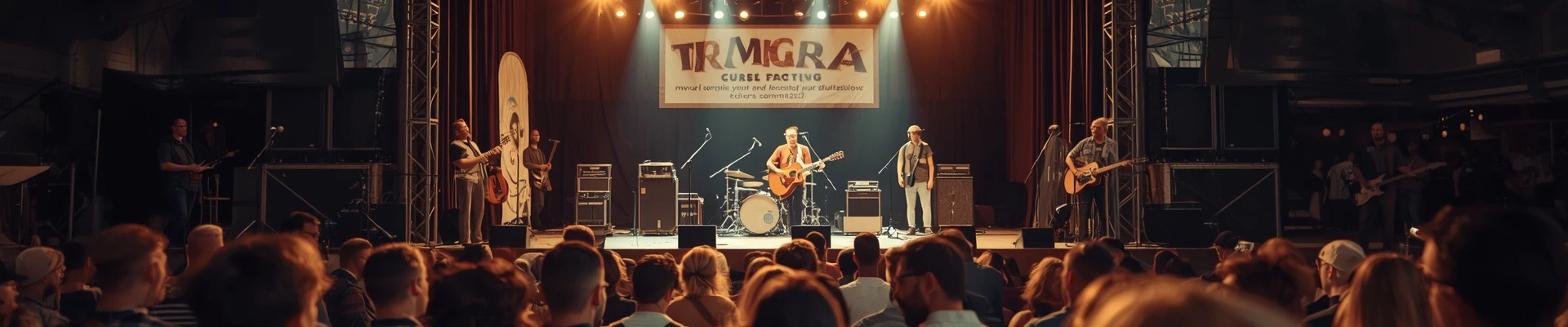
The city's single most internationally recognized musical landmark is The Palladium — the 4,000-capacity concert hall on Major Taylor Boulevard (formerly Chandler Street) that has been one of the essential stops on the national touring circuit for rock, metal, hardcore, and alternative acts since the 1970s. The Palladium's programming history reads as a chronicle of American rock: Black Sabbath, Iron Maiden, Metallica, Soundgarden, Nirvana, Nine Inch Nails, Slayer, Green Day, Rage Against the Machine, and hundreds of others played the Palladium during its defining decades. The room's excellent acoustics, mid-size capacity, and location in the heart of New England made it essential for any major tour routing through the Boston-to-New York corridor. The Palladium's outdoor amphitheatre added a summer concert component. The room's reputation has sustained it through the streaming era — it remains one of the most important mid-size rock venues in New England.
Dinosaur Jr — the Amherst-based alternative rock band led by J Mascis — recorded and played extensively in the Worcester region through the late 1980s, and the city's DIY scene was closely linked to the larger Pioneer Valley and Boston alternative rock circuits that produced some of the most consequential American indie rock of the era. Worcester's geography as a midpoint between Boston and Springfield made it a natural hub for bands moving between the two markets, and the city's cheap rents and college populations made it a place where bands could actually rehearse, live, and build an audience simultaneously.
The city's hardcore and metal scene has been consistent and serious since the early 1980s. Bands including Dropkick Murphys (who formed in nearby Quincy but played Worcester constantly), All That Remains, and a long lineage of local metalcore and hardcore acts built careers through relentless touring from a Worcester base. Killswitch Engage — the metalcore band from Westfield, Massachusetts — were fixtures on the Worcester circuit, and the network of venues and promoters that sustained them was substantially centered on Worcester. The city's Planet FM (the long-running local radio station dedicated to heavy music) gave regional heavy bands a platform that other New England cities lacked.
Worcester's hip-hop scene has been present since the late 1980s and grew in visibility through the 2000s and 2010s. Oompa — the Worcester-based rapper and poet who won the National Poetry Slam in 2016 — is the city's most prominent hip-hop export, with critically acclaimed albums including November (2017) and FU* (2019) that dealt directly with race, gender identity, and life in a mid-size New England city. The city's hip-hop community operates through open mics, local radio (including WPKZ and community radio), and a circuit of venues that cross between hip-hop and indie rock bookings.
The jazz tradition in Worcester runs through the city's historically Black neighborhoods and the music programs at Clark University and Holy Cross. The city's jazz scene is modest but continuous, anchored by local venues, festivals, and the Worcester Jazz Festival. Singer-songwriters and acoustic folk have a consistent home at Ralph's Chadwick Square Diner and The Acoustic Coffee House circuit.
The city's immigrant communities have sustained parallel musical worlds. The large Puerto Rican and Dominican communities (centered in Main South and Vernon Hill neighborhoods) sustain salsa, merengue, reggaeton, and bachata performance and recording. Vietnamese, Albanian, and Somali communities have brought their own musical traditions, and the city's Main South neighborhood — one of the most ethnically diverse in Massachusetts — is a continuous source of world music, community performance, and cross-cultural programming.
Venues and neighborhoods
The venue ecosystem is anchored by The Palladium (4,000 capacity, Major Taylor Boulevard) for national-touring rock, metal, and alternative acts. Mechanics Hall — the 1857 concert hall on Waldo Street, considered one of the finest Victorian concert halls in the United States — programs classical, chamber, and large-audience events including Worcester Chamber Music Society performances and major touring classical and jazz acts. The Hanover Theatre for the Performing Arts (2,800 seats, downtown) programs Broadway touring productions, dance companies, and large popular acts. The Fete Music Hall (formerly multiple venues at the same address) programs mid-size indie, rock, and electronic acts. Ralph's Chadwick Square Diner — the long-running diner-venue hybrid on Shrewsbury Street — is one of Worcester's most distinctive music destinations, programming local and regional acts in a genuine old-school diner setting. O'Brien's Pub and O'Brien's Music on Shrewsbury Street run a multi-night live music program spanning rock, country, and acoustic. The Dive Bar and Lucky Dog Music Hall anchor the smaller-venue and DIY tier. Electric Haze operates as a reggae and dancehall club. The Bull Pen at Polar Park (the home of the Worcester Red Sox, the Triple-A affiliate of the Boston Red Sox, which opened in 2021) programs concerts in the ballpark context.
Neighborhoods define scenes: Shrewsbury Street is the city's primary entertainment and dining corridor, with the highest concentration of live music bars. Downtown Worcester holds the Hanover Theatre, Mechanics Hall, and a growing cluster of bars with music programs. Main South (the neighborhood surrounding Clark University) anchors the city's most economically and musically diverse community. The Canal District — a redeveloped industrial area near Polar Park — has become a new entertainment hub. College Hill (around Holy Cross) and WPI neighborhoods sustain student-oriented music programming.
Festivals and signature events
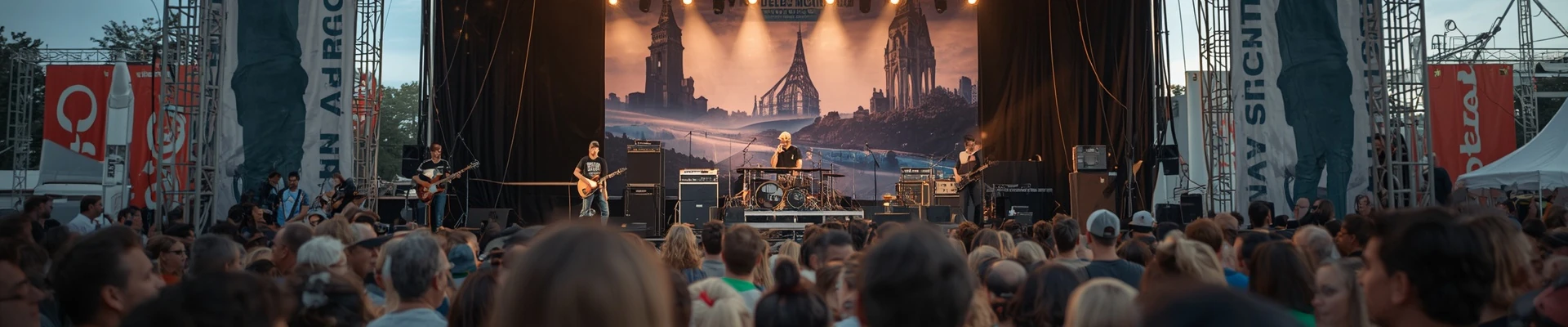
Worcester's festival calendar reflects its mid-size, college-city character. Starlite on the Blackstone programs outdoor music along the Blackstone River corridor. The Worcester Music Festival (defunct but historically significant) ran through the 19th and early 20th centuries as one of the oldest music festivals in the United States. Puerto Rican Festival of Massachusetts features Latin music performance. The Main South Cultural District programs community arts events with live music. First Fridays Woo (downtown monthly gallery walk) incorporates live music across venues. Woo Nation (the Polar Park promotional brand) programs concert events tied to the Red Sox affiliate season. Convergence (an arts and music festival organized by the arts community) programs local and regional acts. Spectrum Worcester incorporates music into its LGBTQ+ arts programming. The Worcester County Music Association has historically supported music education and performance programming.
What ties it all together
Worcester's musical identity is inseparable from its character as a city that has always been slightly in Boston's shadow — close enough to the largest city in New England to be aware of what's happening, far enough away to develop its own stubborn independent culture. The Palladium made Worcester a national concert destination that Boston's smaller mid-size venues couldn't replicate; the colleges provided a constant audience and a constant supply of musicians willing to play cheap; the post-industrial rent structure made it possible for bands to actually survive while touring. The result is a city where hardcore and heavy metal have deep organizational roots, where indie rock has always had a serious local circuit, and where Oompa's poetry-rap could win a national slam championship while being rooted entirely in the experience of living in Worcester. The Heart of the Commonwealth tagline is civic boosterism, but it isn't wrong about the geography — Worcester sits at the center of a region where music has always moved, and the city has been quietly moving it for decades.