
Flint sits on the Flint River in Genesee County at the heart of mid-Michigan, roughly 100 kilometres north-northwest of Detroit and about 140 kilometres east of Lansing. With a population around 98,000 — down from a peak of nearly 200,000 in 1960 — it is the fourth-largest city in Michigan and one of the most cited examples of postindustrial American decline, though that framing consistently undersells the cultural vitality that has persisted through and because of that decline. The city occupies just over 130 square kilometres and sits at roughly 229 metres above sea level on relatively flat glacial terrain in the Great Lakes lowlands. Its economy was built almost entirely on General Motors, and its music was shaped in turn by the same working-class, Black, and immigrant communities that built the cars.
A Brief History
The Odawa and Ojibwe peoples used the Flint River crossing as a trading and travel route long before European contact. Jacob Smith, a fur trader, established a trading post at the river crossing around 1819, and the settlement that grew around it was platted as Flint in 1835 — named for the flint nodules found in the river. By the 1880s Flint had become a centre of the carriage-building industry, earning it the name "Vehicle City" — a nickname it wears to this day.
The automobile age transformed Flint completely. William C. Durant incorporated General Motors in Flint in 1908, and the city became the manufacturing heart of the American auto industry. At its mid-century peak, GM employed nearly 80,000 workers in Flint alone. The Flint Sit-Down Strike of 1936–37 — in which UAW workers occupied GM plants for 44 days and won union recognition — was one of the most consequential labour actions in American history, reshaping the relationship between capital and labour across the country and underpinning the postwar prosperity that made Flint's middle-class music economy possible.
The collapse of the American auto industry from the 1970s onward hit Flint earlier and harder than almost anywhere else. Roger & Me (1989), Michael Moore's documentary about GM's layoffs and their human consequences, made Flint a global symbol of deindustrialisation. The city's population fell by more than half. Poverty, crime, and municipal fiscal crisis followed. Then, between 2014 and 2019, the Flint water crisis — in which the city's water supply was switched to the Flint River without proper treatment, leaching lead from aging pipes into tap water and poisoning thousands of residents, many of them children — put Flint back on the front pages. The crisis became a defining American story about the intersection of poverty, race, and governmental failure.
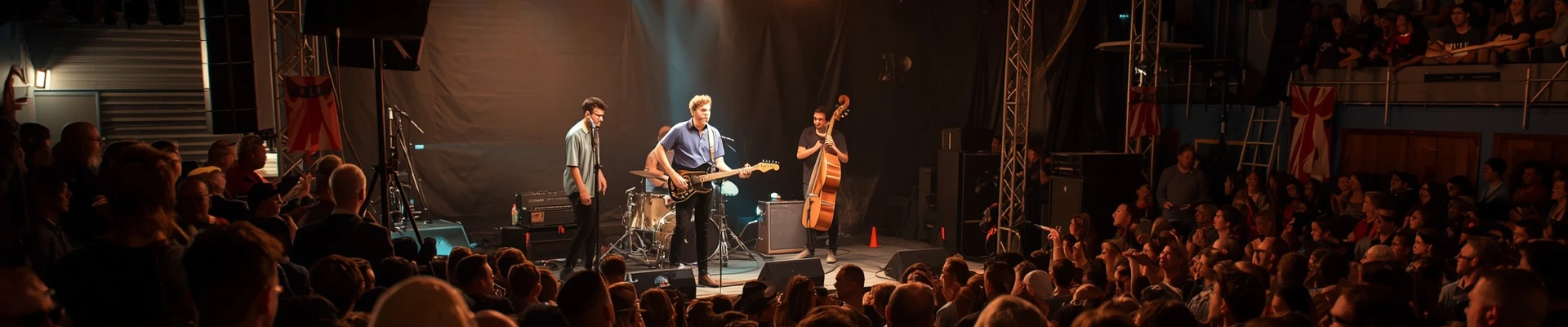
Through all of it, Flint's music scene kept going — in churches, in basements, in clubs on Saginaw Street, and eventually on streaming platforms and regional touring circuits. The city's musicians have processed industrial collapse, economic despair, and survival with a directness that defines the Flint sound.
Music Identity
Flint's most internationally consequential musical contribution is Grand Funk Railroad — one of the loudest, heaviest, and most commercially successful rock bands of the early 1970s. Formed in Flint in 1969 from the remnants of Terry Knight and the Pack, Grand Funk — Mark Farner (guitar, vocals), Mel Schacher (bass), and Don Brewer (drums) — became a phenomenon despite being almost uniformly dismissed by rock critics. Their 1971 Shea Stadium concert sold out faster than the Beatles' legendary 1965 show. Hits like "We're an American Band" (1973), "Locomotion" (their 1974 cover, which reached number one), "Some Kind of Wonderful", and "The Loco-Motion" defined arena rock before the genre had a name. Grand Funk's legacy in Flint is foundational — they were the blue-collar, working-class band that the city's auto-worker culture produced, loud and unpretentious and enormously popular.
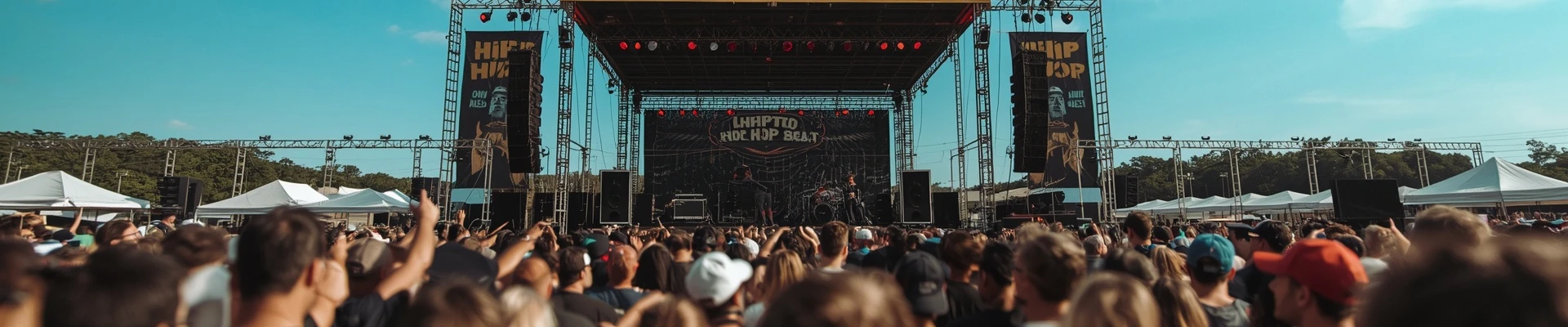
Hip-hop and rap became Flint's dominant contemporary voice from the late 1980s onward. MC Breed — born Eric Breed in Flint in 1971 — was the city's first nationally known rapper, whose 1991 hit "Ain't No Future in Yo' Frontin'" became an early classic of Midwestern hip-hop and introduced the phrase into the national vocabulary. Breed collaborated with 2Pac, Too Short, Scarface, and a generation of West Coast and Southern artists, bridging Flint to the broader hip-hop world before his death in 2008. His legacy defines the first generation of Flint rap.
Jon Connor — born Jonathan Powell in Flint in 1985 — is the city's most important contemporary rapper, a lyricist whose technical precision and loyalty to Flint have made him a respected underground voice for over fifteen years. Connor's mixtape output through the 2000s and 2010s drew comparisons to Eminem and brought him a deal with Aftermath Entertainment (Dr. Dre's label) in 2013 — the only Flint rapper to sign with Aftermath. His work explicitly chronicles Flint's collapse, survival, and community.
Dani Leigh (born in Flint, raised partly in Miami) has emerged as one of the most versatile R&B and pop artists of her generation, though her Flint origins are sometimes obscured by her Miami and Atlanta associations. More firmly Flint-identified is Top Dolla (James Sherrill), a rapper who has built a regional following with Flint-specific content that includes direct references to the water crisis, the city's neighbourhoods, and everyday survival. The broader Flint rap scene runs through multiple generations of artists — Darien Cage, Lil Bibby (Chicago, but with Flint connections), and a continuous underground circuit — who have documented life in one of America's most distressed cities.
Outside rap, Flint has a substantial gospel tradition anchored by its historically Black churches — New Bethel Baptist Church and dozens of other congregations that have fed choirs, organists, and vocalists into the city's music ecosystem for over a century. The Flint School of Performing Arts (FSPA) has been a training ground for classical musicians, jazz players, and vocalists since 1937. The city's UAW hall tradition sustained a working-class country and rock circuit in the mid-century decades.
Venues and Neighborhoods
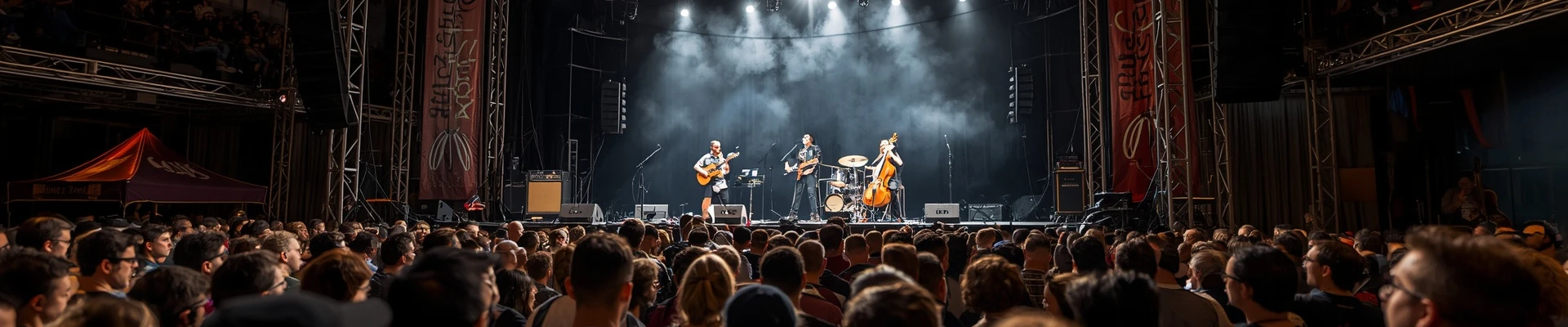
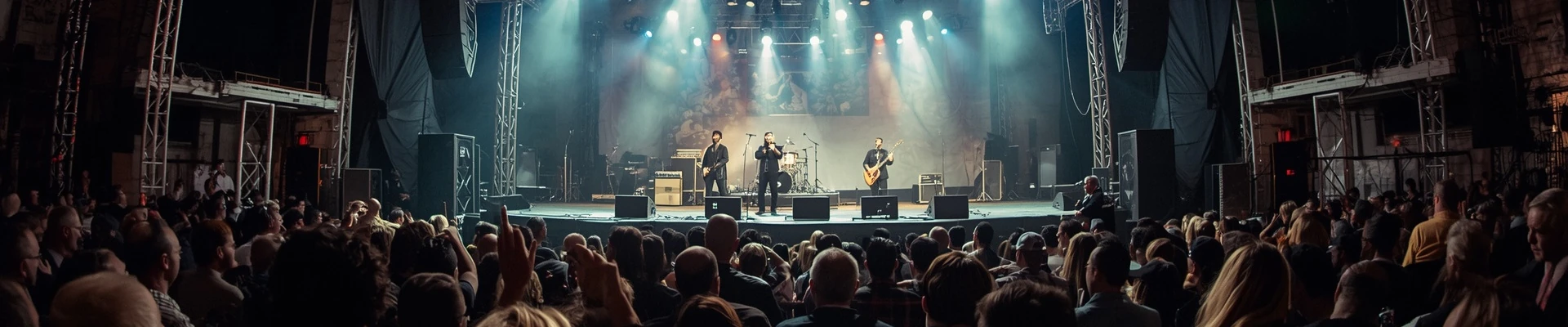
The anchor venue is the Dort Financial Center (formerly Perani Arena, formerly the Dort Federal Event Center), a 6,000-capacity arena on Lapeer Road in the north of the city that serves as Flint's primary touring venue — it has hosted acts from Bon Jovi and Metallica in the arena-rock era to contemporary country, hip-hop, and comedy tours. The Capitol Theatre (1928), on South Saginaw Street in downtown Flint, is one of the most beautiful restored theatres in Michigan — an ornate 1,700-seat venue that programs touring concerts, comedy, and performing arts. The Flint Farmers' Market area along North Saginaw Street has a cluster of bars and restaurants with live music, anchoring the downtown revitalization effort.
The Ferris Street corridor and the North Saginaw Street strip have historically been the commercial hearts of Flint's entertainment scene, though the landscape has shifted significantly with population loss and venue closures. The Bray Road area on the city's east side sustains neighbourhood bars and informal venues. The Carriage Town neighbourhood near downtown is one of the historic districts anchoring preservation and some of the city's small arts scene. The University of Michigan-Flint campus on the Flint River supports some student-oriented programming and the Flint Institute of Arts nearby anchors the cultural district.
Smaller venues and community spaces fill in the rest: the Capitol Lanes (bowling and entertainment complex), the Flint Cultural Center (which includes the Whiting Auditorium, a 2,200-seat classical and touring venue), and church halls and community centres across the city's residential neighbourhoods. Hip-hop and R&B shows have historically moved through a circuit of clubs on the east and north sides that shifts with the economic fortunes of individual venues.
Festivals and Signature Events
The Back to the Bricks automotive festival — held each August, drawing more than 15,000 vehicles and thousands of spectators — is Flint's signature annual event, a celebration of the city's car-making heritage that includes outdoor concerts, a car show on Saginaw Street, and a cruise night that fills the downtown with classic American automobiles. It is one of the largest automotive cruise events in America.
Crim Festival of Races (now the Crim Fitness Foundation's annual race weekend in August) brings runners, walkers, and a community celebration to downtown Flint each summer, with live music programming alongside the races. College Cultural Neighbourhood Association events in the College and Cultural district support arts and music programming year-round. The Flint Institute of Music programs classical concerts, recitals, and educational events through the academic year.
Art Walk events in the downtown corridor, Flint Noir (a literary and arts festival with music programming), and a series of neighbourhood block parties and church festivals mark the cultural calendar. The hip-hop community programs its own events through independent promoters — showcase nights, cypher events, and release parties — at venues across the city.
What Ties It All Together
What defines Flint's music is a specific kind of working-class directness — inherited from the auto-plant culture and UAW solidarity that made the city in the first place, and refined through decades of economic collapse into something rawer and more urgent. Grand Funk Railroad were the loud, unsubtle, enormously popular band that Flint's factory workers deserved — critics dismissed them, the people loved them, and Shea Stadium sold out. MC Breed brought Midwestern rap's blunt vernacular to a national audience. Jon Connor turned Flint's suffering into lyrical precision. The water crisis — one of the most extraordinary public-health failures in modern American history — became subject matter for artists who had already spent careers documenting institutional abandonment.
Flint is the Vehicle City that stopped making vehicles, the GM birthplace that GM left behind, the town that poisoned its own children's drinking water and somehow kept making music anyway. Its sound is not polished. It does not need to be. It is honest, direct, and built on survival — and that has made it one of the most culturally consequential small cities in the Midwest.