



Sterling Heights is the fourth-largest city in Michigan by population, with approximately 132,000 residents spread across 36 square miles in Macomb County, on Detroit's northern edge. The city shares borders with Warren to the south and west, Utica to the north, Shelby Township to the north and northeast, and Clinton Township to the east — a dense suburban matrix that together forms the largest concentration of population in Macomb County and one of the most economically significant suburban corridors in the Great Lakes region. The Clinton River cuts through the northern portions of the city, and the landscape is quintessentially suburban metro Detroit: flat, automotive-era grid streets, wide commercial arterials, ranch-and-colonial neighborhoods, and the industrial parks that supply components to the plants in Warren, Hamtramck, and Dearborn. The city is approximately 15 miles north of downtown Detroit, close enough that the city's residents have always been drawn into Detroit's cultural orbit while simultaneously developing their own distinct character.
Sterling Heights incorporated as a city in 1968, breaking off from Sterling Township, and grew explosively through the 1970s and 1980s as white families left Detroit under the pressures of urban change. The city's population nearly doubled between 1970 and 1990, from roughly 60,000 to over 117,000, one of the fastest suburban growth rates in the Midwest. The automotive industry sustained the growth — General Motors, Chrysler (later Stellantis), and dozens of Tier 1 and Tier 2 suppliers maintain major operations within commuting distance, and Sterling Heights itself hosts Lockheed Martin aerospace operations and the United States Army's TACOM (Tank-Automotive and Armaments Command) at the Detroit Arsenal in neighboring Clinton Township. The demographic story of the past four decades, however, is inseparable from immigration: Sterling Heights became the destination of choice for one of the largest Chaldean communities outside Iraq, and the broader Arab American, South Asian, and Eastern European immigrant populations have reshaped the city's commercial and cultural life in ways that make it one of the most ethnically layered suburbs in the American Midwest.
A brief history
The land that is now Sterling Heights was home to the Ojibwe and Odawa peoples before European contact. The French established the earliest European presence through the fur trade and land grants along the Clinton River corridor in the 18th century. American settlement accelerated after the War of 1812, and the township was organized under the name Sterling — after a township in New York — in 1835. Through the 19th century, the area was agricultural land, supplying grain and produce to the growing city of Detroit. The arrival of auto-era sprawl transformed Sterling Township from farmland to suburb in the post-World War II decades, and the formal incorporation as a city in 1968 reflected a population that had long outgrown its rural administrative origins.
The Chaldean immigration began in earnest in the 1970s and accelerated through the 1980s and 1990s as successive waves of Iraqi Christians fled political instability, the Iran-Iraq War, the Gulf War, and ultimately the sectarian catastrophe that followed the 2003 US invasion of Iraq. The Chaldean American community in metropolitan Detroit — centered substantially in Sterling Heights, alongside West Bloomfield, Bloomfield Hills, and parts of Pontiac — is estimated at 150,000 to 160,000 people, making it the largest Chaldean population outside Iraq. The community established churches, businesses, civic organizations, and cultural institutions throughout Sterling Heights, fundamentally reshaping the city's identity. Mound Road and 15 Mile Road became the spines of a commercial Chaldean corridor of restaurants, markets, and social clubs that remains active today.
Music identity
Sterling Heights sits at the intersection of two distinct musical worlds: the Detroit rock and heavy music continuum that has defined the suburban motor city since the 1960s, and the Chaldean and Arab American cultural music scene that is one of the most concentrated in North America. The city's music identity is not defined by a single sound the way Detroit proper is defined by Motown or techno — Sterling Heights is suburban in character, and its contribution to music is as much infrastructural (providing the arena and the bedroom-studio culture) as it is generative of a specific named style.
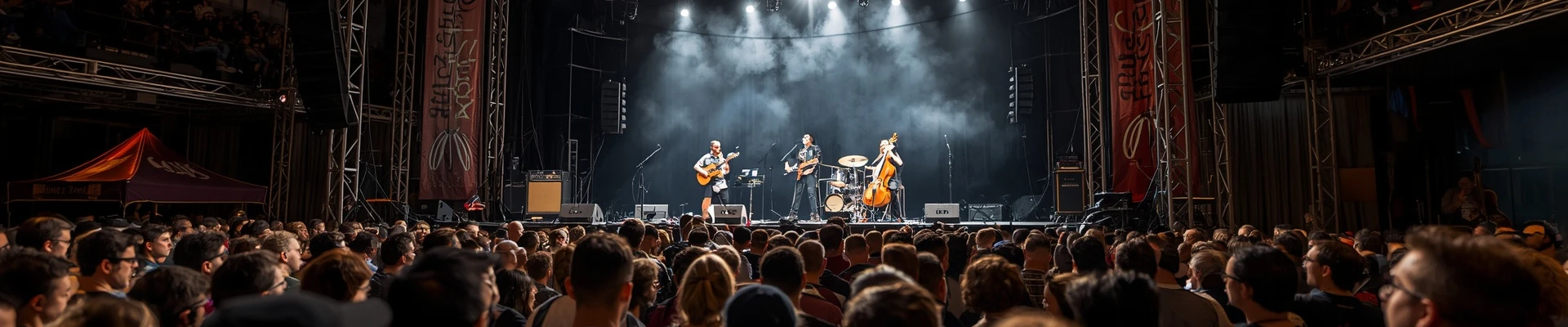
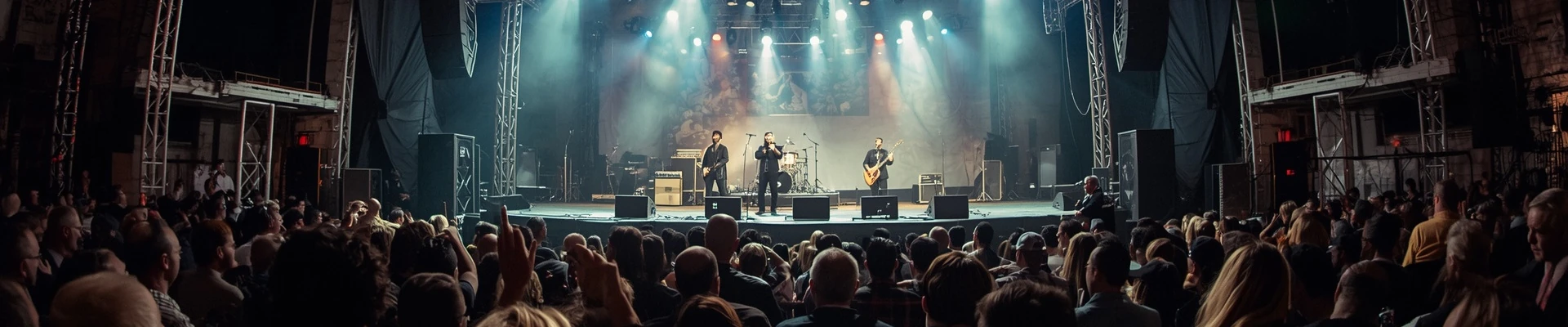
The city's single most consequential musical landmark is Freedom Hill Amphitheatre — the outdoor concert venue on Metropolitan Parkway (formerly 15 Mile Road) near the Freedom Hill County Park. Freedom Hill is a 15,000-capacity outdoor amphitheatre operated under a successive series of corporate names (Pine Knob Entertainment, Live Nation) and has been one of the essential outdoor summer concert stops in Michigan for decades. The venue hosted arena-class rock, country, pop, and hip-hop touring acts from the late 1980s through the 2020s — a partial history of its stages includes Paul McCartney, Bruce Springsteen, Tom Petty, Bob Dylan, Metallica, Dave Matthews Band, Lollapalooza-era alternative acts, and generations of country touring. The amphitheatre's proximity to both Detroit's population base and the Macomb County suburban market made it a reliable grosser on the summer circuit. Importantly, Freedom Hill served as a secondary summer outdoor option alongside Pine Knob Music Theatre (in nearby Independence Township) — the two venues collectively accounted for a massive share of Michigan's summer concert capacity. Freedom Hill's role in the regional market, hosting shows that might otherwise skip the Detroit metro or route around it, gave Sterling Heights residents an arena-class music experience in their own backyard.
The city's connection to the broader Detroit rock and metal scene is structural rather than originatory. The Detroit metro's suburban north — including Sterling Heights, Warren, and Macomb County broadly — provided the audience and the amateur bands that populated the metro's club circuit. The Machine Shop in nearby Flint and The Crofoot in Pontiac anchored the heavier end of the metro circuit, and bands from Sterling Heights routinely played these rooms. The Detroit punk and hardcore scene — which produced bands including The Necros, Negative Approach, and the mid-1980s Touch and Go Records circle — drew from the entire metro, including its northern suburbs. MC5 and The Stooges, Detroit's foundational proto-punk bands from the late 1960s, had national reach that made the entire metro a recruiting ground for subsequent hard rock and punk scenes, and Sterling Heights teenagers grew up on that inheritance.
The hip-hop dimension of Sterling Heights reflects both its proximity to Detroit — one of the most important cities in American hip-hop history, home to Big Sean, Danny Brown, Black Milk, Royce da 5'9", and the ecosystem that produced Eminem — and its own suburban character. The Chaldean community produced a small but visible subset of Arab American rappers operating in the Detroit metro scene through the 2000s and 2010s, blending Detroit's gritty rap aesthetic with Arabic linguistic and cultural references. The broader Arab American hip-hop presence in the Detroit metro is one of the most distinctive in the United States, with Sterling Heights as one of its primary residential bases.
The Chaldean music scene is the most culturally specific contribution Sterling Heights makes to the regional music ecosystem. Chaldean weddings, community festivals, and social events sustain a continuous demand for Chaldean folk music, Iraqi classical forms, modern Arabic pop, and the hybrid genres that Chaldean American musicians have developed in the diaspora. The city's Chaldean churches — including Sacred Heart Chaldean Catholic Church and others — provide performance contexts for liturgical and sacred music. Chaldean-owned restaurants and banquet halls on Mound Road and nearby corridors regularly program live music acts from within the community and from visiting artists based in Iraq, Australia, and the broader diaspora. The Chaldean Cultural Center has hosted concerts and cultural events. This scene is largely invisible to mainstream music media but is extensive, well-organized, and commercially significant within its community.
Venues and neighborhoods
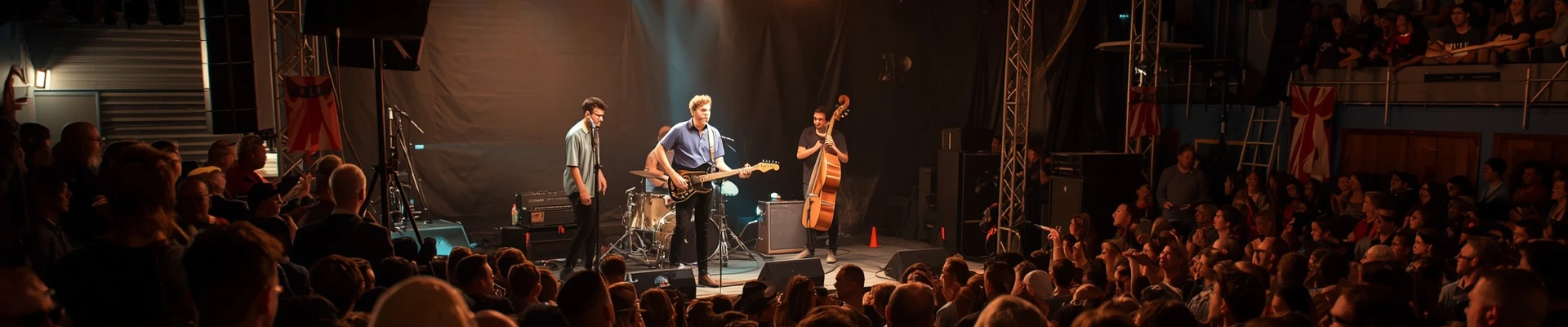
Freedom Hill Amphitheatre (15,000 capacity, Metropolitan Parkway) is the city's landmark venue — an outdoor summer concert facility that has hosted some of the largest touring names in rock, pop, country, and hip-hop since the late 1980s. The rest of Sterling Heights' venue ecosystem is suburban in character: bars and restaurants with live music programming rather than dedicated concert rooms. Sterlingfest (see Festivals) programs a temporary outdoor stage. The Chaldean corridor along Mound Road and 15 Mile Road sustains live music in the context of community banquet halls and restaurants. The city's proximity to Detroit means residents are within 20–30 minutes of Little Caesars Arena (19,000 capacity), The Fillmore Detroit, Saint Andrew's Hall, The Shelter, and Majestic Theatre — the full stack of Detroit proper's venue ecosystem.
Neighborhoods in Sterling Heights are primarily residential subdivisions without the dense commercial-entertainment corridors of older urban neighborhoods. The commercial music and entertainment activity clusters along the major arterials — Mound Road, Van Dyke Avenue, 15 Mile Road, 18 Mile Road — rather than in any single walkable district. The Freedom Hill County Park area, with its combination of outdoor venue, disc golf, and park programming, functions as the closest thing to a defined cultural district.
Festivals and signature events
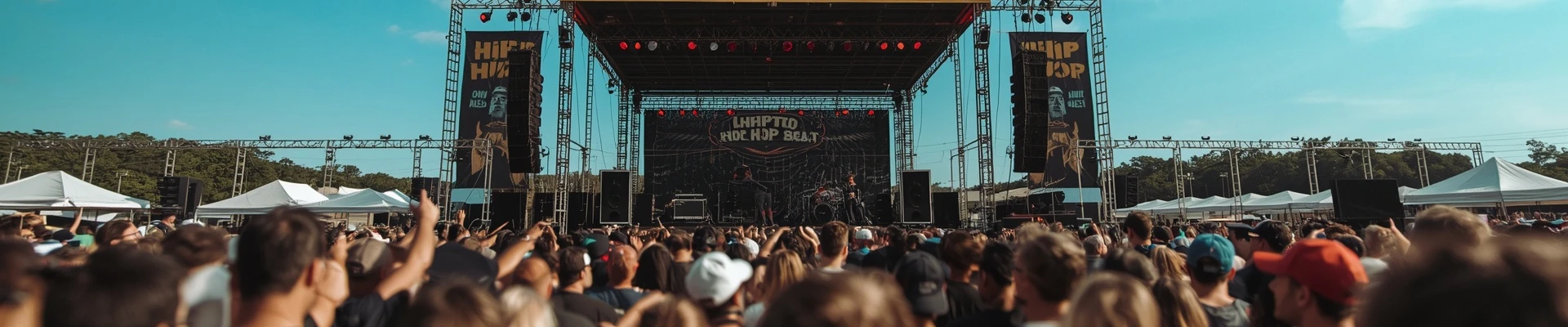
Sterlingfest is Sterling Heights' signature community festival, held annually in late July at Dodge Park — a multi-day outdoor event with live music across multiple stages, food vendors, arts and crafts, and attendance typically in the tens of thousands over the festival weekend. Sterlingfest's music programming draws regional and national touring acts at the county-fair and mid-size festival level, making it one of the larger free community music festivals in Macomb County. The festival is a civic institution and a reliable showcase for the kind of classic rock, country, and mainstream pop that defines the suburban Macomb County audience.
Freedom Hill concerts function as a de facto festival season for the city, with the summer amphitheatre schedule bringing a dozen or more major touring acts to Sterling Heights between May and September each year. The outdoor concert season at Freedom Hill has historically been one of the most anticipated summer entertainment calendars in the Detroit metro.
The Chaldean community organizes cultural festivals and concerts at the Chaldean Cultural Center and at community churches, celebrating Akitu (Chaldean New Year, in April) and other cultural milestones with music, dance, and traditional performance. These events are open to the public and draw participants from across the metropolitan Detroit Chaldean diaspora.
What ties it all together
Sterling Heights' musical identity is the product of its specific place in the American suburban landscape — a post-WWII boom city that grew large enough to anchor a major outdoor amphitheatre, close enough to Detroit to absorb one of the richest urban music scenes in American history, and home to an immigrant community that brought with it musical traditions of extraordinary depth and longevity. Freedom Hill made Sterling Heights a concert destination. The Detroit rock continuum gave its residents a musical inheritance. And the Chaldean diaspora built a live music culture inside the community's own institutions that operates largely off the mainstream radar but is no less real for that. The city does not have a single defining sound, but it has something equally valuable: the suburban infrastructure — the bedrooms, the garages, the amphitheatre stages, the banquet halls — where multiple versions of American music get made and consumed simultaneously.