



Warren is Michigan's third-largest city and the seat of Macomb County, with roughly 134,000 residents spread across a nearly flat, grid-planned expanse of southeastern Michigan immediately north of Detroit. The city occupies approximately 89 square kilometres of land that rises almost imperceptibly from the level glacial plain of the Great Lakes lowland, bounded to the south by Eight Mile Road — the famous, mythologized dividing line between Detroit and its northern suburbs — and extending north to Sixteen Mile Road. To the east lies Sterling Heights, to the west Hazel Park and Madison Heights, and the city of Detroit presses directly against its entire southern border. The terrain offers no drama: Warren is as flat as the farmland it replaced in the postwar building boom, a city of bungalows, strip malls, brick churches, bowling alleys, and enormous manufacturing complexes built at a pace that matched the expansion of the American automobile industry in the mid-twentieth century.
Warren is not a suburb in the genteel, commuter-town sense. It is a working industrial city that happens to be located in the metropolitan orbit of Detroit rather than at its center. The General Motors Technical Center — a landmark complex designed by Eero Saarinen, opened in 1956, and now a National Historic Landmark — sits at the heart of Warren and functions as the intellectual and engineering nerve center of GM's global operations. Chrysler (now Stellantis) operates major facilities in the Warren area. AM General has a Warren presence. The city's tax base, its employment rolls, its whole civic identity — everything runs through the automobile industry in one form or another, and when the industry contracts, Warren contracts with it.
A brief history
The land around Warren was inhabited by the Odawa, Ojibwe, and Potawatomi peoples — the Council of Three Fires — before European contact. French fur traders and missionaries moved through the region in the seventeenth and eighteenth centuries, and the area became part of the Northwest Territory following the American Revolution. Settlement accelerated after the War of 1812 and the opening of the Erie Canal in 1825, which made western Michigan accessible to New England and mid-Atlantic migrants. What became Warren was initially called Beebe's Corners and later Aba Wan before the township of Warren was formally organized in 1837 — named, most likely, for General Joseph Warren, the American Revolutionary War hero who died at the Battle of Bunker Hill.
Warren remained predominantly agricultural through the nineteenth century, with small manufacturing and commercial activity clustered along Mound Road and Van Dyke Avenue, two of the north-south arteries that still define the city's internal geography. The transformation came in the postwar era, as the automobile industry's extraordinary expansion drew hundreds of thousands of workers — from Appalachia, from the American South, from Poland, Italy, Ukraine, and Lebanon — into the Detroit metropolitan area. Warren's population exploded: from roughly 42,000 in 1950 to 179,000 by 1970, one of the fastest-growing cities in the United States during that period. The construction was relentless — subdivision after subdivision of affordable bungalows and small ranch houses filled in the farmland, served by shopping centers anchored by Sears, Kmart, and the region's beloved Kmart headquarters (also in Troy, just to the north).
The Coleman Young era in Detroit (1974–1994) and the dynamics of white flight are inseparable from Warren's demographic story. Warren's population was overwhelmingly white — 99 percent white as recently as 1990, a statistic that reflected not just migration patterns but explicit and documented discriminatory housing policies. The city's former mayor, Ted Bates, became a national symbol of suburban resistance to racial integration during the early 1970s, refusing federal housing assistance rather than allow public housing that might attract Black residents. The racial geography of the Detroit metro — Detroit predominantly Black, Warren and Macomb County predominantly white — was one of the most starkly segregated configurations of any major American metropolitan area, and it shaped everything about both cities' cultural identities, including their music. Warren's population has diversified significantly since the 1990s: the city is now roughly 70 percent white, with growing Arab American (particularly Lebanese, Yemeni, and Iraqi) populations, African American residents, and smaller South Asian and Southeast Asian communities.
Music identity
Warren's music identity is inseparable from Detroit's — the city is too close, too embedded in the metro orbit, and too reliant on the same infrastructure (studios, labels, venues, audiences) to have a fully autonomous scene. But Warren has contributed meaningfully to the Detroit rock, punk, and hip-hop traditions, and several nationally significant artists have roots in the city or in the wider Macomb County orbit.
The most globally recognized artist from Warren is Eminem — Marshall Mathers III — who grew up on the Detroit side of Eight Mile but whose biography is deeply entangled with the Warren and Macomb County geography. The film 8 Mile (2002, directed by Curtis Hanson) fictionalized his early life and made the Eight Mile corridor — the literal and symbolic boundary between Detroit and Warren — famous worldwide. Eminem's early rap career developed in Detroit's hip-hop underground, at battles held in Osborn and at the Hip Hop Shop on 7 Mile Road, but the Macomb County geography, the particular mood of the white working-class suburbs north of Eight Mile, and the cultural friction of crossing that line in both directions are embedded in his art. His breakthrough album The Slim Shady LP (1999, Aftermath/Interscope), produced by Dr. Dre, introduced a voice rooted in the specific sociology of Detroit's white suburbs — the trailer parks, the divorced households, the economic precariousness that the auto industry boom had temporarily papered over. The Marshall Mathers LP (2000) and The Eminem Show (2002) confirmed him as one of the most commercially dominant and critically discussed rappers in history.
Warren's rock and punk lineage runs through the broader Detroit rock tradition that emerged in the late 1960s and 1970s — a tradition defined by raw volume, minimal production, and a working-class aggression that distinguished it from the psychedelia of the West Coast and the art-rock of New York. The MC5 and the Stooges were Detroit bands, not Warren bands, but their influence soaked into every garage and basement in Macomb County. Kid Rock (Robert Ritchie) — born in Romeo and raised in the small town of South Lake in the broader Macomb County area — developed his hybrid rock-rap-country persona in the Detroit suburban circuit, playing shows at venues along the Van Dyke and Mound Road corridors before Devil Without a Cause (1998, Atlantic) sold twelve million copies in the United States and made him one of the era's defining rock crossover acts. Kid Rock's music carries the unmistakable DNA of Macomb County: working-class pride, Southern rock borrowed through the Detroit prism, hip-hop production grafted onto arena rock structures.
Bob Seger — the defining voice of Detroit rock — was born in Dearborn and raised in Ann Arbor, but his music's blue-collar Michigan mythology resonated so deeply throughout Warren and Macomb County that the city claimed him as its own. The Bob Seger System and later the Silver Bullet Band built their early following precisely in venues like the ones that lined Warren's commercial strips, and Seger's anthems — Night Moves, Against the Wind, Old Time Rock and Roll — are Warren's soundtrack as much as they are Detroit's.
The local punk and hardcore scene that flourished in the 1980s and 1990s used venues in Warren and neighboring Hazel Park and Roseville as training grounds. Macomb Community College — one of the largest community colleges in the United States, with campuses in Warren — became a significant venue for all-ages shows and a gathering point for the suburban punk underground. The college's auditoriums and parking lots hosted early performances by bands that would go on to varying degrees of regional and national recognition.
Warren's Arab American community — which has grown substantially since the 1990s and is now one of the largest in Michigan outside Dearborn — sustains a vibrant Arabic pop, dabke traditional dance music, and oud performance culture centered on the city's Lebanese and Iraqi restaurants, banquet halls, and community centers along Hoover Road and Chicago Road. Yemeni musicians and Iraqi traditional ensembles perform at weddings and community events throughout the year. The South Asian community (particularly Indian and Pakistani households in the northern sections of the city) supports Bollywood and bhangra performance. These immigrant music scenes are not connected to the city's rock or hip-hop traditions in any formal way, but they give Warren a musical depth that its industrial exterior obscures.
Venues and neighborhoods
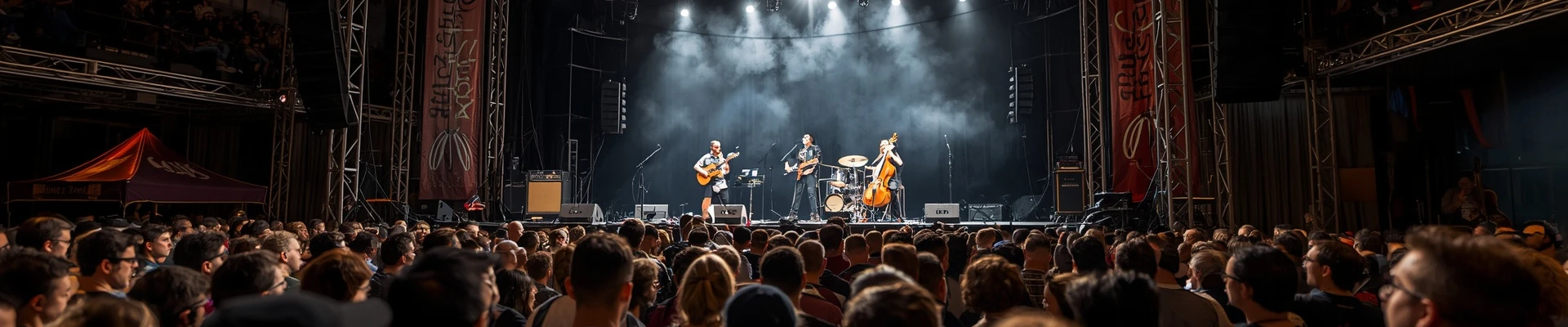
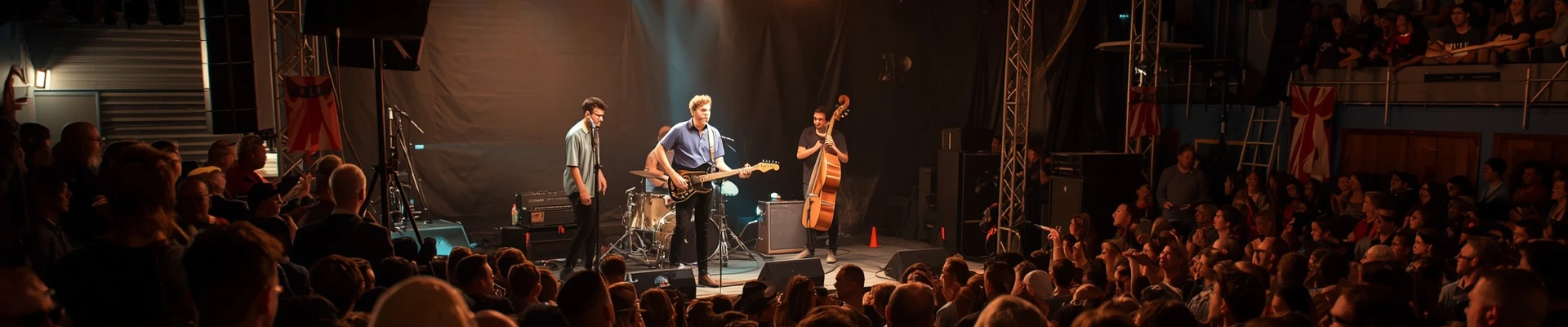
Warren's venue landscape reflects its character: large banquet halls and event centers serving the wedding and community market, bowling alleys with bars that book cover bands on weekends, and a handful of clubs and bars along the major commercial corridors. The Token Lounge in Westland is frequently referenced for the broader Detroit suburban circuit, and similar mid-size bars and clubs have operated along Van Dyke, Mound Road, and 8 Mile Road through Warren's history — though many have turned over with time.
Macomb Community College's Center Campus in Warren has hosted concerts in its performing arts spaces. St. Anne's and other large Catholic parish halls have been community music venues. The Warren Cultural Center (within the Warren Community Center complex on Arden Avenue) programs local arts and music events. Bowlero Warren (formerly AMF Lanes, one of several bowling and entertainment venues in the city) has hosted live music in its bar facilities.
The city's internal geography is defined by its arterial grid rather than distinctive neighborhoods in the urban sense. The Mound Road corridor is the industrial spine, running past GM's Technical Center and several large manufacturing plants. Van Dyke Avenue is the main commercial artery. The south end — closest to Eight Mile Road — is the most urban in character, with smaller housing stock and a demographic profile closer to Detroit's adjacent neighborhoods. The north end approaches the Sterling Heights border and is quieter, more suburban, with larger lots. Downtown Warren around the city hall complex on Civic Center Drive has attempted modest revitalization but lacks the walkable density that would support a traditional music-venue district.
Festivals and signature events
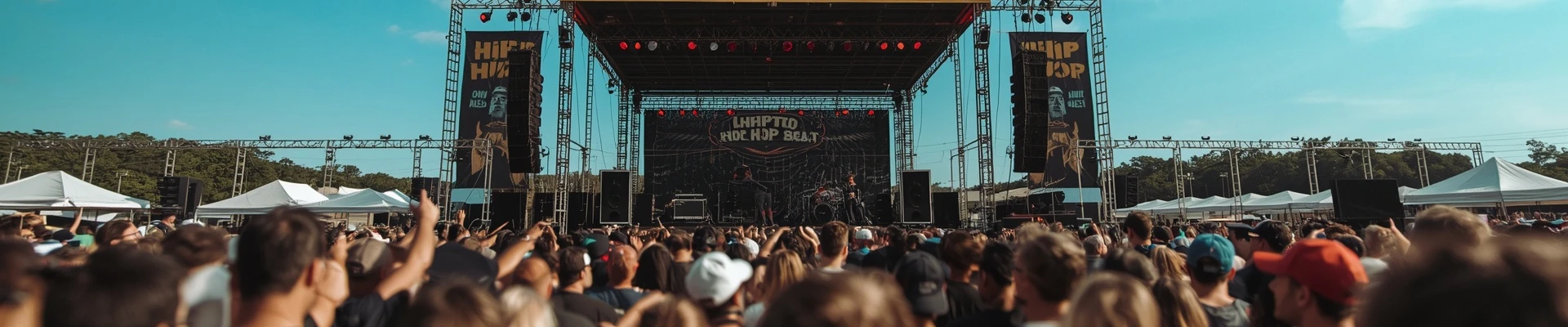
Warren's event calendar is dominated by large community gatherings rather than music-first festivals. WARRENfest (the city's annual summer festival at Halmich Park) programs live music across multiple stages, drawing local and regional acts in rock, country, and pop. The Macomb County Cruisin' the Boulevard car show and event on Van Dyke Avenue incorporates live rock music programming — a fitting combination in a county built on automotive culture. Macomb Community College programs outdoor concerts through its campus events calendar. Ethnic festivals — particularly Lebanese and Arab-American cultural celebrations — incorporate live music and traditional dance performance. The Greek Heritage Festival at St. Basil Greek Orthodox Church has been a summer institution, featuring live rebetiko and popular Greek music alongside food.
What ties it all together
Warren is a city whose music is best understood through its relationship to the boundary it sits against. Eight Mile Road — two lanes of asphalt that have become one of American music's most loaded geographical metaphors — runs along Warren's entire southern edge, separating it from Detroit. That boundary was always porous in the ways that mattered: the young Marshall Mathers crossed it in both directions, absorbing Detroit's hip-hop underground while carrying Macomb County's white suburban frustration back with him. Kid Rock crossed it conceptually, fusing Detroit rock with Southern influences and hip-hop production and selling it back to a national audience hungry for a music that felt rebellious without feeling urban. The GM Technical Center, the Chrysler plants, the bowling alleys, the parish halls, the Arab bakeries on Hoover Road, the basement punk shows at houses near Macomb Community College — these are not obvious raw materials for internationally resonant music, but Warren keeps producing artists who find in them a usable past. The city's musical contribution is ultimately inseparable from Detroit's, which is not a limitation but a definition: Warren is where Detroit's edge becomes suburban, where the industrial city meets the grid of bungalows and strip malls, and that friction has proven, against all expectation, to be generative.