
Omaha is the largest city in Nebraska and the 40th-largest in the United States, with roughly 486,000 residents inside the city limits and more than 950,000 across the surrounding metropolitan area, which spans the Missouri River into Council Bluffs, Iowa. Sitting on the high west bank of the Missouri at the eastern edge of the Great Plains, about 800 km west of Chicago and 480 km north of Kansas City, it is the largest city in Nebraska and the commercial and cultural capital of the eastern Great Plains. Omaha is home to Berkshire Hathaway (Warren Buffett's holding company), Union Pacific Railroad, Mutual of Omaha, and a substantial financial services and insurance industry. It is also, improbably, one of the most consequential indie rock cities in the United States — home to Saddle Creek Records and the extraordinary cluster of bands that grew out of a single circle of Omaha friends in the 1990s and 2000s.
A brief history
The land on the west bank of the Missouri was Omaha, Ponca, and Otoe territory before American settlers arrived in the 1840s. Omaha was founded in 1854 as the eastern terminus of the transcontinental railroad and grew rapidly as a meatpacking, grain, and transportation hub. The completion of the Union Pacific Railroad westward from Omaha in 1869 and the development of the South Omaha meatpacking district — which became one of the largest in the world, rivaling Chicago — built the city's industrial base. Through the 20th century Omaha remained a major agricultural processing, rail, and financial services center. The city's Black community, concentrated in the Near North Side neighborhood, grew through the Great Migration and produced an important blues and jazz tradition. Successive waves of immigration — German and Czech through the 19th and early 20th centuries, Black Southerners during the Great Migration, and very large Sudanese, Somali, Mexican, and Vietnamese communities since the 1990s — have built a city that is roughly 13% Black and 13% Hispanic, with one of the largest Sudanese populations in the United States.
Music identity
Omaha's most internationally consequential musical chapter is the rise of Saddle Creek Records and the Omaha indie scene of the 1990s and 2000s. The label was founded in 1993 by Conor Oberst and his older brother Justin Oberst as a vehicle to release cassette tapes of their bands; it was incorporated and named Saddle Creek in 1996. Oberst's project Bright Eyes — which he began recording as a teenager in his Omaha bedroom — became one of the most acclaimed singer-songwriter acts of the late 1990s and 2000s through albums like Fevers and Mirrors (2000), Lifted or The Story Is in the Soil, Keep Your Ear to the Ground (2002), and I'm Wide Awake, It's Morning (2005). The broader Saddle Creek roster — Cursive (Tim Kasher), The Faint (dark synth-post-punk), Desaparecidos (Oberst's punk side project), Rilo Kiley (briefly), Azure Ray, Commander Venus, Neva Dinova, Lullaby for the Working Class, Mayday, and many others — built one of the most critically regarded independent label catalogues in American indie history and put Omaha on the international music map. The label's commitment to Omaha identity — its founders stayed in the city, continued to record there, and hired locally — made it a genuine regional success story rather than a vanity project. Maria Taylor, Simon Joyner, Now It's Overhead, and a deep current indie scene continue the Saddle Creek lineage.
Omaha's best-selling modern rock export is 311, formed in Omaha in 1988 by Nick Hexum and SA Martinez. The band's fusion of alternative rock, rap, reggae, and funk — crystallized on the triple-platinum 311 (1995) — built one of the most devoted fan bases in American rock and a long career of annual summer festivals, stadium tours, and a 35-year run that continues to the present. Mannheim Steamroller, the progressive new-age and electronic ensemble created by Chip Davis in Omaha in 1974, became one of the best-selling musical acts in American history through its Christmas recordings — with Christmas (1984) and its follow-ups selling more than 28 million copies. The Killers' Dave Keuning grew up in Pella, Iowa and attended school near Omaha. Mousetrap, the Omaha punk band, built a regional following in the late 1970s. Sunny Day Real Estate's Jeremy Enigk spent time in Omaha. Josh Krajcik and a current generation of Omaha singer-songwriters continue the lineage.
Omaha's Black music lineage runs through the historic Near North Side. Charlie Parker, while Kansas City–based, played the Omaha clubs frequently. Preston Love, the Omaha-born alto saxophonist who played in Count Basie's Orchestra, documented the Omaha jazz and blues scene extensively. Paul Williams (the Hucklebuck) played the Omaha circuit. The Dreamland Ballroom and other Near North Side clubs hosted touring R&B and jazz acts through the 1940s and 1950s. Modern hip-hop runs through the city's Black community through artists like Onry Ozzborn and a current generation of trap and indie hip-hop artists. Sudanese music — diasporic pop, traditional ceremonial music, and gospel — runs through the city's large South Sudanese community, concentrated in the Near North Side and the Benson neighborhood.
Omaha also has deep country, folk, and classical traditions. Willy Welch, Greg Brown's Iowa-Nebraska orbit, and a thriving folk and singer-songwriter circuit anchor the city. The Omaha Symphony (founded 1921) and the Orpheum Theater anchor the classical tradition. The annual Omaha Performing Arts season at the Holland Performing Arts Center and the Orpheum programs major classical, opera, Broadway, and pop acts.
Venues and neighborhoods
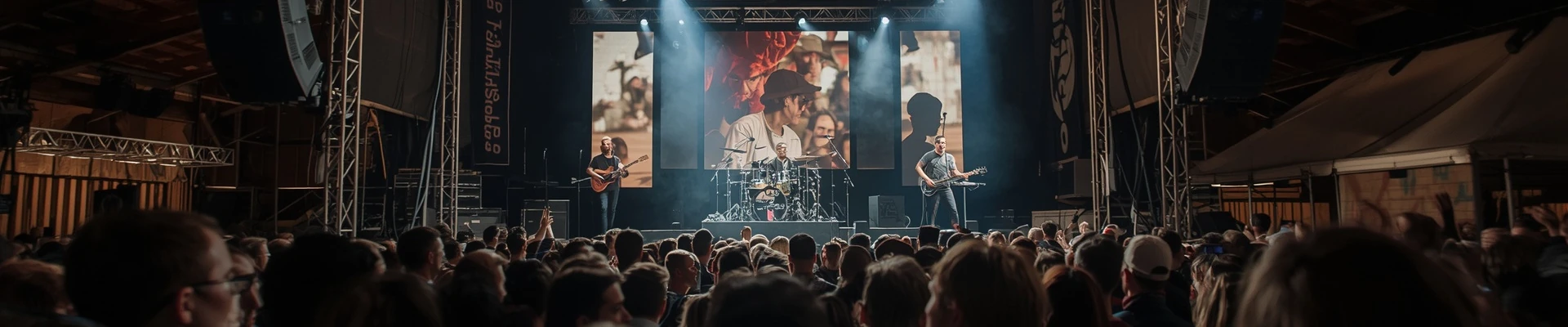
Omaha's venue ecosystem is well-developed. At the top sit the CHI Health Center Omaha (the city's largest arena, home of the Mavericks and major concerts), Charles Schwab Field Omaha (the College World Series stadium, host of outdoor concerts), the Holland Performing Arts Center (a 2005 venue housing the Orpheum Theater and the TD Ameritrade Park Concert Series), the Orpheum Theater (a 1927 Baroque movie palace), the Joslyn Art Museum's Storz Fountain Stage, and the Stir Cove at Harrah's Council Bluffs (across the river in Iowa, the region's primary outdoor amphitheater). The midsize tier includes the Slowdown (the long-running Saddle Creek–adjacent indie rock venue, opened in 2007 and anchoring the Omaha indie scene), the Waiting Room, and the Sokol Auditorium (the long-running Czech-American fraternal hall that has hosted punk, alternative, and folk shows since the 1980s). Beneath them is a deep club layer — the Slowdown, the Waiting Room, O'Leaver's (the beloved punk and indie bar), The Barley Street Tavern, Reverb Lounge, the Sydney in the Benson neighborhood, the Bluebird, Jake's Cigars & Spirits, and a network of bars and DIY rooms across the Old Market, Benson, Midtown Crossing, and the Dundee neighborhood. The Saddle Creek Records office continues to anchor the indie ecosystem. Jazz on the Green at the Joslyn Art Museum adds a free outdoor jazz series each summer.
Different neighborhoods carry different musical identities. The Old Market anchors the tourist-facing bar and venue circuit. Benson has emerged as the city's most active small-venue and indie corridor, with the Sydney, O'Leaver's, and a dense bar strip along Maple Street. Midtown Crossing anchors a higher-end entertainment circuit. The Near North Side retains the historic Black music tradition. Dundee and Happy Hollow support a smaller but serious bar and singer-songwriter circuit. South Omaha supports a large Mexican-American music scene through clubs along 24th Street. The Minne Lusa and North Omaha corridors support the Sudanese and East African music scenes.
Festivals and signature events
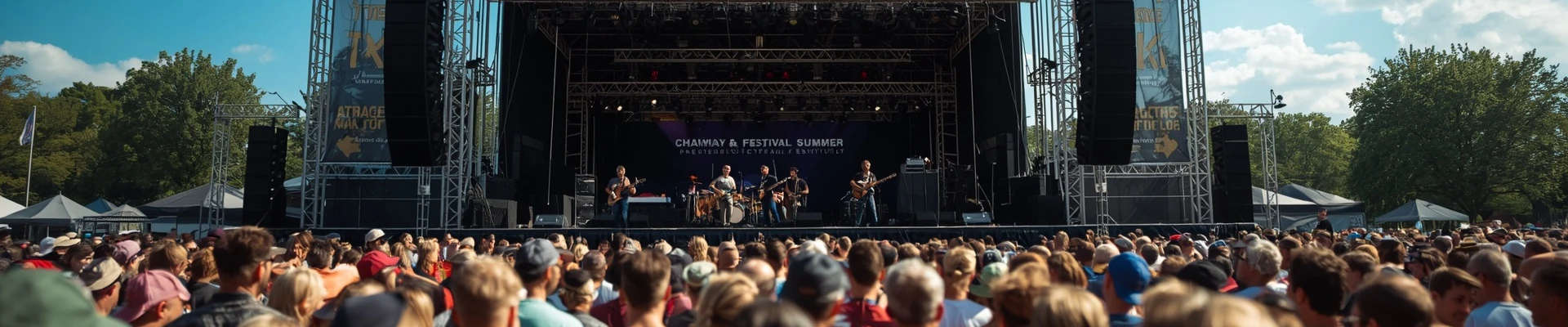
The festival calendar reflects the city's range. College World Series in June draws hundreds of thousands of baseball fans and significant music programming to the downtown area. Maha Music Festival at Stinson Park in Aksarben Village each August is the city's flagship indie and rock festival, drawing major national acts and a heavy local presence. Omaha Jazz and Blues Festival at Midtown Crossing, Cinco de Mayo on 24th Street in South Omaha, Día de los Muertos in South Omaha and the Old Market, Omaha Pride, Celebrate Omaha (the multi-cultural city festival), Benson Days (the Benson neighborhood's annual street festival with music across multiple stages), Saddle Creek Records' anniversary programming, Jazz on the Green at Joslyn, the Nebraska State Fair in nearby Lincoln (drawing on the Omaha audience), and the Omaha Symphony's outdoor summer series round out the calendar.
What ties it all together is the city's combination of Great Plains isolation, working-class Midwestern scrappiness, and a specific moment in the 1990s when a group of teenage musicians in suburban Omaha decided to start a record label and keep it local. Omaha is the city where Conor Oberst started recording in his bedroom at age 13 and built Bright Eyes into one of the most acclaimed American singer-songwriter catalogues of the 2000s, where Saddle Creek Records put an obscure Nebraska city on the international indie map, where 311 built one of the most devoted fan bases in American rock, where Mannheim Steamroller became one of the best-selling musical acts in American history from a studio on the outskirts of town, and where the Slowdown and O'Leaver's continue to anchor a scene that has always punched several weight classes above its size.