
Henderson sits at the southeastern edge of the Las Vegas Valley, roughly 25 kilometres from the Strip, at an elevation of about 580 metres in the Mojave Desert foothills between the Black Mountains and the vast southern Nevada basin. It is Nevada's second-largest city with a population of nearly 290,000, the fastest-growing large city in the United States for much of the 2000s and 2010s, and — despite its identity as a Las Vegas suburb — a city with its own distinct history, geography, and increasingly its own cultural institutions. Henderson's musical story is inseparable from Las Vegas's: it sits inside the Las Vegas–Henderson–Paradise metropolitan statistical area, and the casino resort economy that defines the region's entertainment industry does not observe municipal boundaries. But Henderson is more than a satellite. It houses a significant portion of the region's residential music community, a growing local venue infrastructure of its own, and the kind of mid-size suburban scene — cover bands, tribute acts, casino lounges, original-music rooms, worship circuits — that sustains the regional music economy beneath the Strip's glittering surface.
A brief history
The land Henderson now occupies was Southern Paiute territory for thousands of years before Spanish and then American explorers crossed the Mojave in the 19th century. The city's modern existence begins in 1941, when the federal government selected a site southeast of Las Vegas to build the Basic Magnesium Inc. plant — a massive industrial facility constructed to produce magnesium for wartime aircraft, ammunition, and incendiary weapons. The plant was enormous by any measure: at its peak it employed more than 10,000 workers, making it one of the largest magnesium production facilities in the world, and a purpose-built company town of workers' housing, schools, and commercial facilities grew up around it. After the war the plant was largely decommissioned, but the town remained. Nevada and Clark County purchased the facility infrastructure, and Henderson was incorporated as an independent city in 1953 — one of the few American cities whose origin story is entirely rooted in wartime industrial production rather than agriculture, trade routes, or natural resource extraction.
The postwar decades brought diversification. Chemical manufacturing replaced magnesium. The proximity to Las Vegas — whose casino economy was exploding through the 1950s and 1960s — made Henderson attractive for workers who wanted to live outside the city's noise and intensity. Planned subdivision development followed: Basic, the original wartime community, was joined by Green Valley (a massive master-planned community begun in the 1970s that became one of the most successful planned developments in the American Southwest), MacDonald Ranch, Anthem, Lake Las Vegas (a resort development built around an artificial lake in the McCullough Range foothills), and dozens of other master-planned residential tracts. By the 2000s Henderson had grown from a postwar industrial settlement into a sprawling suburban metropolis of golf courses, retail corridors, gated communities, and the kind of orderly, car-dependent suburban infrastructure that is common across the Sunbelt but that Henderson exemplifies with unusual clarity.
Music identity
Henderson's musical identity is defined by its position within the Las Vegas ecosystem — which is among the most commercially productive entertainment economies on earth — and by the suburban reality that shapes the lives of the musicians, sound engineers, session players, production workers, and entertainment industry professionals who live there. Las Vegas as a metro is built on live performance in a way that no other American city approaches: the Strip's dozens of casino resorts, each with multiple performance spaces, represent a permanent demand for live talent that drives a massive local economy of tribute acts, variety performers, lounge musicians, session players, and touring acts who have relocated to the region between tour cycles. Henderson is where a significant fraction of those people live.
The Las Vegas–Henderson metro has produced and incubated a notable range of original music across genres. The Killers — one of the most commercially successful rock bands of the 2000s and 2010s — formed in Las Vegas in 2001 and have deep connections to the broader Las Vegas Valley, drawing on the region's neon-saturated, desert-and-suburb alienation for the imagery of albums like Hot Fuss (2004), Sam's Town (2006), and Battle Born (2012). Panic! at the Disco formed in Las Vegas in 2004, with founder members Brendon Urie and Ryan Ross drawing on the Vegas suburban experience for the band's theatrical, maximalist pop. Imagine Dragons formed in Las Vegas, with members relocating from Utah to attend the University of Nevada Las Vegas, and became one of the most commercially dominant bands of the 2010s. All-American Rejects have Vegas connections through touring; Celine Dion's extended Las Vegas residency (2003–2007 at Caesars Palace, then returning in 2011) helped establish the long-form casino residency as a serious career option for major artists.
Henderson itself has produced fewer nationally known artists — its suburban, residential character and its relative youth mean that its creative identity is still forming — but the city hosts a large proportion of the Las Vegas Valley's working musicians. The Las Vegas Musicians Union (American Federation of Musicians Local 369), which represents session players and live performers across the metro, serves a membership that is disproportionately housed in Henderson's affordable (by Nevada standards) residential communities. The city's evangelical church circuit — including Central Christian Church (one of the largest churches in Nevada), dozens of megachurch campuses, and a robust Christian music production community — sustains a significant CCM and contemporary worship music ecosystem. Country music has a strong presence through the suburban Southern and Western working-class demographics. Hip-hop and R&B have roots in the city's Black community, centred around the Basic and Pittman areas on the older eastern side of the city.
The tribute act economy that defines much of the Las Vegas entertainment industry extends into Henderson's venue ecosystem. The region sustains dozens of professional tribute bands — covering everyone from the Beatles to Fleetwood Mac to Metallica — who perform regular residencies at casino lounges and bars across the valley. Many of these acts are based in Henderson, rehearsing in home studios in the city's sprawling residential subdivisions before heading to the Strip for work. This is perhaps the defining musical reality of Henderson's creative community: serious professional musicians, often with significant touring or session backgrounds, living suburban lives in the desert while maintaining active performance careers in the casino economy.
Venues and neighborhoods
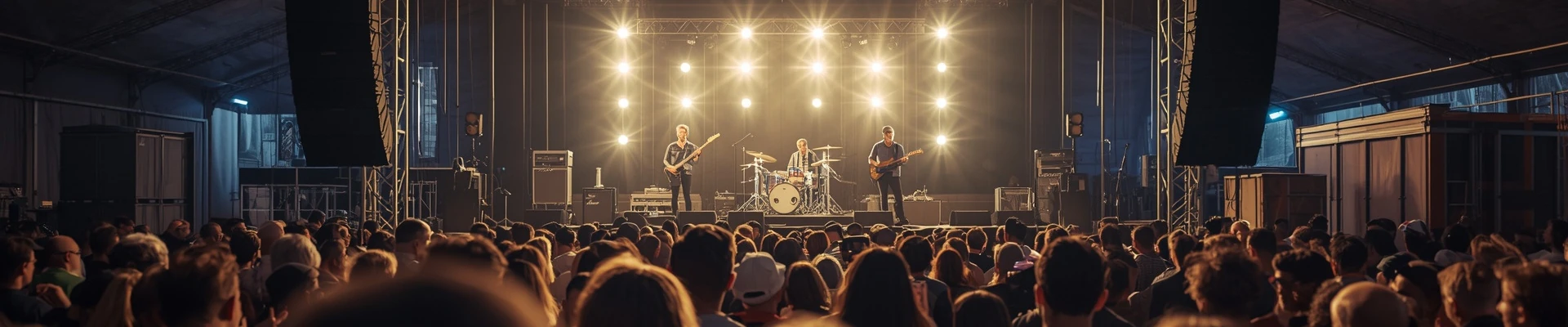
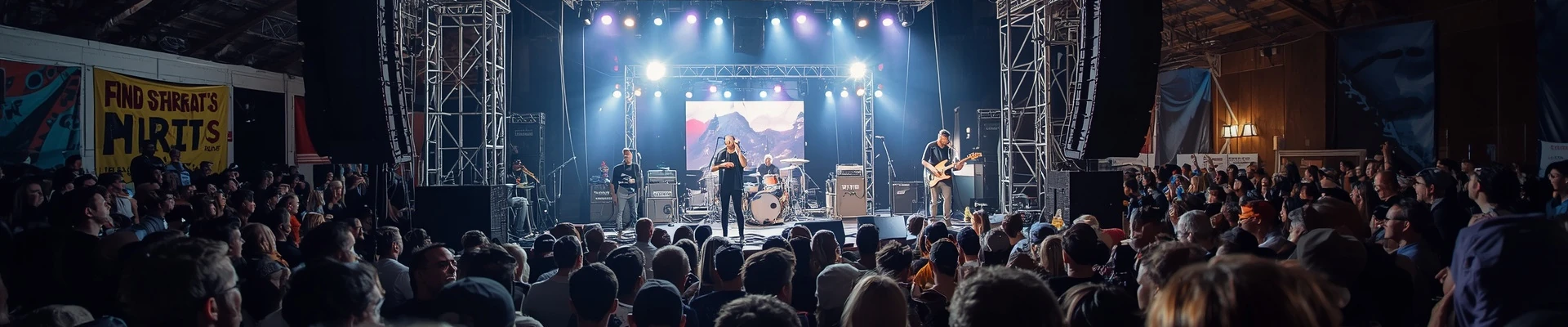
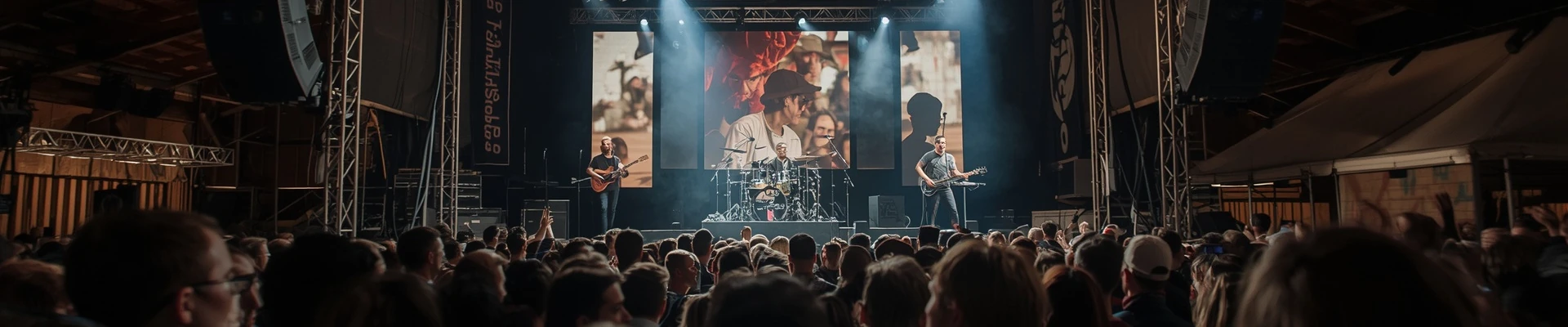
Henderson's venue landscape is split between its own growing entertainment infrastructure and the massive Strip-adjacent complex that defines the wider metro. Within Henderson proper, The Dollar Loan Center (previously named for various corporate sponsors, 6,000-7,000 capacity) serves as the city's primary mid-size arena and has hosted NHL games for the Henderson Silver Knights, concerts, and touring acts. Sunset Station Casino has the Ovation showroom and regular live entertainment programming. Green Valley Ranch Resort Spa and Casino (operated by Station Casinos) is a major Henderson anchor with the Feast Buffet, the Backyard outdoor concert venue, and regular live entertainment. The Encounter at the Henderson Events Plaza handles outdoor events. Ethel M Chocolates botanical garden has hosted outdoor concerts. The Henderson Pavilion and the City of Henderson Amphitheater provide outdoor summer programming.
The Green Valley neighbourhood's commercial corridors — particularly around the Green Valley Pkwy/Sunset Road intersection and the District at Green Valley Ranch outdoor shopping complex — anchor a cluster of restaurants and bars with live music. Basic and the eastern sections of Henderson near the original wartime town contain older commercial districts and smaller live music rooms. The Anthem and MacDonald Ranch areas to the south are primarily residential with minimal entertainment infrastructure. Lake Las Vegas, built around its artificial reservoir in the eastern foothills, hosts upscale resort entertainment.
The Las Vegas Strip, while technically in the unincorporated Paradise community (not in Henderson or Las Vegas city proper), is the region's dominant concert and entertainment infrastructure and is functionally part of the Henderson metro's musical economy. The T-Mobile Arena (20,000 capacity), the MGM Grand Garden Arena, the Michelob ULTRA Arena at Mandalay Bay, the Colosseum at Caesars Palace (the purpose-built residency venue that has hosted Elton John, Celine Dion, Adele, and dozens of other long-form residency acts), and the Sphere (the $2.3 billion immersive entertainment venue opened in 2023) are all within 30 minutes of Henderson and together represent the most concentrated large-venue entertainment infrastructure in the world.
Festivals and signature events
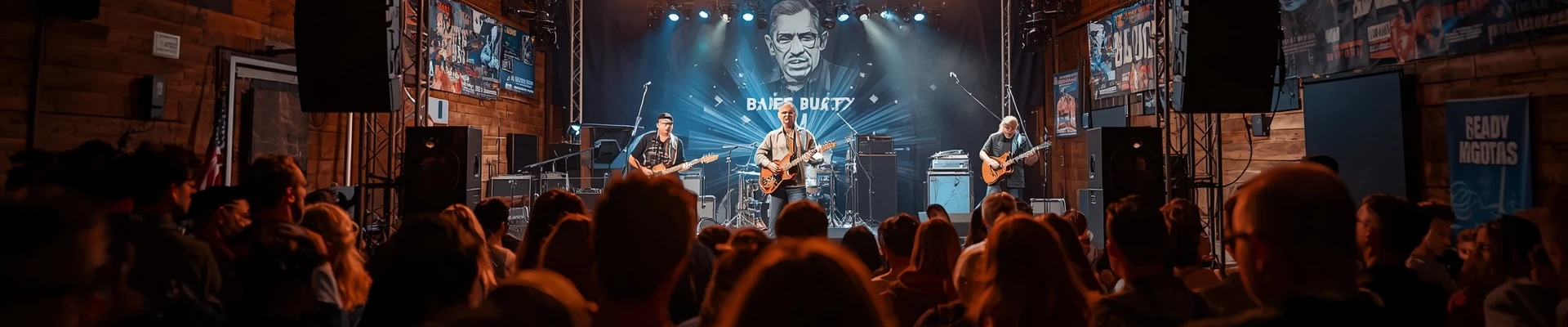
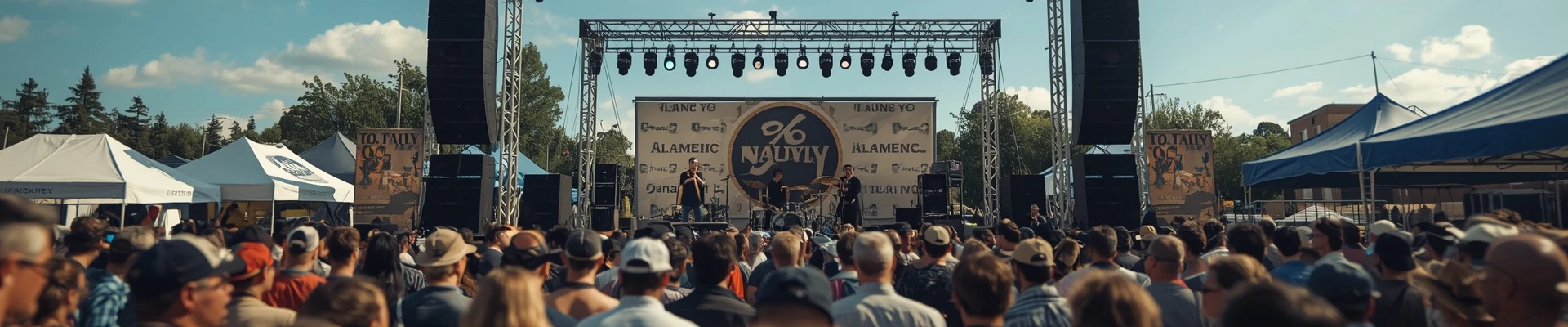
Henderson's own festival calendar is modest relative to the Strip's year-round programming but has been growing with the city's increasing investment in its own cultural identity. The Henderson Salute to Freedom Fourth of July celebration brings major country and rock acts to the Henderson Events Plaza. The Mint 400 off-road race draws enthusiast crowds and ancillary entertainment. Henderson Heritage Park Senior Center hosts community music events. Water Street District festivals and events in the older downtown core, which the city has been actively redeveloping, bring live music to the historical commercial core near the Basic Magnesium plant site. The Lifest Las Vegas Christian music festival has drawn evangelical audiences. Henderson's New Year's Eve events and seasonal outdoor programming round out the local calendar.
The broader Las Vegas metro calendar — including Electric Daisy Carnival (EDC) at Las Vegas Motor Speedway (one of the largest music festivals in North America, anchoring the city's status as the world capital of electronic dance music events), Life is Beautiful festival in downtown Las Vegas, Day N Vegas hip-hop festival, and the continuous stream of Strip residency openings and special events — is accessible to Henderson residents and employs Henderson-based workers in every production and performance role.
What ties Henderson together as a musical city is less a distinctive sound or a named scene than a set of economic and geographic realities: the world's most concentrated live-entertainment economy is next door, tens of thousands of professional musicians, technicians, and entertainment workers live in Henderson's subdivisions, and the city is gradually developing its own local music infrastructure to complement its role in the larger Las Vegas machine. The wartime industrial origins have given way to a suburban community whose creative identity is shaped entirely by proximity to — and deep participation in — the most commercial entertainment economy on the planet.