
Edison is a large township in Middlesex County, New Jersey, with just over 102,000 residents inside its municipal boundaries — and substantially more in the dense surrounding corridor when surrounding communities like Iselin, Metuchen, Woodbridge, and South Plainfield are counted. It sits roughly 40 kilometres southwest of Midtown Manhattan, inside the tightly packed urban fabric of the New York metropolitan area, which with roughly 20 million people is the largest metropolitan area in the United States. Edison is not a city with a historic downtown core in the conventional sense — it is a post-war suburban township assembled from a patchwork of pre-existing communities, rail stops, and industrial zones — but it has grown into one of the most economically and culturally significant townships in New Jersey, defined above all by a single, globally recognized identity: one of the largest and most influential South Asian-American communities in the United States.
A brief history
The land was Lenape territory before Dutch and English colonists established farms and mills along the Raritan River in the 17th and 18th centuries. The area was organized as part of the agricultural interior of colonial New Jersey, with the river providing the milling and transport infrastructure. The name "Edison" came much later — the township was renamed in 1954 in honour of Thomas Alva Edison, the prolific inventor whose famous Menlo Park Laboratory stood on what is now Christie Street in the township. Edison established his Menlo Park complex in 1876 and it became the world's first industrial research laboratory; the phonograph (1877) and the first practical incandescent light bulb (1879) were both invented there. The site is now preserved as the Thomas Edison Center at Menlo Park (a New Jersey State Museum), and the Edison National Historic Site in nearby West Orange (where Edison later relocated his lab) is a full National Park Service unit. Edison's legacy as "The Wizard of Menlo Park" is the township's foundational mythology.
The post-war decades brought dramatic suburban expansion along the rail lines and highways — Route 1, the Garden State Parkway, and the New Jersey Turnpike all pass through or near the township. The Menlo Park Mall (1959, one of the early regional shopping malls in the United States) anchored commercial development. But the transformation that made Edison globally distinctive was the wave of South Asian immigration that accelerated after the Immigration and Nationality Act of 1965 removed national-origin quotas. Educated Indian immigrants — engineers, doctors, academics, and entrepreneurs — settled along the New Jersey Turnpike corridor near New York City, and Edison-Iselin became a gravitational centre. By the 1980s and 1990s the Oak Tree Road corridor in the Iselin section had become "Little India" — a dense commercial and cultural strip of Indian grocery stores, sari shops, jewellers, sweet shops, Bollywood video rental stores, restaurants, and cultural organizations that now stretches for kilometres through Edison and Woodbridge. The township's South Asian-American population is now estimated at roughly 40% or more of total residents — one of the highest concentrations of any municipality of its size in the United States — with communities representing India (especially Gujarat, Maharashtra, Punjab, Andhra Pradesh, Telugu-speaking communities, and Tamil Nadu), Pakistan, Bangladesh, Sri Lanka, and the diaspora broadly.
Music identity
Edison's music identity is dominated by South Asian diasporic music in all its forms, and the Oak Tree Road corridor is the most concentrated commercial desi music scene outside India and Pakistan on the East Coast of the United States.
The bedrock of the Edison music culture is Bollywood film music — the vast output of the Hindi-language film industry, which for decades has been the dominant popular music of the South Asian diaspora worldwide. Every wedding hall, cultural organization, banquet facility, and community centre in Edison's dense South Asian belt programs Bollywood music constantly. The corridor's music shops (now largely streaming-era survivors) once stocked the latest Hindi film soundtracks alongside bhangra compilations and devotional recordings. A generation of Edison's desi community grew up knowing the complete catalogues of composers A.R. Rahman, Lata Mangeshkar, Kishore Kumar, and the full sweep of the Indian filmi tradition by ear.
Bhangra is the second pillar. The energetic Punjabi folk music tradition — which evolved into a global diaspora party genre by the 1990s — fuels Edison's wedding circuit, community events, and cultural performances. Bhangra competition teams from Edison-area high schools and Rutgers University have competed nationally. The township's Punjabi Sikh community, centred partly around the Sikh Cultural Society of New Jersey and area gurdwaras, sustains both devotional kirtan traditions and bhangra performance culture.
Indian classical music — both Hindustani (North Indian) and Carnatic (South Indian) — has deep roots in Edison's South Asian community. The township and surrounding Middlesex County corridor hosts student recitals, guru-shishya teaching lineages, and community concerts throughout the year. Organizations like the Indian Classical Music Circle of New Jersey and various cultural societies program sitarists, vocalists, percussionists, and instrumentalists for audiences drawn from across the tri-state region. The South Asian cultural corridor from Jersey City down through Edison, Iselin, and Piscataway represents one of the most active Indian classical music communities in the Western hemisphere.
Filmi qawwali and Pakistani devotional music traditions are sustained by the township's Pakistani-American community, which is substantial and active in cultural programming. Ghazal evenings and events honouring the traditions of Nusrat Fateh Ali Khan, Mehdi Hassan, and the broader Urdu-language devotional tradition appear regularly in Edison's cultural calendar.
Desi fusion and desi hip-hop have emerged as significant forces in the 21st century. The children and grandchildren of first-generation Edison immigrants have produced artists who blend South Asian melodic and rhythmic elements with hip-hop, R&B, electronic, and pop structures. The tri-state desi underground — centred on the Edison-New Jersey-New York corridor — has been a nursery for artists who navigate between South Asian tradition and American popular music. The desi wedding market has also generated a professional circuit of DJs, live musicians, and hybrid production artists who work the corridor's banquet halls year-round.
Edison's non-South Asian music scenes are smaller but real. The township's African American community, though smaller relative to the South Asian population, connects to the broader New Jersey and New York R&B, hip-hop, and gospel circuits. The Latino community — predominantly Puerto Rican and Dominican, with more recent Central American immigration — sustains salsa, bachata, merengue, and Latin trap scenes. The township's Korean-American community has sustained Korean pop and karaoke culture. The Chinese-American community has its own cultural programming network.
Edison is part of the broader central New Jersey music scene — a circuit that connects to New Brunswick (home of Rutgers University and a historically important indie rock and punk scene, with the Stress Factory Comedy Club and the Court Tavern as anchoring venues), Princeton, the Asbury Park shore scene (80 kilometres south), and ultimately the vast New York City ecosystem (40 kilometres north). Bands and artists from the Edison-Metuchen-Woodbridge corridor have participated in the New Jersey club and bar circuit for decades — playing South Amboy, Sayreville, Piscataway, and the full run of suburban NJ clubs that have always fed the tri-state live music circuit.
The broader New Jersey music tradition — Bruce Springsteen and the E Street Band, Bon Jovi, The Gaslight Anthem, My Chemical Romance (Newark-formed), Southside Johnny, Frank Sinatra (Hoboken), the full arc of Jersey rock — forms the cultural backdrop against which Edison's own scenes play out. Edison itself is not a primary node of the Jersey rock tradition, but it participates in the circuit.
Venues and neighborhoods
Edison's music infrastructure is shaped by its suburban township structure — there is no concentrated downtown entertainment district in the manner of a traditional city. Instead, music happens across a dispersed landscape of community halls, banquet facilities, cultural centres, and suburban clubs.
The Oak Tree Road corridor (through Iselin and into Woodbridge) is the cultural and commercial spine of the South Asian community. The Maplewood Manor banquet hall, Spice Affair Edison and similar catering venues, the Hilton Garden Inn Edison and area hotel ballrooms, and a constellation of community centres host Bollywood nights, bhangra competitions, ghazal evenings, classical recitals, and desi wedding receptions year-round. The Edison Indian Cultural Society and similar organizations program events across the corridor.
The Menlo Park Mall area and Route 1 corridor host chain entertainment venues and occasionally mid-tier touring shows. The Count Basie Center for the Arts in Red Bank (about 55 kilometres south), the State Theatre New Jersey in New Brunswick (15 kilometres north), the Prudential Center in Newark (35 kilometres north), and the MetLife Stadium in East Rutherford (45 kilometres north) are the major regional venue anchors that Edison residents access. Starland Ballroom in Sayreville (15 kilometres northeast) is the closest proper mid-size rock and pop club, an important New Jersey indie-rock stop.
The Metuchen section — the small borough directly adjacent to Edison — has historically sustained a small arts and live music scene, with coffee shops, galleries, and the Metuchen Arts Center programming local and regional acts. The Piscataway-New Brunswick corridor along Route 1 provides the closest concentration of student-driven bar and club music.
Festivals and signature events
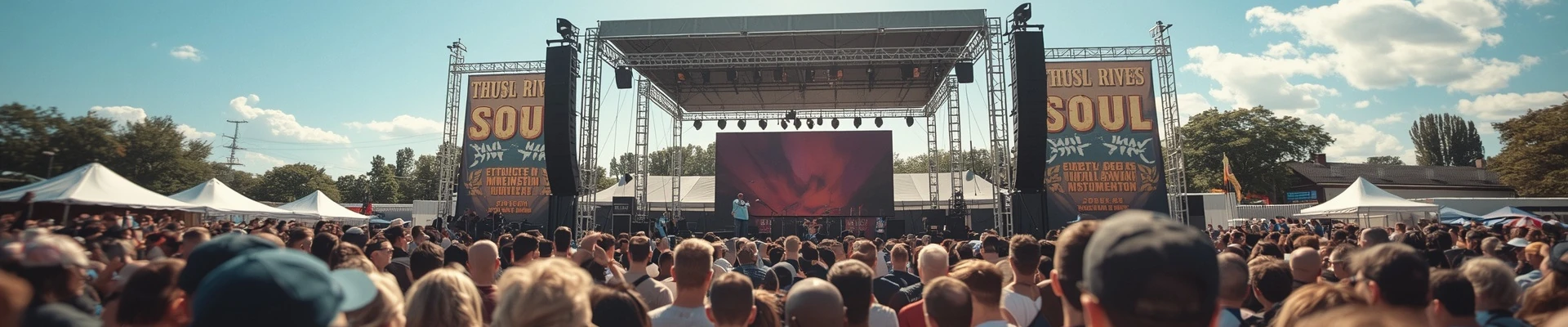
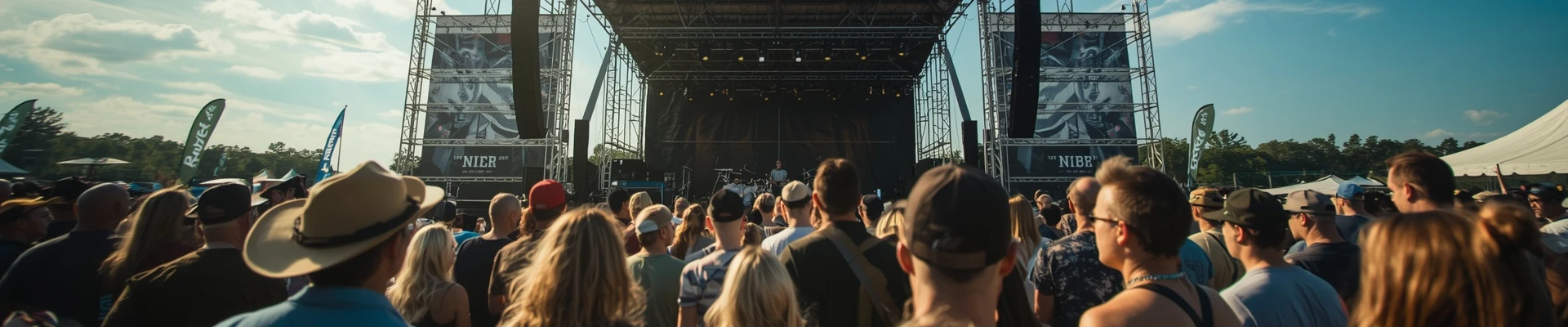
Edison's festival calendar is anchored by South Asian cultural events. Diwali celebrations along Oak Tree Road and at the Edison Arts Society and community centres are among the largest Diwali public celebrations in New Jersey — drawing crowds from across the tri-state area with fireworks, rangoli, cultural performances, and live music. Navratri garba and dandiya events fill banquet halls for nine consecutive nights every autumn, with garba (the circular Gujarati folk dance) and live or DJ-driven garba music as the soundtrack. The Gujarati community of Edison-Iselin runs some of the most elaborately organized Navratri celebrations in North America, with events that can draw thousands of participants nightly.
Holi celebrations in the township's parks and community spaces, Eid gatherings organized by Islamic centres and Pakistani-American associations, Vaisakhi celebrations by the Punjabi Sikh community, Pongal events by the Tamil community, Ugadi by the Telugu community — the full calendar of South Asian religious and cultural festivals runs through Edison's year.
India Day celebrations around August 15th (Indian Independence Day) and Pakistan Independence Day on August 14th both see organized events in the township and along Oak Tree Road. The South Asian Film Festival of New Jersey has programmed events at venues in the Edison area. Youth bhangra and classical dance competitions appear regularly at school auditoriums and community halls through the academic year.
The broader New Jersey arts calendar brings events within range: the Asbury Park Music and Film Festival on the Shore, the Montclair Jazz Festival, and the full run of New York City concerts and festivals are all accessible to Edison residents.
What ties it all together
Edison's defining musical signature is the sound of the South Asian diaspora navigating between worlds — the Bollywood chorus playing at a reception in a Route 1 banquet hall, the tabla and harmonium of a Saturday afternoon classical recital at a community centre on Oak Tree Road, the boom of bhangra bass at a Navratri garba that fills a suburban hotel ballroom for nine nights running, the desi DJ blending Hindi film samples into a hip-hop set for a crowd of New Jersey-raised second-generation kids who know both universes by heart. Edison is not a city that shaped American popular music in the way that Nashville, Detroit, or New Orleans did — it is a city that has become the most important node of South Asian musical culture in the United States east of the Mississippi, a living demonstration of how a diaspora community can transplant, sustain, and transform its musical traditions in a new country. Thomas Edison invented the phonograph in Menlo Park; his township has become, by an extraordinary historical coincidence, one of the most musically rich immigrant communities in America.