
Elizabeth is New Jersey's oldest chartered city, incorporated in 1664 as the first capital of the Province of New Jersey before Trenton assumed that role in 1702. Today it is Union County's seat and most populous city, with roughly 129,000 residents crowded into just 33 square kilometres of flat industrial and residential land on the western shore of Newark Bay and the Arthur Kill — the tidal strait that separates New Jersey from Staten Island, New York. The waterway defines the city's geography: to the east, the industrial port infrastructure of the Port Newark–Elizabeth Marine Terminal, one of the busiest container ports on the East Coast; to the north, the city of Newark (separated by the Frelinghuysen Avenue industrial corridor and the Elizabeth River); to the west and south, the bedroom communities of Linden, Roselle, and Union Township. The New Jersey Turnpike cuts through the city's industrial eastern flank, and the skyline from the Turnpike — oil storage tanks, container cranes, the twinkling lights of the Global Container Terminal at night — is one of the most distinctly industrial landscapes in the American Northeast.
Elizabeth is not a postcard city. It is a working city in the oldest sense: a place where people arrive with limited capital, settle, labor, build community, and eventually move their children further into the suburbs while a fresh wave fills the rowhouses and apartment blocks behind them. This cycle has been operating continuously since the first English settlers displaced the Lenape in the 1660s, and it is the engine of Elizabeth's cultural life — an endless replenishment of energy from every corner of the immigrant world.
A brief history
The city takes its name from Sir George Carteret, one of the original proprietors of the Province of New Jersey, whose wife was Lady Elizabeth Carteret. The city's early English colonial settlement was substantial enough that it served briefly as the provincial capital and hosted William Livingston, the first governor of the independent State of New Jersey, whose estate Liberty Hall (now a museum at Kean University on Morris Avenue) still stands as one of the most intact colonial-era house museums in the region.
Industrialization came early. By the mid-19th century, Elizabeth was home to the Singer Manufacturing Company (sewing machines), the Roebling wire works operations, and a dense cluster of foundries, carriage manufacturers, and metalworking shops. The Central Railroad of New Jersey made the city a freight hub, and the rail yards along the Arthur Kill brought the city into the orbit of the great port economy that dominated the Upper Bay. Immigration waves followed: Irish after the 1845–52 Famine, then German, Italian, Polish, Slovak, and Hungarian workers in the late 19th and early 20th centuries, each group establishing its own parishes, mutual-aid societies, and social clubs.
The transformation that defines contemporary Elizabeth began in earnest in the 1950s and accelerated through the 1970s and 1980s: Puerto Rican families arrived first, drawn by the factory jobs that Newark and Elizabeth still offered, followed by Cuban exiles after 1959, and then by successive waves from the Dominican Republic, Ecuador, Colombia, El Salvador, Guatemala, Mexico, Peru, and virtually every other Latin American country. By the 2000s Elizabeth was majority-Latino — one of the highest Latino-share municipalities in New Jersey — and the culture, commerce, and music of the city had reorganized entirely around that reality. Broad Street and Elizabeth Avenue became corridors of Latin American bakeries, bodegas, restaurants, travel agencies, and music shops, their loudspeakers mixing cumbia, salsa, bachata, and reggaeton across the sidewalks from morning to midnight.
Music identity
Elizabeth's music identity is first and foremost Latin. The city's majority-Latino population — drawn from Ecuador (Elizabeth has one of the largest Ecuadorian immigrant communities in the United States, particularly from the Azuay and Cañar provinces), the Dominican Republic, Puerto Rico, El Salvador, Colombia, and Mexico — has created a music culture of extraordinary density and variety. Salsa remains the dominant social music: the ballrooms and clubs of Elizabeth Avenue and the side streets of the South Elizabeth neighborhood have hosted salsa bands from the tri-state area for decades, and the city's social clubs (some operating as private membership clubs affiliated with specific national-origin communities, others open to the broader Latino public) maintain a live music tradition that is often invisible to outsiders but constant in daily life.
The Ecuadorian community has brought its own musical forms: pasillo (the slow, romantic waltz-descended song form that is Ecuador's national music), sanjuanito, and the popular cumbia variants that dominate Ecuadorian social gatherings. Annual Ecuadorian independence and cultural festivals in Elizabeth feature bands and soloists from the diaspora and from Ecuador itself. The Dominican community sustains merengue and bachata — both of which have undergone their own creative evolution in New York–New Jersey diasporic contexts, with bachata in particular transformed from its rural Dominican roots into a globally influential genre — and the clubs and social halls of Elizabeth have been part of that evolution's ecosystem.
Reggaeton is everywhere. Born in Puerto Rico and shaped by Jamaican dancehall, Panamanian reggae en español, and New York hip-hop, reggaeton has been the dominant popular music of urban Latino communities across the Northeast for two decades, and Elizabeth's young population has been central to both its consumption and its local production. The city's recording studios — modest home setups and small commercial studios dotted through North Elizabeth and Elizabethport — have produced dozens of reggaeton artists who circulate through the tri-state area's club and radio circuit without necessarily breaking nationally.
Beyond the Latin music world, Elizabeth carries a substantial African American music tradition rooted in its Baptist and AME churches. The city's Black community — concentrated historically in the Elizabethport waterfront neighborhood, which was also one of New Jersey's most impoverished areas by the mid-20th century — produced generations of gospel singers whose voices shaped the church choirs and community ensembles that remain active. The connection between Elizabeth's gospel tradition and the broader Newark R&B and soul ecosystem (Newark is four miles north) is direct: artists move between the two cities, and the emotional vocabulary of Newark soul is present in Elizabeth's church music.
Elizabeth's hip-hop scene is embedded in the broader Northern New Jersey circuit that connects Irvington, Orange, East Orange, Plainfield, Trenton, and the city's own streets into a regional underground. The city has not produced a nationally recognized hip-hop artist of the stature of Newark's Redman or Queen Latifah, but its underground is persistent and locally respected. Producers and MCs from Elizabethport and North Elizabeth circulate through New Jersey's open-mic and mixtape circuits, and the cultural overlap with the Staten Island hip-hop world (the Wu-Tang Clan formed just across the Kill, and Staten Island's 1120 Richmond Terrace housing projects have exact counterparts in Elizabeth's own housing stock) gives the city's hip-hop a particular grit and specificity.
The city also has a thread of rock and indie history through its connection to Kean University, which has drawn younger residents and student populations into alternative music scenes. Smaller venues on the Newark Avenue and Broad Street corridors have historically programmed rock, punk, and indie acts for the university-adjacent audience, though this scene has always been modest in scale.
Venues and neighborhoods
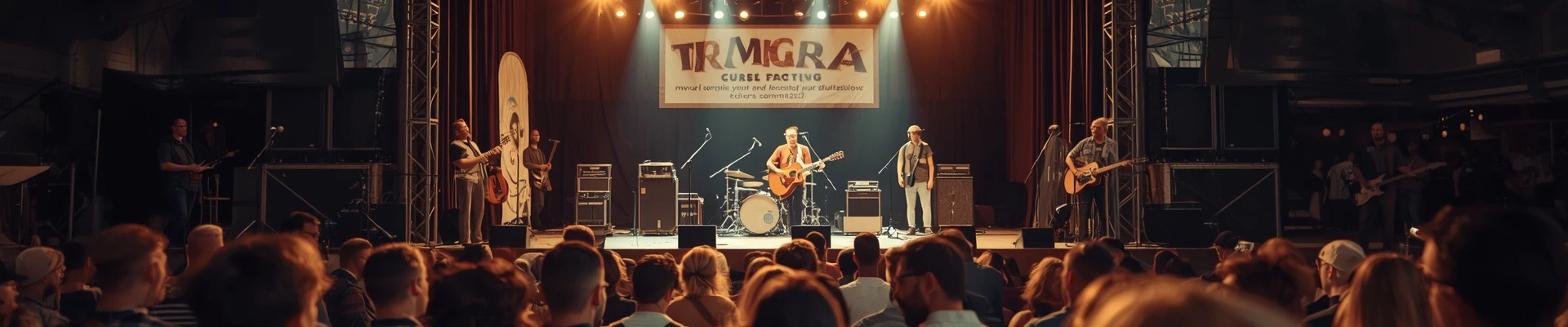
Elizabeth's live music infrastructure is decentralized and largely community-embedded rather than organized around destination venues. The city's most important music spaces are its social clubs and ballrooms — the Club Ibérico, the Ecuadorian cultural association halls, the various Dominican social clubs along Elizabeth Avenue, and the Puerto Rican Cultural Center spaces that program live salsa and merengue for their memberships. These are not spaces that appear in touring databases, but they are where Elizabeth's music actually lives: private events, quinceañeras, independence day celebrations, and weekend dances that bring in regional bands from New York and New Jersey's vast Latin music circuit.
The Ritz Theatre on Broad Street — a mid-20th-century movie palace that has been repurposed multiple times — has been used for community performances and event programming. Kean Stage at Kean University programs classical, jazz, and theatrical performances for the university community and the broader city. The Elizabeth YMCA and community centers in Elizabethport and North Elizabeth program youth music and after-school performance. Bars along Magnolia Avenue and on the fringes of Elmora — the city's historically Italian-American west side neighborhood, now substantially Latino — program live music for neighborhood clientele.
Elizabethport is the oldest and most historically significant neighborhood: the waterfront district where immigrants first settled in the 19th century, where the industrial plants concentrated, and where the African American community centered for most of the 20th century. North Elizabeth — bounded roughly by First Street and the Newark border — is denser, younger, more Dominican and Salvadoran, with a street culture that overflows onto sidewalks on warm evenings. Elmora (west of South Broad Street) retains traces of its Italian and then Portuguese history in its architecture and some of its institutions, now overlaid with Latin American commerce. South Elizabeth is more residential, quieter, working families who have been in the city for one or two generations.
Festivals and signature events
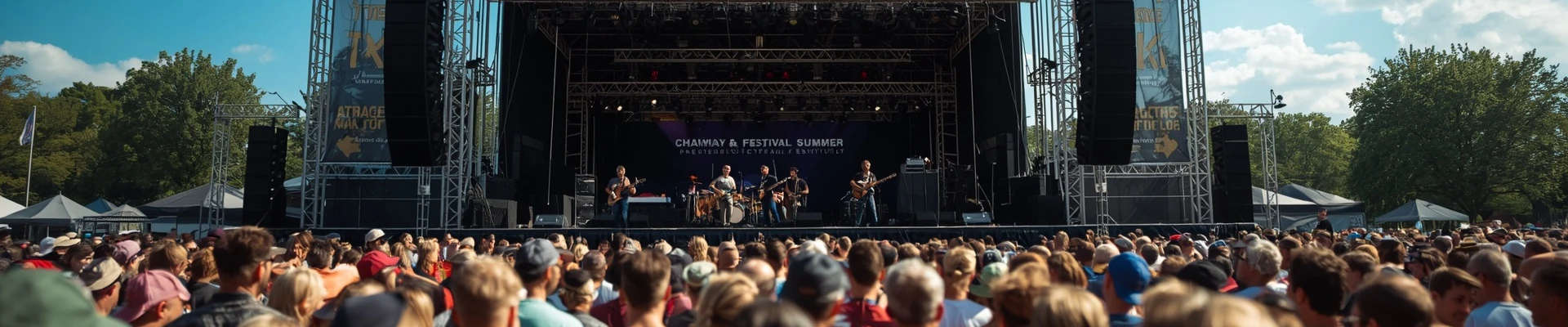
Elizabeth's annual calendar is anchored by community celebration rather than commercial festival production. Ecuadorian Independence Day (August 10) is celebrated with a major community festival, typically including live music, traditional food, and cultural performance drawing the city's extraordinarily large Ecuadorian diaspora. Dominican Republic Independence Day (February 27) and Dominican Restoration Day (August 16) are both major celebrations with musical programming. Puerto Rican Heritage Month programming runs through June, culminating in community events with salsa and bomba performances. The St. Patrick's Day Parade (Elizabeth has a substantial Irish-American legacy population, particularly in older west side neighborhoods) includes traditional Irish music performance.
Elizabeth Waterfront Festival — when programmed — has used the Arthur Kill waterfront for outdoor music events. The Union County Dominican Parade (which draws from Elizabeth's large Dominican community as a co-organizing community) programs live merengue and bachata performance. Kean University Arts programs an annual roster of concerts and recitals open to the public. The Elizabeth Public Library and community centers run consistent small-scale music programming for children and families.
What ties it all together
Elizabeth's musical identity is an immigration story told in sound. Each wave of newcomers brings its music, builds its venues, forms its ensembles, and eventually assimilates into a city where the music of the previous wave is already the background of daily life. The result is a city where salsa from the 1960s Puerto Rican clubs, bachata from the 1990s Dominican clubs, reggaeton from the 2000s studio apartments, Ecuadorian pasillo from the community association halls, and African American gospel from the Elizabethport churches all coexist within walking distance of one another, each alive and current in its own community context. Elizabeth is not a city with a scene in the music-industry sense — there is no cluster of labels, no recording district, no tastemaker press. What it has is something harder to commodify and more durable: a deep structural relationship between music and identity, maintained by communities who use music to hold themselves together across the distance of migration. That is Elizabeth's contribution — not a style or a sound, but a practice, repeated in a hundred church basements and social club ballrooms every weekend, of using music to remain who you are.