
Jersey City is New Jersey's second-largest city and one of the most densely populated and ethnically diverse municipalities in the United States, with roughly 264,000 residents packed into 21 square miles on a peninsula between the Hudson River to the east and the Hackensack River to the west. The downtown waterfront sits directly across the Hudson from Lower Manhattan — the World Trade Center towers visible from almost every high point in the city — making Jersey City simultaneously a New Jersey city and an outer borough of the New York metropolitan orbit. Exchange Place and the Grove Street neighborhood form the civic and commercial core; Journal Square anchors the historic inland center; The Heights rises steeply to the north; and a patchwork of neighborhoods — McGinley Square, Bergen-Lafayette, Greenville, West Side — extend through the rest of the city's footprint. The waterfront Newport district has become a major residential and commercial corridor. Jersey City's population is among the most diverse in the country: roughly 28% Hispanic, 24% Asian (including one of the largest Filipino communities in the northeastern US, substantial Indian, South Asian, and Chinese populations), 24% Black, and 28% white, with significant Cuban, Puerto Rican, Dominican, Ecuadorian, Bangladeshi, and Pakistani communities alongside them.
A brief history
The land at the mouth of the Hudson was Lenape territory before Dutch settlement in the 1620s; Paulus Hook (now the downtown waterfront) was an early Dutch trading outpost. Jersey City was incorporated as a city in 1838 and grew through the 19th century as an industrial and transportation hub — the New Jersey terminus of major railroad lines, the point where freight from across the continent was transferred to ferries bound for Manhattan. By the late 19th century the city was a dense immigrant working-class community: Irish, German, Italian, Polish, and Jewish arrivals layered atop one another in the row-house neighborhoods that still define much of the city. The mid-20th century brought deindustrialization, white flight, and fiscal crisis, but also the arrival of Cuban, Puerto Rican, Dominican, and later Southeast and South Asian immigrant communities who reshaped the city's demographic map. The 1970s and 1980s were difficult decades; the waterfront rebirth of the 1990s — driven by Goldman Sachs, Merrill Lynch, and other financial firms relocating back-office operations across the Hudson — began Jersey City's contemporary transformation into a high-cost, intensely gentrifying city that is now one of the most expensive real estate markets in New Jersey.
Music identity
Jersey City's most consequential international music contribution is to jazz. The city produced Stanley Clarke — the bassist whose work with Chick Corea's Return to Forever in the early 1970s defined jazz fusion bass playing, and who has remained one of the most technically influential bassists in any genre for five decades. Count Basie grew up across the river in Red Bank, but the Hudson County jazz circuit ran through Jersey City's Black neighborhoods and clubs throughout the mid-20th century. The tradition of jazz education and live jazz continues through the city's concert programming and club scene.
The Cuban-American community centered in Union City (directly adjacent to Jersey City's north) and its Jersey City extensions sustains one of the most vital Cuban jazz and salsa scenes in the northeast US. This is a community with direct generational links to pre-revolutionary Havana — musicians whose families fled Cuba in the early 1960s who brought the son, bolero, guajira, and charanga traditions with them and have built a self-sustaining scene through dance clubs, community events, and an active Latin radio presence. Celia Cruz (born in Cuba, the undisputed "Queen of Salsa") recorded and performed extensively in the New York/New Jersey Cuban-American circuit, and the community that loved her remains centered in this corridor.
The Filipino community — one of the largest in the northeast — has built an active music scene that runs through Filipino restaurants and community centres across Jersey City and neighboring communities. OPM (Original Pilipino Music) concerts, karaoke culture (which in the Filipino-American context functions as genuine community music practice rather than bar entertainment), and a network of Filipino-American musicians who have moved between the local scene and the broader New York entertainment industry are all active here.
The city's indie rock and punk history runs through several distinct eras. In the 1980s and 1990s, Jersey City's affordable rents and proximity to Manhattan made it a home for New York musicians priced out of the city — the loft and warehouse spaces in the Powerhouse Arts District (now the redeveloped Gulch area) hosted rehearsal spaces, studios, and informal shows. The Feelies — the legendary minimalist post-punk band from nearby Haledon, NJ — played extensively in the Jersey City circuit, and the city's indie rock ecosystem has always been entangled with the broader downtown New York scene. The Maxwell's in nearby Hoboken (open 1978–2013) was the definitive venue for the New Jersey indie rock scene and drew Jersey City bands and audiences throughout its run.
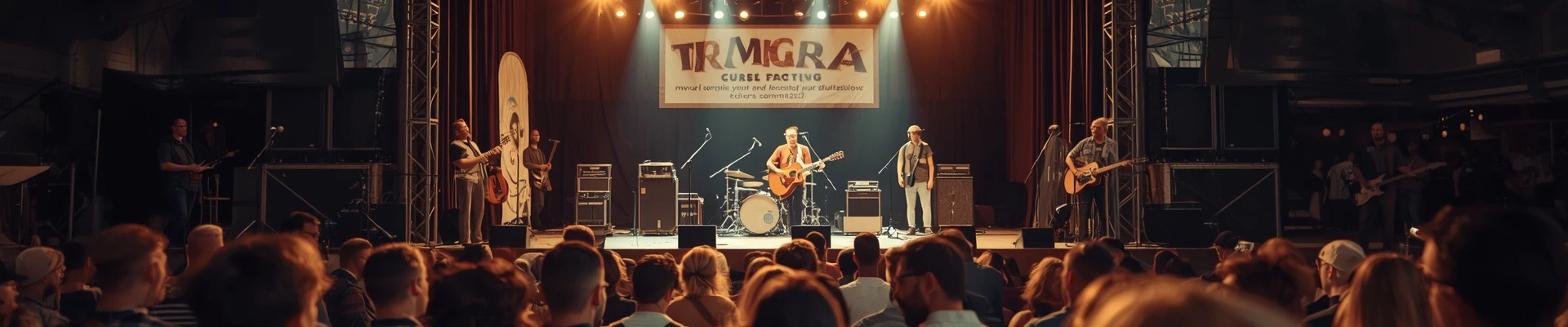
Jersey City's contemporary music scene is anchored by several venues and communities. The White Eagle Hall (a beautifully restored 1908 ballroom on Newark Avenue in the Journal Square area that reopened as a concert venue in 2017) has become the city's premier mid-size music room — presenting indie rock, jazz, soul, R&B, and world music acts in an 850-capacity space with serious sound and sight lines. The Landmark Loew's Jersey (the breathtaking 1929 movie palace at Journal Square, one of the five surviving Loew's Wonder Theatres, lovingly preserved and operated as a nonprofit event venue) hosts occasional concerts alongside its film programming. Brightside Tavern in downtown has been an anchor of the indie and alternative bar music scene for years. The Grove Street neighborhood, centered on the Grove Street PATH station, has a bar and restaurant circuit that includes regular live music. Monty Hall (operated by White Eagle Hall's team) has been a secondary smaller room for emerging acts.
The South Asian music community — Bengali, Pakistani, Bangladeshi, and Indian populations in and around Jersey City — sustains a Bollywood, ghazal, qawwali, and South Asian pop scene through community events, banquet halls, and a dense network of South Asian cultural organizations in Hudson County. The Bangladeshi community in particular, centered on Bergenline Avenue in nearby Union City and Jersey City's West Side, hosts regular traditional and contemporary Bangladeshi music events.
Venues and neighborhoods
Jersey City's geography shapes its music scene as much as its demographics. Downtown and the Grove Street / Newark Avenue Pedestrian Mall corridor anchor the post-gentrification bar and live music scene, drawing both Jersey City residents and PATH-train commuters from Manhattan. The Journal Square neighborhood — historically working-class and now in active gentrification — hosts White Eagle Hall (the 850-capacity ballroom) and the Loew's Jersey (the 2,800-capacity wonder theatre), giving this historically neglected inland neighborhood two of the city's most important performance spaces. The Powerhouse Arts District (the redeveloping former industrial waterfront south of Exchange Place) hosts art events, warehouses, and occasional music programming. The Heights (the high ridge above Hoboken) has a local bar and music scene of its own. Bergen-Lafayette and Greenville in the city's south have historically been predominantly Black neighborhoods with deep connections to gospel, R&B, and hip-hop.
The PATH train (Port Authority Trans-Hudson, connecting Jersey City and Hoboken to lower and midtown Manhattan) is the spine of the city's relationship to New York's music industry. Jersey City musicians commute to Manhattan gigs; Manhattan-based music lovers commute to Jersey City shows. This back-and-forth makes the city simultaneously fully New Jersey and deeply embedded in the New York ecosystem.
Festivals and signature events
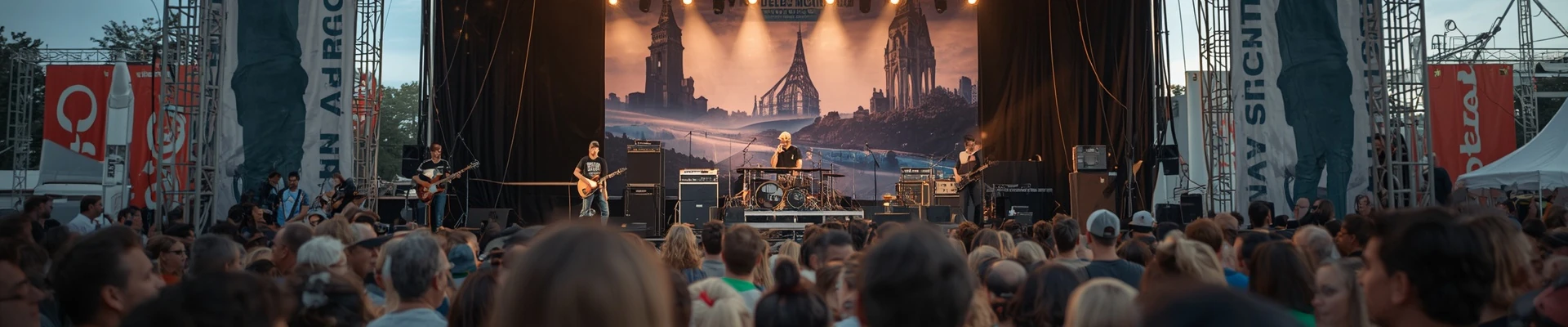
The festival calendar draws on the city's diversity and its waterfront setting. Jersey City Music Festival (the annual free outdoor festival held in Lincoln Park, one of the largest free music festivals in New Jersey, drawing tens of thousands over a full day of programming) is the signature summer event. Afro Latin Jazz Festival programming at various venues draws on the Cuban and Latin jazz tradition. Filipino American History Month events in October include musical programming through the community. Journal Square Performing Arts Center programming and the Loew's Jersey film-and-concert calendar run through the fall and winter. SummerFest at Liberty State Park — held in the city's landmark waterfront park beneath the Statue of Liberty — has programmed major rock and pop touring acts. Groove on Grove (the street festival on the Newark Avenue pedestrian mall) programs local and regional acts through the summer. The city's Colombian, Ecuadorian, and Dominican communities each sustain annual cultural festivals with live music as a centerpiece.
What ties it all together is the defining paradox of Jersey City: a city that is simultaneously right there — visible from Wall Street, a nine-minute PATH ride from the World Financial Center — and unmistakably, proudly its own place. It is a city where Cuban musicians who fled Havana in 1962 raised children who can hold their own in any salsa conversation in the world, where Filipino karaoke is genuine communal music practice, where Stanley Clarke invented bass guitar vocabulary that jazz and rock players still reach for fifty years later, where a restored 1908 ballroom in a gentrifying working-class neighborhood is now one of New Jersey's best mid-size rooms, and where you can look out any window facing east and see the Manhattan skyline and still feel, unmistakably, like you are somewhere else entirely.