
Albuquerque is the largest city in New Mexico and the 32nd-largest in the United States, with roughly 565,000 residents inside the city limits and more than 920,000 across the surrounding metropolitan area. Sitting on the Rio Grande at 1,620 metres above sea level, ringed by the Sandia Mountains to the east (which rise nearly to 3,250 m above the city) and the volcanic mesas of the West Mesa, it is the largest city in the American Southwest between Phoenix and Oklahoma City and the cultural and economic capital of New Mexico. Albuquerque sits at the historical crossroads of three deep musical traditions: the New Mexican Hispano music inherited from 400 years of Spanish-Mexican Catholic culture; the Indigenous (Pueblo, Navajo, Apache) music of the 19 Pueblo communities and the surrounding Navajo Nation and Mescalero Apache reservation; and the Anglo-American country, folk, and rock traditions that arrived with the railroad in 1880 and Route 66 in the 1920s. Its musical identity reflects all three: a continuous Hispano tradition running from Spanish liturgical music to modern Chicano alternative; one of the most consequential urban Native American music scenes in the United States; an outsized indie rock heritage tied to the rise of the Shins and Beirut; and a fast-growing modern hip-hop and Latin urban ecosystem.
A brief history
The Rio Grande Valley was Tiwa Pueblo territory for thousands of years before Spanish colonists established the Villa de Alburquerque in 1706 (named for the Duke of Alburquerque, viceroy of New Spain — the first "r" was dropped over the centuries). Through the Spanish colonial era (1706–1821), the Mexican period (1821–1846), and the early American territorial era after the U.S.–Mexican War, Albuquerque remained a small adobe-brick town centred on the Old Town plaza. The 1880 arrival of the Atchison, Topeka and Santa Fe Railway shifted the town two miles east to New Town and triggered rapid growth. New Mexico became the 47th U.S. state in 1912 with Santa Fe as capital and Albuquerque as its largest city. Through the 20th century Albuquerque grew steadily as a federal-government, military, and research hub — anchored by Kirtland Air Force Base, Sandia National Laboratories, Los Alamos National Laboratory an hour north, and the postwar boom of Route 66 through the city's Central Avenue. Successive waves of migration — Anglo-Americans through the 20th century, Mexican and Central American immigrants throughout, and steady Native American urbanization from the surrounding 19 Pueblos and the Navajo Nation — have built a city that is roughly 51% Hispanic/Latino and 6% Native American, with one of the largest urban Native populations in the United States.
Music identity
Albuquerque's deepest musical tradition is New Mexican music — a distinctive Hispano-Catholic-Indigenous fusion that runs continuously from the Spanish colonial era to the present. Alabados (penitential hymns), rancheras, corridos, valses, polkas, and the broader New Mexican repertoire have been sustained for centuries by the Hermanos Penitentes brotherhoods, family músicos, and a deep folk tradition centred on the Rio Grande Valley. Cipriano Vigil, Roberto Martínez, Antonia Apodaca, and the Bayou Seco orbit kept New Mexican folk music alive through the 20th century. The 20th-century commercial New Mexican music industry — through artists like Al Hurricane ("the Godfather of New Mexico Music"), his brothers Tiny Morrie and Baby Gaby, and a long lineage of New Mexico music ranchera and big-band acts — built a regional Spanish-language popular music tradition that runs distinct from broader Mexican-American mariachi, Tejano, or norteño. The genre's continued health is anchored by the New Mexico Music Awards (held in Albuquerque each year), the Roberto Griego family, Lorenzo Antonio's career, and a thriving current scene through artists like Los Hermanos Lugo and Nosotros.
Albuquerque's Indigenous music lineage is one of the most consequential in the United States. The 19 Pueblos surrounding the city — including Sandia, Isleta, Santa Ana, Acoma, Laguna, Jemez, and Zuni — sustain ancient ceremonial song and dance traditions, and Albuquerque is the urban centre where many Pueblo, Navajo, and Apache musicians have built professional careers. R. Carlos Nakai, the Diné/Ute Native American flute virtuoso who built one of the most acclaimed Native American instrumental catalogues of the 20th century, has deep ties to Albuquerque. Robert Mirabal, the Taos Pueblo flute player and singer, anchored a generation of contemporary Native music. Star Nayea, Buffy Sainte-Marie's Albuquerque tour stops, Joseph Fire Crow, and a deep contemporary Native American music scene through the Indigenous Music Awards orbit and the Native American Music Awards anchor the genre. Mariee Sioux, Shea Diamond, and a current generation of Indigenous folk and hip-hop artists continue the lineage. Frank Waln, the Lakota hip-hop artist, played Albuquerque constantly. Hip-hop has its own Native lineage through Tha Yoties, Nataanii Means, and PJ Vegas.
The 1990s and 2000s remade the city again. The Shins, formed in Albuquerque in the 1990s as an offshoot of Flake Music, built one of the most acclaimed indie rock catalogues of the 2000s through Oh, Inverted World (2001) and Chutes Too Narrow (2003) before relocating to Portland. Calexico's Joey Burns is from Albuquerque-area; Beirut (Zach Condon), born and raised in Albuquerque, built one of the most acclaimed indie folk catalogues of the 2000s through Gulag Orkestar (2006) and The Flying Club Cup (2007). Neon Indian (Alan Palomo) was born in Mexico but raised in Albuquerque and broke nationally with Psychic Chasms (2009), helping define the chillwave genre. A Hawk and a Hacksaw (Jeremy Barnes and Heather Trost), the Albuquerque-based folk-experimental duo, has built one of the most acclaimed underground catalogues of the past 20 years. Treasure Mammal, The Handsome Family (the Albuquerque-based alt-country and Americana duo), and a thriving local indie scene around clubs like the Launchpad and the Sister Bar continue the lineage. The Handsome Family's "Far From Any Road" became the theme song for HBO's True Detective.
Albuquerque also has a deep country and folk tradition. John Denver lived in nearby Aspen but played Albuquerque constantly; Lyle Lovett's tour stops, Michael Martin Murphey (whose "Wildfire" was inspired by New Mexico), and a deep regional country and folk circuit fill venues across the city. Tom Russell's tour stops anchor the singer-songwriter circuit. Jazz runs through the University of New Mexico music program and clubs like the Outpost Performance Space.
The 21st century has brought a serious modern hip-hop and Latin urban wave. Wake Self, the beloved Albuquerque rapper killed in 2019, anchored the city's underground hip-hop scene. Tha Yoties, DJ Young Native, Definite, and a current generation of trap and indie hip-hop artists fill the city's clubs. Latin urban, reggaeton, trap en español, and regional Mexican scenes have boomed through clubs across the South Valley and the West Mesa. Tribal (a uniquely New Mexican Hispano dance subgenre that fuses cumbia and tribal house) emerged in part from the broader Albuquerque-El Paso Latin urban scene.
Venues and neighborhoods
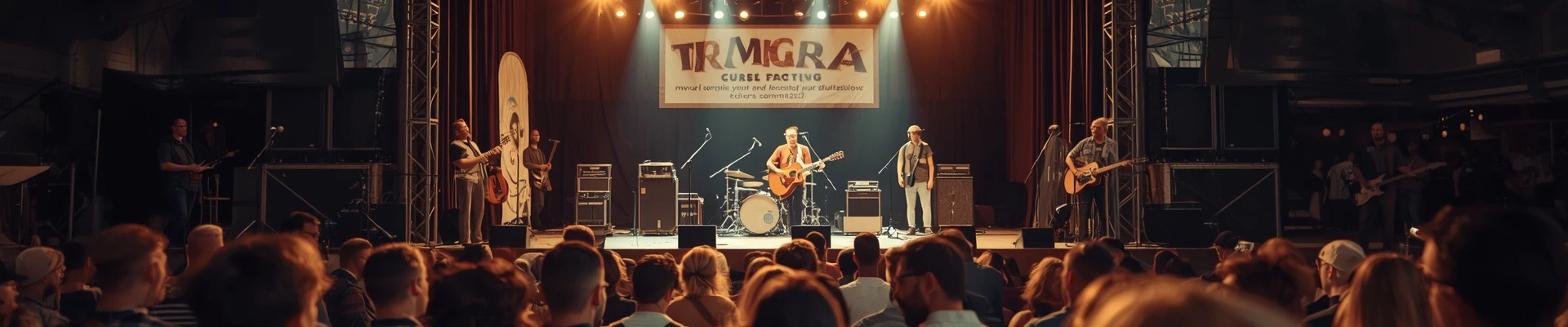
Albuquerque's venue ecosystem is well-developed. At the top sit Isleta Amphitheater (a 15,000-capacity outdoor amphitheater on Isleta Pueblo land south of the city, the city's largest concert venue), Tingley Coliseum at Expo New Mexico, Sandia Resort Amphitheater on Sandia Pueblo land, the Kiva Auditorium at the Albuquerque Convention Center, the Popejoy Hall at UNM (home of the New Mexico Philharmonic), and the KiMo Theatre (a 1927 Pueblo Deco movie palace turned concert venue, one of the most architecturally distinctive venues in the Southwest). The midsize tier includes the El Rey Theater (a restored 1941 movie palace), Sunshine Theater (the legendary downtown rock venue), Revel (an entertainment complex), and the Albuquerque Press Club. Beneath them is a deep club layer — the Launchpad (the long-running downtown indie rock venue), the Sister Bar, the Cooperage, Burt's Tiki Lounge, the Two Fools Tavern, Effex Nightclub, the Outpost Performance Space (one of the most respected jazz and chamber listening rooms in the Southwest), the Cell Theatre, and a network of bars and DIY rooms across downtown, Nob Hill, the South Valley, and the West Mesa. Sandia, Isleta, and Santa Ana Pueblo casino-resorts host substantial concert programming. Latin music has homes at clubs across the South Valley and the West Mesa.
Different neighborhoods carry different musical identities. Downtown Central along Central Avenue (the historic Route 66 corridor) anchors the indie rock, alternative, and bar circuits through the Launchpad, Sister Bar, and Sunshine Theater. Nob Hill anchors a higher-end bar and venue circuit through the El Rey and a string of nearby bars. The South Valley anchors the Hispano, Chicano, and Latin music scenes through generations of bailes, dance halls, and Spanish-language radio. The West Mesa supports a complementary Latin and country scene. Old Town anchors the historic Hispano and tourist-driven music programming. Nob Hill, the University area, and the broader Central Avenue corridor anchor the indie and college scenes through UNM. Sandia and Isleta Pueblos, just north and south of the city, anchor the Indigenous music economy.
Festivals and signature events
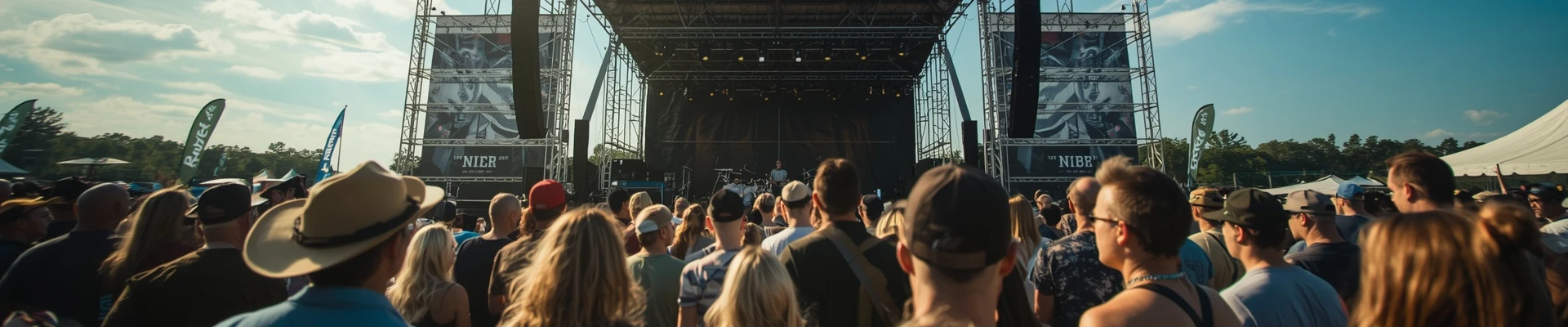
The festival calendar reflects the city's range. Albuquerque International Balloon Fiesta at Balloon Fiesta Park each October — the largest hot-air balloon festival in the world, drawing more than 800,000 attendees over nine days — programs major country, rock, and Latin acts at the festival's evening shows. New Mexico State Fair at Expo New Mexico each September programs major country, Latin, and rock acts at Tingley Coliseum and the surrounding fairgrounds. Globalquerque is one of the most respected world music festivals in the western United States. Summerfest along Civic Plaza, ¡Globalquerque!, Indigenous Comic Con's music programming, Albuquerque Folk Festival, Festival Flamenco Albuquerque (one of the largest flamenco festivals in North America, held at the National Hispanic Cultural Center), the Gathering of Nations at Tingley Coliseum (one of the largest powwows in North America, drawing more than 700 tribal nations and 100,000 attendees), Cinco de Mayo, Diez y Seis, Día de los Muertos at the National Hispanic Cultural Center, Albuquerque Pride, Indian Pueblo Cultural Center's programming, and Marigold Parade add cultural and community programming. The National Hispanic Cultural Center anchors a year-round programming track that includes flamenco, mariachi, New Mexican music, and Latin alternative concerts.
What ties it all together is the city's identity at the crossroads of three deep musical traditions: Hispano, Indigenous, and Anglo-American. Albuquerque is the city where Al Hurricane built modern New Mexican music, where the Gathering of Nations brings 700 tribal nations to Tingley Coliseum each spring, where the Shins, Beirut, and Neon Indian came up through the local indie scene before relocating, where the Handsome Family wrote the theme to True Detective, where R. Carlos Nakai and Robert Mirabal carry the Native American flute tradition forward, where Festival Flamenco Albuquerque is one of the largest flamenco festivals in North America, and where the Pueblo and Navajo musical traditions of the surrounding land have run continuously for more than a thousand years.