
Las Cruces is the second-largest city in New Mexico and the seat of Doña Ana County, with roughly 102,000 residents inside the city limits and a metropolitan area approaching 220,000. It sits in the Mesilla Valley — one of the most fertile agricultural strips in the American Southwest — along the Rio Grande, at an elevation of around 1,170 metres (3,900 feet), ringed by the Organ Mountains to the east, the Chihuahuan Desert stretching in every direction, and the Jornada del Muerto badlands to the north. El Paso, Texas lies 74 kilometres (46 miles) to the south, and Ciudad Juárez, Chihuahua lies just across the international border — making Las Cruces part of one of the largest binational metropolitan zones in North America. The city is defined by three forces: the New Mexico State University campus (with more than 14,000 students), the agriculture of the surrounding valley (the self-proclaimed "Chile Capital of the World" — New Mexico's famous Hatch green chiles are grown just north of the city), and the Mexican-American border culture that has shaped art, food, music, and daily life here for generations.
A brief history
The territory around Las Cruces has been inhabited for thousands of years — by the Jornada Mogollon people, whose petroglyphs survive in the Organ Mountains and the surrounding desert, and later by Manso and Suma peoples, and the Pueblo communities of the Rio Grande valley. Spanish colonial settlement arrived in the 17th century, with the El Camino Real de Tierra Adentro (the Royal Road of the Interior Lands) running through the Mesilla Valley as the primary route connecting Mexico City to Santa Fe. Las Cruces was formally established as a Mexican town in 1849 — the name ("The Crosses") refers to a series of crosses that marked the graves of victims of either a massacre or a disease outbreak, accounts differ — and became a US territorial possession in the aftermath of the Mexican-American War (1846–1848) and the Gadsden Purchase (1853), which moved the international border south of the Mesilla Valley, leaving the region firmly in the United States.
The arrival of the Atchison, Topeka and Santa Fe Railway in 1881 transformed Las Cruces from an agricultural village into a regional commercial hub. New Mexico Agricultural and Mechanical Arts College — now New Mexico State University — was founded in 1888 as the land-grant college of the territory, anchoring the city's identity as an educational centre that persists to this day. Las Cruces grew steadily through the 20th century, shaped by the military presence at White Sands Missile Range (established 1945 — the nation's largest military installation by area, the site of the Trinity nuclear test in July 1945, and a continuing aerospace and defence research complex), the growth of NMSU, the Space Age tourism around Spaceport America (the world's first purpose-built commercial spaceport, located north of Las Cruces in Sierra County), and the consistent growth of the Latino population that today makes up more than 68% of the city's residents. Historic Mesilla — the plaza village adjacent to Las Cruces that served as the Confederate capital of Arizona Territory and where Billy the Kid was convicted in 1881 — is now a tourist and cultural destination within the greater Las Cruces area.
Music identity
Las Cruces's most internationally consequential musical contribution is indirect but significant: the city is close enough to the El Paso–Ciudad Juárez borderlands to share deeply in the Tex-Mex, norteño, and conjunto traditions that define the Chihuahuan Desert border corridor. The Borderlander musical identity — a blend of Spanish-language corrido storytelling, accordion-led conjunto, cumbias, rancheras, and increasingly hybrid norteño-rock and Latin alternative — runs through Las Cruces as viscerally as it does in El Paso.
The city's home-grown rock and alternative scene has produced one significant national-level figure: Hank Williams III (the outlaw country and metal provocateur) spent formative time in the New Mexico area, and the broader outlaw country tradition has deep roots in the Chihuahuan Desert corridor. More locally, the desert rock and stoner rock currents that swept through the Southwest in the 1990s and 2000s have particular resonance in Las Cruces, given the city's proximity to the desert landscape that inspired acts like Kyuss and Queens of the Stone Age (both formed in the California desert but deeply connected to the Southwest desert-rock ecosystem). Las Cruces's own desert rock scene is small but genuine — local acts working in fuzz-heavy rock, psych, and Americana have populated the city's bar circuit for decades.
New Mexico State University provides the institutional infrastructure for a broader range of musical activity. The NMSU Music Department trains classical musicians and music educators; the Pan American Center (the 13,000-capacity arena on the NMSU campus) is the city's only large venue and has hosted major touring acts from AC/DC to Janet Jackson to Tim McGraw. The NMSU Mariachi Aguilas ensemble is one of the finest college mariachi programs in the Southwest, reflecting the city's deep ties to Mexican musical traditions.
The Mexican-American community sustains a rich parallel music world running from mariachi (performed at quinceañeras, weddings, and cultural events throughout the year) through conjunto and norteño (the accordion-led son tradition brought north by Mexican immigrants in the early 20th century) to banda sinaloense, cumbia, regional Mexican pop, and increasingly reggaeton and Latin trap among younger audiences. The Mexican Independence Day celebrations and Cinco de Mayo events on the Mesilla Plaza are the most visible public expressions of this musical tradition, drawing thousands to outdoor concerts featuring both local and imported talent.
The city's smaller music scenes include a punk and hardcore circuit running through NMSU, a country and Americana tradition tied to the ranching and agricultural culture of the surrounding valley, a singer-songwriter scene rooted in the coffee-shop and small-venue circuit, and the New Mexico jazz tradition sustained by the Doña Ana Arts Council and local festivals. The classical music tradition is anchored by the Las Cruces Symphony Orchestra, founded in 1959 and one of the oldest civic orchestras in New Mexico, which programs a full season of performances at the Atkinson Recital Hall on the NMSU campus.
Venues and neighborhoods
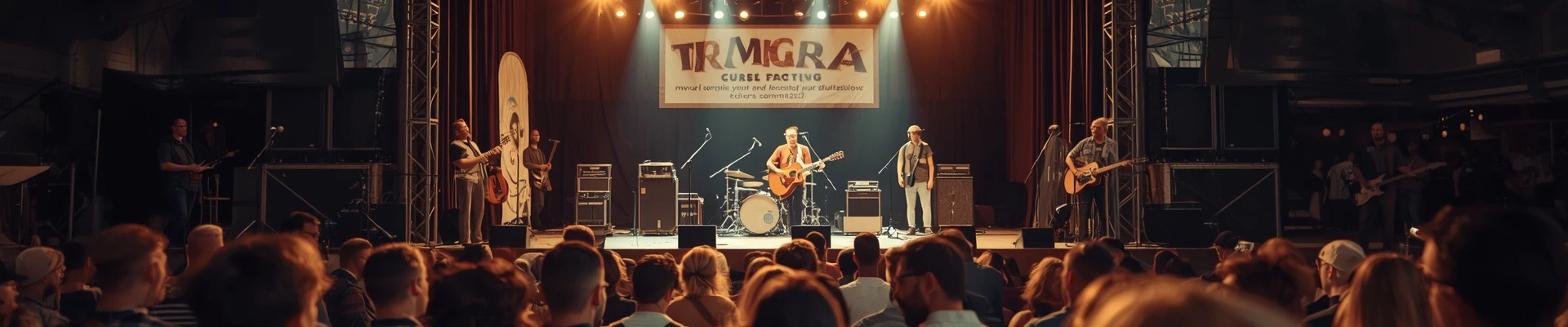
Las Cruces's venue infrastructure is modest but functional for a city its size. At the top sits the Pan American Center at NMSU (13,000-capacity arena, the largest venue in southern New Mexico, hosting major touring acts). The mid-size tier includes the Rio Grande Theatre (the historic 1926 downtown cinema turned performing arts venue, now a 500-capacity live music and events space), the Doña Ana Arts Council Black Box Theater, the NMSU Music Center, and Hershel Zohn Theatre. The club and bar circuit runs primarily through Downtown Las Cruces on Main Street and the surrounding blocks — High Desert Brewing Company (which programs local and regional live music in its tap room), The Shed (a multi-use live music bar), Stacey's Place, and a rotating cast of bars and restaurants that host local acts on weekends.
The Mesilla Plaza is the city's most atmospheric outdoor performance space — a historic Spanish colonial plaza surrounded by adobe buildings, restaurants, and galleries in the adjacent Village of Mesilla, used for festivals and outdoor concerts throughout the year. The Young Park Amphitheater hosts outdoor concerts and community events. The broader entertainment corridor runs along University Avenue (the main commercial strip adjacent to NMSU) and El Paseo Road.
Festivals and signature events
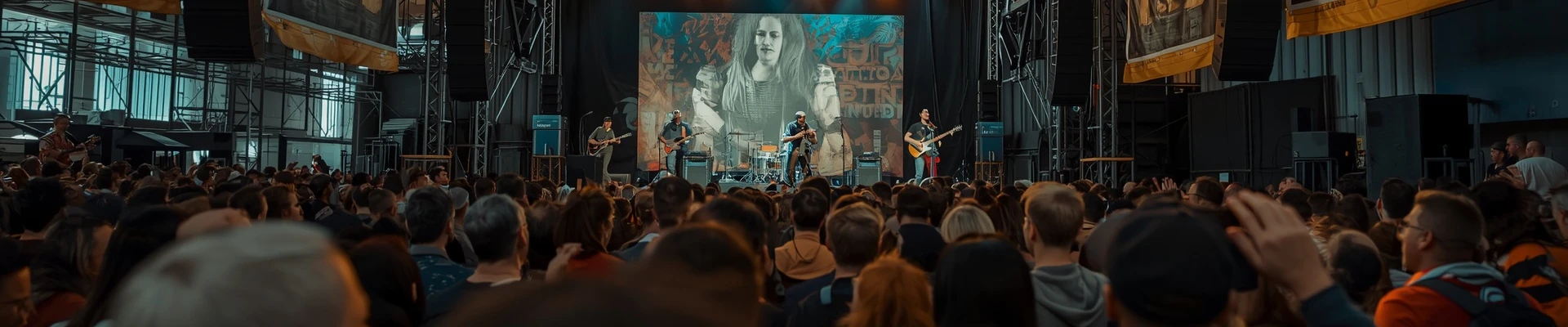
Whole Enchilada Fiesta (the long-running October street festival celebrating New Mexico's chile tradition, with live music across multiple stages on Main Street) is the city's biggest annual community event. Mesilla Valley Music Fest has brought regional and national acts to the area. The Las Cruces International Film Festival incorporates music programming. The Doña Ana Arts Council runs the Arts Crawl and various gallery events that include live performance. The Pan American Center programs arena-level touring acts throughout the year. New Mexico Farm and Ranch Heritage Museum (the 47-acre living history museum just east of the city) hosts outdoor concerts and cultural events tied to agricultural and ranching heritage. The Las Cruces Farmers & Crafts Market (Saturday mornings on Main Street, one of the largest outdoor markets in New Mexico) features live acoustic music as a regular feature.
The Day of the Dead (Día de los Muertos) celebrations across the city in late October and early November are among the most culturally rich events in the Las Cruces calendar, drawing on the deep Mexican-Catholic tradition to produce processions, altars, and musical performances — marimba, mariachi, folk song — through Downtown and Mesilla. Noche de Luminarias in Mesilla Plaza marks the Christmas season with thousands of paper lantern luminarias and live music.
What ties it all together
What holds Las Cruces's musical identity together is the border — the invisible and increasingly fortified line 74 kilometres south that divides two countries but cannot divide a culture that has been continuous across this desert valley for centuries. The accordion that drives a norteño conjunto at the Mesilla Plaza festival is the same instrument that drove the polka-inflected dance music Mexican immigrants brought north from Monterrey in the early 20th century; the singer-songwriter at High Desert Brewing trading in desert Americana draws from the same landscape as the corrido poets who told stories of the Rio Grande in the 19th century. Las Cruces is a chile city, a university city, a border city — shaped by the Chihuahuan Desert heat, the deep agricultural rhythms of the Mesilla Valley, the constant cultural exchange of the US-Mexico borderlands, and the youthful energy of a university that has anchored this community since 1888. Its music is modest in national profile but genuine in local vitality, rooted in two languages, two flags, and one desert.