
Albany is the capital of New York State and the seat of Albany County, situated on the western bank of the Hudson River roughly 233 kilometres north of New York City. With a city population of approximately 101,000 — and a Capital District metropolitan area of around 900,000 spread across Albany, Rensselaer, Saratoga, and Schenectady counties — Albany punches above its population weight as a seat of political power, a historically significant river town, and an underrated regional music hub. The city is the oldest surviving chartered municipality in the United States (chartered in 1686), a fact that colours its brick-and-brownstone streetscape and its sense of institutional permanence. State government — the New York State Legislature, the Governor's office, and dozens of state agencies — is the dominant employer. The University at Albany (SUNY) and a cluster of smaller colleges add a significant student population that has continuously refreshed the music and arts scenes across the city's varied neighbourhoods.
A Brief History
The site of present-day Albany was inhabited by Mohican people when Dutch traders established Fort Nassau here in 1614, followed by Fort Orange in 1624. Under Dutch rule the settlement was called Beverwijck; when the English seized New Netherlands in 1664, it was renamed Albany in honour of the Duke of York and Albany. Albany was incorporated as a city in 1686 under the Dongan Charter — the oldest surviving city charter in the United States — and became a vital nexus of the fur trade, shipping beaver pelts southward to New York City and onward to Europe.
The city's strategic position on the Hudson and later the Erie Canal (completed 1825) made Albany a transshipment powerhouse through the 19th century. The wealth of that era built the New York State Capitol (completed 1899, after 32 years of construction) and the grand Italianate and Victorian rowhouses of Mansion Hill and Center Square that still define the streetscape. The O'Connell machine — a notoriously powerful Democratic organisation — controlled city politics from the 1920s through the 1970s and shaped Albany's working-class, Catholic, Irish-Italian-Polish identity; its legacy lingers in the neighbourhood loyalties of the city.
Post-war urban renewal brought the demolition of the Pastures neighbourhood to build Empire State Plaza — Governor Nelson Rockefeller's grandiose modernist complex of state office towers and the Egg performing arts centre, completed in the 1970s. The Arbor Hill, Sheridan Hollow, and South End neighbourhoods bore the heaviest burdens of deindustrialisation and disinvestment. The revival of Lark Street as a bohemian commercial corridor in the 1980s and 1990s, and the ongoing reinvestment in Mansion Hill and Hudson/Park, have reshaped the city's geography without fully resolving its persistent inequality.
Music Identity
Albany's music identity is rooted in the intersection of several streams: a punk and hardcore tradition stretching from the late 1970s through the present, a significant jazz and R&B heritage built around the city's Black community (particularly in Arbor Hill and the South End), a country and folk thread sustained by the rural character of the surrounding Capital Region, and a broader indie rock and alternative ecosystem fed continuously by the student population at SUNY Albany and the smaller colleges.
The most internationally recognised figure connected to Albany is Trey Anastasio, the guitarist and songwriter of Phish — one of the most influential jam bands in American music history. While Phish formed in Burlington, Vermont, the band's early touring circuit through the northeast made Albany's Palace Theatre and Knickerbocker Arena (now MVP Arena) central to their rise, and the upstate New York scene has been inseparable from the jam band tradition ever since. Ani DiFranco (the feminist folk-punk songwriter and Righteous Babe Records founder, based in Buffalo but embedded in the upstate circuit) is another figure whose trajectory intersected heavily with Albany's independent venues.
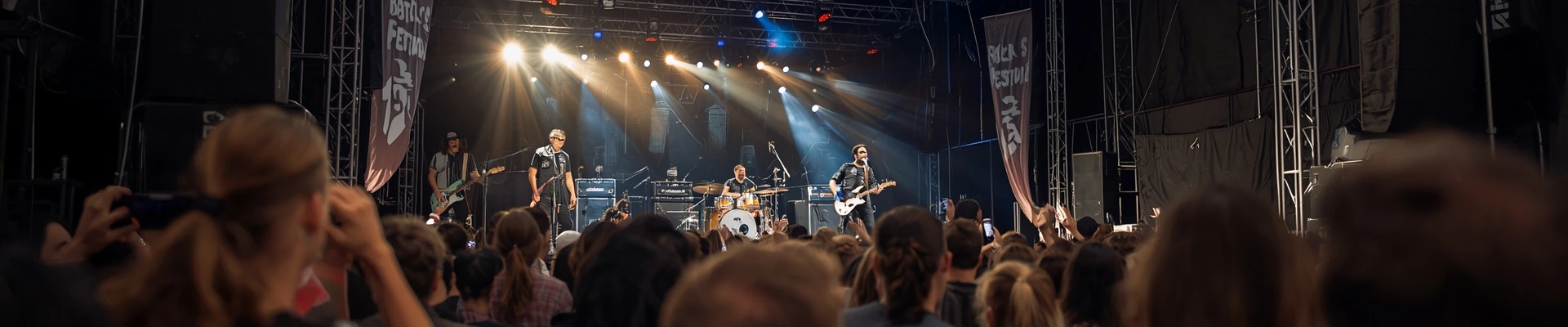
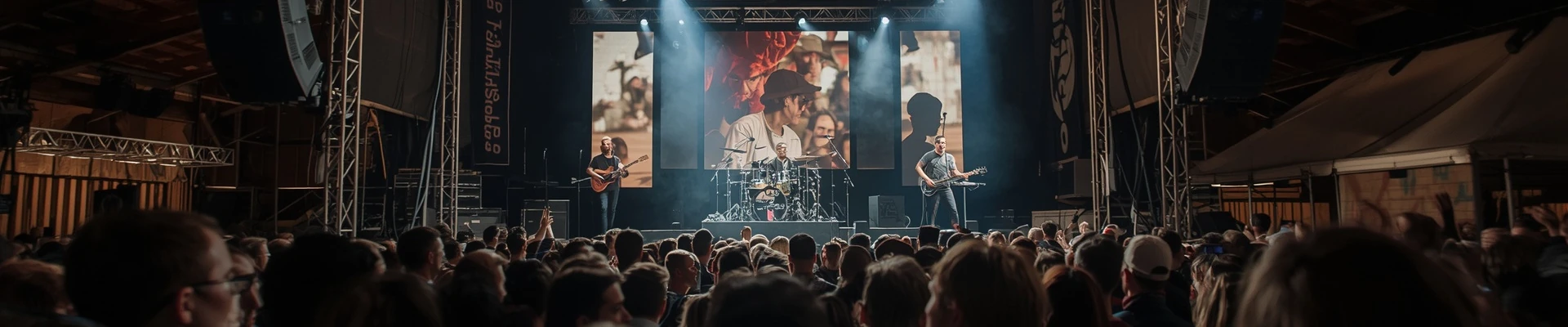
The city's punk and hardcore lineage is the most persistently distinctive element of its identity. The 1980s brought a hard-charging hardcore scene centred on venues like QE2 and the 8 Ball Saloon. Blotto — the Albany new wave/comedy rock band whose 1980 single "I Wanna Be a Lifeguard" received MTV airplay in the channel's earliest days — was one of the first regional American acts to capitalise on MTV's launch. The 1990s produced With Honor and a network of basement and all-ages venues. Into the 2000s and 2010s, Albany sustained a continuously active hardcore, metal, and punk underground anchored by Valentine's (named for the street, booking punk and alternative since the 1980s), the Hollow (a mid-tier venue in Sheridan Hollow), and DIY spaces in Centre Square and Pine Hills.
The city's jazz tradition runs deep in the African American community of Arbor Hill and the South End. Albany produced Joe McPhee — the free jazz saxophonist and trumpeter, a towering figure in experimental jazz who grew up in Albany and recorded prolifically for the Hat Hut label. The Capital Jazz Fest and the programming at Troy Savings Bank Music Hall (across the Hudson in Troy, a 10-minute drive) have sustained the region's jazz identity.
Blues runs through a circuit of bars in the city's working-class south end. Country and Americana are sustained by the rural character of the surrounding region — Saratoga Springs (45 minutes north), Cooperstown (90 minutes west), and the Catskills (two hours south) feed a country and roots music audience into Albany. The city's hip-hop scene is centred in Arbor Hill and the South End, running through clubs like Lolita Bar and Scores Entertainment Complex, with a steady stream of upstate New York MCs on the circuit.
Venues and Neighbourhoods
Albany's venue landscape spans an unusually wide range for a city of its size. At the top sits MVP Arena (formerly Knickerbocker Arena and Times Union Center), the 17,500-capacity arena that anchors the downtown waterfront and hosts everything from NCAA tournaments to Billy Joel to Justin Bieber — the city's primary stop for major touring acts. Just below it, the Palace Theatre (2,800 seats, a 1931 atmospheric movie palace now operated as a concert hall) is the most beloved room in the city, programming mid-tier touring rock, pop, country, comedy, and classical with a richness of sound and sight-line quality that larger venues cannot match.
The mid-size tier is anchored by The Egg (the brutalist performing arts centre at Empire State Plaza, with its 982-seat Hart Theatre and 450-seat Lewis A. Swyer Theatre), which programs jazz, classical, dance, and adventurous world music alongside its core performing-arts calendar. Proctors Theatre in nearby Schenectady (a 1926 movie palace, 2,700 seats) and Troy Savings Bank Music Hall in Troy (an 1875 concert hall renowned for its acoustic perfection, 1,200 seats) round out the region's historic mid-size rooms.
The club tier is anchored by Valentine's — the long-running punk and alternative club on New Scotland Avenue that has been booking underground rock since the 1980s and remains the city's most important small live music venue. Skyloft (a downtown club and bar), The Hollow (a restaurant and music venue in Sheridan Hollow), Cafe Hollywood (a South End club and bar booking R&B, hip-hop, and Latin music), and a cluster of bars on Lark Street in Center Square sustain the city's club circuit. Hudson River Way, the pedestrian bridge connecting downtown Albany to the Hudson Riverfront, anchors seasonal outdoor events.
The Pine Hills neighbourhood — west of Washington Park, anchored by Madison Avenue — is the student bohemian corridor and supports indie rock and experimental music venues and bars. Center Square and the Lark Street district are the bohemian commercial heart of the city, with bars, restaurants, and small venues bookended by Washington Park. Arbor Hill and the South End anchor the city's Black music traditions. The waterfront along the Hudson is developing as an entertainment zone around the Port of Albany and the Hudson Riverside area.
Festivals and Signature Events
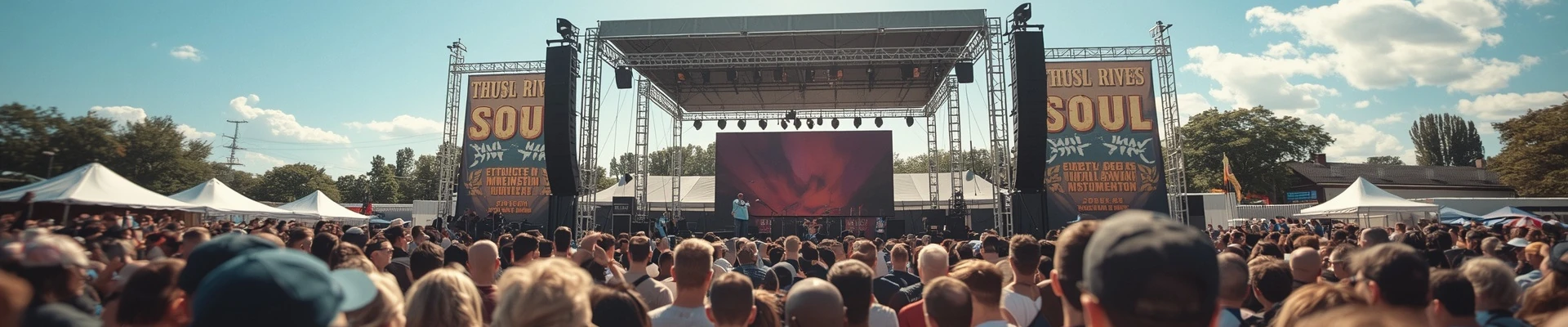
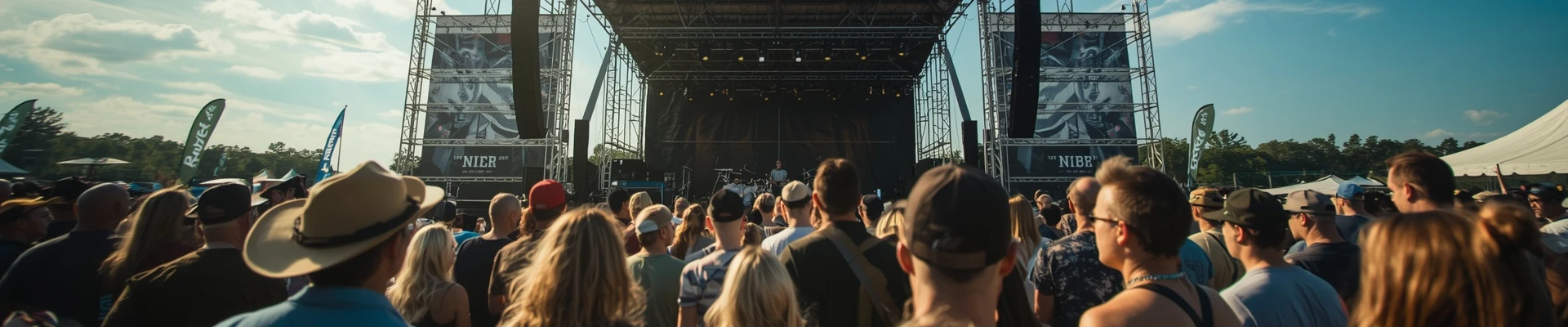
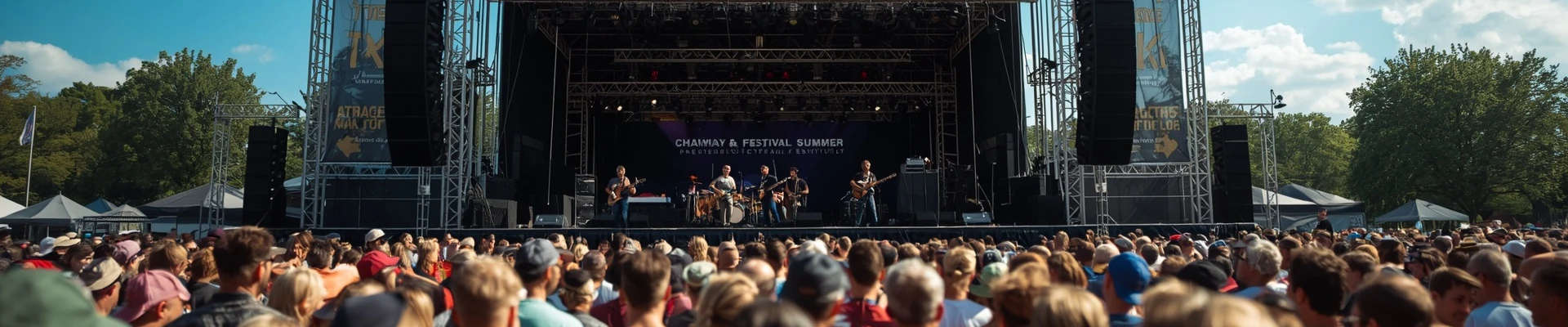
The Capital Region's festival calendar is substantial. Alive at Five — the downtown Albany concert series held on Thursday evenings through the summer, drawing free crowds of several thousand to Riverfront Park — is the most popular community music event in the city. Larkfest (the annual street fair on Lark Street in Center Square, one of the largest one-day street festivals in New York State, drawing 50,000+ people with multiple live music stages) is the city's signature neighbourhood event and a reliable showcase for regional bands. The New York State Fair (held in Syracuse, 2.5 hours west, but drawing heavily from Albany) and the Saratoga Performing Arts Center summer season (featuring the New York City Ballet, the Philadelphia Orchestra, and major rock and pop touring acts in its 25,000-capacity amphitheatre) give the wider region an outsized cultural footprint for its population.
Albany Riverfront Jazz Festival celebrates the city's jazz heritage with free waterfront programming. Uncle Nearest Black Music Honors and Juneteenth celebrations in Lincoln Park anchor the African American cultural calendar. The Capital Pride Festival programs LGBTQ+ community music events through June. Tulip Festival — the city's signature spring celebration in Washington Park, held annually since 1948 to honour Albany's Dutch heritage — features folk, world music, and roots acts on multiple stages. First Night Albany anchors the New Year's Eve calendar.
What Ties It All Together
Albany is a city whose music identity is built on institutional permanence, working-class stubbornness, and the continuous creative pressure of a student population that keeps renewing the underground. The state capital's political weight and government employment base give the city a stability that pure market logic would not — Albany survives economically when other small northeastern cities don't, and that stability sustains a music ecosystem that a purely deindustrialised rust-belt city of 100,000 could not support. Valentine's has been booking punk and alternative for four decades because Albany has always had enough people who needed that room. The Palace Theatre draws acts that would skip a city of Albany's size because Albany is also the gateway to a 900,000-person metro area and an easy routing stop between New York City and Montreal. Troy Savings Bank Music Hall — arguably the most acoustically perfect small concert hall in the northeastern United States — is the region's most extraordinary cultural asset, a room that classical musicians seek out specifically for its sound.
What Albany sounds like at its core is the scrape and compression of upstate New York working-class rock — the punk and hardcore tradition, the blues bars on the south end, the country bars of the surrounding rural counties seeping into the city's orbit, and underneath all of it the jazz and R&B tradition of Arbor Hill. Albany is not a city that invented a genre or launched a movement that went global. It is a city that has quietly kept its venues open, kept its scenes alive, and kept producing musicians who understand that working-class music is made for the room you're in, not the one you're imagining.