
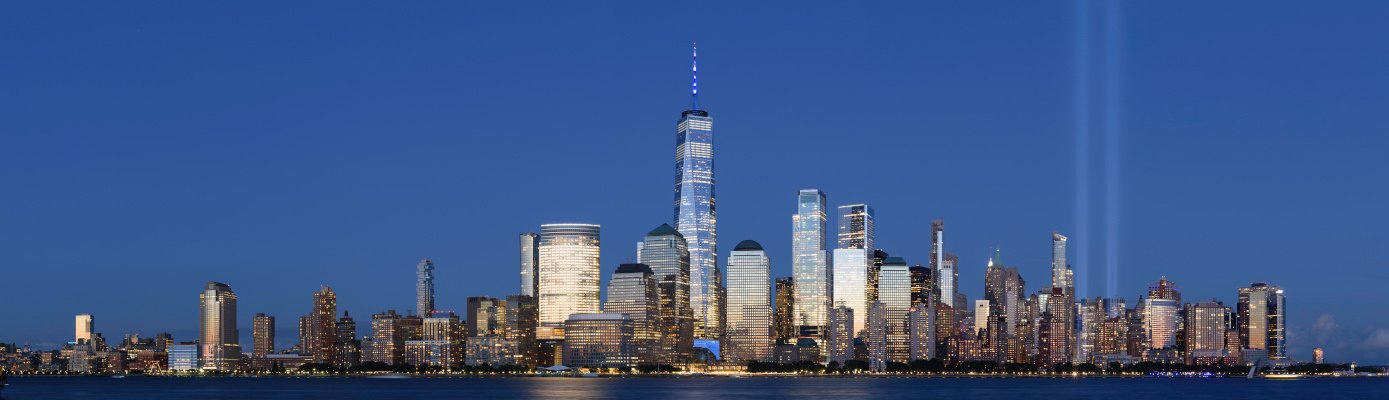
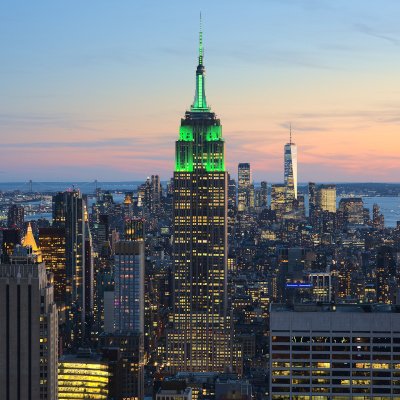
New York City is the largest city in the United States and one of the most consequential music cities in modern history. Sprawled across five boroughs at the mouth of the Hudson River — Manhattan, Brooklyn, Queens, the Bronx, and Staten Island — it is home to roughly 8.8 million residents drawn from virtually every culture on earth. That density and diversity is the engine of its musical life: at almost any moment, on almost any block, multiple traditions are colliding, borrowing, and reinventing themselves into something new.
A brief history
The Lenape people inhabited the area for thousands of years before Dutch colonists founded New Amsterdam in 1624. The British seized the colony in 1664 and renamed it New York, and after independence the city briefly served as the first capital of the United States. Through the 19th century it grew explosively as the country's principal port and the entry point for tens of millions of immigrants who arrived through Castle Garden and, after 1892, Ellis Island. Each wave — Irish, German, Italian, Jewish, Caribbean, Puerto Rican, Dominican, Chinese, West African, and many more — brought instruments, songs, and dance traditions that quickly intermingled in the city's tenements, ballrooms, and street corners.
By the early 20th century New York had become the headquarters of America's recording, publishing, and broadcasting industries. Tin Pan Alley songwriters in midtown Manhattan defined the sound of American popular song; Broadway theaters defined the American musical; and the major record labels, music publishers, performing rights organizations (ASCAP and later BMI), and music magazines all set up shop within walking distance of one another. To this day a disproportionate share of the country's music business — labels, management, agencies, press, publishing, and live touring infrastructure — is run from offices in Manhattan and Brooklyn.
Music identity
It would be hard to name a major American music genre that was not either born in New York or fundamentally reshaped there. Harlem in the 1920s and 1930s was the world capital of jazz, with the Cotton Club, Savoy Ballroom, and Apollo Theater hosting Duke Ellington, Cab Calloway, Ella Fitzgerald, Count Basie, and Billie Holiday. The city remained the center of jazz innovation through bebop in the 1940s (Minton's Playhouse in Harlem and 52nd Street's "Swing Street"), hard bop and modal jazz in the 1950s and 1960s, and the loft scene and avant-garde of the 1970s. Greenwich Village in the early 1960s became the cradle of the American folk revival, launching Bob Dylan, Joan Baez, Simon & Garfunkel, Peter, Paul and Mary, and many others from venues like the Bitter End, Gerde's Folk City, and Cafe Wha?.
In the mid-1970s three world-changing genres emerged in the city almost simultaneously. In the South Bronx, DJ Kool Herc's block parties at 1520 Sedgwick Avenue and the work of Afrika Bambaataa and Grandmaster Flash gave birth to hip-hop, which would become the dominant popular music of the 21st century. Downtown on the Bowery, CBGB and Max's Kansas City incubated American punk and post-punk through the Ramones, Television, Patti Smith, Talking Heads, Blondie, and Sonic Youth. A few blocks west, clubs like the Loft, Paradise Garage, and the Gallery turned underground gay and Black dance parties into disco and the foundations of modern house, garage, and club culture. The same era saw New York Latin music explode through the Fania Records roster — Hector Lavoe, Willie Colon, Celia Cruz, Ruben Blades — codifying what the world now calls salsa.
The story continued without pause. The 1980s gave the city no wave, freestyle, electro, and the early commercial triumph of hip-hop through Def Jam, Tommy Boy, and Sleeping Bag. The 1990s produced one of hip-hop's greatest creative peaks — Nas, the Notorious B.I.G., Wu-Tang Clan, Mobb Deep, A Tribe Called Quest, Jay-Z — alongside an indie rock and DIY scene centered on Brooklyn. The 2000s indie-rock revival pushed bands like the Strokes, Yeah Yeah Yeahs, Interpol, LCD Soundsystem, TV on the Radio, Vampire Weekend, and the National out of Lower East Side and Williamsburg practice rooms onto international stages. Today the city remains a global capital for jazz, classical, opera, contemporary composition, indie rock, electronic and club music, drill and modern hip-hop, Latin urban genres including reggaeton and dembow, Afrobeats, K-pop touring, and just about anything else with an audience.
Venues and neighborhoods
New York's venue ecosystem is unmatched in scale and depth. At the top end sit Madison Square Garden, Radio City Music Hall, Barclays Center in Brooklyn, and the recently opened UBS Arena in Belmont Park. The midsize tier includes Terminal 5, Webster Hall, Brooklyn Steel, Kings Theatre, Beacon Theatre, Hammerstein Ballroom, Forest Hills Stadium, and the historic Apollo Theater in Harlem. Beneath them is a deep bench of clubs and listening rooms — Bowery Ballroom, Music Hall of Williamsburg, Mercury Lounge, Brooklyn Bowl, Le Poisson Rouge, Elsewhere, Knockdown Center, Baby's All Right, Saint Vitus, Pianos, Berlin, The Sultan Room, Union Pool, Nublu, and dozens more. The jazz tradition is sustained by clubs like the Village Vanguard, Blue Note, Smalls, Smoke, Birdland, Dizzy's Club at Jazz at Lincoln Center, and Mezzrow. Carnegie Hall, Lincoln Center, the Metropolitan Opera, BAM, and the 92nd Street Y anchor classical and contemporary programming. Latin music has homes at SOB's, Le Poisson Rouge, and a circuit of clubs across Washington Heights, the Bronx, and Queens. The club and electronic scene runs through Public Records, Nowadays, House of Yes, Good Room, Knockdown Center, Basement, and Bossa Nova Civic Club.
Different neighborhoods carry different musical identities. Harlem and the Bronx remain central to Black American music. Washington Heights and the Bronx are strongholds of Dominican, Puerto Rican, and broader Latin music. Queens — the most ethnically diverse county in the United States — hosts thriving scenes in Bollywood, Caribbean, Korean, Colombian, and West African music. Brooklyn neighborhoods like Williamsburg, Bushwick, Bedford-Stuyvesant, Crown Heights, and Greenpoint are the current center of independent rock, electronic, and DIY music, with warehouse parties and small venues spread across former industrial corridors. Lower Manhattan, the East Village, and the Lower East Side retain a dense club and bar circuit even as the underground has migrated outward.
Festivals and signature events
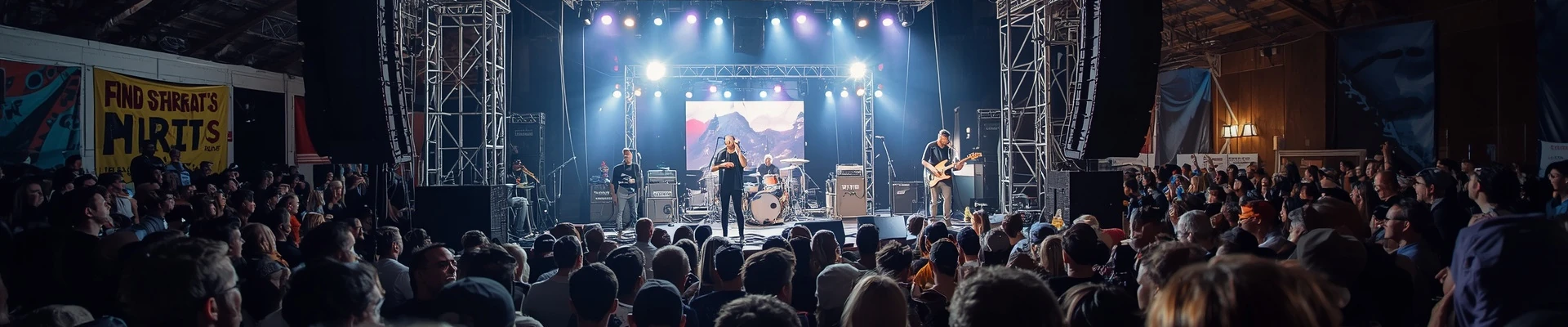
The city's festival calendar is correspondingly busy. Governors Ball on Randall's Island and All Things Go at Forest Hills draw international headliners. Electric Zoo has anchored Labor Day weekend electronic music for nearly two decades. Panorama, Afropunk in Brooklyn, SummerStage in Central Park and across the boroughs, Celebrate Brooklyn! at Prospect Park Bandshell, and Lincoln Center's Summer for the City keep parks and plazas full of free and low-cost shows from June through September. The Blue Note Jazz Festival, Winter Jazzfest, and the Charlie Parker Jazz Festival carry the jazz tradition; the New York Salsa Festival and the New York International Salsa Congress carry the Latin one; the CMJ Music Marathon historically and now a rotating cast of industry showcases serve the discovery circuit. The Tribeca Festival, New York Film Festival, and Lincoln Center's programming routinely intersect with music. Halloween's Village Halloween Parade, the West Indian Day Parade on Eastern Parkway, the Puerto Rican Day Parade, the Dominican Day Parade, Lunar New Year in Manhattan and Queens, and dozens of other cultural processions are themselves rolling music festivals.
What ties all of this together is the city itself: the subway, which lets a kid from the Bronx see a show on the Lower East Side and be home by 1am; the rents and apartments that for a century and a half have packed musicians next door to one another; the sheer audience density that lets even niche styles fill a room any night of the week; and the immigrant-engine that keeps remaking the city's sound from below. New York does not have a sound. It has all of them.