
The Salt City at the Crossroads
Syracuse occupies the geographic heart of New York State, sitting at the eastern end of the Finger Lakes region where the Onondaga Lake basin meets the old Erie Canal corridor. The city proper holds around 144,000 people; the greater metropolitan area stretches to roughly 650,000 across Onondaga County and its neighbors. It is an hour and a half east of Rochester, two and a half hours west of Albany, and four hours from New York City — a position that has made it a touring hub for artists threading the northeast circuit since the mid-twentieth century.
The city earned the nickname Salt City from the brine springs around Onondaga Lake that made it a major salt-producing center in the nineteenth century. Salt gave way to manufacturing — Carrier Corporation brought the air conditioning industry to Syracuse in the early twentieth century — and manufacturing gave way to the service economy anchored by Syracuse University, SUNY Upstate Medical University, and a substantial healthcare sector. Through each economic era, the city's music infrastructure has adapted rather than collapsed, and Syracuse enters the twenty-first century with a smaller but genuinely active live music ecosystem and a university that continues to send musicians, producers, and music professionals into the broader industry.
The Grand Tradition of the Landmark Theatre
No single building defines Syracuse's relationship with live performance more than the Landmark Theatre at 362 South Salina Street. Built in 1928 as Loew's State Theatre, it is an ornate, Indo-Persian fantasy interior — plaster elephants, gilded arches, a painted ceiling — that holds around 2,900 seats and has hosted virtually every significant touring act to pass through central New York for nearly a century. Bob Dylan, Bruce Springsteen, Frank Sinatra, The Grateful Dead, and hundreds of others have played the Landmark. The theatre was saved from demolition in the 1970s through a community preservation campaign, and it has operated as a nonprofit performing arts venue ever since, booking everything from Broadway road companies to rock headliners.
The Landmark's survival and continued operation is the defining institutional fact of Syracuse's music culture. A city of its size might easily have no venue of this caliber; instead it has one of the most beautiful restored movie palaces in the northeastern United States, which means that mid-size and major touring acts have a genuine reason to route through rather than skip over.
Syracuse University and the College Scene
Syracuse University, perched on a hill above the downtown grid, has been feeding musicians into the city's ecosystem since the mid-twentieth century. The university's College of Visual and Performing Arts trains a significant number of working professionals annually, and the institutional presence means that the city's music scene has always had an injection of young, technically schooled players cycling through every four years.
The bars and clubs adjacent to the Marshall Street strip and through the Westcott Street neighborhood in the southeastern part of the city have historically served as the primary live music infrastructure for college-adjacent rock, indie, and jazz. Westcott Street in particular functions as a cultural corridor — the annual Westcott Street Cultural Fair draws tens of thousands and includes stages for local and regional music. The neighborhood's mix of independent businesses, galleries, and older residential stock creates the kind of walkable density that sustains a local scene.
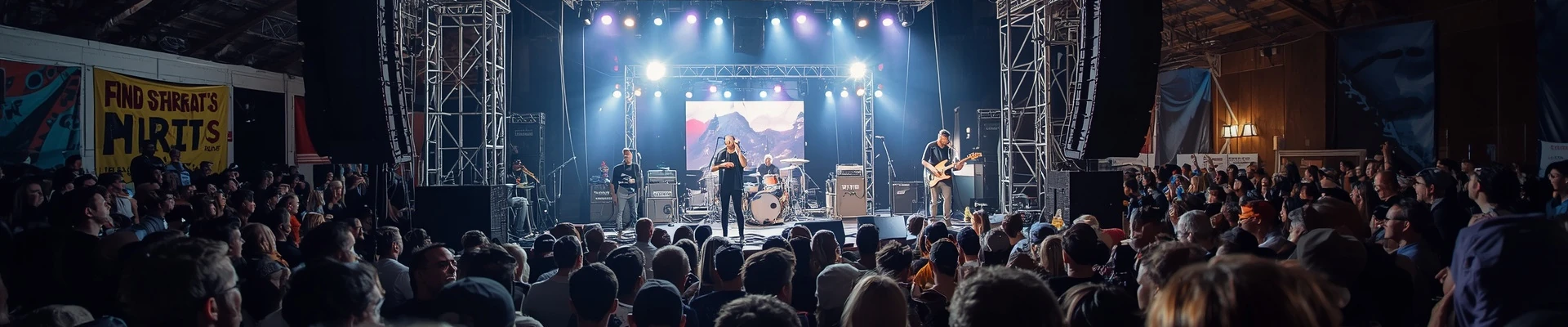
The Westcott Theater, a former movie house turned concert venue on Westcott Street with a capacity around 500, anchors the mid-size indie and alternative circuit in a way that puts Syracuse on the regional touring map for acts too small for the Landmark and too big for bar stages. The venue has hosted Built to Spill, Andrew Bird, St. Vincent, and waves of indie and rock touring acts who find it a reliable stop on the northeastern circuit.
The New York State Fair: A Stage for Every Era
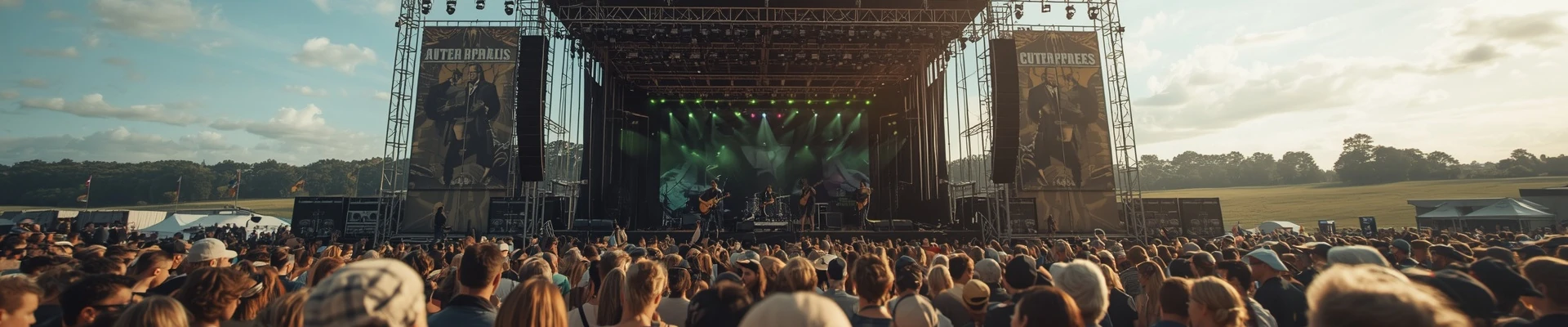
Perhaps the largest annual music event tied to any city in New York is the New York State Fair, held every August on the New York State Fairgrounds on the city's western edge. The Fair draws more than a million visitors across its twelve-day run and presents a substantial live music program at multiple stages, with the Chevy Court stage and the Chevrolet Music Festival stage hosting major national acts — country headliners, legacy rock acts, hip-hop artists, and pop draws — at no additional charge to fairgoers.
The Fair's free concert model has meant that Syracuse residents have had access to major touring acts — from Keith Urban and Miranda Lambert to Macklemore and Alice Cooper — in a format that bypasses the economics of ticketed venue shows. It is, in aggregate, one of the most significant music programming events in upstate New York, and its location in Syracuse gives the city a cultural footprint larger than its population would otherwise command.
Blues, Soul, and the Fifteenth Ward Legacy
Syracuse's African American community, historically concentrated in the Fifteenth Ward and later dispersed through urban renewal programs that demolished much of that neighborhood in the 1960s, sustained a blues and soul scene that ran parallel to the university-adjacent rock and folk circuit. The Fifteenth Ward's clubs and social halls hosted the same Chitlin' Circuit package shows that moved through other northeastern cities — James Brown, B.B. King, and regional blues and R&B artists played Syracuse dates that rarely made the local newspapers but were major events for Black residents.
The destruction of the Fifteenth Ward by urban renewal — a story that Syracuse shares with dozens of American cities — scattered this community and disrupted the infrastructure of its music scene. Pioneer Homes and the Near Westside became the new centers of Black Syracuse, and the music scene re-rooted in these neighborhoods through the 1970s and 1980s. What survived was a blues and gospel tradition that feeds into the city's contemporary R&B and soul programming, visible in annual events like Jazz Fest at Clinton Square, which presents free outdoor jazz and soul performances in the summer months.
Hip-Hop and Contemporary Rap
Syracuse has produced a genuine hip-hop scene since the early 1990s, one that reflects the city's working-class demographics and the economic pressures of post-industrial upstate New York. The scene has never produced a nationally dominant figure of the kind associated with nearby Buffalo or with New York City itself, but it has sustained local artists with regional followings and occasional wider recognition.
Sean Price, the Brooklyn rapper associated with Boot Camp Clik and Heltah Skeltah, spent formative years connected to the upstate New York scene, though his identity is more firmly Brooklyn. More directly, Syracuse-bred artists have contributed to the northeastern underground hip-hop circuit — releasing through regional labels and independent distribution, performing at venues including the Palace Theatre and various club rooms. The Shoppingtown Mall era parties and the club nights that rotated through downtown's bar district in the 2000s developed local MCs and producers whose work circulated through mixtape culture without crossing over to major-label attention.
The contemporary scene operates primarily through SoundCloud, Bandcamp, and streaming platforms, with local artists performing at The Westcott Theater, Funk 'n Waffles (a downtown venue that combines music and a restaurant), and rotating club nights. Funk 'n Waffles on South Clinton Street has become one of the most reliable mid-size live music rooms in the city, booking local and regional hip-hop alongside indie rock, experimental, and jazz acts.
Rock, Metal, and the DIY Circuit
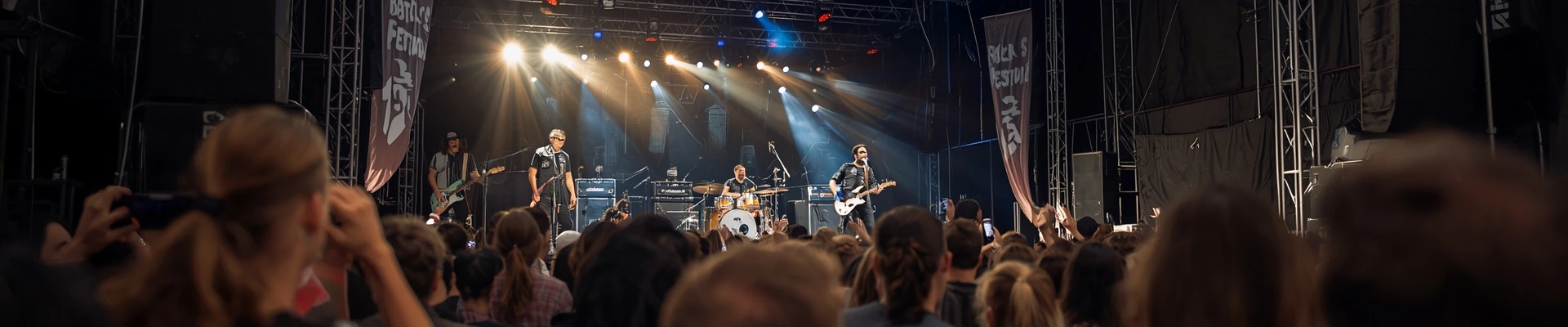
Syracuse has a durable tradition of hard rock and metal, fed in part by the working-class manufacturing culture of Onondaga County and in part by the college scene's appetite for loud guitar music. The Chucky D's era of the 1980s and 1990s — when a circuit of bar venues sustained local original bands alongside regional touring acts — produced musicians who spread into national acts without the city receiving credit as a scene.
The Lost Horizon, a club that operated through various incarnations in the city's northern neighborhoods, was a primary venue for punk, metal, and hardcore shows through the 1990s and 2000s, hosting both local acts and touring bands on the underground circuit. It has closed and reopened multiple times, reflecting the economic volatility of the small club model in a mid-size northeastern city.
Contemporary rock venues include The Westcott, Funk 'n Waffles, and a rotating cast of bar stages on Burnet Avenue and in the Armory Square neighborhood — the revitalized downtown entertainment district built on a cluster of nineteenth-century buildings between downtown and the railroad corridor.
Armory Square and the Downtown Live Music Ecosystem
Armory Square, the commercial district roughly bounded by West Jefferson Street and Walton Street west of downtown, emerged as the primary nightlife and entertainment corridor from the 1990s onward. Its bars, restaurants, and small music venues replaced the downtown clubs that had scattered after urban renewal. The area hosts venues ranging from bar stages with 100-person capacity to mid-size rooms, and its concentration of food and drink options creates the pedestrian density that live music businesses require.
The Palace Theatre on South Salina Street has at various points served as a concert venue for shows larger than bar capacity but smaller than the Landmark. The broader downtown entertainment geography reflects a city working to maintain a live music culture against the pressures of population loss, suburban migration, and competition from Albany and Rochester for touring bookings.
Festivals and Signature Events
Beyond the New York State Fair, Syracuse sustains several music-anchored festivals. Syracuse Jazz Fest, held at Clinton Square in the summer, presents free outdoor performances across multiple days. Empire Farm Days and agricultural events in the regional calendar bring country and roots music programming to the broader Onondaga County audience.
The Skidmore Jazz Institute and Eastman School in nearby Rochester have influenced the broader central New York jazz ecosystem, and Syracuse benefits from this institutional density through the jazz musicians who teach, perform, and record in the region. CNY Jazz, the nonprofit dedicated to jazz programming in central New York, presents concert series at venues across the city.
Syracuse University's Goldstein Auditorium and its performing arts spaces host significant concerts and events through the academic year, bringing artists to campus who often extend their visit with off-campus appearances.
What Ties It Together
Syracuse is a city whose music life exceeds what its population alone would generate, for two reasons: the New York State Fair — which functions as an annual mega-stage at the city's doorstep — and the Landmark Theatre — which gives mid-size touring acts a genuine destination. Everything else — the college scene around SU, the hip-hop underground, the blues and soul tradition rooted in the African American neighborhoods, the bar-circuit rock and metal community — operates at the scale expected of a city this size, with competence and local dedication but without the industry infrastructure to create national-level careers. What Syracuse does consistently well is sustain a live music culture through institutional investment: the Landmark, the State Fair, CNY Jazz, and the SU arts schools ensure that music is not an afterthought but a civic priority. That combination of historic infrastructure and institutional commitment is what keeps the Salt City on the northeast touring map decade after decade.