
Charlotte is the largest city in North Carolina and the 15th-largest in the United States, with roughly 911,000 residents inside the city limits and more than 2.8 million across the surrounding metropolitan area, which spans the South Carolina border into Rock Hill and Fort Mill. Sitting in the rolling Piedmont between the Appalachian Mountains and the Atlantic coastal plain, ringed by Lake Norman and Lake Wylie, it is the second-largest banking center in the United States after New York — home to Bank of America and a major Wells Fargo hub — and the home of NASCAR, with most of the sport's race teams headquartered in the suburbs of Concord, Mooresville, and Huntersville. Charlotte's musical identity reflects that geography and demography: a Carolina Piedmont blues, bluegrass, and gospel heritage; a long beach music and shag culture inherited from the South Carolina coast; a deeply Black gospel, jazz, and R&B tradition rooted in the West End and Beatties Ford Road corridor; and a fast-growing modern hip-hop, country, and Latin music ecosystem fed by the city's explosive population growth.
A brief history
The land where Charlotte sits was Catawba and Waxhaw territory before Scots-Irish, German, and English settlers arrived in the mid-18th century. The town was chartered in 1768 and named for Charlotte of Mecklenburg-Strelitz, the queen consort of King George III, while Mecklenburg County took its name from her birthplace. The 1799 discovery of gold at the Reed Gold Mine east of Charlotte triggered the first U.S. gold rush, and a federal mint operated in Charlotte from 1837 until the Civil War. Through the 19th and 20th centuries Charlotte grew as a textile, railroad, and banking center; the 20th-century rise of NCNB and Wachovia (which together became Bank of America and Wells Fargo) and the postwar relocation of major NASCAR teams to the Charlotte region built the modern city. Successive waves of migration — Black Southerners during and after the Great Migration, a steady stream of relocations from the Northeast and Midwest since the 1980s, and very large Mexican, Honduran, Salvadoran, Indian, Vietnamese, and West African populations since the 1990s — have built a city that is roughly 35% Black, 16% Hispanic, and increasingly diverse.
Music identity
Charlotte's modern musical history starts with Piedmont blues and gospel. The Piedmont blues — fingerpicked, ragtime-influenced, and built around acoustic guitars and small-group ensembles — ran through the Carolinas in the early and mid-20th century with artists like Blind Boy Fuller (a regular through Charlotte), Etta Baker, and the broader Carolina blues circuit. The Black gospel tradition, anchored by churches across the West End and Beatties Ford Road corridor, fed the careers of artists including the Briarhoppers, the Golden Gate Quartet (founded in nearby Norfolk but with deep Charlotte ties), and a long lineage of choirs. The 1948 founding of WBT-TV and the long radio tradition of WBT brought country, gospel, and bluegrass into Charlotte households daily; Charlotte's WBT Crazy Water Crystal Barn Dance and the CBS Crazy Barn Dance broadcasts in the 1930s and 1940s were among the most-listened-to country radio programs in the South. Earl Scruggs, the architect of three-finger banjo and one of the foundational figures of bluegrass, was born in nearby Cleveland County and built much of his early career through Charlotte radio and venues. Doc Watson played the Charlotte circuit constantly from his home base in Deep Gap, North Carolina.
The 1960s and 1970s extended the lineage. James Brown — though Augusta-based — recorded "Live at the Apollo"'s legendary follow-up live albums and developed many of his signature sounds through tours that ran constantly through the Carolinas, with Charlotte as a major stop. The beach music and Carolina shag tradition — a slower, sweeter R&B dance music that crystallized along the South Carolina coast in the 1940s, 1950s, and 1960s — became a defining cultural marker of the broader Charlotte region; the Tams, the Embers, the Catalinas, and a long lineage of beach music groups continue to fill Charlotte ballrooms and resort hotels. Country music has run through the city continuously through the Coyote Joe's lineage (the long-running Charlotte honky-tonk), the Charlotte Country Music Association, and the careers of artists like Randy Travis (Marshville-born, just east of Charlotte), Eric Church (Granite Falls-raised, with deep Charlotte ties), Scotty McCreery, Luke Combs (Asheville-raised but Charlotte-active), Chris Stapleton's tour stops, and a thriving regional country circuit.
The 1990s and 2000s remade the city again. Anthony Hamilton, born and raised in Charlotte, broke nationally with Comin' from Where I'm From (2003) and built one of the most acclaimed neo-soul catalogs of the 2000s; he remains based in Charlotte and is one of the city's most beloved cultural figures. Calvin Richardson, Avant's Charlotte ties, and a deep modern R&B scene anchor the city's contemporary Black music. The Avett Brothers, formed in nearby Concord by brothers Scott and Seth Avett, broke nationally in the late 2000s and have built one of the most acclaimed Americana catalogs of the 21st century out of the broader Charlotte region. Ben Folds Five, while Chapel Hill-based, played the Charlotte circuit constantly. Hootie & the Blowfish played Charlotte continuously through their early career.
The 2010s and 2020s have brought a serious hip-hop wave. DaBaby (Jonathan Lyndale Kirk), raised in Charlotte's University City and West Charlotte neighborhoods, broke nationally with Baby on Baby (2019) and Kirk (2019) and became one of the most commercially successful rappers of the early 2020s. Stunna 4 Vegas, DaBaby's long-time collaborator and a fellow Charlotte rapper, built the Billion Dollar Baby Entertainment roster alongside DaBaby. Toosii, Lute (the J. Cole Dreamville signee, raised in Charlotte), Deniro Farrar, Elevator Jay, Jus Daze, and a current generation of trap and indie hip-hop artists continue the lineage. The city's vast Latin community — primarily Mexican, Honduran, and Salvadoran — fuels a thriving regional Mexican, bachata, and reggaeton circuit through clubs across East Charlotte and the Independence Boulevard corridor. West African music — primarily Nigerian Afrobeats and Ethiopian Habesha pop — runs through community halls and event spaces across the University City and Eastland corridors.
Charlotte also has a deep classical and jazz tradition. The Charlotte Symphony Orchestra, founded in 1932, is one of the oldest professional orchestras in the South. Opera Carolina, the JazzArts Charlotte organization, and the Stax Café's programming anchor the classical and jazz tradition. Indie rock runs through bands working out of NoDa and Plaza Midwood, including Modern Moxie, Junior Astronomers, and a thriving DIY scene. Punk and hardcore have a long Charlotte lineage through the Milestone Club (the long-running NoDa punk venue, opened in 1969) and a deep current generation.
Venues and neighborhoods
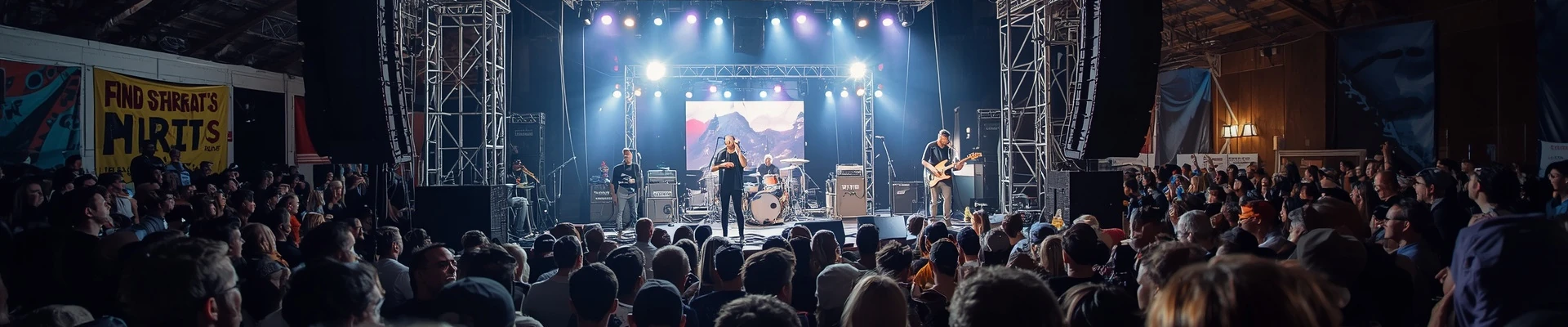
Charlotte's venue ecosystem is well-developed. At the top sit the Spectrum Center (home of the Hornets and the city's largest indoor concerts), Bank of America Stadium (home of the Panthers), PNC Music Pavilion (a 19,000-capacity outdoor amphitheater on the city's east side), the Charlotte Metro Credit Union Amphitheatre, Belk Theater at Blumenthal Performing Arts Center (home of the Charlotte Symphony and Opera Carolina), the Knight Theater, and the Booth Playhouse. The midsize tier includes The Fillmore Charlotte (in the AvidXchange Music Factory complex), The Underground, the Neighborhood Theatre in NoDa, the Visulite Theatre in Plaza Midwood, and the Coyote Joe's country honky-tonk. Beneath them is a deep club layer — the Milestone Club (the legendary NoDa punk venue), Snug Harbor, Petra's, Tommy's Pub, Evening Muse, Skylark Social, Hattie's Tap & Tavern, Amos' Southend, Stage Door Theater, and a network of bars and DIY rooms across NoDa, Plaza Midwood, and the South End. Coyote Joe's anchors the country and honky-tonk circuit. Latin music has homes at clubs across East Charlotte, including Latin Quarter and a long lineage of dance halls.
Different neighborhoods carry different musical identities. NoDa (North Davidson) is the heart of the city's indie rock, punk, and DIY scenes — and the home of the Milestone, the Neighborhood Theatre, and a dense bar and venue strip. Plaza Midwood anchors a complementary indie and singer-songwriter circuit. The South End has emerged in the last decade as a high-end bar and venue corridor through the AvidXchange Music Factory and a string of breweries. University City anchors the city's hip-hop scene through DaBaby's home neighborhood and a deep current generation. The West End and Beatties Ford Road corridor anchor the gospel, jazz, and Black music history. East Charlotte and Eastland anchor the Latin and West African music scenes. Concord, Mooresville, and Huntersville in the northern suburbs are the heart of the country and Americana scene through the Avett Brothers' orbit.
Festivals and signature events
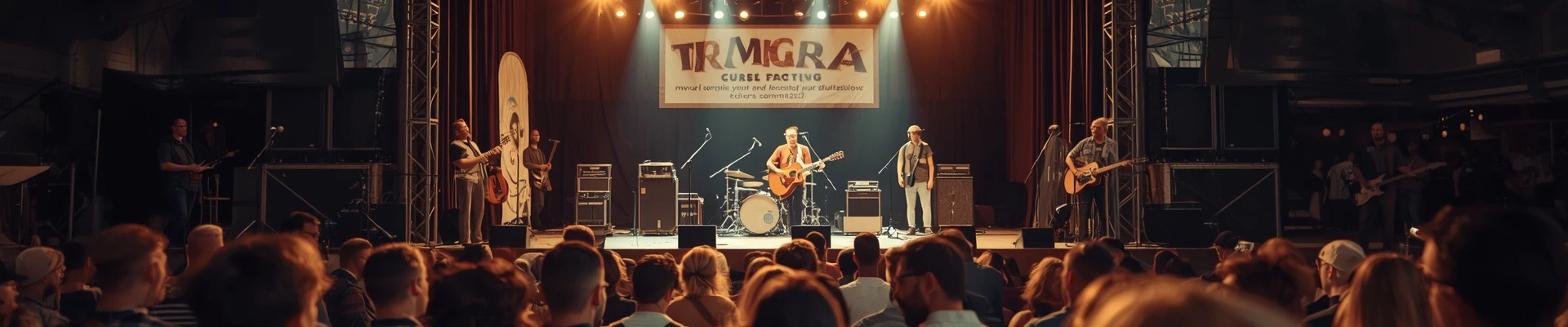
The festival calendar reflects the city's range. Lovin' Life Music Fest (formerly Breakaway Festival's Charlotte edition), CIAA Tournament music programming, Charlotte SHOUT! music programming, Festival in the Park at Freedom Park, Yiasou Greek Festival's music programming, the Carolina Renaissance Festival music track, Charlotte Pride, Festival Latinoamericano, Festival of India, and the AfroFuture Charlotte add cultural and community programming. The Avett Brothers' New Year's Eve concert at the Spectrum Center has become one of the city's signature year-end events. Heath Out! at Camp North End, Tuck Fest at the U.S. National Whitewater Center, and the Tosco Music Party anchor the indie and roots circuits. NASCAR events at Charlotte Motor Speedway, including the Coca-Cola 600, draw national country and rock acts as part of pre-race entertainment. Charlotte Symphony's Summer Pops and Live at Symphony Park add classical and crossover programming.
What ties it all together is the city's combination of New South corporate growth, deep Black musical heritage, and explosive 21st-century immigration. Charlotte is the city where Anthony Hamilton became Anthony Hamilton through the West End churches, where DaBaby became one of the biggest rappers in America out of University City, where the Avett Brothers built modern Americana out of Concord, where the Milestone Club has been programming punk continuously since 1969, and where the bluegrass and Piedmont blues traditions of the Carolinas still feed venues and festivals across the metropolitan area.