
Durham is a mid-size city in the northeastern Piedmont of North Carolina, with roughly 257,000 residents inside city limits and more than 1.2 million across the Durham–Chapel Hill metropolitan area. It sits at the geographic heart of the Research Triangle — a region anchored by Duke University, the University of North Carolina at Chapel Hill, and North Carolina State University in Raleigh — and is one of the fastest-growing metropolitan areas in the United States, fueled by the biotech, pharmaceutical, and technology industries clustered around Research Triangle Park, one of the largest planned research parks in the world. Long defined by its tobacco economy, its historically Black universities, and its immigrant communities, Durham has transformed since the 1990s into one of the South's most culturally vital mid-size cities — and in music, it has punched far above its weight, producing and sheltering some of the most adventurous independent artists of the past three decades.
A brief history
The land in present-day Durham was occupied by the Eno people and later the Occaneechi Band of the Saponi Nation before European settlement. The city proper grew from a small railroad hamlet named for Bartlett Snipes Durham, a local physician who donated land for a station on the North Carolina Railroad in 1853. Its real expansion came after the Civil War, when Washington Duke — a former Confederate soldier who discovered that his plug tobacco was uniquely popular among Union and Confederate soldiers alike — returned home and built one of the great American tobacco empires. Duke's factory, later reorganized as the American Tobacco Company, made Durham the tobacco capital of the United States through the late 19th and early 20th centuries. Duke University, founded in 1838 as Trinity College and renamed and transformed into a major research university in 1924 through a $40 million endowment from James B. Duke, has been the city's dominant intellectual institution ever since.
The tobacco boom produced two Durhams living side by side. The city's white business district concentrated around Main Street and the American Tobacco Campus (now a mixed-use arts and entertainment district). The city's Black community — one of the largest and most economically substantial in the post-Reconstruction South — built its own parallel economy along Parrish Street, dubbed the "Black Wall Street of the South" for the concentration of Black-owned insurance companies, banks, law firms, and businesses. North Carolina Mutual Life Insurance Company, founded on Parrish Street in 1898, became the largest Black-owned business in the United States. Hayti — the predominantly Black neighborhood south of downtown — was a dense, thriving cultural district with churches, theatres, and restaurants that anchored Black civic and musical life for decades. Urban renewal in the 1960s and 1970s, which routed the Durham Freeway (N.C. 147) directly through Hayti, destroyed much of the district — a civic wound whose effects on Durham's Black community are still visible.
Music identity
Durham's musical identity begins with blues and gospel, which grew from the tobacco factory floors, Black church choirs, and juke joints of the early 20th century. Gary Davis — the Reverend Gary Davis — was one of the most technically extraordinary guitar players of the 20th century. Born in Laurens County, South Carolina, Davis came to Durham in the 1920s and 1930s, busked and performed around the city, was ordained as a Baptist minister, and developed the elaborate ragtime-inflected fingerpicking style that would, after his 1940 move to New York, directly influence Bob Dylan, Stefan Grossman, David Bromberg, and a generation of American folk-revival guitarists. Blind Boy Fuller — Fulton Allen — was another Durham-area blues figure of the 1930s, recording for the American Record Corporation and laying down a catalog of Piedmont blues that defined the regional sound. Sonny Terry, the harmonica virtuoso who collaborated with Fuller and then with Brownie McGhee for decades, came through the Durham scene.
The university presence brought jazz and classical traditions. Duke Ellington played at Duke University's Page Auditorium — a fact with some irony, given that the school was racially segregated — and Durham's Black community built a jazz listening culture through clubs and dance halls in Hayti. The tobacco factory workers' union halls hosted dances and music events that kept regional swing, jump blues, and early R&B current through the mid-20th century.
Durham's transformation into an independent-rock and alternative hub began in the 1980s and 1990s with a deep, porous cultural relationship with nearby Chapel Hill, home of UNC. The twin cities' music scenes were so intertwined through the 1990s that journalists routinely spoke of the "Chapel Hill Sound" — a jangle-pop and indie-rock aesthetic anchored by bands like Superchunk, Polvo, Archers of Loaf, Squirrel Nut Zippers, Dillon Fence, and Southern Culture on the Skids — while simultaneously acknowledging that Durham was home to many of the key figures and institutions. Merge Records, founded in Chapel Hill in 1989 by Superchunk's Mac McCaughan and Laura Ballance but long operating from the Triangle's creative matrix, became one of the most important independent labels in American music history, releasing early records by Neutral Milk Hotel, Spoon, Lambchop, the Magnetic Fields, the Clientele, Camera Obscura, M. Ward, and dozens more.
Polvo — arguably the most sonically adventurous of the Chapel Hill/Durham bands — developed a dissonant, rhythmically complex guitar rock that influenced post-rock and math-rock for a generation. Archers of Loaf, formed at UNC, recorded one of the essential indie-rock catalogs of the 1990s. Squirrel Nut Zippers, the Durham-based swing-revival band led by Jimbo Mathus, had an improbable major-label career through the mid-1990s with their retro-jazz and hot-club sound. The Durham-Chapel Hill axis of the 1990s produced a density of adventurous music per capita that few American mid-size cities have matched.
The 2000s and 2010s brought new energy. Megafaun, the experimental folk trio, relocated to Durham in the late 2000s and became central figures in the city's freak-folk and avant-Americana scene. Mountain Goats bandleader John Darnielle has lived in Durham for years, and the Mountain Goats' catalog is partly defined by the city's rhythms. Hiss Golden Messenger — M.C. Taylor's Durham-based Americana project — has become one of the most acclaimed folk and roots acts of the past decade, with a catalog that draws on country, gospel, and blues in the Piedmont tradition. Sylvan Esso — the electronic-folk duo of Amelia Meath and Nick Sanborn — formed in Durham in 2013 and became one of the breakthrough independent acts of the mid-2010s; they founded Psychic Hotline, the Durham-based independent label, in 2021, adding another chapter to the city's label history. Bon Iver's Justin Vernon has strong ties to the Triangle music community. Carolina Chocolate Drops — the string-band ensemble led by Rhiannon Giddens that resurrected the Black string-band tradition of the Piedmont South — formed in Durham in 2005 and became one of the most celebrated and historically consequential acts of the past two decades; Giddens has gone on to win the Pulitzer Prize for Music (for her opera Omar, co-written with Francesco Turrisi) and the MacArthur "Genius" Fellowship.
Durham's hip-hop scene runs from the 1990s underground through a current generation anchored by artists like Rapsody (Marlanna Evans), the Durham-raised MC and Roc Nation signee who has become one of the most critically acclaimed female rappers in the country with albums like Beauty & the Beast and Eve. Jolie Rouge, Kendrick Lamar tour stops, and a deep contemporary R&B and trap ecosystem anchored by clubs and recording studios fill the rest of the local hip-hop picture. J. Cole, though from Fayetteville, spent formative years in the Triangle and has deep ties to the region's hip-hop community.
Durham's immigrant music scenes are substantial. The city's large Latino population — predominantly Mexican, with significant Guatemalan, Salvadoran, and Puerto Rican communities — sustains an active norteño, banda, mariachi, and Latin urban ecosystem through clubs and community events. Durham's Burmese community — one of the largest in the United States, a legacy of refugee resettlement through the 2000s and 2010s — has sustained Burmese traditional music and pop within the city. An Ethiopian and Eritrean community concentrated in southwest Durham supports its own music events and gathering spaces. The city's diverse immigrant mosaic has fed a broader multicultural arts ecology centered on institutions like the ArtsCenter in Carrboro and the Durham Arts Council.
Venues and neighborhoods
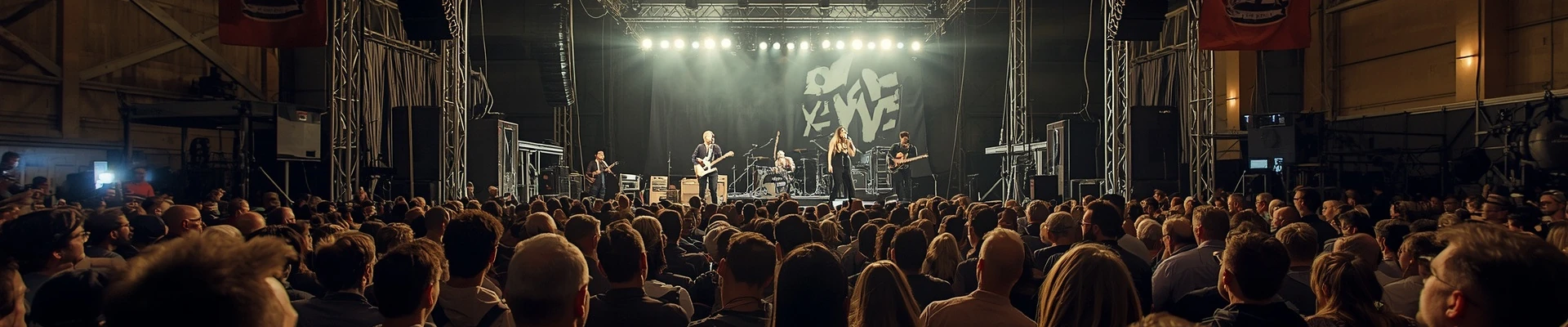
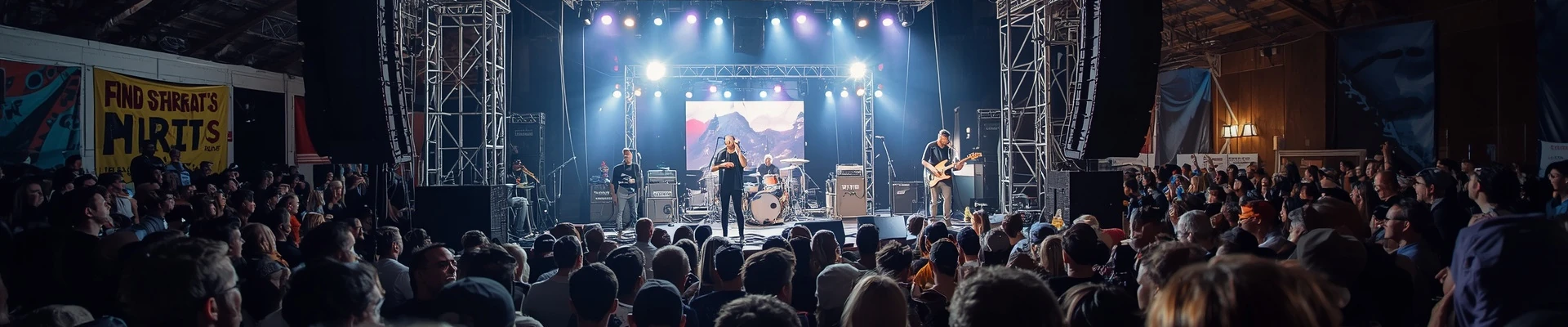
Durham's venue landscape is modest in scale but serious in character. Motorco Music Hall — a converted garage and auto dealership on Foster Street in the Burch Avenue corridor — is the city's primary mid-size venue (capacity around 600), with a beer garden, an attached restaurant, and a booking calendar that skews adventurous indie rock, folk, electronic, and hip-hop. The Pinhook, on the American Tobacco Campus edge, is the city's essential small club — a divey, serious listening room that has hosted a generation of underground and independent touring acts. Fullsteam Brewery functions as a music venue alongside its craft beer operation. The Fruit — a performing arts center in an old produce warehouse — hosts music alongside dance, theater, and community events. The Carolina Theatre, a historic 1926 venue in downtown Durham, programs film festivals, classical concerts, and touring acts in its elegant main hall. Lincoln Theatre programs rock and alternative acts. DPAC (Durham Performing Arts Center), opened in 2008 with 2,700 seats and fast becoming one of the top-grossing theater venues in the United States, programs Broadway touring shows and a range of major music acts. Duke University's Page Auditorium, Baldwin Auditorium, and the outdoor Kville area at Cameron Indoor Stadium host academic and community concerts.
The 9th Street District — along 9th Street in the Ninth Street neighborhood just east of Duke's West Campus — has been the bohemian commercial and cultural heart of the city for decades, with independent bookshops, record stores, coffee shops, and bars that support a DIY and undergraduate music ecosystem. The American Tobacco Campus has anchored a post-tobacco entertainment corridor since its adaptive reuse in the early 2000s. The Watts-Hillandale neighborhood, the Trinity Park area, and the Northgate Park corridor support a dense independent cultural life. The East Durham neighborhood, historically working-class and now undergoing rapid gentrification pressure, has a deep community arts and music tradition anchored by organizations like Dirty South Roller Derby and Urban Ministries.
Festivals and signature events
Durham's festival circuit is punchy for a city its size. Bull Durham Blues Festival, held annually in September at Rock Quarry Park and one of the oldest continuous blues festivals in the Southeast, anchors the city's blues heritage programming. Bull City Food and Beer Experience, Moogfest (the electronic, technology, and music festival that relocated to Durham from Asheville in 2016 and has anchored a unique music-and-innovation ecosystem), Durham Folk Festival (one of the oldest folk festivals in North Carolina), American Dance Festival (which includes music programming), Full Frame Documentary Film Festival, Dance Durham, Music Maker Foundation's annual events, Duke Performances (the university's major presenter, which brings international jazz, classical, world music, and experimental acts to campus venues), Kidznotes performances, Durham Symphony Orchestra's season, Durham Savoyards's Gilbert and Sullivan programming, Art of Cool Festival (focused on jazz and creative music), and the outdoor concert series at the American Tobacco Campus fill the calendar year-round. Merge Records anniversary and showcase events have periodically brought major indie-label acts to the city. The WUNC Public Radio concert series and various brewery-hosted music events round out the programming.
What ties it all together is a city with a rare combination: a deep, old blues and gospel root in the Piedmont tradition going back to Reverend Gary Davis and Blind Boy Fuller; an independent label infrastructure in Merge Records that shaped American music for thirty years; a dense, mutually reinforcing university arts ecology through Duke and nearby UNC; a folk and Americana renaissance through Hiss Golden Messenger, Carolina Chocolate Drops, and Rhiannon Giddens's extraordinary career; and a hard-working indie music scene fed by a steady stream of musicians priced out of New York and Los Angeles who have found in Durham a city that takes music seriously, keeps rents (relatively) low, and still believes that a band playing a 200-person club on a Tuesday night is worth showing up for.