
Fayetteville is the seat of Cumberland County and the sixth-largest city in North Carolina, with roughly 202,000 residents inside the city limits and approximately 380,000 across the greater Cumberland County area. It sits on the western edge of the Coastal Plain, about 60 miles south of Raleigh and 90 miles southeast of Charlotte, where the Cape Fear River cuts through the flatlands before winding toward the Atlantic coast at Wilmington. The city's identity is inseparable from Fort Liberty — known until 2023 as Fort Bragg — the massive U.S. Army installation that sprawls across the city's northern and western edges and is home to the 82nd Airborne Division, the Special Forces Command, Delta Force, and tens of thousands of active-duty soldiers at any given moment. Fort Liberty is one of the largest military installations on earth by troop population, and its presence shapes virtually everything about Fayetteville: the economy, the demographics, the pace of social change, the geography of the bar and music scene, and the constant churn of people passing through from every corner of the country and the world.
A brief history
The land along the Cape Fear River had been home to the Lumber River Siouan peoples before European arrival. European settlers established the town of Cross Creek in the early 18th century; it was renamed Campbellton and then merged and renamed Fayetteville in 1783 — one of the first American towns named in honor of the Marquis de Lafayette. The Highland Scots who immigrated heavily into the Cape Fear region brought fiddle and bagpipe traditions that fed into the broader Carolinian string-band heritage. Fayetteville was a significant inland port town in the antebellum period, connected to the coast via the Cape Fear River and later by the Western Railroad, and its position made it an important market town for the surrounding agricultural hinterland. During the Civil War, Sherman's Army marched through and burned much of the city's arsenal district in 1865. Reconstruction and the late 19th century brought renewed growth, but Fayetteville remained a modestly sized regional center through the first half of the 20th century.
The transformation came with World War II. Camp Bragg (established 1918, upgraded to Fort Bragg during WWII) became one of the premier training installations in the American military, and the economic and demographic effects were permanent. The postwar decades brought an influx of veterans who stayed, waves of civilian workers tied to the base economy, and a geography split between the base's controlled world and the civilian town beyond — a geography that gave rise to the bars, clubs, tattoo parlors, pawnshops, used car lots, and music venues that cluster along Bragg Boulevard and Skibo Road. The city incorporated surrounding communities over the decades, and by the 2000s Fayetteville had become a sprawling, traffic-choked city of strip malls and subdivisions belted around its older commercial corridors, with a revitalizing downtown core around Hay Street and the Market House.
Music identity
Fayetteville's music identity is fragmented in the most productive possible way. There is no single "Fayetteville sound" that music historians have branded and packaged — instead there are multiple overlapping scenes sustained by a transient military population that constantly seeds the city with musicians from everywhere else, and a civilian population with deep Carolinian roots in gospel, country, blues, and soul.
The deepest roots run through Cape Fear blues and gospel — the rural Cumberland County and Robeson County countryside to the south and east was home to a significant Black musical tradition in the early 20th century, and Fayetteville's Black neighborhoods around Murchison Road sustained juke joints, church choirs, and barrelhouse piano traditions that fed into the regional R&B scene of the 1950s and 1960s. Roberta Flack, one of the most significant singer-songwriters and pianists of the 1970s, grew up in Black Mountain, NC but spent formative years in the region and reflects the depth of the Carolinian gospel-into-soul pipeline.
The military population brought rock and roll into the city early and insistently. By the 1970s Fayetteville had a dense cluster of bars and clubs along Bragg Boulevard serving soldiers who wanted live music on Friday and Saturday nights, and the scene was famously rough — the strip earned a reputation as one of the more volatile bar corridors in the Southeast. That roughness became generative: the bar circuit trained working bands fast and brutally, and the audiences demanded energy. Southern rock and country rock dominated through the 1970s and into the 1980s, with local acts cycling constantly through the club loop.
The 1980s punk and hardcore scene in Fayetteville was small but fierce. House shows in the student neighborhoods near Fayetteville State University and the broader Cumberland County circuit produced bands that fed into the larger North Carolina underground — a scene that connected with Raleigh, Chapel Hill, and Charlotte without ever achieving national visibility of its own. The DIY ethic was practical necessity: no major labels were scouting, no music industry infrastructure existed, so bands self-recorded and self-distributed. Fayetteville State University — an HBCU with deep roots in the city's Black community — contributed gospel choirs, marching band traditions, and eventually hip-hop ciphers and production circles to the scene.
Hip-hop arrived in Fayetteville with particular intensity in the late 1980s and 1990s. The city's demographics — young, diverse, heavily Black and Latino from both the military population and the civilian working class — were ideal conditions for hip-hop to take root. Bragg Boulevard and the housing corridors around Murchison Road and Ramsey Street produced emcees and producers who circulated within the regional Carolina rap underground. Fayetteville's hip-hop scene has never produced a crossover star on the level of a J. Cole (from nearby Fayetteville — J. Cole, born Jermaine Cole, grew up in Fayetteville and has been the city's most internationally significant musical export in any genre), but the scene produced the conditions that shaped him.
J. Cole is the defining figure in Fayetteville's music story. Born in Frankfurt, Germany to a U.S. military family, he grew up in Fayetteville, attended Terry Sanford High School, and developed his production and lyrical skills in a city that gave him both the military-town edge and the Carolinian storytelling sensibility that define his work. His Dreamville Records label — co-founded with Ibrahim Hamad — is now one of the most significant independent hip-hop labels in America, home to Bas, J.I.D, EarthGang, Cozz, Ari Lennox, and Lute (also a Fayetteville native). Cole's 2011 debut Cole World: The Sideline Story and 2014 double-platinum 2014 Forest Hills Drive (named for his Fayetteville childhood home address) gave the city a landmark album to call its own. Dreamville Festival, held annually in Raleigh's Dorothea Dix Park, is organized by Cole's team and has become one of the most important hip-hop festivals on the East Coast — a direct product of Fayetteville's musical DNA.
Lute — Alute McCray — is the other significant Fayetteville hip-hop figure: a rapper on the Dreamville roster whose 2017 mixtape Fire in the Barn and 2019 debut album West 1996 are rooted explicitly in Fayetteville's geography and working-class Black experience. His work alongside J. Cole on the Revenge of the Dreamers III collaborative album helped bring broader attention to the city.
Beyond hip-hop, Fayetteville has a persistent country and Americana undercurrent tied to the surrounding Carolinian rural culture. The Cape Fear Regional Theatre and venues like Huske Hardware House (a downtown brewpub with a live music stage) sustain a modest but real folk, singer-songwriter, and Americana scene. The city's Latino population — substantial due to Fort Liberty's large contingent of Puerto Rican and Mexican-American soldiers and their families — has generated reggaeton, cumbia, and salsa social scenes centered on venues along Bragg Boulevard and Skibo Road.
Venues and neighborhoods
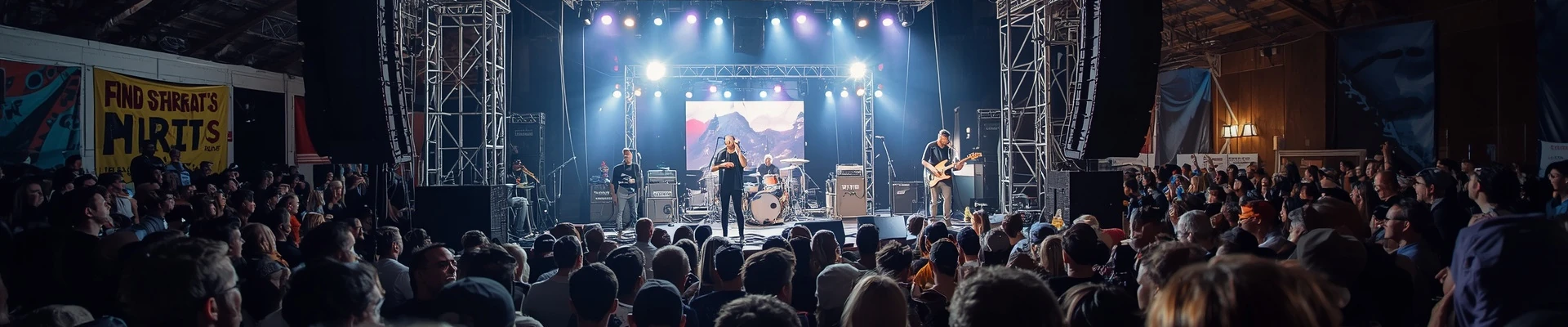
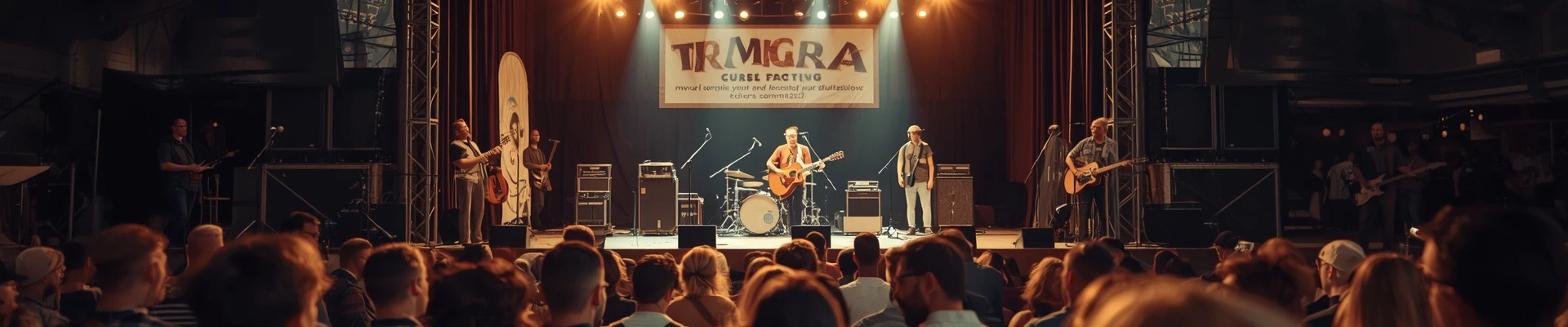
Downtown Fayetteville along Hay Street and the Market House district has been the focus of gradual revitalization since the 2010s. The Huske Hardware House, a brewpub occupying a century-old hardware store building on Hay Street, is the most consistent live music room in the downtown core, hosting folk, Americana, local rock, and singer-songwriter nights. The Drunk Horse Pub on Hay Street is a smaller, rougher alt-rock room. Colony has been a notable hip-hop and R&B venue in the city.
Bragg Boulevard remains the old spine of the military-adjacent bar scene — a long commercial strip running northwest from downtown toward the main gate of Fort Liberty, lined with bars, strip clubs, tattoo parlors, and sporadic live music rooms that serve soldiers and veterans. The energy here is transient, cash-heavy, and musically eclectic.
Murchison Road is the historically Black commercial corridor, running north-south through the city's west side and connecting neighborhoods that sustained gospel, soul, and hip-hop scenes from the mid-20th century forward. Fayetteville State University anchors the southern end of this corridor.
The Crown Complex — the city's arena and convention center — hosts touring acts at the top of the market: country headliners, pop acts, and occasional hip-hop tours. It is the largest indoor concert venue in the Cumberland County area.
Festivals and signature events
Dogwood Festival is Fayetteville's longest-running outdoor festival, held annually in Festival Park in late April. While primarily an arts and crafts fair, it includes a music stage with regional acts spanning country, rock, and gospel. The festival is a civic institution and draws crowds from across Cumberland County.
International Folk Festival is one of the more distinctive events in the city's calendar — a celebration of Fayetteville's extraordinary cultural diversity, with live music performances representing the many nationalities present in the military community: Filipino, Korean, Nigerian, Puerto Rican, Mexican, German, and dozens of other traditions all represented on stage. The military's multinational character turns the International Folk Festival into something genuinely global.
Dogwood Trails in the spring and the Fayetteville Marketfest on Hay Street provide additional outdoor-stage opportunities for local acts. The city's proximity to Raleigh (one hour north) means most national touring acts bypass Fayetteville for the larger Raleigh-Durham market, which keeps the local scene oriented toward originals, regional circuits, and the college crowd.
What ties it all together
Fayetteville's music is defined by churn and resilience. The constant rotation of military families — people arriving from California, Texas, the Philippines, Puerto Rico, Mexico, Germany — deposits musical DNA into the city year after year, and the civilian community absorbs and transforms it. The result is a city that doesn't have one sound but has many sounds layered on top of each other: Cape Fear gospel underneath, Southern rock and country in the bars, hip-hop in the neighborhoods and the recording studios, reggaeton along the boulevard. J. Cole turned that layering into internationally recognized art — his records are essentially Fayetteville's biography compressed into verse, tracing the specific texture of growing up in a military city at the edge of the Coastal Plain. For a city that rarely makes music-industry lists, Fayetteville has punched disproportionately hard: the Dreamville label and festival are legitimate cultural institutions, and Lute's clear-eyed Carolinian storytelling has extended the city's reach further still. The music scene here is not glamorous, but it is real — and in a city that has always been about people passing through on their way somewhere else, the music is what stays.