
Greensboro, North Carolina
Greensboro sits near the geographic center of North Carolina, roughly equidistant between the Blue Ridge foothills to the west and the coastal plain to the east, and it anchors one point of the Piedmont Triad — the triangle formed with Winston-Salem and High Point. It is a mid-size city of about 285,000 people, home to six colleges and universities, a substantial manufacturing and logistics base, and a civic culture shaped permanently by the courage of four NC A&T students who sat down at a Woolworth's lunch counter on February 1, 1960, and refused to leave. That act of defiance rippled outward from Greensboro until the entire edifice of legal segregation in American public life began to crack. The city has carried that identity — principled, plain-spoken, willing to hold a line — into its music ever since.
Early Sounds: Old-Time, Blues, and the Mill Circuit
Before Greensboro was a record-store city it was a textile city, and the mill villages that ringed its core in the early twentieth century sustained a dense network of old-time string bands, gospel quartets, and country blues players. Charlie Poole, the banjo virtuoso from nearby Randolph County, recorded some of the most commercially successful old-time music of the 1920s with his North Carolina Ramblers, and his angular clawhammer style — pitched somewhere between ragtime sophistication and Appalachian rawness — influenced generations of pickers across the Carolinas. Poole played throughout the Greensboro area on the mill-village circuit that stretched from Burlington to High Point.
The railroad corridors that ran through downtown Greensboro also meant a steady movement of blues musicians between the Deep South and the mid-Atlantic cities. The East Market Street corridor — Greensboro's historically Black commercial and entertainment spine — housed juke joints, barbershops with phonographs, and later small clubs that pulled in touring acts traveling the Chitlin' Circuit. The pianist and bandleader Thelonious Monk was born in Rocky Mount, NC, and while he left early for New York, his extended family's roots in the Carolina Piedmont reflect the broader African-American musical migration that cities like Greensboro fed and received throughout the first half of the twentieth century.
The HBCU Heartbeat: NC A&T and Bennett College
North Carolina A&T State University is the largest HBCU in the United States by enrollment, and it has been the cultural engine of Black Greensboro for more than a century. Its music department has trained choir directors, bandleaders, and session players whose influence extends far beyond North Carolina. The A&T Marching Band — known formally as the Blue and Gold Marching Machine — is one of the most technically demanding college bands in the HBCU circuit, and its alumni have played in professional ensembles, recording studios, and touring acts across the country. Bennett College, a historically Black women's college a few blocks from A&T, sustained its own choral and gospel traditions that anchored Sunday worship throughout the East Side.
Gospel was not merely Sunday music in Greensboro — it was the sonic infrastructure of the civil-rights movement. The churches that organized the sit-in campaigns rehearsed their marchers with freedom songs, and the call-and-response discipline of Black Baptist worship translated directly into the kind of collective endurance that made nonviolent direct action possible. That fusion of spirit, community, and musical rigor has persisted. Contemporary Greensboro gospel, from large Baptist churches to storefront Pentecostal congregations, remains a living force rather than a museum piece.
Soul, R&B, and the Club Scene
The 1960s and 1970s brought a flowering of soul and funk across the Piedmont Triad. Greensboro venues like Club Zanzibar and later the NС Rhythm and Blues circuit clubs drew national acts — James Brown, the Four Tops, the Temptations — who stopped between Charlotte and Washington. Local promoters built an infrastructure of dance halls in the neighborhoods east of downtown, and a generation of Greensboro musicians absorbed the hardest funk coming up through the live circuit before trying to record their own material.
The producer and arranger Skip Scarborough — born in Greensboro — co-wrote and produced soul and R&B hits for Earth, Wind & Fire ("Can't Hide Love"), Natalie Cole, and Jeffrey Osborne. His trajectory from the Greensboro church circuit to the top of the Los Angeles session world in the 1970s is a quiet but significant chapter in the city's musical export history.
Rock, Punk, and the College Scene
The six colleges clustered in Greensboro — A&T, Bennett, Guilford College, UNCG, Greensboro College, High Point University to the south — have always maintained a gravitational pull on touring bands moving through the I-85 corridor. By the early 1980s a local punk and new-wave scene had taken root, drawing energy from the same countercultural undercurrent that produced, slightly to the east in Chapel Hill, one of the most celebrated indie-rock ecosystems in the American South.
Guilford College in particular developed a reputation as a venue for adventurous touring acts, and the college's Quaker tradition of principled dissent gave it a community that welcomed left-of-center music. Local promoters and club owners in downtown Greensboro built a cluster of small venues that cycled through punk, hardcore, post-punk, and early indie acts throughout the 1980s and into the 1990s.
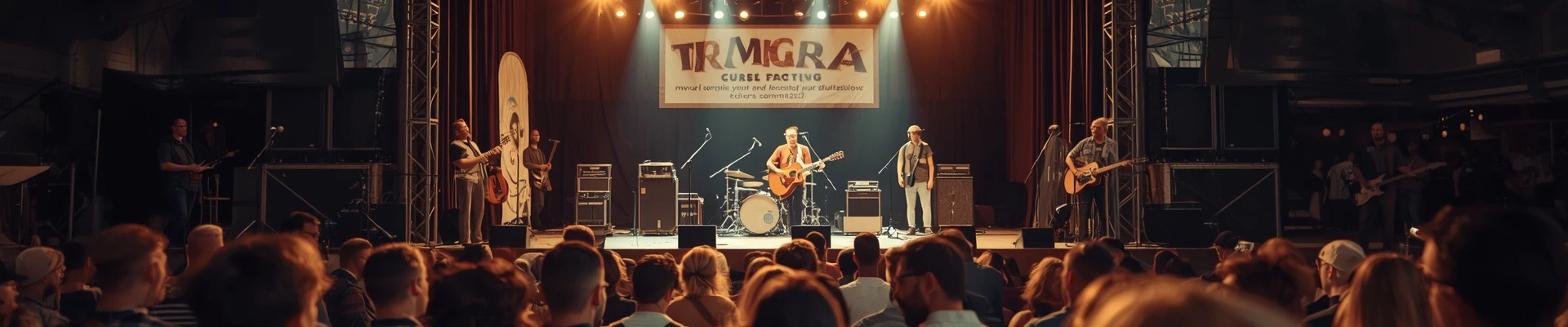
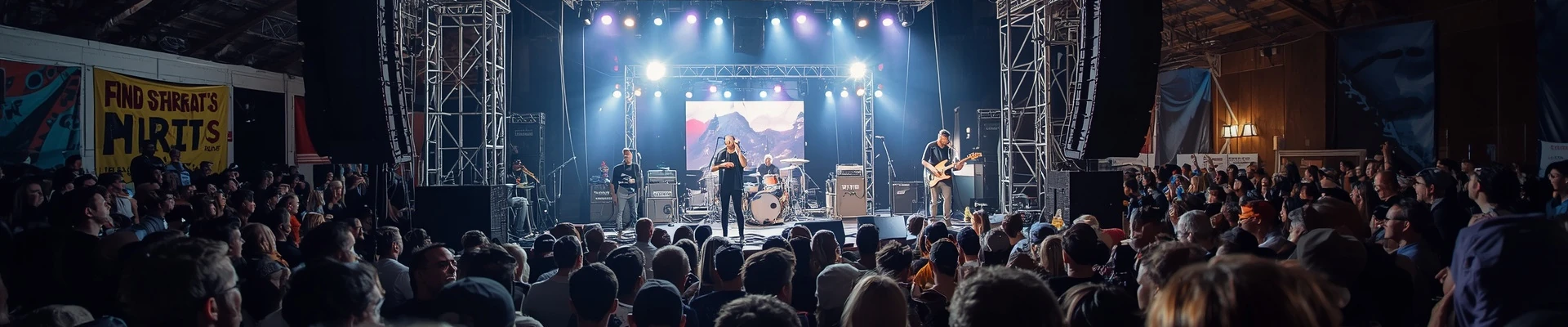
The Blind Tiger — a venue on West Lewis Street that has operated under various guises — became the flagship mid-size independent club for touring and local acts and has remained one of the most reliable indie venues in the Carolinas for decades. Its stage has hosted hundreds of artists in the genre range between singer-songwriter and hard rock, and it functions as the connective tissue between the college-age audience and the broader music economy of the city.
Ziggy's, which operated in Winston-Salem and had a sister presence in the Triad bar circuit, was another significant venue node that supported touring acts throughout the 1990s. The gravitational pull of the nearby Chapel Hill scene — home of Merge Records, Superchunk, Neutral Milk Hotel, and Polyphonic Spree — meant that Greensboro functioned as a stop on the same touring circuits without necessarily producing equivalent national breakout artists, but the audience was real and the clubs were working.
Genres: Metal, Hip-Hop, and the Contemporary Scene
Greensboro developed a credible metal and heavy rock underground beginning in the late 1980s, with bands cycling through the same small clubs that hosted punk acts. The city's working-class, post-industrial neighborhoods to the east and south provided a constituency for heavier sounds, and Greensboro has maintained a consistent presence on the southeastern metal circuit ever since.
Hip-hop arrived via the same tapes and radio signals that transformed every American city in the 1980s, but Greensboro developed its own variant inflected by the HBCU community, the Southern soul tradition, and the particular swagger of the Carolina Piedmont. By the 2000s a local hip-hop scene — producers, MCs, and a small cluster of independent labels — had established itself in the city's East Side neighborhoods. Rapsody, born Marlanna Evans and raised in Snow Hill, NC, studied at NC State but built key professional relationships in the broader North Carolina hip-hop corridor that Greensboro participates in. The broader NC rap tradition — which runs through J. Cole (Fayetteville), DaBaby (Charlotte), and Rapsody — is one that Greensboro feeds with talent, production, and audience even when the headline names are claimed by other cities.
9th Wonder, the Grammy-winning producer from Winston-Salem who spent years on the faculty of NC Central and Duke, is part of the broader Piedmont Triad hip-hop infrastructure. His work with Jay-Z, Kendrick Lamar, Mary J. Blige, and Destiny's Child emerged from a career rooted in the college music programs and independent label ecosystems of the region.
The singer-songwriter Ben Folds spent formative years in Greensboro before attending UNC and eventually forming Ben Folds Five in Chapel Hill. His early Greensboro years — piano lessons, high-school bands, absorbing the eclectic music that flowed through the Triad's clubs — informed the sardonic, classically inflected pop-rock that made "Whatever and Ever Amen" one of the definitive 1990s alt-rock records.
Venues and Neighborhoods
The Blind Tiger anchors the West Lewis Street corridor near downtown, which has evolved into a walkable entertainment district with bars, restaurants, and smaller performance rooms. The nearby Iron Works hosts larger local and regional acts in a converted industrial space. Center Stage (now operating as various venue names after remodeling cycles) has provided a mid-size concert room for national touring acts. The Cone Denim Entertainment Center, a converted mill-building space, has hosted comedy, concerts, and events for the broader Triad market.
The Steven Tanger Center for the Performing Arts, opened in 2021 in the heart of downtown, is a 3,000-seat theatre that has dramatically elevated Greensboro's ability to attract Broadway touring productions, orchestral performances, and mid-size pop and rock acts. Its opening marked a generational investment in the city's performing-arts infrastructure and signals an ambition to compete with Raleigh and Charlotte for the attention of national touring productions.
For the DIY and experimental end of the spectrum, Elsewhere — a bar and multi-level venue complex in the downtown core — has become one of the most interesting mid-size independent spaces in the Carolinas, with a curatorial sensibility that prizes the weird and adventurous. Its record store component and its commitment to local and regional acts make it a genuine community hub rather than just a room for touring bands to play through.
The East Market Street corridor and the South Elm Street district are the two historic entertainment axes of the city, with South Elm having gentrified somewhat around craft breweries, coffee shops, and music-adjacent retail in the 2010s.
Festivals and Events
The Greensboro Music Festival (various incarnations) has cycled through organizational forms over the years, reflecting the challenge that mid-size cities face in sustaining large-scale outdoor events. The city's proximity to Chapel Hill and the I-85 corridor means that major regional festivals — Moogfest (Durham), Hopscotch (Raleigh), the Wide Open Bluegrass festival (Raleigh) — are within driving distance, and Greensboro audiences participate in the broader NC festival ecosystem.
The National Folk Festival held its run in Greensboro from 2015 to 2017, a three-year residency that brought some of the most internationally diverse roots-music programming in the country to downtown's Festival Park. That run — which included performers from dozens of countries representing traditions from Appalachian old-time to West African griot to Tejano conjunto — demonstrated that Greensboro's audience has the appetite for ambitious programming when the infrastructure is in place.
UNCG's School of Music, Theatre and Dance produces an ongoing stream of classical, jazz, and experimental performances that are open to the public throughout the academic year, and the school's jazz studies program in particular has produced working musicians who have contributed to the regional scene.
What Ties It Together
Greensboro is not a city with a single, nationally exported sound — it is a city with multiple overlapping musical identities that have coexisted, borrowed from each other, and periodically collided across more than a century of making music in the North Carolina Piedmont. What unifies them is a particular quality of tenacity: the Charlie Poole sessions cut in the Depression-era mill economy; the NC A&T marching band drilling in the shadow of the sit-in movement; the Blind Tiger keeping the doors open through economic cycles that have shuttered comparable venues across the South; the hip-hop producers building careers inside a university system that gave them infrastructure when the industry would not. Greensboro has always made music the way it has done most things — with more seriousness of purpose than its size would seem to require, and with a quiet conviction that what happens here matters even when no one in New York or Los Angeles is paying close attention.