
Raleigh is the capital of North Carolina and the 23rd-largest city in the United States, with roughly 482,000 residents inside the city limits and more than 1.4 million across the Raleigh–Durham–Chapel Hill metropolitan area known as the Research Triangle — one of the fastest-growing metros in the United States. Sitting on the rolling Piedmont plateau about 200 km inland from the Atlantic coast, Raleigh is home to North Carolina State University and sits within a 30-minute drive of Duke University (Durham) and the University of North Carolina at Chapel Hill — a concentration of research universities that has made the Triangle one of the most educated and fastest-growing metropolitan areas in the country. Raleigh's musical identity reflects that university-driven character: a serious indie rock, alternative, and punk scene anchored by the Chapel Hill sound of the 1990s; a deep bluegrass, old-time, and Appalachian roots tradition fed by the surrounding Carolina Piedmont; a growing modern hip-hop scene tied to the broader North Carolina rap tradition; and a thriving contemporary classical and jazz ecosystem fed by the university music programs.
A brief history
The land in the Carolina Piedmont was Tuscarora, Sissipahaw, and Occaneechi territory before British colonists arrived in the late 17th century. Raleigh was established as North Carolina's capital in 1792 — one of the first planned state capitals in the United States — and laid out on a grid centred on the State Capitol building. Through the 19th century the city grew slowly as a state-government and railroad hub; the founding of North Carolina State College (now NC State) in 1887 and the growth of the textile and tobacco industries through the early 20th century built the modern city. The post-World War II establishment of Research Triangle Park in 1959 — a planned research campus between Raleigh, Durham, and Chapel Hill that attracted IBM, GlaxoSmithKline, Cisco, and dozens of other major corporations — triggered the explosive growth that has continued into the 21st century. Successive waves of migration — Black Southerners throughout the 20th century, a large Hispanic (primarily Mexican and Central American) population since the 1990s, and a steady stream of tech-sector relocations from the Northeast and California — have built a city that is roughly 29% Black and 12% Hispanic and growing rapidly.
Music identity
Raleigh's most internationally famous musical chapter is the Chapel Hill indie rock scene of the early-to-mid 1990s — which, while centred 25 km west in Chapel Hill and Durham, ran continuously through Raleigh venues and clubs and is functionally a Triangle-wide achievement. Superchunk, formed in Chapel Hill in 1989 by Mac McCaughan and Laura Ballance, became one of the most acclaimed American indie rock bands of the era and founded Merge Records — which went on to sign Neutral Milk Hotel, Arcade Fire, Spoon, Lambchop, Crooked Fingers, and dozens of other consequential acts and is now considered one of the most important independent labels in American music. Polvo, Archers of Loaf, Zen Frisbee, Metal Flake Mother, the Backsliders, Whiskeytown (Ryan Adams's country-punk precursor, based in Raleigh), Southern Culture on the Skids (SCOTS, Chapel Hill), and a generation of mid-1990s Triangle bands were part of one of the most consequential regional indie scenes in American history. Ryan Adams, raised in Jacksonville, North Carolina but based in Raleigh through his Whiskeytown years (1994–2000), built one of the most acclaimed Americana and rock catalogues of the 2000s.
Raleigh also produced Ben Folds Five, formed in Chapel Hill in 1993 by Ben Folds, Robert Sledge, and Darren Jessee. Whatever and Ever Amen (1997) and the single "Brick" made them one of the most commercially successful alternative acts of the late 1990s. Squirrel Nut Zippers, the retro-swing and jazz band formed in Chapel Hill in 1993, built a major national following and a Gold-certified album (Hot, 1996) from the Triangle. The Avett Brothers, while based in Concord and Charlotte, are part of the broader North Carolina roots tradition that runs through Raleigh constantly. Hiss Golden Messenger (M.C. Taylor), the Durham-based Americana and soul act, and a deep current Raleigh–Durham indie scene continue the lineage.
Raleigh's hip-hop lineage connects to the broader North Carolina rap tradition. J. Cole (Jermaine Lamarr Cole) was born in Frankfurt, Germany but raised in Fayetteville, North Carolina, about 80 km south of Raleigh; he attended St. John's University in New York but maintains deep ties to the Fayetteville–Raleigh corridor and founded Dreamville Records in Raleigh's Dreamville neighbourhood. Dreamville Records — home of J. Cole, Bas, Omen, Cozz, Earthgang, Ari Lennox, Lute, JID, Interlude, and a rotating roster of critically acclaimed artists — is one of the most respected hip-hop labels of the current era, with its annual Dreamville Festival at Dorothea Dix Park becoming one of the largest hip-hop festivals in the Southeast. Little Brother (Phonte Coleman and Rapper Big Pooh), the Durham hip-hop duo, built one of the most acclaimed underground hip-hop catalogues of the 2000s. Petey Pablo (Moses Barrett III), raised in Moyock, North Carolina but a constant Raleigh presence, broke nationally with "Raise Up" (2001). Rapsody (Marlanna Evans), raised in Snow Hill, North Carolina and UNC-educated, has built one of the most acclaimed women's hip-hop catalogues of the past decade. EARTHGANG (Johnny Venus and Doctur Dot), the Atlanta-based Dreamville duo, are deeply tied to the North Carolina circuit. A current generation of Raleigh trap and indie hip-hop artists continues to build.
The bluegrass and old-time tradition runs continuously through Raleigh and the broader Piedmont. The North Carolina Bluegrass & Old-Time Fiddlers Convention at Union Grove (two hours northwest) draws musicians from across the state. Doc Watson, the Deep Gap guitar virtuoso, played Raleigh constantly throughout his career. The Raleigh area has a deep old-time and string-band scene through the Swamp Gravy and Chatham Rabbits orbit and a thriving weekly jam and session culture at venues like Berkeley Cafe and Pour House Music Hall. North Carolina Roots — the broader state tradition of bluegrass, gospel, country, and Appalachian old-time — feeds the Raleigh scene continuously.
Venues and neighborhoods
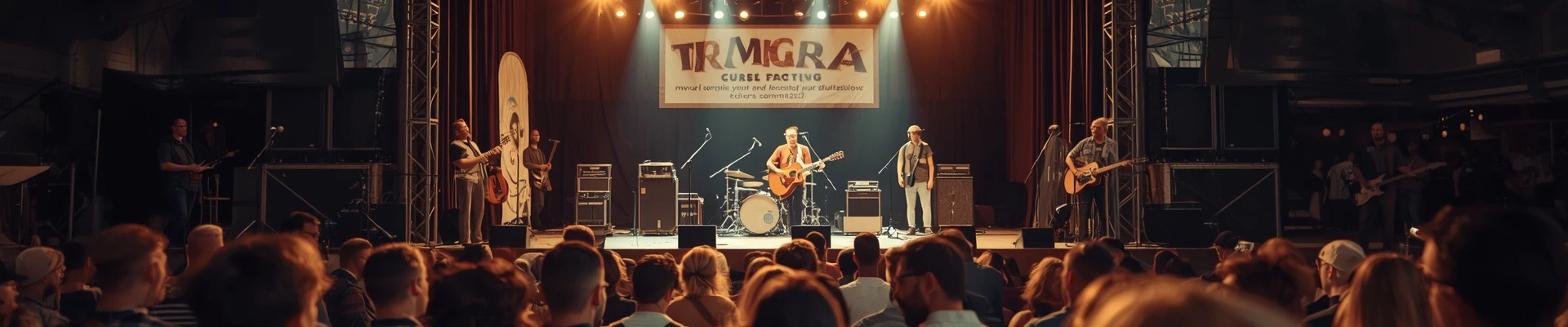
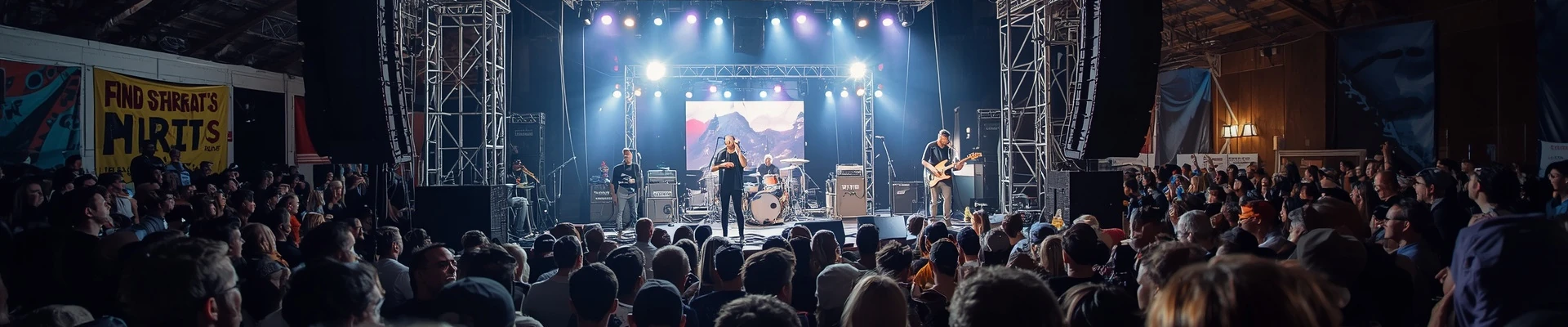
Raleigh's venue ecosystem is well-developed. At the top sit the PNC Arena (home of the Hurricanes and NC State Wolfpack, and the city's largest indoor concerts), the Coastal Credit Union Music Park at Walnut Creek (the 20,000-capacity outdoor amphitheater, one of the busiest in the Southeast), the Duke Energy Center for the Performing Arts (housing the Meymandi Concert Hall — home of the North Carolina Symphony — the Raleigh Memorial Auditorium, the Fletcher Opera Theater, and the Kennedy Theater), and the Red Hat Amphitheater (the 5,900-capacity outdoor venue in downtown Raleigh). The midsize tier includes the Lincoln Theatre (the long-running downtown rock and alternative venue), Cat's Cradle in nearby Carrboro (one of the most beloved mid-size venues in the South, the spiritual home of the Chapel Hill indie scene since 1969), the Motorco Music Hall in Durham, and Local 506 in Chapel Hill. Beneath them is a deep club layer — Pour House Music Hall (the long-running South Street venue), The Ritz, Slim's Downtown, Deep South the Bar, Legends Nightclub, The Rockford, Neptunes Parlour, and a network of bars and DIY rooms across downtown Raleigh, Glenwood South, Five Points, Hillsborough Street, and the Warehouse District. Cat's Cradle in Carrboro (functionally part of the Raleigh-area concert market) and the Pinhook in Durham anchor the broader Triangle club circuit.
Different neighborhoods carry different musical identities. Downtown Raleigh and Glenwood South anchor the bar, pop, and larger-venue circuits. Hillsborough Street supports the college and student scenes near NC State. Five Points and the Warehouse District anchor the indie rock and arts scenes. South Raleigh anchors the Black music and hip-hop traditions. East Raleigh supports the growing Hispanic music scene. Durham (25 km west) anchors a complementary hip-hop (Little Brother, Dreamville) and indie music scene through Motorco and the Pinhook. Chapel Hill and Carrboro (30 km west) anchor the foundational indie rock scene through Cat's Cradle, Local 506, and the broader Chapel Hill sound legacy.
Festivals and signature events
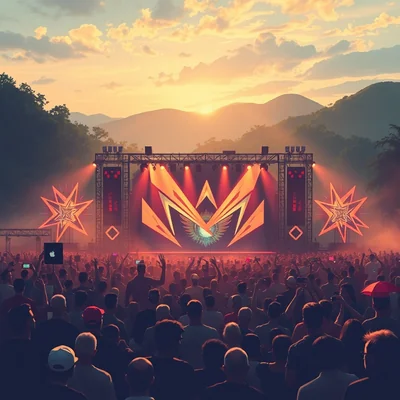
The festival calendar reflects the city's range. Dreamville Festival at Dorothea Dix Park each April, founded in 2019 and organized by J. Cole and Interscope Records, has become one of the most important hip-hop festivals in the Southeast, drawing major headliners and a Dreamville-centred lineup. Hopscotch Music Festival in downtown Raleigh each September is one of the most respected indie and underground festival in the Southeast, programming across 20+ venues for three days. Wide Open Bluegrass (the IBMA World of Bluegrass festival, held in Raleigh since 2013 after moving from Nashville) is the world's most important bluegrass industry event, turning downtown Raleigh into a bluegrass festival for a week each September. North Carolina State Fair at the State Fairgrounds each October programs major country, pop, and rock acts at Dorton Arena and the Grandstand. Artsplosure Spring Arts Festival, MoogFest (the electronic music and technology festival, held in Durham), IBMA Bluegrass Live! outdoor free shows, Raleigh Pride, Fiesta del Pueblo (one of the largest Hispanic heritage festivals in the Southeast, held at the State Fairgrounds each September), African American Cultural Festival of Raleigh, Korean Cultural Festival, and the North Carolina Symphony's outdoor Summerfest season round out the calendar.
What ties it all together is the city's combination of fast growth, university density, and a North Carolina musical heritage that runs from Appalachian old-time through Chapel Hill indie rock to Dreamville hip-hop. Raleigh is the city where Superchunk and Merge Records put the Carolina Piedmont on the indie map, where Whiskeytown gave Ryan Adams his first major platform, where Ben Folds and Squirrel Nut Zippers came out of the Chapel Hill scene, where J. Cole built Dreamville Records in his hometown neighbourhood, where the IBMA turns downtown Raleigh into the world capital of bluegrass each September, and where Hopscotch has been programming the best underground touring acts in a downtown parking lot since 2010.