
Cleveland is the second-largest city in Ohio and the 53rd-largest in the United States, with roughly 365,000 residents inside the city limits and more than 2.0 million across the surrounding metropolitan area. Sitting on the southern shore of Lake Erie at the mouth of the Cuyahoga River in northeastern Ohio, the city is the financial, medical, and cultural capital of Northeast Ohio and one of the most musically consequential cities in American popular culture. Cleveland is the home of the Rock and Roll Hall of Fame and Museum (which opened on the Lake Erie waterfront in 1995 as the world's preeminent rock music institution, sited in Cleveland because the city was where DJ Alan Freed coined the term "rock and roll" in 1951), the Cleveland Orchestra (one of the "Big Five" American orchestras and widely regarded as one of the finest in the world), the Cleveland Clinic (one of the most prestigious hospitals in America), the Cleveland Museum of Art (with one of the most important art collections in the country), and Case Western Reserve University. The city was once one of the great American industrial powerhouses — the home of John D. Rockefeller's Standard Oil, of the steel mills that lined the Cuyahoga, and of the immigrant communities (Irish, German, Polish, Slovenian, Czech, Hungarian, Italian, Lebanese, Greek, and Black Southerners arriving during the Great Migration) who built modern Cleveland's distinctive musical character. Cleveland is roughly 48% Black and 13% Hispanic.
A brief history
The land at the mouth of the Cuyahoga was Erie and later Iroquois territory before American settlers arrived in the late 18th century. General Moses Cleaveland of the Connecticut Land Company surveyed the future city site in 1796 (the "a" was later dropped from the city's name for typographical convenience). Through the 19th century Cleveland grew as a Great Lakes shipping and manufacturing centre — the Erie Canal's 1832 completion and the railroad boom turned Cleveland into a major industrial hub. John D. Rockefeller founded Standard Oil here in 1870, building one of the great American fortunes. The 20th century saw waves of immigration build the ethnic neighborhoods that defined Cleveland — Slavic Village, Little Italy, Asia Town, the Hungarian Buckeye-Shaker neighborhood, and the Polish Slavic Village. The Great Migration brought hundreds of thousands of Black Southerners to Cleveland's east side. The 1969 Cuyahoga River fire (one of at least 13 fires on the heavily polluted river over the previous century, but the one that captured national attention) became a defining symbol of American urban environmental decay and helped spark the Clean Water Act. Through the late 20th century Cleveland's industrial decline, urban depopulation, and racial segregation reshaped the city; the 1990s and 2000s downtown redevelopment (Rock Hall, Jacobs Field/Progressive Field, Gund Arena/Rocket Mortgage FieldHouse) anchored a partial revival.
Music identity
Cleveland's most internationally famous musical claim is that it is the city where rock and roll was named. Alan Freed, the legendary DJ at WJW-AM, began calling rhythm and blues records "rock and roll" on his radio show in 1951 and organized the Moondog Coronation Ball at the Cleveland Arena on March 21, 1952 — widely regarded as the first major rock and roll concert (it was famously cancelled mid-show after 20,000 fans tried to enter a 10,000-capacity venue, ending in a near-riot). This Cleveland origin is why the Rock and Roll Hall of Fame was sited here in 1995, designed by I.M. Pei on the Lake Erie waterfront. The Hall has anchored Cleveland's musical identity ever since, hosting the annual induction ceremony and drawing over 600,000 visitors a year.
Beyond the Hall, Cleveland has produced extraordinary musicians across nearly every American popular genre. The James Gang (the late-1960s and early-1970s rock band that launched Joe Walsh's career before he joined the Eagles) was Cleveland-formed. Pere Ubu (the influential post-punk and avant-garde rock band led by David Thomas, formed in 1975 from the ashes of the legendary proto-punk band Rocket from the Tombs — alongside Peter Laughner and Stiv Bators, who would go on to form Dead Boys) helped invent post-punk. The Dead Boys (one of the foundational late-1970s American punk bands, who relocated to New York's CBGB) emerged from Cleveland. Pere Ubu, The Pagans, The Cramps (formed in Sacramento but with deep Akron-Kent State roots), Devo (from nearby Akron, but tightly tied to Cleveland's punk scene), and the broader Cleveland punk and post-punk scene of the mid-1970s are foundational to American underground rock.
Nine Inch Nails is Cleveland's most internationally famous contemporary musical export. Trent Reznor built Nine Inch Nails out of Cleveland in the late 1980s, working at Right Track Studios as a janitor and recording demos that became 1989's Pretty Hate Machine — one of the foundational industrial rock albums and the launching point for one of the most influential American careers in rock since 1990. Reznor relocated production to Le Pig studio in New Orleans in the 1990s, but Cleveland remains essential to the NIN origin story.
Cleveland's R&B and soul tradition is deep. The O'Jays (the Philadelphia International Records soul trio whose hits "Love Train," "Backstabbers," and "For the Love of Money" defined 1970s Philly soul) are Canton-formed but Cleveland-based throughout most of their career. Bobby Womack (the Cleveland-born soul singer-songwriter and guitarist whose decades-long career included writing "It's All Over Now" for the Rolling Stones, "Across 110th Street," and a string of solo hits), The Isley Brothers (Cincinnati-formed but with deep Cleveland connections), Bone Thugs-n-Harmony (the Cleveland-formed hip-hop quintet whose 1995 E. 1999 Eternal and the Eazy-E tribute "Tha Crossroads" made them one of the best-selling hip-hop groups of the 1990s), Kid Cudi (the Cleveland-raised hip-hop and alt-rap pioneer whose 2009 Man on the Moon shaped a generation of emo-rap), MGK (Machine Gun Kelly) (the Cleveland-raised rapper and pop-punk crossover artist), and Stalley all root the city's hip-hop and R&B legacy.
The Cleveland Orchestra at Severance Hall (one of the most acoustically celebrated concert halls in America, opened in 1931 in University Circle, and the orchestra's home since) is one of the great American orchestras, with a residency at the Blossom Music Center in nearby Cuyahoga Falls each summer. The Cleveland Institute of Music trains world-class classical musicians.
The city's polka tradition runs through the legendary Slovenian-American community on Cleveland's east side. Frankie Yankovic (the "Polka King") built his career in Cleveland and made the city the centre of American Slovenian polka music for decades. The annual Polka Hall of Fame Awards ceremony is held in the city.
Venues and neighborhoods
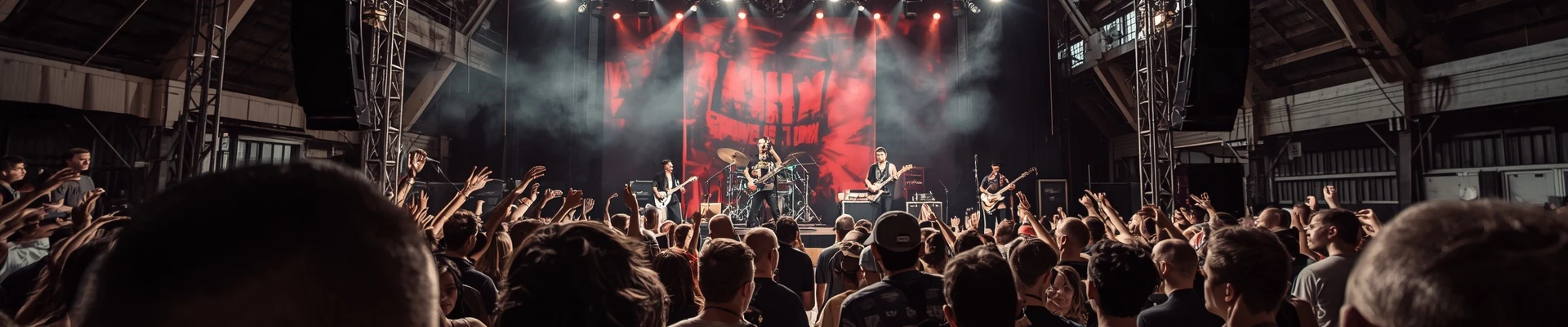
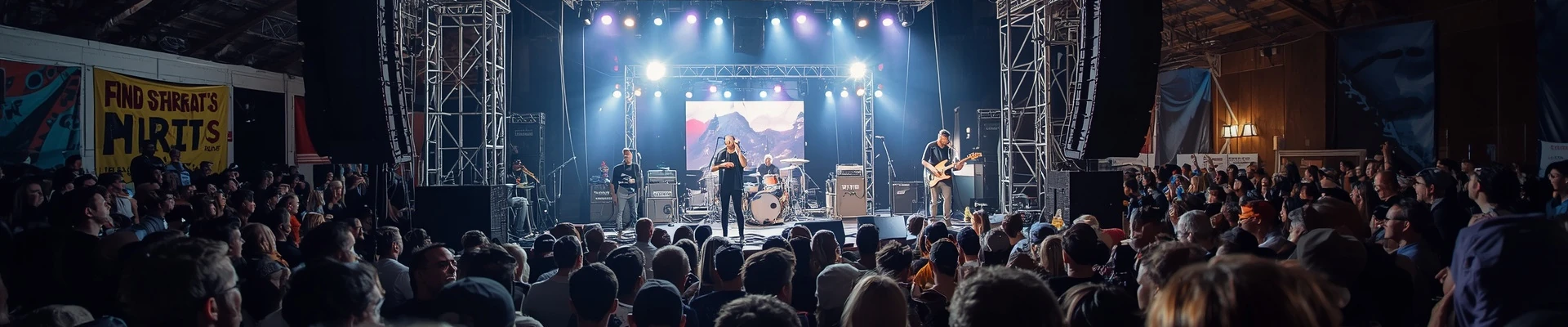
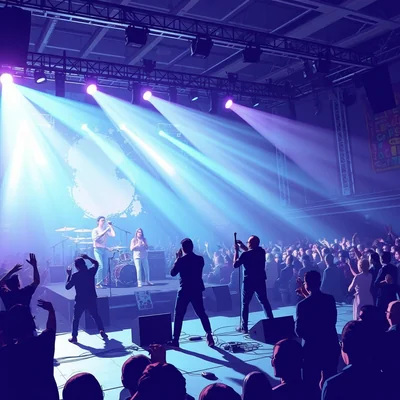
Cleveland's venue ecosystem is one of the most developed in the Midwest. At the top sit Rocket Mortgage FieldHouse (the 19,000-capacity downtown arena, home of the NBA Cavaliers and the city's largest concerts), Progressive Field (the MLB Guardians' ballpark, hosting the largest stadium tours), the State Theatre (a 3,200-capacity restored 1921 movie palace in the Playhouse Square complex — Playhouse Square is the largest performing arts centre in the United States outside New York), the Connor Palace, the Mimi Ohio Theatre, and Severance Hall (the Cleveland Orchestra's home). The midsize tier includes the Agora Theatre and Ballroom (the legendary 2,000-capacity venue, in operation since 1966 and one of the most historically important rock venues in America — Bruce Springsteen's 1978 Live at the Agora performance is among the most celebrated bootlegs in rock history), the Beachland Ballroom and Tavern in the Collinwood neighborhood (one of the most beloved indie rock venues in the Midwest), the Grog Shop in Coventry/Cleveland Heights, House of Blues Cleveland, and the Music Box Supper Club. Beneath them is a deep club layer running through Ohio City, Tremont, Detroit-Shoreway (the Gordon Square Arts District), and East 4th Street in downtown — including Mahall's 20 Lanes in nearby Lakewood, The Happy Dog in Detroit-Shoreway, and a network of bars and DIY spaces.
Different neighborhoods carry different musical identities. Downtown Cleveland (around the Rock Hall and Playhouse Square) anchors the major venue circuit. Ohio City and Tremont anchor the bohemian indie and craft-bar scene. East 4th Street anchors the entertainment district. Detroit-Shoreway/Gordon Square anchors the contemporary indie arts circuit. Collinwood anchors the Beachland Ballroom and the Slavic-immigrant music heritage. University Circle anchors the classical and arts institutional circuit. Slavic Village anchors the Polish polka heritage. Cleveland's east side (Hough, Glenville, Mount Pleasant) anchors the Black music tradition.
Festivals and signature events
The festival calendar reflects the city's range. Rock and Roll Hall of Fame Induction Ceremony (held in Cleveland in alternate years, the most consequential annual rock event in America), Cleveland International Film Festival's music programming, Tri-C JazzFest (the long-running jazz festival programmed by Cuyahoga Community College), Brite Winter Festival (the winter outdoor music festival in Ohio City), Ingenuity Cleveland, Cleveland Asian Festival, Cleveland Pride, Larchmere Porchfest, Slovenian Sausage Festival's polka programming, Cleveland Greek Festival, Cleveland Polish Festival, Wade Oval Wednesdays at University Circle, and the Cleveland Orchestra's summer Blossom Festival at Blossom Music Center round out the calendar. Burning River Fest programs Lake Erie waterfront music. WaterFire Cleveland programs music alongside river-fire installations. Wonderstruck is a major contemporary music festival.
What ties it all together is Cleveland's role as the city where rock and roll got its name and where the Rock and Roll Hall of Fame anchors its memory — combined with a deep, distinctive music ecosystem rooted in Slavic immigrant communities, Great Migration Black culture, post-industrial punk, and one of America's great orchestras. Cleveland is the city where Alan Freed coined "rock and roll" in 1951 and where the Moondog Coronation Ball became its near-riot baptism in 1952, where the James Gang launched Joe Walsh, where Pere Ubu and the Dead Boys reshaped American underground rock, where Trent Reznor built Nine Inch Nails as a janitor at Right Track Studios, where Bone Thugs-n-Harmony made Cleveland a hip-hop city, where Kid Cudi shaped 2010s emo-rap, and where the Cleveland Orchestra at Severance Hall continues to anchor one of the great American classical music institutions.