
Toledo sits at the mouth of the Maumee River where it empties into the western basin of Lake Erie, anchoring the northwest corner of Ohio about 60 miles south of Detroit and 110 miles west of Cleveland. It is the fourth-largest city in Ohio — though it has shed nearly half its population since its 1950 peak of 300,000 — and the center of a metropolitan area of roughly 600,000 people spread across Lucas and Wood counties. The city's economy was built on glass manufacturing (the Owens-Illinois and Owens-Corning empires were born here), auto parts supply, and the port trade along the Maumee; all three sectors have contracted since the 1970s, leaving Toledo in the postindustrial Rust Belt category alongside Youngstown, Flint, and Gary. But Toledo has a musical pedigree that few cities of its size can match — anchored by two artists who rank among the most important musicians America has produced in the 20th century.
A brief history
The land at the Maumee's mouth was contested before Europeans arrived. The Ottawa, Wyandot, and Potawatomi nations held the river valley when British and French traders established the portage route linking the Great Lakes to the Ohio River system in the 17th century. American settlement accelerated after the War of 1812, and a brief but comically bloodless conflict — the Toledo War of 1835 — pitted Ohio and Michigan in a boundary dispute over the Maumee strip, settled in Ohio's favor by Congress. Toledo incorporated in 1837 and grew rapidly as a canal terminus: the Miami and Erie Canal connected the Maumee to Cincinnati, and Toledo became one of the great grain-shipping ports of the inland midwest.
The late 19th century brought the glass industry. Edward Drummond Libbey relocated his New England Glass Company to Toledo in 1888, drawn by cheap natural gas and Maumee Valley silica sand, and built what became the Libbey Glass empire. Michael Owens, a Libbey glassblower from West Virginia, invented the automated glass-blowing machine in 1903 — a mechanical achievement that effectively industrialized glass production worldwide. By 1920 Toledo produced nearly half of all the flat glass in the United States, earning the city its permanent moniker: the Glass City.
The 20th century brought the auto industry's supply chain (Jeep assembled in Toledo; Champion Spark Plug headquartered here), a militant labor movement anchored by the Auto-Lite Strike of 1934 — one of the pivotal labor battles of the New Deal era — and the Great Migration north, which brought Black workers from the Deep South into Toledo's Birmingham neighborhood and the Junction area on the east side. That migration seeded the jazz and blues scenes from which Toledo's most important musical figure would emerge.
Music identity
Art Tatum was born in Toledo on October 13, 1909, and grew up in the city's east side community. He was nearly blind from birth — a cataract-related condition left him with only partial vision in one eye — and learned piano in Toledo churches, clubs, and social halls before leaving for New York in the early 1930s. What Tatum achieved in the following three decades reshaped the entire concept of jazz piano: an almost inhuman technical facility (Oscar Peterson called him "the most gifted musician I have ever heard"), harmonic sophistication decades ahead of its time, and an improvisational daring that influenced not just jazz pianists but bebop architects like Charlie Parker and Dizzy Gillespie, who cited Tatum as a decisive influence. Tatum died in Los Angeles in 1956, but Toledo claims him as its most important artistic son — a plaque marks the east-side neighborhood where he grew up, and the Art Tatum Jazz Heritage Award is given annually at the Toledo Jazz & Blues Festival. His hometown remains genuinely proud, if sometimes uncertain how to fully honor an artist of his stature.
Chrissie Hynde is Toledo's other world-historical musical contribution. Born in Akron, Ohio, in 1951, Hynde is often claimed equally by Akron — but she grew up partly in suburban Toledo and spent her formative years absorbing the Detroit and Cleveland rock radio that saturated northwest Ohio before moving to London in 1973 to form The Pretenders. Pretenders (1980) and Pretenders II (1981) are among the great albums of the British new wave era, and Hynde's guitar work and vocal persona established a template for women in rock that reverberated through the following four decades. She is technically an Akron/Toledo borderline figure, but her Ohio formation is inseparable from the radio culture of the Toledo-Cleveland-Detroit triangle.
The Toledo rock scene has its own distinct lineage. Devo — the foundational post-punk and art-rock band — is from Akron, but their Akron-Cleveland-Toledo triangle of Ohio rock culture is indivisible. Toledo's own contribution to the 1970s and 1980s rock circuit came through bands that played the local club circuit before the scene collapsed: the Agora Ballroom on the Maumee strip was a key stop on the Midwest touring circuit in the 1970s, bringing arena acts through Toledo on their way between Detroit and Cleveland. Glass City Festival and the late-1970s punk and new wave scenes in downtown clubs gave Toledo its own moment in the post-punk transition.
Toledo has also produced Stacy Andrews and the roots gospel tradition centered in the east side Black churches — a tradition that fed directly into the jazz and R&B scenes of the mid-20th century. The Greater Toledo Urban League and the east-side community institutions sustained an African American cultural life that included music education, church choral programs, and a network of jazz clubs and social halls that are now largely gone but whose influence is still traceable in the city's musical DNA.
Hip-hop in Toledo emerged in the 1990s and 2000s from the east side and the Junction, with local artists building scenes around clubs like The Venue, Ottawa Tavern, and a series of downtown spots that have cycled through the years. The Toledo rap scene has never achieved national breakout status, but it has sustained a productive underground tradition, with artists like King Louie (not the Chicago rapper) and a network of local producers contributing to the regional mixtape and streaming ecosystem.
Blues and soul run through Toledo's musical story in ways that don't always get national attention. The Blues on the Maumee tradition — informal jam sessions and blues clubs along the river — sustained a scene from the 1950s through the 1980s. Ottawa Hills and the Junction neighborhoods carried the Black music tradition through the civil rights era, and Toledo's position halfway between Detroit and Cincinnati meant that soul and R&B acts on the Chitlin' Circuit moved through regularly.
Venues and neighborhoods
Toledo's flagship large venue is the Huntington Center — an 8,000-seat multipurpose arena in downtown, home of the ECHL's Toledo Walleye and the primary destination for major touring acts. The Toledo Museum of Art Peristyle — a stunning Greek Revival concert hall inside one of America's great regional art museums — hosts the Toledo Symphony Orchestra and classical chamber performances in a jewel-box acoustic space that rivals anything in the state. The Valentine Theatre in downtown (reopened after restoration in 1999) is the city's 1,600-seat performing arts anchor for touring Broadway, dance, and classical acts.
The club tier runs through a network of downtown and neighborhood venues: The Ottawa Tavern in Old West End, The Venue, The Rusty Nail, Club Bijou, and the perennial workhorses of the local rock and indie scene. Franklinton and the Arts Commission of Greater Toledo programming have extended live music into gallery and outdoor spaces. The Tony Packo's chain (made famous by M*A*S*H's Corporal Klinger, who was always longing for Toledo's famous Hungarian hot dogs) is not a music venue but is the city's most recognizable cultural export after Tatum and Hynde.
The Warehouse District in downtown has been the primary zone of nightlife development in the 21st century — a pattern familiar from postindustrial Rust Belt cities, where old industrial buildings become event spaces and bars as manufacturing departs. Maumee and Sylvania in the suburbs carry the mainstream suburban entertainment corridor. The Old West End neighborhood — Toledo's Gilded Age mansions, one of the most intact Victorian residential districts in the Midwest — hosts the annual Old West End Festival, which includes a music component alongside the neighborhood's historic home tours.
Festivals and signature events
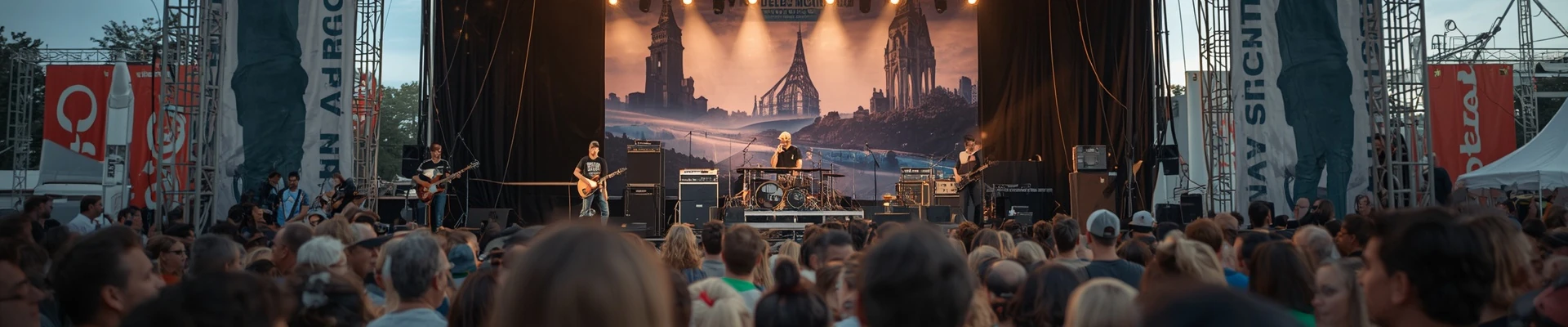
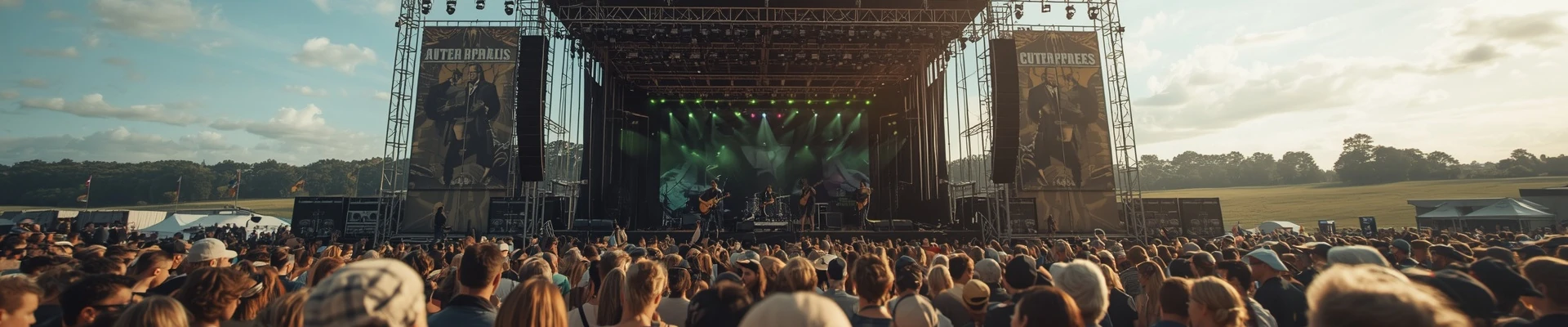
Toledo Jazz & Blues Festival — held each summer at the International Park along the Maumee River — is the city's most important music event and the occasion for the Art Tatum Jazz Heritage Award. The festival draws regional and national jazz and blues acts and anchors Toledo's claim to its jazz heritage. Jeep Fest — an annual celebration of the Jeep brand, which has been assembled in Toledo since 1941 — draws tens of thousands of Jeep enthusiasts and includes a significant outdoor concert component. Crosby Festival of the Arts in Ottawa Park is the city's flagship outdoor arts festival, with a music stage programming local and regional acts. Toledo Brewfest and various summer riverfront programming continue the tradition of outdoor civic music events along the Maumee.
Glass City Marathon weekend includes a music-on-the-course component, and various neighborhood festivals — Sylvania Summerfest, Maumee Valley Days — add to the summer calendar of outdoor live music in the Toledo metro.
What ties it together
Toledo is a city where the greatest jazz pianist in American history learned to play in east-side churches; where one of rock's most formidable singer-guitarists absorbed Ohio's radio culture before leaving for London; where the Glass City's industrial prosperity built institutions — the Toledo Museum of Art, the Toledo Symphony, the Valentine Theatre — that sustain a serious musical infrastructure even as the manufacturing economy that funded them has contracted. The Maumee River and Lake Erie define Toledo's geography and its working-class character, and the music that has emerged here carries that character: technically sophisticated, emotionally direct, and rooted in the labor and community life of a city that knows it matters more than the national press has bothered to acknowledge.