






Lawton is the third-largest city in Oklahoma, with a population of roughly 97,000 within the city limits — though the broader Lawton–Fort Sill metropolitan area adds a substantial military-dependent population that swells the economic footprint considerably. The city sits in the Comanche County seat in southwest Oklahoma, about 130 kilometres (80 miles) southwest of Oklahoma City and 175 kilometres (110 miles) north of the Texas border. To the northwest of the city rise the Wichita Mountains, a genuinely ancient range of granite peaks and boulders — among the oldest exposed rock formations in North America — that form the centrepiece of the Wichita Mountains Wildlife Refuge, home to bison, elk, longhorn cattle, and prairie dog towns. Lawton was founded in a single day in 1901 during one of the last Oklahoma land lotteries and grew up entirely alongside Fort Sill, the massive U.S. Army installation that has defined the city's character, economy, and culture for more than 125 years. Today, Fort Sill is home to the Army Field Artillery School and the 428th Field Artillery Brigade, and it remains one of the most economically important military installations in the American interior.
History and character
The land around Lawton was Comanche, Kiowa, and Apache territory for generations — the southern plains were the Comancheria, the heartland of the Comanche Nation's power and reach. Fort Sill was established in 1869 by General Philip Sheridan as a base for the campaign against the southern plains tribes, and it became the site of the imprisonment of Geronimo, the Apache leader who spent his final years at Fort Sill and is buried in the post's Apache prisoner-of-war cemetery. The Comanche Nation remains headquartered in Lawton to this day, with tribal offices, cultural programmes, and the Comanche Nation Casino anchoring Indigenous presence and economic activity in the city. The Kiowa Tribe and Apache Tribe of Oklahoma are also federally recognised nations centred in Comanche County and neighbouring counties, making the Lawton area one of the most significant concentrations of Native American nations in Oklahoma.
The 1901 land lottery established Lawton overnight as a planned townsite, and the city grew rapidly through the early 20th century as Fort Sill expanded. Cameron University — founded in 1908 as the Cameron State School of Agriculture, now a comprehensive regional university with about 11,000 students — has been a steady cultural anchor. The military economy has always been the dominant driver: when Fort Sill expands or contracts, Lawton expands or contracts with it. The Base Realignment and Closure (BRAC) processes of the 1990s and 2000s have added and subtracted missions over the decades, but Fort Sill has remained one of the larger installations in the country.
Music identity
Lawton's music scene is shaped by three overlapping forces that don't exist in quite the same combination anywhere else in Oklahoma: the transient military culture of Fort Sill, the Native American musical traditions of the Comanche, Kiowa, and Apache nations, and the working-class country and rock culture of southwest Oklahoma.
The most internationally consequential musical connection to Lawton is Wayne Coyne, the lead singer and creative force behind The Flaming Lips — one of the most critically acclaimed and genuinely strange rock bands in American history. Coyne grew up in Oklahoma City, but the Flaming Lips formed in Oklahoma City and their sonic universe is deeply Oklahoman. More directly Lawton-rooted is the lineage of country and rock acts that have passed through the Fort Sill circuit. Military towns have a specific live music ecology: bars near the base gate, clubs oriented around soldiers with disposable income and a high tolerance for loud music, and a constant churn of young musicians from all over the country cycling through for training. This produces a live music scene that is energetic and varied in ways that purely civilian cities of similar size rarely match.
The Native American musical tradition in the Lawton area runs deep. The Comanche Nation has sustained powwow culture as one of the living musical and ceremonial forms of the southern plains — the drum, the song, and the dance. The American Indian Exposition (held in nearby Anadarko, the "Indian Capital of the Nation," 65 kilometres northeast of Lawton) is one of the most important annual gatherings of Native American nations in the United States, and the Lawton area feeds into that tradition. Comanche singer-songwriter traditions have also connected with the broader Americana and roots scene: Oklahoma has produced a continuous thread of Native artists engaging with country and folk forms, from the legacy of Woody Guthrie (the Okemah-born folk pioneer who is the patron saint of Oklahoma music) across to contemporary Native singer-songwriters.
Oklahoma more broadly has been a fertile music state. Tulsa produced the Tulsa Sound — the country-soul hybrid pioneered by J.J. Cale, Leon Russell, Eric Clapton (who recorded much of his Slowhand album in Tulsa studios), Tom Petty (who worked extensively with Tulsa musicians), and David Gates of Bread. Oklahoma City has produced an active indie and alternative rock scene. Lawton sits at the southwestern edge of this musical Oklahoma ecosystem, a city that has sent artists through the system and received touring acts, but has not generated a distinctive exportable sound of its own — which is honest. Its music identity is more about the live experience, the club scene near Fort Sill, and the cultural convergence of Native, military, and working-class Oklahoman traditions.
Gospel is significant in Lawton. The Black community — approximately 22% of the city's population — sustains a substantial gospel tradition running through churches on the east side of the city. Blues runs through the same community, connecting Lawton to the broader Oklahoma and Texas blues tradition. Tejano and regional Mexican music serve the Latino community (roughly 22% of the population), with norteño and banda programming in clubs and at community events. Fort Sill's soldiers bring musical traditions from across the United States and, with international training programmes, from around the world.
Cameron University provides a classical and jazz anchor — the Cameron University music department runs concert bands, jazz ensembles, and recital series, and the campus has been the site of Cameron University's Signature Series, which has brought touring chamber ensembles and classical soloists to southwest Oklahoma.
Venues and neighborhoods
Lawton's venue landscape is compact but active. The most important room for touring is McMahon Auditorium — a 2,000-seat civic auditorium at the Lawton Community Center that hosts the mid-size touring acts, symphony concerts, and theatrical productions. Cotton Electric Stage at the Lawton-Fort Sill Farmers Market has provided an outdoor performance space. The Lawton Philharmonic Orchestra performs at various downtown venues. Cameron University's Burch Hall and campus venues anchor the university-arts circuit.
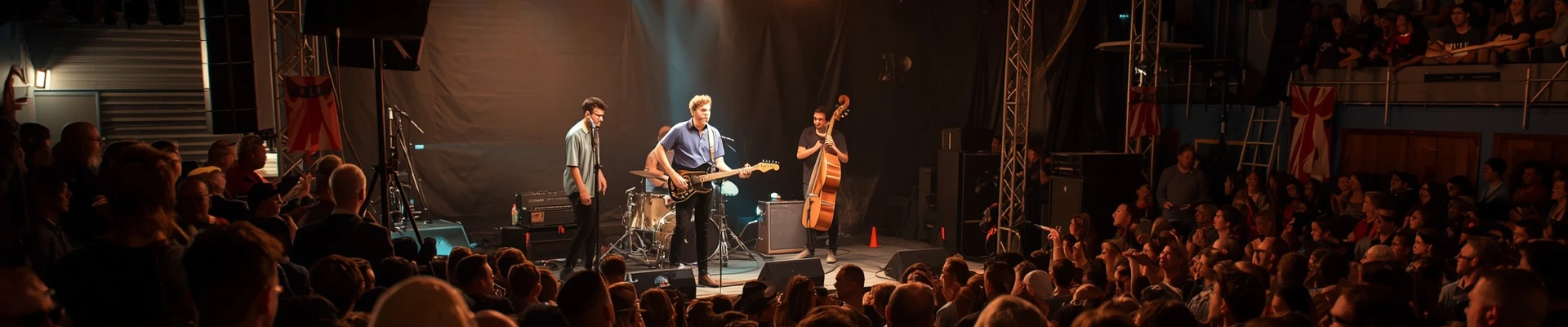
The club scene near Fort Sill — along Cache Road, the commercial artery running north from the main gate, and along Gore Boulevard through downtown — has historically been the most active live music corridor. Bars and clubs along these strips serve the military community seven nights a week, with country, rock, and metal acts playing to a young, loud, and appreciative crowd. The downtown corridor around C Avenue and the Lee Building area has seen urban revitalization investment, with a small cluster of bars and restaurants providing live music on weekends.
Comanche Nation Casino (in Lawton) and other tribal gaming facilities in the area program entertainment acts — country, classic rock, and tribute bands — for their showrooms, providing another steady venue tier.
Festivals and signature events
The festival calendar reflects the area's dual identity. Festival of Ballooning — Lawton's signature annual event at Elmer Thomas Park — draws participants from across the region for hot air balloon launches at dawn over the Wichita Mountains. Kid Day Arts Festival at Elmer Thomas Park celebrates community arts in the spring. Lawton International Indian Exposition programming connects to the broader American Indian Exposition in Anadarko. Comanche Nation Fair in Walters (the Comanche Nation seat, south of Lawton) includes traditional cultural programming, powwow dance competitions, and community music. Fort Sill Open House events and military ceremonies include band performances by the U.S. Army Field Artillery Band, one of the Army's premier professional music units, which performs at ceremonies, community concerts, and public events throughout the year. The Field Artillery Band's presence is genuinely significant — military bands at the level of Fort Sill are full-time professional musicians, and they provide classical, march, jazz, and popular programming to the Lawton community on a scale no civilian city of 97,000 would otherwise sustain.
Wichita Mountains Wildlife Refuge drives a nature and outdoor recreation culture that shapes what Lawton residents do on weekends — hiking to Mt. Scott, fishing at Lake Lawtonka, and camping — and this outdoor culture intersects with the campfire Americana and singer-songwriter tradition that runs through small-city Oklahoma.
What ties Lawton together musically is the convergence of four forces that rarely share a zip code: the U.S. Army Field Artillery Band providing professional classical and ceremonial music; the Native American powwow tradition of the Comanche, Kiowa, and Apache nations; the military-bar country and rock circuit on Cache Road; and a Cameron University arts anchor sustaining classical ensembles and visiting performers. Lawton is not a city that exports musical scenes, but it is a city where music is deeply woven into daily life — in ways both expected (the honky-tonk near the base gate) and unexpected (the powwow drum carried down through centuries of Comanche tradition on the southern plains).