

Beaverton is Oregon's sixth-largest city, with roughly 97,000 residents inside its boundaries, sitting inside Washington County on the western edge of the Portland metropolitan area. The Tualatin Hills rise behind the city to the west; the Tualatin Valley opens to the south; the Beaverton Creek and its riparian corridors thread through flat suburban terrain that once held nurseries, hop fields, and dairy farms. Portland city limits begin fewer than ten kilometres to the east, and Beaverton functions as an integral and well-funded piece of the broader Portland–Hillsboro–Beaverton metro, a region of roughly 2.5 million people that is one of the Pacific Northwest's principal technology, manufacturing, and cultural centres. The city is synonymous nationwide with one name above all others: Nike.
A brief history
The land that became Beaverton was Atfalati (Tualatin) Kalapuya territory before American settlers arrived via the Oregon Trail in the 1840s and 1850s. The first settler community was named for the beaver dams that backed up Beaverton Creek; the community platted a town in 1893. Agriculture — nurseries, orchards, hops — dominated through the early 20th century, and Beaverton remained a small farming town. The transformation began in the postwar decades: US Route 26 (the Sunset Highway) opened fast connections to Portland, Washington County incorporated suburban tracts at rapid pace, and the technology sector began seeding the corridor that would eventually be called the Silicon Forest. Intel opened its first Oregon facility in Hillsboro in 1976; the industry's gravitational pull reshaped Washington County into one of the most economically dynamic suburban zones on the West Coast.
Nike moved its world headquarters to an unincorporated parcel in Washington County — within the Beaverton ZIP code, giving the city its most indelible cultural association — in 1990, building the sprawling campus on Murray Boulevard that would grow into a 400-acre installation housing more than 12,000 employees, a private track and field facility, a sports research lab, and enough buildings named for athlete legends to constitute a small city of its own. Nike's presence transformed Beaverton into a place of global corporate significance, attracted thousands of workers from across the country and the world, and helped build the tax base that funds the city's schools, parks, and infrastructure.
Beaverton incorporated wave after wave of immigrants through the late 20th and early 21st centuries. The Korean-American community — drawn by technology jobs, proximity to Portland, and existing community networks — became one of the largest in the Pacific Northwest, concentrated particularly along the Canyon Road and TV Highway (Oregon Route 8) corridors, where Korean restaurants, churches, grocery stores, hair salons, and cultural organisations established a density of Korean-language commerce and community unmatched in Oregon outside Portland's own neighbourhoods. The Vietnamese-American community grew similarly, clustering in the same western Washington County zone. Smaller but significant communities from the Philippines, India, China, and Mexico brought Beaverton to a demographic profile where roughly 30 percent of the population identifies as Asian or Asian-American and the city claims one of the highest proportions of foreign-born residents of any city its size in the Pacific Northwest.
Music identity
Beaverton's music identity is primarily an extension of the Portland metro ecosystem rather than a self-contained scene — the city is too close to Portland, too suburban in character, and too dominated by its corporate and technology economy to have generated a distinct sound of its own. But the connection to Portland's music world is real, continuous, and runs through community institutions, the Korean and Vietnamese-American cultural organisations, and the musicians who live in Washington County while making their work in the city next door.
Portland's nationally consequential music legacy forms the backdrop against which Beaverton musicians operate. The Decemberists — the indie folk orchestral band led by Colin Meloy — are Portland's most internationally celebrated contemporary act, and their ornate storytelling folk rock has defined Portland's reputation as a city of serious, literary independent music. Elliott Smith recorded and lived in Portland; his fragile, acoustic heartbreak helped make the city synonymous with introspective singer-songwriter work. Portugal. The Man formed in Wasilla, Alaska, but came of age and built their audience in Portland; their psych-pop sound, anchored by the massive streaming hit Feel It Still, gave Portland a rare piece of mainstream pop crossover. Quarterflash — the new wave band behind Harden My Heart (1981) — are a Portland original, with the band's saxophonist-vocalist Rindy Ross defining a particular strand of polished Northwest pop. M. Ward, the folk-and-country-tinged singer-songwriter, has been a Portland fixture for decades. Menomena — the art rock trio — built a cult following in the mid-2000s with their loop-based compositional process.
Beaverton's own musicians tend to circulate in the regional indie and rock ecosystem without necessarily advertising a specific hometown identity. The city's large Korean-American community sustains a vibrant Korean pop (K-pop) fan and cover-artist culture — tribute events, dance performance nights, and community showcases draw on the pan-Pacific cultural flows that make Beaverton a node in a wider Korean-American music network that runs from Los Angeles through Seattle. Local Korean-language churches support extensive choral and contemporary Christian music programs. The Vietnamese-American community runs cultural celebration events through organisations like the Vietnamese-American Community of Oregon and Washington, with traditional music, modern Vietnamese pop, and generationally blended programming. The Filipino-American community stages cultural festivals that fold in contemporary OPM (Original Pilipino Music) alongside folk and traditional forms.
The city's relationship with Nike introduces a parallel music dimension: the company has hosted private concerts and athlete events on campus that have brought major touring artists through the city — events that rarely generate public ticketing but are part of the regional music circuit in ways that are hard to quantify. Nike's marketing culture, deeply intertwined with hip-hop and street culture since the Michael Jordan and Run-DMC era, has made the company an indirect patron of music in Beaverton in ways that extend well beyond the city's own venue infrastructure.
The broader Washington County zone has produced musicians who orbit the Portland scene without claiming specific Beaverton identity. The area's well-funded public school system — Beaverton School District, one of Oregon's largest — runs significant instrumental and choral programs that feed musicians into the Portland metro's orchestral, jazz, and rock ecosystems.
Venues and neighborhoods
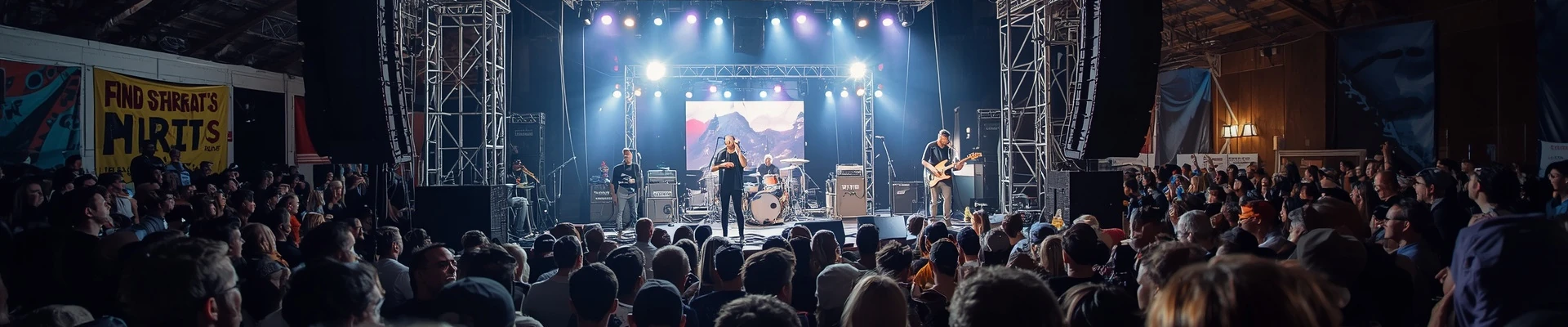
Beaverton's live music infrastructure is a suburban-scale complement to Portland's much denser venue ecosystem. The Round — the mixed-use development at Beaverton's nominal downtown core, around the Beaverton Central MAX light rail station — anchors the city's most concentrated entertainment district, with restaurants and bars that program local acoustic and small-band acts. Thirsty Lion Gastropub at The Round is among the livelier spots for evening programming. The Beaverton Farmers Market (May through October, on Hall Boulevard behind the Round) programs free live music each Saturday morning alongside its produce and artisan vendors, making it one of the most attended recurring free music events in Washington County. Craft breweries — Beaverton's taproom scene, including Threshold Brewing & Blending and others in the city's growing beer corridor — host local acoustic nights and small-band performances.
For larger shows, Beaverton residents are a 20-minute MAX light rail ride from Portland's primary venue ecosystem: the Arlene Schnitzer Concert Hall (the 2,776-seat home of the Oregon Symphony), the Moda Center (the 19,000-capacity NBA arena and major touring venue), Crystal Ballroom (the 1,500-capacity Willamette Week mainstay in the West End), McMenamins Crystal Hotel stages, the Wonder Ballroom, and the Doug Fir Lounge (one of Portland's best mid-size rooms). The MAX's Blue and Red lines connect Beaverton Transit Center directly to Portland's downtown, making the commute to a show as easy as any suburban-urban transit link in the Pacific Northwest.
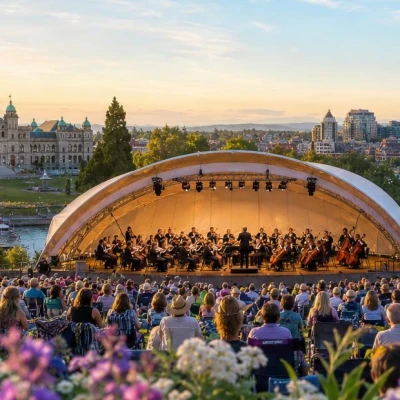
Sunset High School's theater and Beaverton High School's auditorium host student productions, community orchestra concerts, and occasional public performance events. The Beaverton City Library programs family and community music events. The Elsie Stuhr Center (the city's senior recreation facility) hosts music for older adults. The Tualatin Hills Park and Recreation District (THPRD) — which manages more than 80 parks and recreation centres across Washington County — stages outdoor concerts and community events through the summer, including free concerts at Sunset Park and other greenspaces.
Festivals and signature events
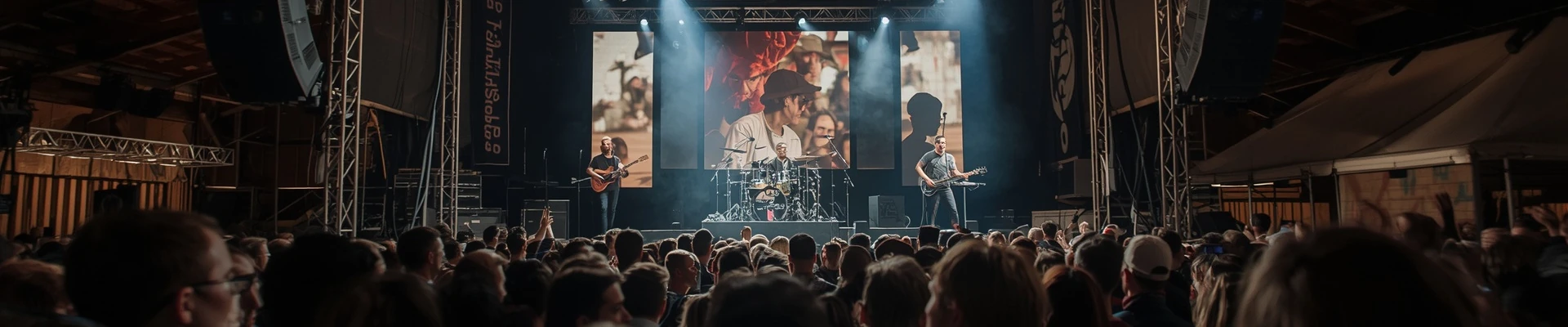
The festival calendar reflects Beaverton's multicultural demographics. The Beaverton Night Market — an outdoor market and street fair on 5th Street with food vendors, artisan goods, and live entertainment — has grown into one of the city's signature summer events. The Beaverton Asian Celebration at Tualatin Hills Athletic Center draws thousands to celebrate Asian and Pacific Islander heritage with cultural performances, traditional arts, and music from multiple Asian-American communities. The Korean Cultural Festival programs K-pop, traditional samulnori percussion, and community performances. The Vietnamese Mid-Autumn Festival (Tết Trung Thu) draws the Vietnamese-American community with lantern parades and cultural music.
Rock Creek and Sunset Corridor commercial districts stage smaller neighbourhood events with live music components. The annual Beaverton Arts Mix — the city's public art programme — includes music performance components alongside visual arts. The Oregon Children's Theatre (which has Beaverton program links) and Tualatin Valley Community Band provide classical and community music anchors.
For the biggest regional festivals, Beaverton residents access Portland's event calendar: Pickathon (the annual indie folk and roots festival at Pendarvis Farm in Happy Valley, just east of Portland), the Waterfront Blues Festival, MusicfestNW, Portland Jazz Festival, and the broader seasonal festival circuit.
What ties it all together
Beaverton is a city whose music culture is inseparable from both its geography and its demographics. The light rail line to Portland makes the distance to the Pacific Northwest's most vibrant music ecosystem irrelevant on a practical level — Beaverton residents are Portland music consumers in every meaningful sense. But the city's own cultural identity — shaped by Nike's global corporate presence, by Washington County's tech-sector affluence, and above all by the large and community-minded Korean-American and Vietnamese-American populations who have made the Canyon Road corridor their home — generates a distinct musical texture. Korean pop cover nights, Vietnamese cultural celebrations, Filipino community festivals, and an Asian-American cultural calendar that has no equivalent in any other Oregon city outside Portland give Beaverton a music life that is quietly particular, community-rooted, and increasingly confident. The Beaverton Night Market, the Asian Celebration, and the Saturday Farmers Market concert series are not Portland's scene — they are Beaverton's own.