

Eugene, Oregon
Eugene sits at the southern end of the Willamette Valley, where the McKenzie and Willamette rivers converge beneath the Coast Range foothills, roughly 110 miles south of Portland. With a population approaching 180,000 — swelling seasonally with the University of Oregon's 23,000 students — it is Oregon's second-largest city by metro area, the seat of Lane County, and the economic engine of a region that harvests timber, grass seed, and wine grapes in roughly equal measure. The city's personality is shaped by a persistent counterculture, a fierce athletic tradition rooted in distance running, and a music community that punches well above its weight for a mid-sized college town.
TrackTown and the Kesey Legacy
Eugene's international identity rests on two pillars that, at first glance, seem unrelated: Bill Bowerman and Steve Prefontaine forged the city's reputation as TrackTown USA through the University of Oregon's track program and, eventually, Nike. But it is Ken Kesey — the author of One Flew Over the Cuckoo's Nest, who ran his Merry Pranksters farm in nearby Pleasant Hill — who more accurately presages the city's musical soul. Kesey's psychedelic bus, his embrace of the Grateful Dead, and his lifelong presence in the valley created a gravitational field for creative outsiders that never fully dissipated. Eugene absorbed that energy and converted it into something more durable: a civic tolerance for noise, weirdness, and experimentation that has kept a genuine underground alive for five consecutive decades.
The WOW Hall — Heart of Eugene's DIY Scene
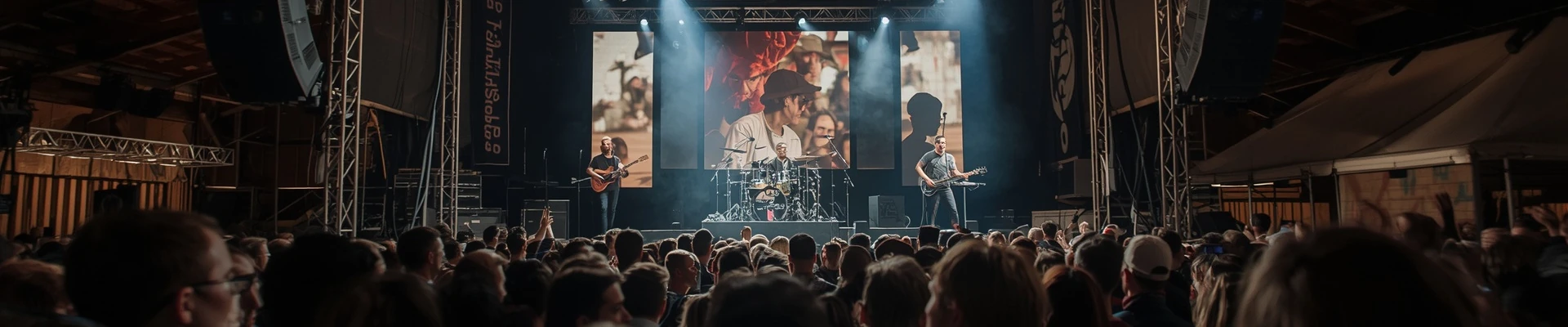
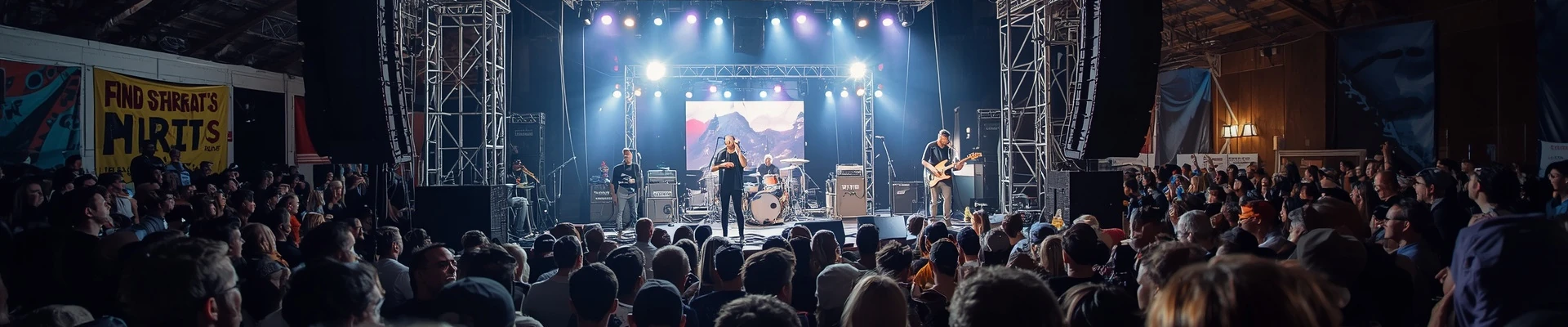
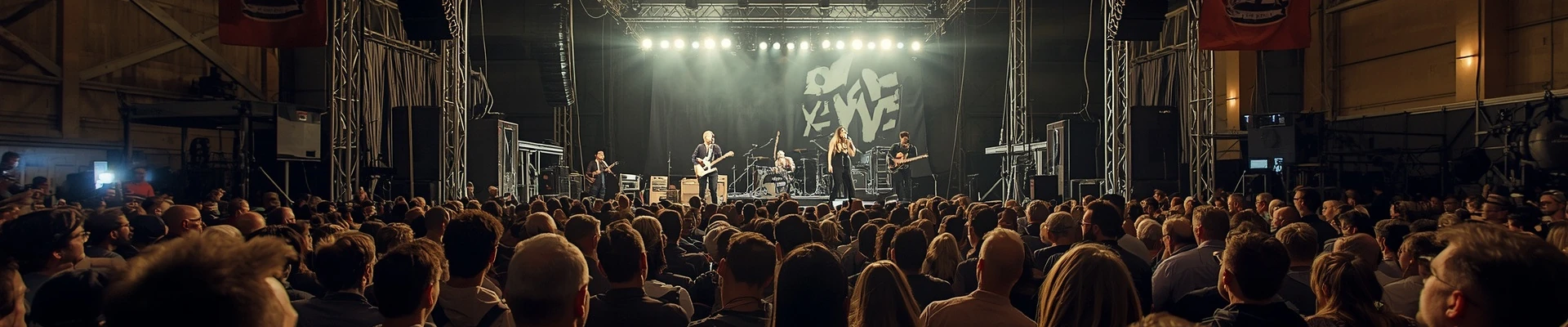
No building has done more for Eugene's musical identity than the WOW Hall (Community Center for the Performing Arts), a 19th-century fraternal hall on West 8th Avenue that has operated as a community-run, volunteer-staffed all-ages venue since 1975. The WOW Hall is the connective tissue of every significant music movement the city has produced. Punk, new wave, ska, grunge, folk-punk, noise rock, hip-hop, and electronic acts have all cycled through its spring-loaded wood floor. It has hosted everyone from the Violent Femmes to NOFX to local acts whose national ambitions launched from that stage. The WOW Hall's nonprofit governance model — community members own the space collectively — makes it one of the longest-running community-run music venues in the American West, and it remains the moral center of Eugene's live-music ecosystem.
Mid-Size Venues and the Hult Center
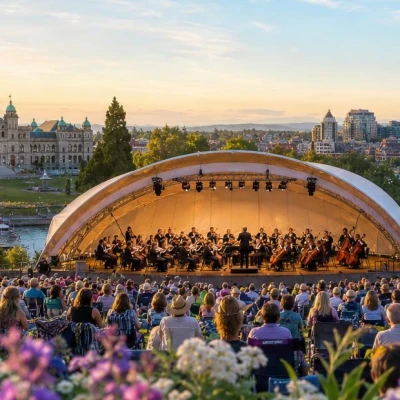
For bigger productions, Eugene built around the Hult Center for the Performing Arts, a 1982 downtown complex that houses Silva Concert Hall (2,500 seats, among the best acoustics in the Pacific Northwest) and the more intimate Soreng Theater. The Hult Center books touring classical, jazz, and world-music acts alongside its resident Oregon Bach Festival — a two-week June festival of Johann Sebastian Bach's choral and orchestral works that has drawn international soloists and conductors since 1970, making it one of the oldest dedicated Bach festivals in the United States.
The McDonald Theatre, a 1925 vaudeville house on Willamette Street, serves as Eugene's primary mid-capacity rock and indie venue, fitting roughly 1,000 standing. Its ornate tile lobby and art-deco bones make it one of the handsomest rooms in the state. The HiFi Music Hall (formerly known as several names in its long career) and the Whirled Pies listening room on Blair Boulevard round out the listening options for the 300–800 capacity range.
The Wow Hall, McDonald Theatre, and Hult Center effectively define a tiered system — 200 seats, 1,000 seats, 2,500 seats — that allows most touring acts to find a correctly-sized room, an advantage many Oregon cities outside Portland cannot offer.
Eugene's Sound: Folk Punk, Noise, and the Grateful Dead Thread
Eugene's default musical register is acoustic guitar and social conscience, which explains the city's deep affection for folk-punk. The Dead Kennedys played the WOW Hall early. So did the Replacements. But Eugene's own output has leaned more melancholy than aggressive: the city's counterculture aesthetic tends toward the contemplative. Bands like Floater — the post-grunge progressive rock act that has self-released more than a dozen albums and maintained a passionate regional following since the early 1990s without ever signing to a major — represent the archetype of Eugene music: artistically independent, community-sustained, proudly local.
The Grateful Dead's influence is more than incidental. Eugene was one of the Dead's most reliably sold-out tour stops throughout the 1970s and 1980s; the city's tapers and Deadhead community gave it an infrastructure for underground music distribution — bootleg cassettes, zines, show recordings — that normalized the sharing of live music decades before the internet. That archive culture has shaped how Eugene music fans consume and preserve recordings to this day.
Post-grunge and alternative rock found fertile ground here in the 1990s. Several members of the Eugene scene moved fluidly between the city and Portland, blurring the distinction between those two musical worlds. Heatmiser, the band co-founded by Elliott Smith in Portland, had members with Eugene connections; Smith himself played Willamette Valley gigs during the formative years of his solo catalog. The sadness and intimacy that define his best work feel consonant with Eugene's personality.
University of Oregon and the Student Music Infrastructure
The University of Oregon functions as both an audience-generator and a scene-sustainer. KWVA (88.1 FM), the student-run radio station, has been a discovery engine for alternative and experimental music since the 1980s, giving airtime to local acts long before they could afford a publicist. The Jordan Schnitzer Museum of Art on campus hosts chamber concerts. The Music School (now the Robert Donald Clark Honors College's arts programs merged with the School of Music and Dance) trains jazz and classical musicians who frequently cross-pollinate with the rock and folk communities in town.
The student population ensures that Eugene's venue corridor stays economically viable even when the permanent population might not support it alone. Blair Boulevard — the artery that runs through the Whiteaker neighborhood — has become the city's most music-dense strip: recording studios, instrument repair shops, record stores, and small bars cluster there alongside vegetable co-ops and vintage clothing. Whiteaker is to Eugene what Portlandia stereotypes assigned to Portland proper: hand-screen-printed posters, co-op living, chickens in the backyard, and a band rehearsing behind every other fence.
The Whiteaker District
The Whiteaker (locals say "the Whit") is Eugene's oldest neighborhood and its musical soul. When downtown Eugene gentrified in the 2000s and 2010s, the Whit absorbed the spillover: studios, practice spaces, a cluster of vintage record shops (House of Records has operated since 1971), and the Ninkasi Brewing taproom, which doubles as a semi-regular live music space. Whirled Pies, a pizza restaurant on Blair that books touring folk and indie acts most nights, exemplifies the Whit's integration of music, food, and community — the kind of room that exists in Eugene because rent is low enough to make that math work.
Folk and the Oregon Country Fair
No discussion of Eugene's music scene is complete without the Oregon Country Fair, held annually in July on the Fern Ridge Reservoir floodplain in nearby Veneta, about 13 miles west of downtown. The Fair began in 1969 as a benefit for the University of Oregon's experimental college and has grown into a three-day, 45,000-person celebration of craft, performance, and counterculture that remains one of the Pacific Northwest's singular events. Its Main Stage and multiple smaller stages book national folk, world-music, and roots acts alongside local favorites. The Fair functions as an annual affirmation of the values that define Eugene's music community: anti-corporate, handmade, participatory, joyful.
The Fair's economic and cultural weight shapes booking decisions at Eugene venues year-round: artists who play the Fair often do warm-up or cool-down shows at the WOW Hall or McDonald Theatre, creating a festival-venue pipeline that smaller Oregon cities can't replicate.
Jazz, Classical, and the Broader Spectrum
Eugene has a working jazz scene concentrated around the University of Oregon's jazz ensemble program and the Jazz Station, a nonprofit jazz venue and education center that has operated on East Broadway since 2001. The Jazz Station hosts weekly performances, workshops, and a summer outdoor festival series that brings regional and national jazz acts to a 150-seat room. It is one of the few dedicated jazz venues in Oregon outside Portland.
Classical music finds its primary home in the Oregon Bach Festival (Hult Center, late June through early July) and in the Eugene Symphony, which plays its season at Silva Concert Hall. The Symphony has an adventurous programming reputation for a mid-sized city orchestra, regularly pairing core symphonic repertoire with contemporary commissions.
What Ties It All Together
Eugene's defining musical quality is the refusal to separate music from community. The WOW Hall exists because neighbors voted to buy the building. The Oregon Country Fair exists because a counterculture decided to celebrate itself on farmland. House of Records has stayed open for fifty-plus years because locals chose to shop there. Floater has 30 years of recordings because fans paid for them directly. This is a city where music is understood as infrastructure rather than entertainment — a utility that keeps the community coherent and legible to itself. The Willamette Valley provided the geography: far enough from Portland to develop its own identity, close enough to Portland to receive national touring acts who extend their run by one night south. That combination — isolation enough to breed distinctiveness, connectivity enough to sustain momentum — is what has made Eugene, against all demographic odds, one of Oregon's most musically consequential cities.