

Gresham is Oregon's fourth-largest city, sitting on the eastern rim of the Portland Metropolitan Area with roughly 113,000 residents. It lies approximately 24 kilometres east of downtown Portland, occupying a broad plateau between the Sandy River valley and the Columbia River Gorge National Scenic Area, with Mount Hood visible on the southeast horizon. Gresham is both a suburb and a city in its own right — incorporated in 1905, the seat of Multnomah County's eastern reaches, and the terminus of TriMet's MAX Blue Line light rail, which connects it to Portland's Pearl District, downtown, and eventually Hillsboro. The city is economically working-class to middle-class, with employment in manufacturing, healthcare, retail, and distribution, and a population that is roughly 20% Latino, with Vietnamese, Somali, Ukrainian, and Russian immigrant communities adding further cultural depth. It has none of Portland's hipster polish and all of its neighbour's musical restlessness — Gresham's music scene is grittier, more grassroots, and more genuinely cross-cultural than the city across the county line.
A brief history
The land at the eastern edge of the Portland Basin was home to the Multnomah band of the Chinook people before sustained Euro-American settlement arrived via the Oregon Trail in the 1840s. Early settlers farmed the fertile plateau east of Portland, and the community of Powell Valley was established in the 1880s. When the railroad arrived, the town was renamed Gresham — after Walter Quinton Gresham, Postmaster General under President Chester Arthur. Incorporation in 1905 gave the young town official status, but it remained a quiet agricultural service community for decades, famous for its nurseries, berry farms, and proximity to the Columbia River Gorge.
The post-World War II suburban expansion transformed Gresham dramatically. The arrival of the Sandy Boulevard corridor, later the extension of US 26 (Mount Hood Highway), and then the completion of Interstate 84 made Gresham an accessible commuter suburb for Portland workers. The city annexed rapidly through the 1980s and 1990s as Portland's growth pushed outward. The MAX Blue Line opened service to Gresham in 1986 — the first light rail line in Oregon — cementing its role as Portland's eastern anchor community and making cultural exchange between the two cities fast and constant.
Through the 1990s and 2000s, Gresham's demographic composition shifted significantly. The city became home to a major Mexican and Central American immigrant community, driven by agricultural work, the food-processing industry, and family networks. The city also received large numbers of Vietnamese, Russian, Ukrainian, and later Somali refugees through resettlement programs. Today, East Gresham and Rockwood — the dense urban neighbourhood straddling the Gresham–Portland border — are among the most ethnically diverse zip codes in Oregon.
Music identity
Gresham's music identity is defined by its position within the Portland Metro ecosystem — close enough to borrow Portland's infrastructure, distinctive enough to have developed its own working-class, multicultural sound. The city has produced and hosted artists across metal, punk, country, hip-hop, and Latin music, without the self-conscious art-scene posturing that often marks Portland proper.
The most internationally consequential music to emerge from the Gresham area is tied to Pacific Northwest rock and metal. The broader Portland-Gresham corridor was part of the fertile 1980s and 1990s Northwest underground that gave rise to grunge's Pacific Northwest context, and Gresham's high schools and basement scenes fed into that tradition. The DIY ethic — practise in garages, record at small studios, release on cassette — ran strong through Gresham's suburban infrastructure. Portland-area metal has long included Gresham-based bands in its lineage, and the city's working-class demographics made heavy music a natural outlet.
The city's most prominent nationally known musical connection is through country and Americana. Gresham sits in the broader tradition of Oregon country — a rural-flavoured working-class genre tradition that runs through the state's smaller cities and feeds into the broader Pacific Northwest honky-tonk scene. Venues along Powell Boulevard and the Burnside corridor (shared with outer East Portland) have historically hosted country and rockabilly nights that draw from Gresham's older white working-class community.
Latin music is Gresham's fastest-growing scene, driven by the city's large Mexican-American and Central American population. The Rockwood neighbourhood — dense, majority-Latino, served by the MAX — is the cultural centre of this scene. Norteño, banda, cumbia, corrido, and contemporary reggaeton circulate through restaurants, quinceañera halls, and small venues in the area. Weekend dances at El Charrito (the long-running Mexican restaurant and community gathering place near the Rockwood MAX station) and similar establishments are genuine community anchors. Spanish-language radio out of Portland — KRYP and the broader Univision Oregon affiliate network — serves the Gresham audience daily.
The Somali and East African community, concentrated in parts of East Gresham and the 122nd Avenue corridor, sustains a vibrant scene of qaraami (the Somali guitar-based genre), afrobeats, and hip-hop that circulates through community centres, mosques, and informal gathering spaces. It's not an industry-facing scene but it is a living musical tradition.
Hip-hop and R&B run through Gresham's younger multicultural generation, connected to the broader Portland hip-hop scene — Luck-One, Illmaculate (the Portland rap battle champion and emcee), and the broader Portland underground hip-hop network have Gresham-area roots and connections. Treehouse Records and the east Portland DIY label scene have produced local hip-hop acts with regional followings.
The city's punk and hardcore scene connects through the Roseland Theater and Mississippi Studios corridors in Portland, with Gresham-based bands regularly playing Portland's small venues. DIY spaces in Gresham garages and rented halls have hosted punk matinees and all-ages hardcore shows, carrying on the Pacific Northwest underground tradition.
Venues and neighborhoods
Gresham lacks a major concert venue of its own — the city's music life flows through a network of smaller bars, restaurants, and community spaces, supplemented by easy MAX access to Portland's full venue ecosystem. The principal live music destination within city limits is the Historic Gresham Downtown district along Powell Boulevard, Main City Park, and the Gresham Arts Plaza, which hosts outdoor summer programming. The Taborspace event centre (technically in SE Portland at the MAX line) is a regular destination for Gresham-adjacent acts.
Within the city, venues include bar-and-grill stages in the Downtown Gresham core, the Big City Burrito and similar restaurants that host acoustic and small-band shows, and the Rockwood Public House area's handful of neighbourhood bars. The Multnomah County Library — Gresham Branch hosts community music programming. The Gresham-Barlow School District's performing arts facilities — Sam Barlow High School and Gresham High School — anchor school-based music programs.
For mid-size and major shows, Gresham residents take the MAX 20 minutes into Portland to reach the Roseland Theater (1,400-capacity), Crystal Ballroom (1,500-capacity), Wonder Ballroom (600-capacity), Mississippi Studios (250-capacity), Revolution Hall (850-capacity), or the Moda Center (19,000-capacity) arena. The proximity and frequency of the MAX Blue Line makes Portland's full venue spectrum functionally available to Gresham residents in a way that is unusual for a city of this size.
Distinct neighborhoods carry distinct musical characters. Historic Downtown Gresham hosts the small stage and open-mic circuit. Rockwood (shared with Portland's 122nd Avenue area) is the Latin and East African music hub. Powell Valley and Pleasant Valley carry the older country and Americana tradition. North Gresham near the Columbia River corridor has historically had a blue-collar bar scene with country and classic rock.
Festivals and signature events
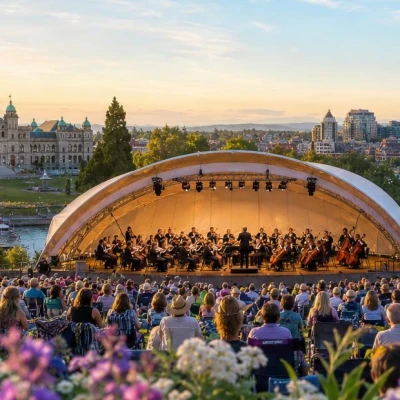
Gresham's festival calendar reflects its community character. The Gresham Arts Festival (held in late summer at Main City Park, featuring visual arts alongside music) is the city's flagship public event. The Mt. Hood Jazz Festival — held annually at Mt. Hood Community College in Gresham — is the region's most important dedicated jazz event, drawing nationally touring jazz acts to the Gresham campus for more than 40 years. It has featured McCoy Tyner, Branford Marsalis, Dave Holland, Dianne Reeves, and dozens of other major jazz artists, and stands as Gresham's most internationally significant music event. The festival was suspended for a period and has operated intermittently, but it remains the definitive Gresham music landmark.
The Cinco de Mayo and Fiestas Patrias celebrations in the Rockwood neighbourhood bring outdoor music, dance, and community to the corridor's largest public gatherings. The Gresham Farmers Market at Historic Downtown hosts live acoustic music through the summer season. Powell Butte Nature Park (on the Portland-Gresham border) has hosted acoustic outdoor programming. The Rockwood Music Hall community space has hosted youth concerts and open mic events.
For major festival experiences, Gresham residents access Project Pabst, Pickathon (held at Pendarvis Farm in Happy Valley, 15 kilometres south), the Oregon Symphony at Waterfront Park, and MusicfestNW in Portland — all within easy driving or transit distance.
What ties it together
What ties Gresham's musical identity together is the productive tension between its working-class grit and its cultural plurality. This is not a city that markets itself as a music destination — it has no music tourism infrastructure, no branded district, no national headline venues. What it has is a deeply rooted community musical life that runs through basement practise spaces, Rockwood restaurant dance floors, high school auditoriums, quinceañera halls, the Mt. Hood Community College jazz stage, and the MAX platform that carries Gresham musicians into Portland and Portland audiences back out. The Mt. Hood Jazz Festival gave the city a genuine claim to national jazz significance for four decades. The Latino music corridor in Rockwood is one of the most authentically local community music scenes in the Portland metro. The punk and metal underground continues to churn out bands that play the Roseland and the Wonder Ballroom before moving on. And Mount Hood watches from the southeast — a reminder that Gresham is also a gateway city, the place where the Columbia River Gorge begins and the urban edge of the Pacific Northwest gives way to something wilder.