

Portland is the largest city in Oregon and the 26th-largest in the United States, with roughly 652,000 residents inside the city limits and more than 2.5 million across the surrounding metropolitan area, which spans the Columbia River north into Vancouver, Washington. Sitting at the confluence of the Willamette and Columbia rivers in the lush, rainy Pacific Northwest, ringed by the snow-capped peak of Mount Hood to the east and the Coast Range to the west, it is the largest city in Oregon and the cultural capital of the broader Northwest interior. Portland's musical identity reflects that geography and demography: a deeply-held bohemian, anti-corporate, and DIY sensibility — captured in the unofficial motto "Keep Portland Weird" — that has produced an outsized share of American indie rock, folk, electronic, and underground music since the late 1970s; a long Black music tradition rooted in the historic Albina corridor of North and Northeast Portland; a thriving punk and hardcore lineage that runs back to the late 1970s; and a fast-growing modern electronic, hip-hop, and Latin music ecosystem.
A brief history
The land at the confluence of the Willamette and Columbia was Multnomah, Clackamas, and broader Chinook territory before settlers from New England arrived in the 1840s. The town was famously named on the toss of a coin in 1845 — losers wanted to call it Boston, winners chose Portland after Portland, Maine. The 1850s California Gold Rush and 1860s Idaho Gold Rush turned Portland into a major Pacific Northwest river port and shipping hub. Through the 19th and early 20th centuries Portland grew steadily as a timber, shipping, and manufacturing center; the postwar Vanport flood of 1948 destroyed Oregon's largest Black-majority community and displaced thousands of Black Portlanders into the historic Albina district of North and Northeast Portland. The 1970s and 1980s rise of microbreweries, the 1990s and 2000s tech and outdoor-recreation boom around Nike (in nearby Beaverton), Intel, and a deep small-business culture, and the explosive 2010s population growth driven by California and East Coast relocations have all shaped the city. Successive waves of migration — Black Southerners during the WWII shipyard era, large Vietnamese and Hmong populations after the Vietnam War, very large Mexican and Russian-speaking communities since the 1980s, and growing Somali, Ethiopian, and West African populations since the 1990s — have built a city that remains less ethnically diverse than other West Coast metropolises but is rapidly diversifying.
Music identity
Portland's most internationally famous current musical chapter is the Pacific Northwest indie rock explosion of the late 1990s and 2000s. The Decemberists, formed in Portland in 2000 by Colin Meloy and Chris Funk, built one of the most acclaimed American indie folk catalogues of the era through Picaresque (2005) and The Crane Wife (2006). Modest Mouse (Issaquah-based but constantly Portland-touring), Sleater-Kinney (Olympia-based but with deep Portland ties; Carrie Brownstein and Corin Tucker have lived in Portland for years), The Dandy Warhols, Pink Martini (the lounge-and-world-music ensemble built around Thomas Lauderdale), The Shins (Albuquerque-formed, but James Mercer has been Portland-based for years and the band's later catalogue is essentially a Portland project), The Thermals, Stephen Malkmus of Pavement (relocated to Portland in 2000 and based there for 20 years), Quasi (Sam Coomes and Janet Weiss), The Joggers, Menomena, Blitzen Trapper, Spoon's tour stops, and a long lineage of Portland-based indie acts built one of the most consequential indie rock scenes in the country. Elliott Smith, while raised in Texas and Portland and based later in Brooklyn and Los Angeles, came up through the Portland indie scene and built much of his early catalogue at his home studio in Northeast Portland; his death in 2003 turned him into one of the most beloved figures in modern indie rock.
The 2000s and 2010s extended the lineage. Modest Mouse's adopted Portland base, Mirah, The Helio Sequence, Loch Lomond, Y La Bamba, The Builders and the Butchers, Typhoon, Brothers from Another Mother, and a deep current generation of indie folk and rock acts built the modern Portland identity. M. Ward, the singer-songwriter and She & Him collaborator, has been Portland-based for years. Stephen Malkmus and the Jicks, Quasi, and a thriving 2000s scene around clubs like the Doug Fir Lounge (opened in 2004 in a sleek mid-century-modern bar in Burnside) and Mississippi Studios anchored the indie boom. Beat Connection, STRFKR, Glass Candy, Chromatics (the Italians Do It Better label is Portland-based), and a thriving electronic and synth-pop scene through artists working out of Portland's home studios have built an internationally watched modern electronic music tradition. Esperanza Spalding, the bassist and vocalist born and raised in Portland, attended Berklee and built one of the most acclaimed jazz catalogues of the 21st century.
Portland's punk and hardcore lineage runs unusually deep. The Wipers, formed in Portland in 1977 by Greg Sage, became one of the most influential American post-punk bands — directly influencing Kurt Cobain, who covered three Wipers songs and called Sage one of his favorite guitarists. Dead Moon, formed in Clackamas (just south of Portland) in 1987 by Fred and Toody Cole, built one of the most beloved cult catalogues in American garage punk. Poison Idea, The Rats, Sweet Diss & The Comebacks, and a generation of Portland punk bands ran through clubs like the Satyricon (Portland's foundational punk venue) and the X-Ray Cafe. The 1990s and 2000s brought Hood, Pierced Arrows, Red Fang (the Portland metal band that has built one of the most acclaimed catalogues in modern stoner metal), and a deep current generation. Riot Grrrl, while Olympia-anchored, had a strong Portland presence through bands like Sleater-Kinney and the broader Pacific Northwest feminist punk circuit.
Portland's Black music lineage runs through the historic Albina corridor of North and Northeast Portland — particularly along Williams Avenue, Mississippi Avenue, and the Vanport legacy. The Cotton Club at NE Mississippi and the Dude Ranch, the Frat Hall, and a long lineage of clubs hosted touring R&B and jazz acts through the 1940s, 1950s, and 1960s. Esperanza Spalding came up through Portland's Black music network. Nu Shooz, the Portland duo, broke nationally with "I Can't Wait" in 1986. Hip-hop has its own Portland lineage through artists like Cool Nutz (the city's longest-running rapper and music industry figure), Aminé (the Portland rapper raised in the Tabor neighborhood, who broke nationally with "Caroline" in 2016 and has built one of the most acclaimed Black Pacific Northwest hip-hop catalogues of the past decade), Iame, Vursatyl, Lifesavas, Tope, Mic Capes, The Last Artful, Dodgr, and a current generation of trap and indie hip-hop artists.
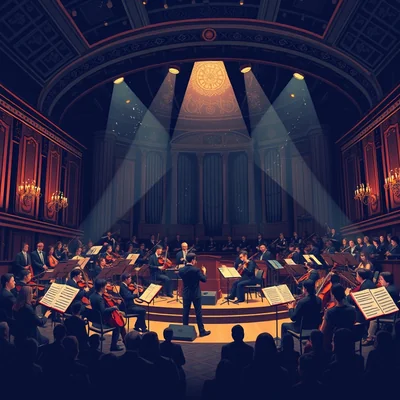
The 21st century has brought a broader immigrant music wave. Latin music — primarily Mexican and Central American — runs through clubs across East Portland and the Cully neighborhood. Eastern European and Russian-speaking music has a presence through Portland's substantial Russian and Ukrainian populations, particularly in Beaverton and East Portland. East African music — primarily Somali and Ethiopian — runs through community halls and event spaces in the city's eastern neighborhoods. Indigenous music runs through the Native American Youth and Family Center's programming and powwow gatherings. The Oregon Symphony, the Portland Opera, and Portland Baroque Orchestra anchor the classical and contemporary tradition; Cathedral Park Jazz Festival and PDX Jazz Festival anchor the jazz tradition.
Venues and neighborhoods
Portland's venue ecosystem is well-developed. At the top sit the Moda Center (home of the Trail Blazers and the city's largest indoor concerts), Veterans Memorial Coliseum, the Theater of the Clouds (the smaller configuration of the Moda Center), the Keller Auditorium, the Arlene Schnitzer Concert Hall (home of the Oregon Symphony), the Newmark Theatre, the Roseland Theater, McMenamins Crystal Ballroom (the legendary 1914 ballroom on Burnside, with its famous bouncing dance floor), and the Revolution Hall (a 850-capacity venue in a former high school auditorium). The midsize tier includes the Aladdin Theater, the Hawthorne Theatre, the Wonder Ballroom, and Mississippi Studios (one of the most beloved small concert rooms on the West Coast). Beneath them is a deep club layer — Mississippi Studios, the Doug Fir Lounge, Holocene (the long-running electronic and DJ club), Bunk Bar, The Goodfoot, Dante's (the legendary downtown rock and burlesque venue), The Liquor Store, Star Theater, Polaris Hall, Twilight Cafe, the Kenton Club, Show Bar PDX, The Lovecraft Bar, the Know's legacy, and a network of bars and DIY rooms across the inner Eastside, North Mississippi, North Williams, Southeast, and Sellwood. Jimmy Mak's (the historic jazz club, closed in 2016 after 20 years), The 1905, and Wilfs anchor the jazz tradition. Kelly's Olympian's legacy and Kells support the city's blues and Irish music circuits.
Different neighborhoods carry different musical identities. Inner Southeast and the Buckman/Hawthorne/Belmont corridor anchor the indie rock and DIY scenes. North Mississippi Avenue and North Williams anchor the indie folk and small-venue circuit (Mississippi Studios) and the historic Black music corridor. Old Town/Chinatown anchors a smaller cluster of larger venues including the Roseland and Dante's. The Pearl District anchors a higher-end bar and listening-room circuit. The inner Eastside's industrial corridor anchors the warehouse and electronic music scene. East Portland along 82nd Avenue supports the city's largest immigrant music scenes (Latin, Vietnamese, Russian, East African). St. Johns in North Portland supports a smaller bar circuit. The West Hills anchor the classical and conservatory tradition through Reed College, Lewis & Clark, and the Oregon Symphony.
Festivals and signature events
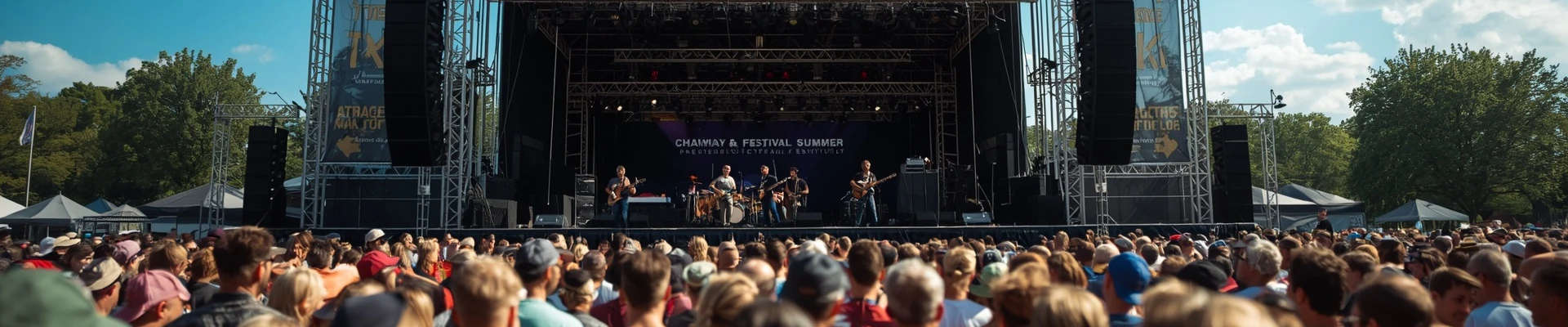
The festival calendar reflects the city's range. MusicfestNW, founded in 1994, is the city's flagship multi-genre festival. Pickathon, held each August at Pendarvis Farm in nearby Happy Valley, is one of the most respected boutique indie and folk festivals in the country. Project Pabst (the late-summer festival sponsored by Pabst Brewing), Pickathon's legacy, Cathedral Park Jazz Festival (one of the longest-running free jazz festivals on the West Coast, in operation since 1981), PDX Jazz Festival in February, Portland Rose Festival's music programming, Waterfront Blues Festival (one of the largest blues festivals on the West Coast, drawing major touring acts to Tom McCall Waterfront Park each Fourth of July weekend), Portland Pride, Festa Italiana, Día de los Muertos at the Oregon Historical Society and Milagro Theatre, Portland Greek Festival, Mississippi Street Fair, Last Thursday on Alberta, Portland EDM events, Decibel Festival's legacy, and Soul'd Out Music Festival add cultural and community programming. Sasquatch! Festival's former Gorge Amphitheatre programming drew on the Portland audience for years. The Oregon State Fair in Salem (an hour south) programs major country, rock, and pop acts.
What ties it all together is the city's combination of geographic isolation, anti-corporate sensibility, and a continuous commitment to local, independent, and DIY culture. Portland is the city where the Wipers built American post-punk in 1977, where Elliott Smith built a quiet and devastating songwriting catalogue, where the Decemberists turned indie folk into national arena rock, where Sleater-Kinney made the Pacific Northwest a global feminist punk capital, where Esperanza Spalding rebuilt jazz vocals for a new generation, where Aminé became one of the most acclaimed Black Pacific Northwest rappers of the 2010s, where Pickathon turns a single farm into one of the most respected festivals in America, and where the Crystal Ballroom's 1914 dance floor still bounces under the feet of every touring band on the West Coast.