
Allentown is the third-largest city in Pennsylvania and the seat of Lehigh County, with roughly 120,000 residents inside the city limits and more than 800,000 across the broader Lehigh Valley metropolitan area. The city sits in the eastern Pennsylvania hill country along the Lehigh River, about 60 miles north of Philadelphia and 90 miles west of New York City, in a valley carved between the South Mountain and Blue Mountain ridges of the Appalachian system. Allentown's neighbor cities — Bethlehem (five miles east) and Easton (fifteen miles east) — form the Lehigh Valley triad, a regional cluster whose combined cultural and economic weight has long exceeded any of the three cities individually. The city's economy was defined for generations by iron and steel production — Bethlehem Steel's enormous plant complex straddled the Bethlehem-Allentown border and employed tens of thousands — and the deindustrialization of the 1970s and 1980s left a mark on the region's identity that became, among other things, the subject of one of the most-recognized city songs in American pop music history.
A brief history
The land now occupied by Allentown and the Lehigh Valley was home to the Lenape people for centuries before European contact. The area was settled by German and Scots-Irish colonists in the mid-18th century — Allentown was founded in 1762 by William Allen, Chief Justice of the Province of Pennsylvania, and the German immigrant culture remained dominant in the region's character through the 19th century. During the American Revolution, Allentown played a quietly significant role: in September 1777, as British forces advanced on Philadelphia, the Liberty Bell and other bells from Philadelphia's churches were secretly transported to Allentown and hidden beneath the floorboards of Zion Reformed Church (now Zion United Church of Christ) to prevent their capture and destruction. A replica Liberty Bell is now displayed at the church, and this story remains one of the city's defining historical narratives.
Through the 19th century, Allentown industrialized steadily — iron production, silk manufacturing, and textile mills. The late 19th and early 20th centuries brought waves of immigration from Eastern Europe, Italy, and Lebanon, adding to the German-descended base. In the post-World War II decades, a major demographic shift began as Puerto Rican migrants — many drawn by manufacturing jobs, others fleeing economic hardship on the island — began settling in Allentown. By the 1970s and 1980s, Allentown had developed one of the largest Puerto Rican communities in Pennsylvania, and today the city is majority-minority, with roughly 50 percent of residents identifying as Hispanic or Latino, the overwhelming majority Puerto Rican.
The decline of Bethlehem Steel and the surrounding manufacturing economy through the late 1970s and 1980s defined the region's national image. Plant closures, layoffs, and downtown vacancy spread across the Lehigh Valley, creating the conditions that Billy Joel would immortalize in 1982.
Music identity
Allentown's most internationally recognized musical moment is a song that isn't technically about Allentown — or rather, is precisely about Allentown while being more broadly about a whole class of American industrial cities. Billy Joel's "Allentown", released on his 1982 album The Nylon Curtain, became one of the defining anthems of American deindustrialization: "Well we're living here in Allentown / and they're closing all the factories down." Joel has acknowledged that he was drawn to Allentown partly for the sonic quality of the name itself, but the song's imagery was rooted in careful research into the region's economic collapse. It became the soundtrack for an era, won Joel a Grammy nomination, and placed the city on the cultural map in a way that no amount of civic boosterism could have accomplished. The Nylon Curtain album — also featuring "Pressure" and "Goodnight Saigon" — is considered one of Joel's most serious artistic statements, and "Allentown" anchors its social conscience.
Far less internationally celebrated but equally significant in the city's own self-understanding is the Allentown Band — founded in 1828, it is widely recognized as the oldest continuously active municipal concert band in the United States. The band performs a full season of free outdoor concerts at J. Birney Crum Stadium and the Allentown Fairgrounds, programming traditional band repertoire for audiences that span generations. Its continuity across nearly two centuries of the city's history — through industrialization, immigration, depression, and deindustrialization — gives it a rare kind of institutional weight in a city that has experienced significant disruption.
The most consequential contribution of Allentown's contemporary music scene is the Puerto Rican and broader Latino music ecosystem that has grown from the city's dominant demographic community. Allentown is one of the most Puerto Rican cities in the continental United States by percentage, and the musical traditions that community sustains are deep and multifarious. Salsa, merengue, bachata, reggaeton, and bomba y plena are performed and produced regularly across the city — at clubs on the Hamilton Street and 7th Street corridors, at community events, at the annual Lehigh Valley Puerto Rican Parade and Festival, and at the Allentown Fairgrounds during the Great Allentown Fair. Local Latin radio — anchored by Spanish-language stations serving the Lehigh Valley — provides infrastructure for emerging artists. The community's musical production is largely domestic to the city rather than oriented toward national export, but its density and organizational depth make it a genuine regional music capital for Latin music in Pennsylvania.
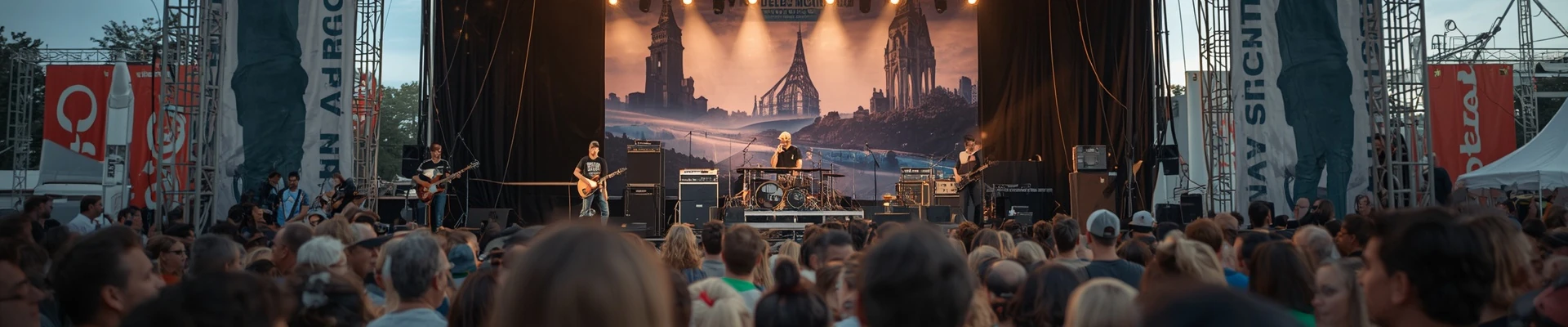
The city's rock and alternative scene has been sustained for decades by a circuit of clubs anchored by Crocodile Rock — the downtown venue on Hamilton Street that has operated as one of the region's essential mid-size rock rooms since the late 1980s. Crocodile Rock has programmed everything from touring national acts to local and regional bands across rock, punk, metal, and alternative genres, and its longevity in a city where venues come and go has made it a genuine local institution. The Sands Bethlehem Events Center (now the Wind Creek Event Center) in neighboring Bethlehem books larger national touring acts and serves the broader Lehigh Valley market. The PPL Center — a 10,000-capacity arena in downtown Allentown that opened in 2014 as part of a major downtown revitalization effort — books major stadium-level touring acts and is the largest concert venue in the region.
Allentown has also been part of the broader Philadelphia and Northeastern Pennsylvania indie rock and punk circuit since the 1980s. The city's proximity to Philadelphia — about an hour by car or by the SEPTA regional rail corridor — means it sits at the edge of one of the most active music ecosystems in the country, and local bands have historically oriented toward Philadelphia for label connections, recording, and broader audience development while maintaining a Lehigh Valley home base. A number of regional recording studios and rehearsal facilities operate in and around Allentown, supporting both the Latino music production ecosystem and the rock/alternative scene.
The Godfrey Daniels folk and acoustic venue in neighboring Bethlehem — one of the most respected listening rooms in the Northeast — serves the broader Lehigh Valley audience and represents the folk, Americana, and acoustic traditions that parallel the city's rock and Latin scenes. The late Dan Fogelberg, the singer-songwriter best known for "Leader of the Band" and "Same Old Lang Syne," lived for a period in Bethlehem and the Lehigh Valley during his career.
Venues and neighborhoods
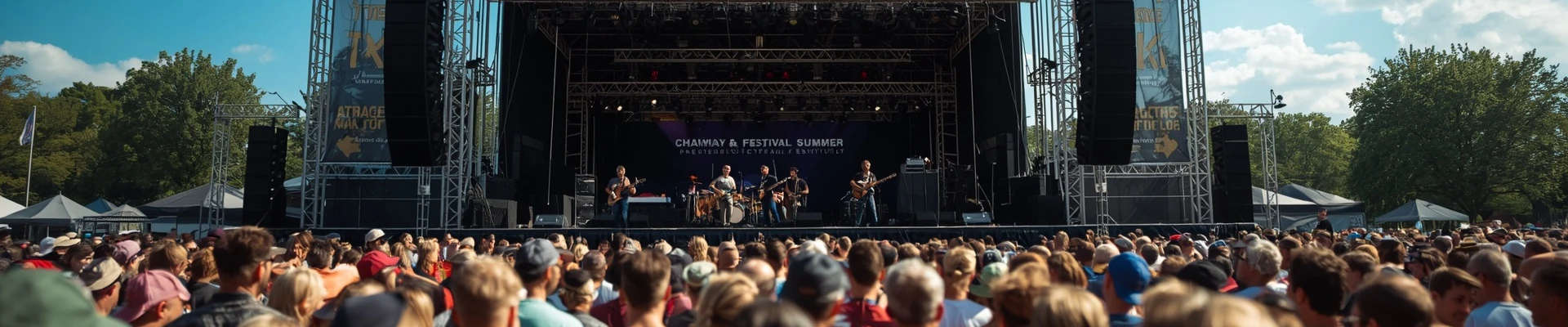
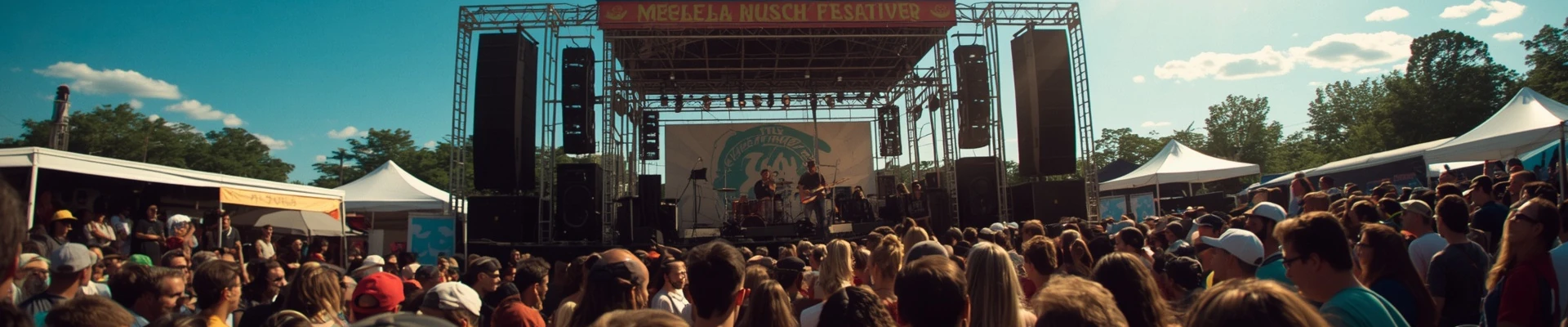
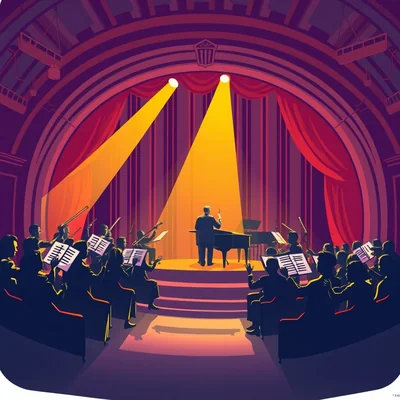
The venue landscape is centered on Hamilton Street, the city's main commercial corridor and the axis of downtown Allentown's nightlife. Crocodile Rock (Hamilton Street) remains the flagship rock club — a multi-room venue with a long booking history in rock, metal, and alternative. The PPL Center (7th and Hamilton) is the downtown arena, home to the Lehigh Valley Phantoms AHL hockey team and the primary destination for arena-level touring acts. The Allentown Symphony Hall — the 1926 Scottish Rite Cathedral on Linden Street, now home to the Allentown Symphony Orchestra — programs classical orchestral concerts. 1st Choice Credit Union Arena at Cedar Crest College programs mid-size events. The Great Allentown Fairgrounds hosts concerts during the annual Great Allentown Fair, a late-summer event that has brought major touring country, rock, and pop acts to the city for generations. The Levitt Pavilion SteelStacks — technically in Bethlehem, on the grounds of the former Bethlehem Steel plant — is an outdoor amphitheatre that programs free concerts across genres through the summer, and Musikfest (Bethlehem's ten-day August music festival, one of the largest free music festivals in the United States) operates across both cities' cultural geography.
Neighborhoods anchor distinct scenes: Downtown Allentown (Hamilton Street and the PPL Center district) is the primary live music corridor and the center of the city's nighttime economy. The West End is a more residential, historically middle-class district with its own bar and restaurant scene. The South Side and the neighborhoods along 7th Street are the heart of the Puerto Rican community and the center of Latin music programming. Tilghman Street runs east-west through several neighborhoods that have historically been home to working-class and immigrant communities. The Iron District — the city's designation for a redeveloping industrial area — has been positioned as a site for arts and cultural venues.
Festivals and signature events
The Lehigh Valley festival calendar is dominated by Musikfest, held each August in Bethlehem across more than a dozen stages, attracting more than a million visitors annually and presenting hundreds of free and ticketed performances spanning pop, rock, country, Latin, classical, jazz, and folk. While Musikfest is a Bethlehem event, its scale defines the regional festival identity for the entire Lehigh Valley. The Great Allentown Fair (late August/early September) combines agricultural exhibitions with a major outdoor concert series in a century-old fairgrounds tradition. The Lehigh Valley Puerto Rican Parade and Festival features outdoor Latin music performance and is one of the largest cultural events in the city's annual calendar. PPL Center programs arena concerts year-round. Downtown Allentown's summer series and holiday programming incorporate live music along the Hamilton Street corridor. Jazz on the Parkway has programmed outdoor jazz in the West Park area.
What ties it all together
Allentown is a city in two registers simultaneously. In the external imagination, it is Billy Joel's Allentown — the place the steel mills closed, the sons who came home to find the jobs gone, the anthem of a generation of Americans for whom industrial decline was personal. In the internal reality of the city's daily life, it is something more complex and more vibrant: a majority-Latino city whose music is dominantly Puerto Rican, a post-industrial urban core that has built a downtown around a new arena and a revitalized Hamilton Street, a regional anchor for a Lehigh Valley whose cultural weight — Musikfest, Godfrey Daniels, Crocodile Rock, SteelStacks — exceeds what any one of its three cities could claim alone. The Allentown Band, still playing free concerts after nearly two centuries, and the salsa orchestras playing the Hamilton Street clubs on a Friday night are part of the same city — one that was shaped by immigration and industry, changed by deindustrialization and demographic transformation, and continues to make music because that is what cities where people live hard lives tend to do.