
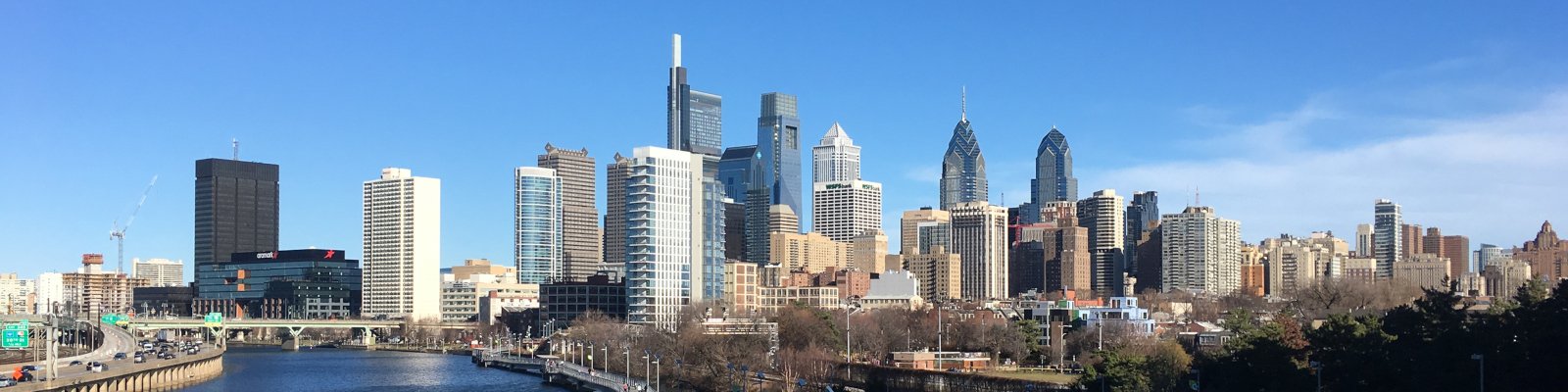
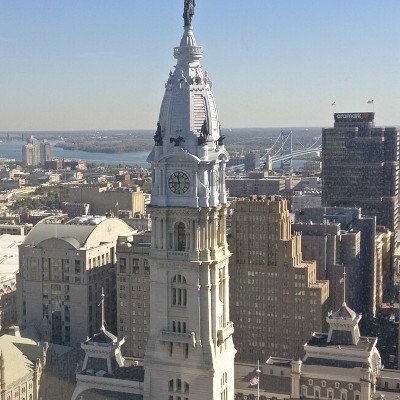
Philadelphia is the largest city in Pennsylvania and the sixth-largest in the United States, with roughly 1.57 million residents inside the city limits and more than 6 million across the surrounding Delaware Valley metropolitan area. Founded by William Penn in 1682 as the capital of his Quaker colony and laid out on a grid between the Delaware and Schuylkill Rivers, it served as the capital of the United States for most of the period from 1776 to 1800 and remains one of the country's most historically dense cities. Beyond the founding-era postcards, Philadelphia is a working-class, majority-Black-and-Brown, deeply musical metropolis whose contribution to American popular music — particularly to Black popular music — is rivaled only by a handful of cities in the world.
A brief history
The land between the Delaware and Schuylkill was Lenape territory long before Swedish, Dutch, and English colonists arrived in the 17th century. William Penn founded Philadelphia in 1682 as the capital of the Pennsylvania colony and laid out one of the first modern grid plans in the Americas. Through the 18th century the city was the largest in British North America and, after independence, the de facto capital of the new United States — host to the Continental Congress, the drafting of the Declaration of Independence and the U.S. Constitution, and the seat of the federal government from 1790 to 1800. Through the 19th and early 20th centuries Philadelphia grew as one of the great industrial cities on the East Coast, with shipbuilding, textiles, steel, and printing industries that absorbed waves of Irish, German, Italian, Eastern European Jewish, and Black Southern migrants. The Great Migration brought hundreds of thousands of Black Americans to North and West Philadelphia from the 1910s onward, and they would shape the city's musical identity for the next century. Postwar deindustrialization, the collapse of Center City retail in the 1970s, and the long, slow rebuilding of the city since the 1990s have all left their mark on the music — Philadelphia is a place where DIY scenes have always run alongside major commercial ones, and where the line between sacred and secular Black music is thinner than almost anywhere else in the country.
Music identity
Philadelphia's modern musical history begins with the Black church and Black radio of the 1940s and 1950s. WDAS was one of the first major Black-oriented radio stations in the country; Sigma Sound Studios at 12th and Race opened in 1968 and would become one of the most important recording studios in 20th-century pop. In the late 1950s Dick Clark's nationally televised American Bandstand, broadcast from WFIL studios in West Philadelphia, made Philadelphia the daily on-screen home of American teenage popular music for nearly a decade and turned the city into a launching pad for Chubby Checker, Bobby Rydell, Frankie Avalon, Fabian, and the broader Philly teen-pop wave.
The defining Philadelphia musical innovation, however, was the Sound of Philadelphia — Philly soul — built in the late 1960s and 1970s by the songwriting and production team of Kenny Gamble and Leon Huff and the arranger Thom Bell, working out of Sigma Sound and their Philadelphia International Records label. Lush orchestral arrangements with strings, French horns, and vibraphones; deep funk rhythm sections (the legendary MFSB house band); and socially aware lyrics built a sweet, sophisticated soul that became the bridge between Motown and disco. The O'Jays ("Love Train," "Back Stabbers"), Harold Melvin & the Blue Notes ("If You Don't Know Me by Now"), Billy Paul ("Me and Mrs. Jones"), The Stylistics, The Spinners, Teddy Pendergrass, Patti LaBelle, and The Three Degrees all built international careers on records cut at Sigma. Gamble and Huff's "T.S.O.P. (The Sound of Philadelphia)" became the theme to Soul Train, and the Philly International template fed directly into disco, modern R&B, and hip-hop for the next 50 years.
The 1980s and 1990s extended the lineage in every direction. Boyz II Men, formed at the Philadelphia High School for the Creative and Performing Arts, became one of the best-selling vocal groups of all time. Will Smith and DJ Jazzy Jeff broke from West Philadelphia in the late 1980s and helped take hip-hop to mainstream radio and television. The Roots, formed at CAPA in 1987 by Questlove and Black Thought, built one of the most important catalogs in hip-hop and turned the city into a node of the neo-soul movement. Jill Scott, Musiq Soulchild, Bilal, Floetry's Philadelphia ties, and Vivian Green all came up in the city's neo-soul wave; Eve, Beanie Sigel, Cassidy, Freeway, and the broader Roc-A-Fella / State Property crew defined Philadelphia hip-hop in the 2000s. Lil Uzi Vert, Meek Mill, PnB Rock, Tierra Whack, and a deep current generation of rappers and singers continue the lineage today. Kurt Vile, Kevin Morby, The War on Drugs, Dr. Dog, Beach House's Philly ties, Hop Along, Mannequin Pussy, Japanese Breakfast, Snail Mail's area roots, and Alex G put the city at the center of 2010s and 2020s American indie rock.
Philadelphia also has a deep classical, jazz, and gospel tradition. The Philadelphia Orchestra, one of the so-called "Big Five" American orchestras, has been a global force since the early 20th century. John Coltrane, McCoy Tyner, Sun Ra (who lived in Germantown for decades), Lee Morgan, Stanley Clarke, Christian McBride, Kurt Rosenwinkel, and Pat Martino all came up through Philadelphia jazz; Ortlieb's Jazzhaus, Chris' Jazz Café, South Jazz Kitchen, and Heritage continue the tradition. The city's gospel scene runs through churches across North and West Philadelphia and into the recording careers of artists like Marion Williams, the Dixie Hummingbirds, the Clara Ward Singers, and Tye Tribbett. Punk and hardcore have a long Philadelphia lineage through bands like YDI, McRad, Ruin, the Dead Milkmen, Atom and His Package, Paint It Black, Kid Dynamite, and the broader DIY scene anchored by venues like the First Unitarian Church basement, PhilaMOCA, and the Foundry. Latin music — Puerto Rican, Dominican, and Mexican — runs through the El Centro de Oro corridor in North Philadelphia and a long lineage of salsa, bachata, and reggaeton clubs. Caribbean and West African scenes thrive in West and Southwest Philadelphia.
Venues and neighborhoods
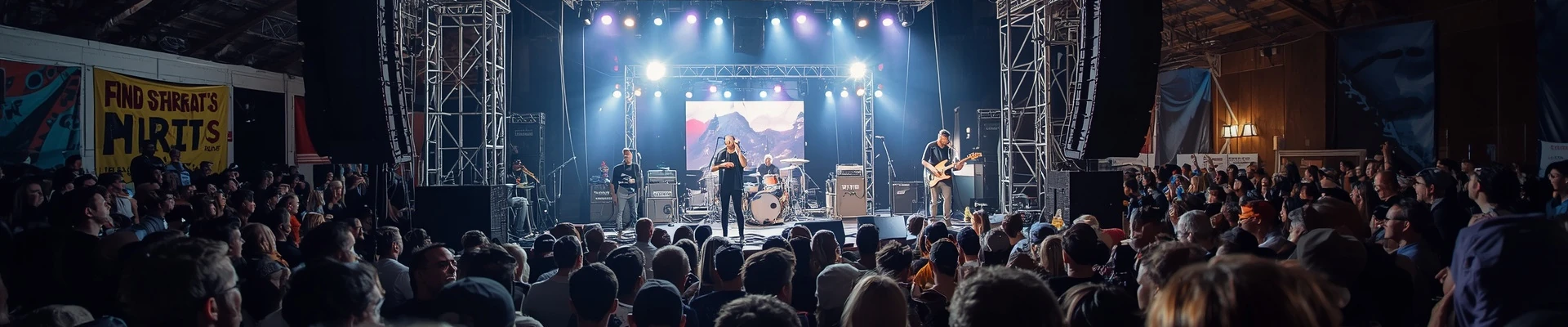
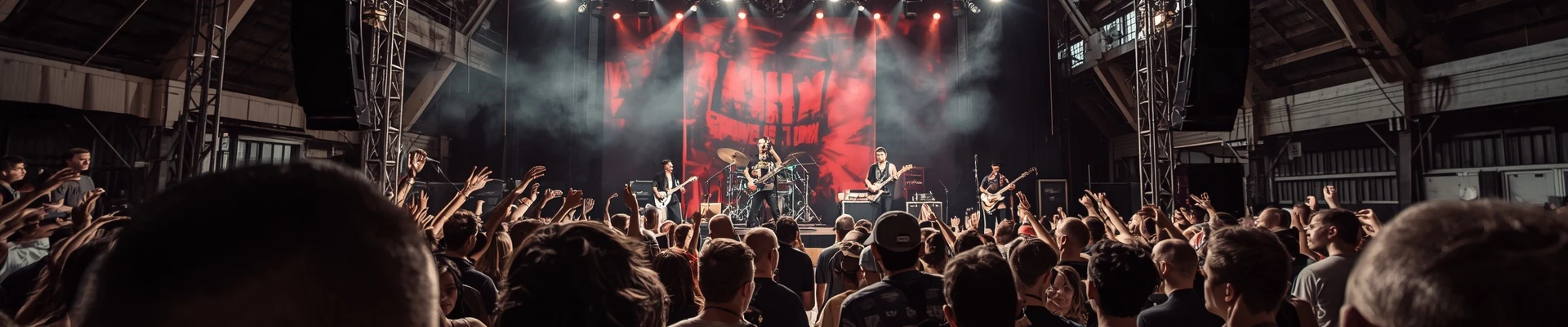
Philadelphia's venue map is exceptionally deep. At the top sit the Wells Fargo Center, Lincoln Financial Field, Citizens Bank Park, the Mann Center for the Performing Arts in Fairmount Park, the Met Philadelphia (formerly the Metropolitan Opera House), the Academy of Music (the oldest continually operating opera house in the country), the Kimmel Center (home of the Philadelphia Orchestra), and the Tower Theater in Upper Darby. The midsize tier includes the Fillmore Philadelphia in Fishtown, Franklin Music Hall (formerly the Electric Factory), the Theatre of Living Arts (TLA) on South Street, Underground Arts, Brooklyn Bowl Philadelphia, and Union Transfer. Beneath them is one of the deepest club layers in the country — Johnny Brenda's in Fishtown, Ortlieb's, Kung Fu Necktie, PhilaMOCA, Boot & Saddle's legacy, The Khyber's legacy, MilkBoy, World Cafe Live, District N9NE, The Foundry, and a long list of bars and DIY rooms across Fishtown, South Philadelphia, West Philadelphia, and Kensington. Jazz lives at Chris' Jazz Café, South Jazz Kitchen, Heritage, Ortlieb's, and Solar Myth. Latin music has homes at clubs across North Philadelphia and the El Centro de Oro corridor.
Different neighborhoods carry different musical identities. North Philadelphia and West Philadelphia remain central to Black Philadelphia music — soul, gospel, hip-hop, and R&B. South Philadelphia anchors a long Italian-American doo-wop and pop tradition through Bobby Rydell, Frankie Avalon, Fabian, and Chubby Checker, and now hosts a vibrant Mexican, Vietnamese, and Cambodian community with its own venues. Fishtown, Northern Liberties, and Kensington anchor the indie rock and DIY scenes. University City and West Philadelphia support the city's largest concentration of Black indie, jazz, and experimental scenes. El Centro de Oro along Fifth Street and the Hunting Park corridor are heart of the Puerto Rican and Dominican music scenes. Germantown and Mount Airy support a deep lineage of Black bohemian, jazz, and gospel music.
Festivals and signature events
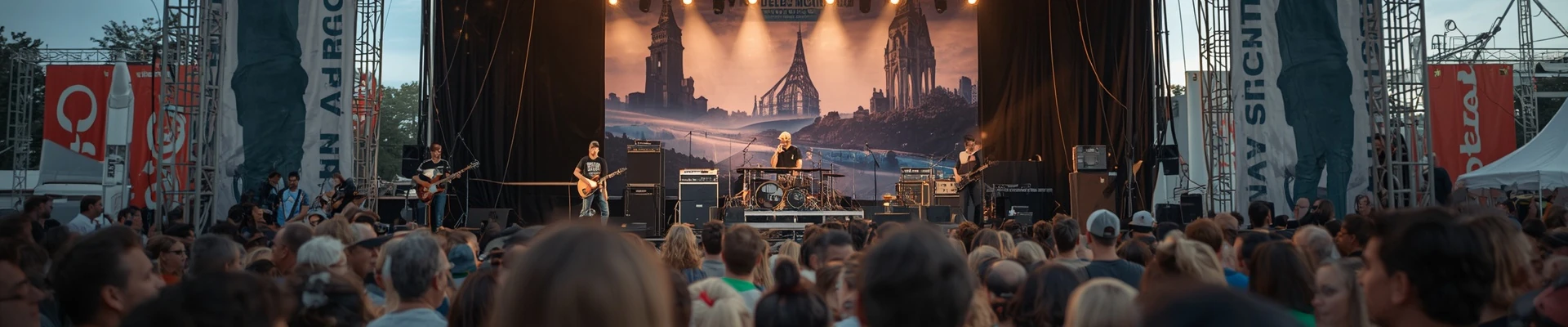
The festival calendar reflects the city's range. Made in America, founded by Jay-Z in 2012 on the Benjamin Franklin Parkway, has been the city's flagship modern festival, drawing major hip-hop, R&B, pop, and rock acts each Labor Day weekend. Roots Picnic at the Mann Center, organized by Questlove and the Roots, is one of the most curatorially respected hip-hop and R&B festivals in the country. The Roots Jam Sessions, XPoNential Music Festival at Wiggins Park in Camden, the Philadelphia Folk Festival (one of the longest-running folk festivals in North America), the Philly Jazz Festival, Welcome America for the Fourth of July, and Mural Arts music programming keep the calendar full. Latin events anchor the Puerto Rican Day Parade along Fifth Street, the Hispanic Heritage Festival at Penn's Landing, Carnaval de Puebla in South Philadelphia, and Día de los Muertos in multiple neighborhoods. Odunde, founded in 1975 in South Philadelphia, is the largest African-American street festival in the country, drawing hundreds of thousands for African and Caribbean music and culture each June. The Mummers Parade on New Year's Day — itself a working-class, brass-band, string-band procession unique to Philadelphia — adds a layer of marching-band and folk music tradition unlike anything in any other American city.
What ties it all together is the city's combination of working-class density, Black migratory history, and proximity to New York and the wider East Coast. Philadelphia musicians grow up an hour from Manhattan, in a city where the Black church, the corner bar, the school of the performing arts, and the church choir feed one another. They grow up in a city that gave the world the Sound of Philadelphia, neo-soul, the Roots, and a half-century of working-class hip-hop and indie rock — and where the Mummers parade through Center City every January 1st in a tradition that is, itself, one of the strangest and most charming pieces of American music.